 Birch Bay Siding
 Deck Repair Built for the Nooksack Area's Climate
Homes in the Nooksack area near Birch Bay deal with a specific combination of weather that most inland decks never have to survive: salt-laden air off the water, long stretches of driving rain through fall and winter, and a moss season that can stretch from October well into spring. Any one of those on its own is manageable. Together, they're what turns a deck that looked fine two summers ago into one with soft boards, rusted fasteners, and a slick, green film that makes every rainy morning a slip hazard.
We work on decks throughout the greater Birch Bay area, including Nooksack, and we've seen the same failure patterns repeat house after house. This page covers what actually goes wrong with decks out here, what a proper repair looks like, and how we approach the job so it holds up through the next few winters instead of needing the same fix again in two years.
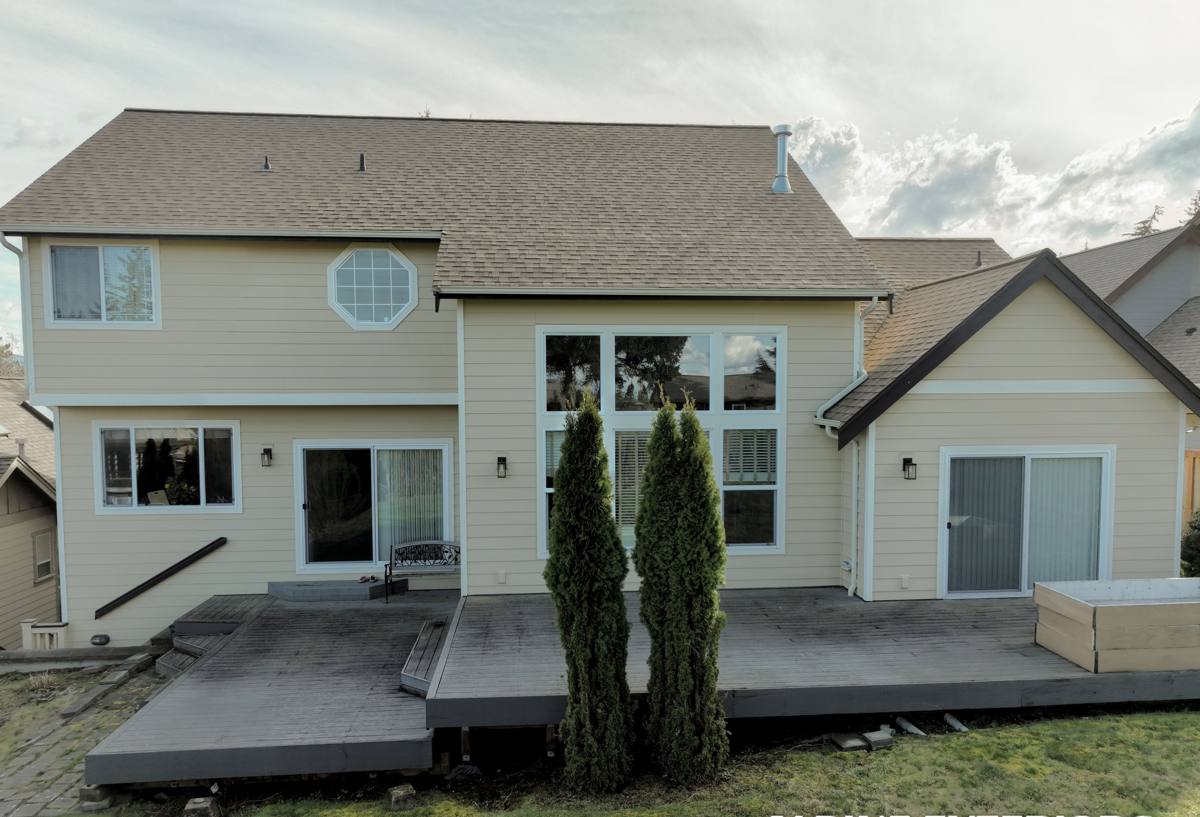
Why Decks Take More Punishment Here Than Elsewhere
Salt Air and Metal Fasteners
Proximity to salt water accelerates corrosion in any exposed metal — nails, screws, joist hangers, and structural connectors. Once a fastener starts to rust, it loses grip strength long before the rust is visible from the surface. A deck board can look solid while the screw holding it down has already lost a good portion of its holding power underneath.
Driving Rain and Water Intrusion
Whatcom County's weather pattern brings rain that doesn't just fall straight down — wind-driven rain gets pushed sideways into ledger boards, under railing posts, and into any gap where flashing wasn't done correctly the first time. That's the water that rots framing from the inside, long before the decking on top shows a problem.
Moss, Algae, and Trapped Moisture
A long moss season means organic growth has months to establish itself in the grain of wood decking, in the gaps between boards, and on the north-facing or shaded sections of a deck that never fully dry out. Moss holds moisture against the wood surface constantly, which is exactly the condition that leads to rot underneath a perfectly paintable-looking board.
Common Signs a Nooksack-Area Deck Needs Repair
- Boards that feel spongy, springy, or slightly soft underfoot
- Green or black staining that comes back within weeks of cleaning
- Rust streaks running down from screw heads or metal hardware
- Railings or posts that wiggle more than they used to
- Gaps opening up between deck boards, or boards cupping (edges higher than the center)
- Visible daylight or soft wood where the deck ledger meets the house
- Stairs that feel less solid than the rest of the deck
None of these mean the whole deck needs to be torn out. Most of the time they point to specific, fixable problem areas — but only if someone gets underneath the deck and actually checks, rather than just patching what's visible from the top.
What an Honest Deck Repair Actually Involves
Structural Inspection First
Before we touch a single board, we get under the deck and check the framing: joists, beams, posts, and especially the ledger board where the deck attaches to the house. This is the single most important connection on the whole structure, and it's also the one most likely to have hidden water damage in a climate like this. If the ledger has rot or was never flashed correctly, fixing the decking on top without addressing that is a waste of money.
Fastener and Hardware Condition
Given how fast salt air corrodes standard hardware, we check joist hangers, structural screws, and any exposed metal connectors for rust and weakening. Corroded hardware gets replaced with fasteners rated for coastal or wet exposure — this is not an area to save money by reusing what's there.
Decking Material Assessment
Whether the deck is wood or composite changes the repair approach:
| Material | Common Issue Here | Typical Repair Approach |
|---|---|---|
| Pressure-treated wood | Rot at board ends, moss growth, cupping | Replace individual boards, address moisture source, re-seal cut ends |
| Cedar | Graying, splitting, softening in shaded/damp spots | Sand and refinish sound sections, replace split or soft boards |
| Composite decking | Fading, moss in grooved surfaces, fastener pull-through | Clean and reseat boards, replace damaged clips/fasteners, spot-replace boards if available |
| Framing (any deck) | Ledger rot, hidden joist rot, corroded hangers | Sister or replace damaged framing, correct flashing, upgrade hardware |
Flashing and Water Management
A huge percentage of "deck repairs" out here are really water management fixes. Correct flashing at the ledger board, proper slope so water sheds away from the house, and gaps between boards that allow drainage instead of trapping moisture — these details matter more in this climate than they would somewhere drier.
Repair or Replace? How We Help You Decide
Not every deck problem calls for a full rebuild, and not every deck is worth patching indefinitely. We walk through this honestly on-site, but here's the general logic:
| Situation | Usually Repair | Usually Replace |
|---|---|---|
| Framing/ledger condition | Solid, only isolated soft spots | Widespread rot, sagging, or unsafe posts |
| Decking boards | Some individual boards damaged | Most boards cupped, split, or soft |
| Age of structure | Under 15-20 years, built to code | Older, unpermitted, or undersized framing |
| Moss/moisture pattern | Localized to shaded sections | Deck-wide, with no realistic drainage fix |
Our goal isn't to sell the biggest job possible — it's to tell you what the deck actually needs so you can spend your money where it matters.
Our Deck Repair Process
- On-site inspection — top and underneath, including framing, ledger, and hardware
- Written assessment — what's damaged, what's causing it, and what the options are
- Repair plan — board replacement, framing repair, hardware upgrade, and flashing correction as needed
- The work itself — matched materials where possible, corrosion-resistant fasteners throughout, correct flashing detail at the house connection
- Walkthrough — we show you what was fixed and why, and flag anything worth watching going forward
Cost Factors for Deck Repair
Every deck is different, but the price of a repair generally comes down to a handful of factors rather than square footage alone:
| Factor | Why It Matters |
|---|---|
| Extent of framing damage | Framing repairs cost more than surface board replacement, but skipping them isn't safe |
| Number of boards needing replacement | A handful of boards is a quick job; widespread cupping or rot approaches replacement cost |
| Access underneath the deck | Low clearance or enclosed skirting adds labor time |
| Material match | Matching older or discontinued decking can take longer to source |
| Hardware condition | Full hardware upgrades (hangers, screws, connectors) add cost but extend the life of the fix |
We give a straight number after inspection, not a phone-quote guess — there's too much variation to price it any other way honestly.
Simple Deck Maintenance That Extends the Repair
- Sweep leaves and debris off the deck regularly, especially in fall — trapped debris holds moisture against boards
- Clean moss and algae off the surface at least once a year, ideally before it gets thick
- Check that gaps between boards are clear so water can actually drain through
- Look underneath once a year for new staining, soft spots, or rust on hardware
- Keep gutters and downspouts near the deck clear so runoff isn't dumping directly onto it
- Reseal or refinish wood decking on the manufacturer's recommended schedule, not just when it looks bad
Why It Matters That We Already Work in Nooksack
A crew that works this specific stretch of Whatcom County already knows which framing details tend to fail first in this weather, what moss and algae actually look like at different stages of damage versus cosmetic staining, and how much drainage a deck really needs to survive the wet season here. That's not something you get from a general handyman or a contractor driving in from out of the area for a one-off job. It also means faster response if a repair issue turns out to be more urgent than expected — a soft ledger board or a failing post isn't something you want to wait weeks on.
We also understand the practical side of working here: permitting expectations for structural deck work, and realistic scheduling around the wettest stretches of the year when framing repairs need dry conditions to be done right.
Get a Straight Answer on Your Deck
If your deck has soft spots, recurring moss, rusted hardware, or just doesn't feel as solid as it used to, it's worth getting an honest look before the next wet season makes it worse. We offer free, no-pressure estimates for deck repair in Nooksack and the surrounding Birch Bay area — use the form below to get one scheduled.