 Birch Bay Siding
 Why Decks Wear Out Faster in Birch Bay Village
Birch Bay Village sits close enough to the water that salt-laden air is part of daily life, and that air is harder on a deck than most homeowners realize. Salt accelerates corrosion in fasteners and hardware, and it settles into wood grain and composite surfaces alike. Combine that with Whatcom County's long stretch of wet weather and the shaded, damp conditions that let moss and algae take hold every fall through spring, and you have a climate that specifically targets the weak points of an aging deck: exposed fasteners, unsealed end grain, and any spot where water can sit instead of drain.
A deck that would last decades in a dry inland climate can start showing real structural problems in half that time out here. That's not a knock on any particular builder — it's just what happens when driving rain, salt air, and a long moss season stack up year after year on an outdoor structure.
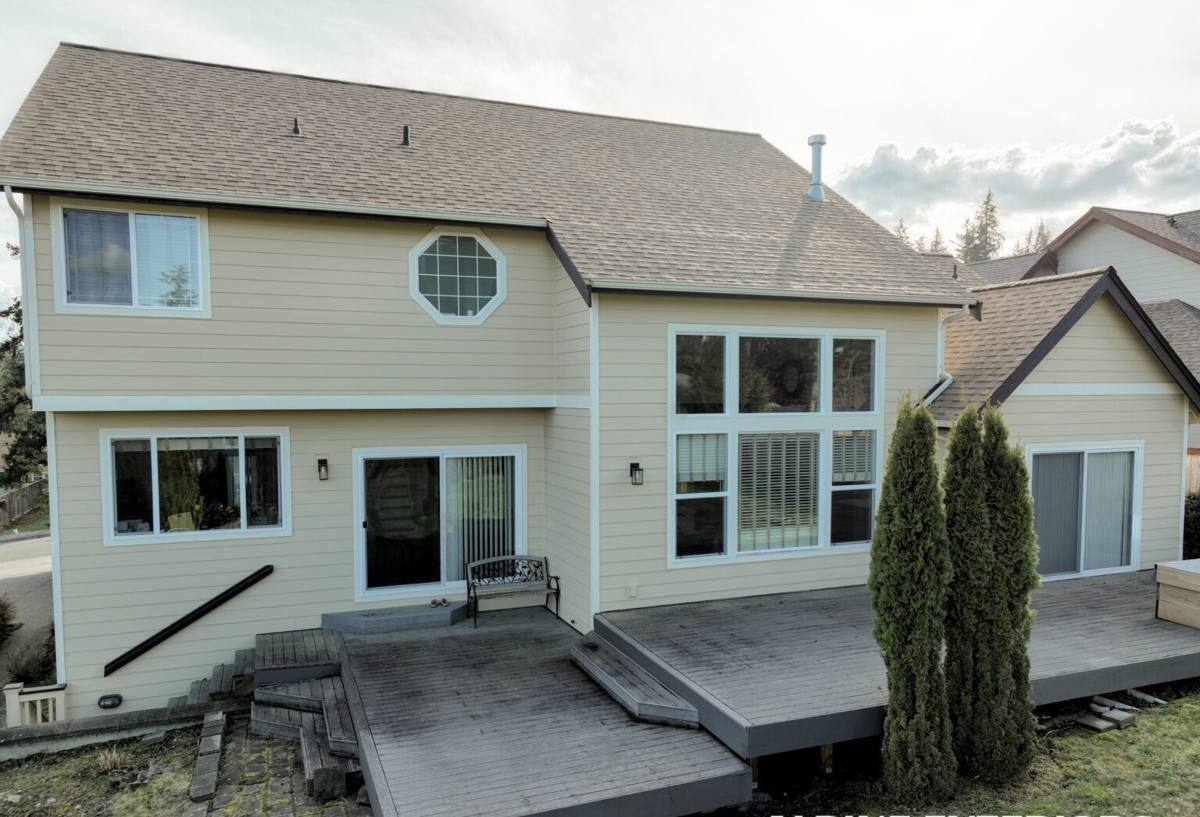
Signs Your Deck Has Reached the End of Its Life
Not every deck problem means a full replacement. But certain signs tell us the structure itself is compromised, not just the surface.
- Soft, spongy, or spring-feeling boards, especially near the house or at board ends
- Rust streaks bleeding from fasteners or visible corrosion on brackets and hangers
- Gaps opening up where the deck meets the house, or the ledger board pulling away
- Persistent green or black staining that comes back within weeks of cleaning
- Wobble or movement in the railing posts or stair stringers
- Visible rot or splitting where support posts meet the ground or concrete footings
- A musty smell coming from underneath the deck, which usually points to trapped moisture
If you're seeing two or more of these, it's worth having someone look at the framing, not just the decking boards. Surface staining is cosmetic. A soft joist or a rotted ledger connection is a safety issue.
What a Correct Deck Replacement Actually Involves
Removing the old deck and inspecting what's underneath
A proper replacement starts with tearing the old structure down to the posts and footings, because that's the only way to actually see what's happening underneath the boards. We've found decks where the visible decking looked fine but the joists underneath were badly deteriorated from years of trapped moisture — the kind of damage you'd never catch without pulling everything up.
Footings and structural framing
Whatcom County's wet soil conditions put real demands on footings. We check that existing footings meet current code depth and bearing requirements before reusing them, and we won't reuse a footing that's cracked, undersized, or shows signs of frost heave. New framing gets built with joist spacing and beam sizing matched to the actual span and load, not just copied from whatever was there before.
Ledger board and flashing
The ledger board — where the deck attaches to the house — is the single most common failure point we see on rebuilds, and it's almost always a flashing problem. Water that gets behind an improperly flashed ledger has nowhere to go, and it will rot both the ledger and the house's rim joist from the inside out. A correct install uses proper flashing, a water-resistant barrier behind it, and through-bolted connections rather than lag screws driven into questionable framing.
Choosing the Right Decking Material for a Marine Climate
There's no single "best" decking material — the right choice depends on how much maintenance you're willing to do, your budget, and how much moss and moisture exposure the deck's location gets. Here's an honest comparison of the main options we work with.
| Material | Moisture & Moss Resistance | Maintenance | Typical Lifespan |
|---|---|---|---|
| Pressure-treated lumber | Good if sealed regularly; moss-prone in shaded, damp spots | Annual cleaning and periodic sealing | 10-15 years with upkeep |
| Cedar | Naturally decay-resistant but still needs sealing against salt air | Regular sealing/staining to maintain color and protection | 15-20 years with upkeep |
| Composite decking | Doesn't rot, but can develop surface algae/moss film in shade | Occasional washing, no sealing or staining | 25-30 years |
| PVC decking | Fully moisture-resistant, least hospitable to moss growth | Lowest maintenance of the group | 25-30+ years |
Composite and PVC products (brands like Trex, TimberTech, and similar manufacturers) cost more up front but remove the sealing and staining cycle entirely, which matters in a climate where moss can reappear within a season of cleaning. Wood costs less initially but only performs as advertised if the homeowner keeps up with sealing on a schedule — skip a year or two in this climate and moisture gets a foothold fast.
Fasteners, Hardware, and Corrosion in Salt Air
This is where a lot of deck failures actually start, and it's easy to overlook because fasteners are small. Standard galvanized fasteners can corrode faster than expected in a marine air environment, and once a fastener starts rusting, it weakens right at the point where boards and framing connect. We use stainless steel or high-grade coated fasteners rated for coastal exposure, along with corrosion-resistant joist hangers and structural hardware — it costs more than builder-grade hardware, but it's the difference between hardware that outlasts the decking and hardware that fails years before it should.
Cost Factors in a Birch Bay Village Deck Replacement
Every deck is different, and we won't quote a number without seeing the site, but these are the factors that actually move the price up or down.
| Factor | How It Affects Cost |
|---|---|
| Deck size and shape | Larger footprints and complex angles increase material and labor |
| Condition of existing framing | Rotted joists, beams, or footings add demolition and rebuild time |
| Decking material chosen | Wood costs less upfront; composite/PVC cost more but need less upkeep |
| Height and stairs | Multi-level decks and stair systems add framing and railing work |
| Railing style | Cable, glass, and composite railings cost more than standard wood balusters |
| Permit and inspection requirements | Structural changes or height increases may trigger additional review |
| Site access | Tight lots, slopes, or limited equipment access add labor time |
Permits and Code Considerations in Whatcom County
Most deck replacements that change the structure — footings, framing, height, or attachment to the house — require a permit and inspection through Whatcom County. This isn't paperwork for its own sake: inspections catch ledger flashing mistakes and undersized footings before they're buried under decking, which is exactly the kind of problem that's expensive to fix later and cheap to catch now. We handle the permit process as part of the job so homeowners aren't left tracking down inspections on their own.
Our Deck Replacement Process
- On-site assessment of the existing deck, framing, footings, and ledger connection
- Honest recommendation on repair versus full replacement, with the reasoning explained
- Material selection based on your budget, maintenance preference, and the deck's sun/shade exposure
- Permit filing and scheduling of required inspections
- Demolition and removal of the old structure, including proper disposal
- Rebuild of footings, framing, ledger flashing, and structural connections to current code
- Installation of decking, railings, and stairs with corrosion-resistant fasteners throughout
- Final walkthrough and inspection sign-off before we consider the job done
What to Ask Before Hiring a Deck Contractor
Deck work is structural work attached to your house — it's worth vetting a contractor the same way you would for any other load-bearing project.
- Are you licensed and insured to do structural deck work in Washington?
- Will you pull the required permit, or is that left to me?
- What fasteners and hardware do you use, and are they rated for coastal/marine exposure?
- How do you flash the ledger board where the deck attaches to the house?
- Do you inspect and replace footings, or only the visible decking?
- Can you walk me through why you're recommending one decking material over another for my specific deck's exposure?
A contractor who can answer these clearly, without hedging, is usually one who's done this enough times to know where problems actually hide.
Why Local Experience in Birch Bay Village Matters
A crew that already works in Birch Bay Village has seen how decks in this specific area age — which sides of a house take the worst of the driving rain, which yards stay shaded and damp long enough to grow moss year-round, and which fastener and flashing details actually hold up against the salt air coming off the water. That's the kind of judgment that only comes from working the same conditions repeatedly, not from a general framework applied to any deck anywhere. It shows up in small decisions: how footings are placed relative to drainage, which material holds up best on a north-facing deck versus a sun-exposed one, and where extra flashing detail is worth the added time.
If your deck is showing soft spots, rust stains, or moss that won't go away, we're happy to come take an honest look. There's no pressure and no obligation — just a straight answer about whether you need a repair or a full replacement, and what that would actually involve. Use the form below to request a free estimate.