 Birch Bay Siding
 Cottonwood Beach Windows Work Harder Than Windows Ten Miles Inland
Cottonwood Beach sits right up against the water in Birch Bay, and that changes what a window has to survive. Homes a few miles inland in Whatcom County deal with rain and cold. Homes here deal with rain, cold, wind off the bay, and a steady dose of salt-laden marine air that settles on glass, frames, and hardware every single day. A window that's rated fine for a general Pacific Northwest climate can still underperform on a shoreline lot like this one — the difference shows up in fogged glass, corroded hardware, and heating bills that creep up year after year.
This page is about one job, done right, in one place: replacing or upgrading windows on Cottonwood Beach homes so they actually perform for the conditions they're sitting in, not just the conditions on a spec sheet.
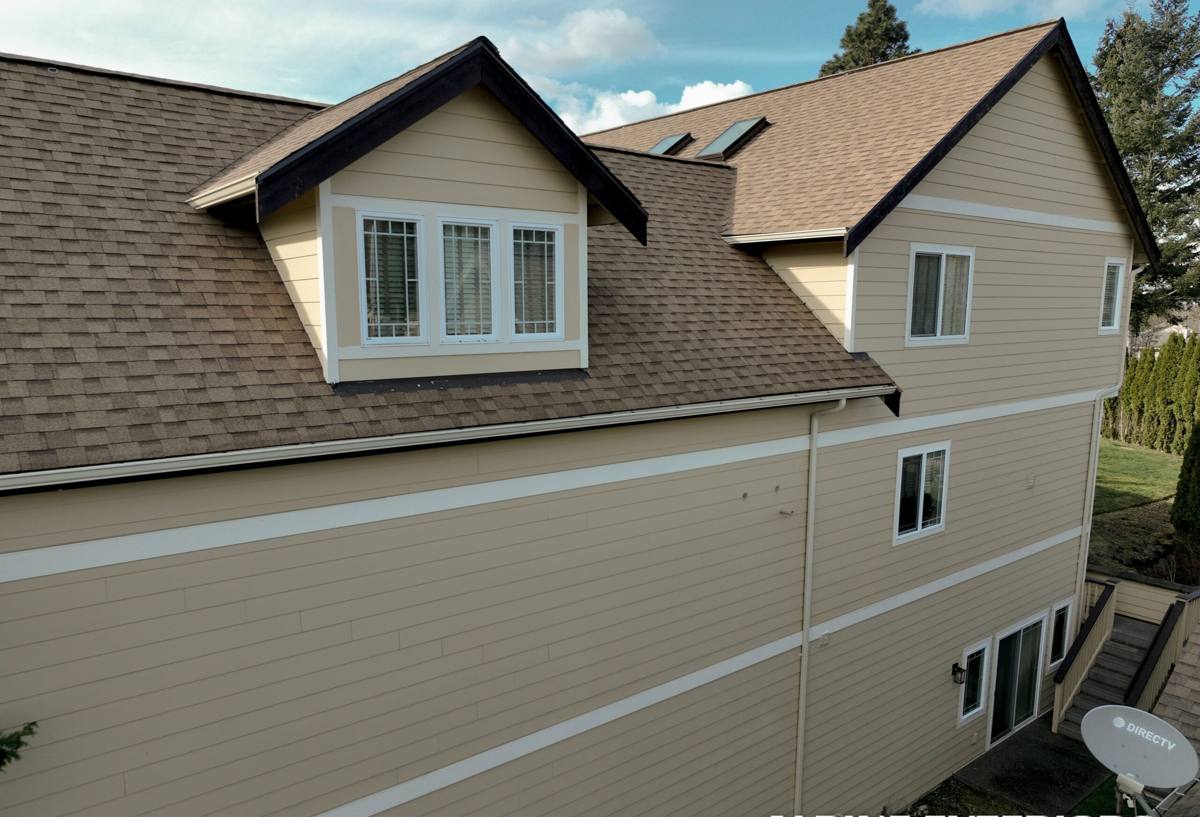
What "Energy-Efficient" Actually Means for a Window
"Energy-efficient" gets used loosely in this industry. On an actual window, it comes down to a handful of measurable properties, and all of them matter more on an exposed waterfront lot than on a sheltered inland one.
U-Factor
U-factor measures how much heat the window lets escape. Lower is better. On a home that catches wind directly off the water, a poor U-factor doesn't just waste energy — it creates cold spots near the glass that you'll feel sitting in the room, especially in a north- or west-facing living room that faces the bay.
Solar Heat Gain Coefficient (SHGC)
SHGC measures how much solar heat passes through the glass. Whatcom County doesn't get brutal summer sun, but a well-chosen SHGC still matters for comfort and for controlling glare off open water, which can be intense on clear days.
Air Infiltration Rating
This measures how much air leaks through the assembly itself, independent of the glass. On a wind-exposed lot, air infiltration is often the bigger energy loss than glass performance — a beautifully rated window installed with a sloppy seal will still leak air and, more importantly here, let wind-driven moisture in behind the trim.
Frame Materials: What Actually Holds Up Near the Water
Frame material choice matters more on a shoreline property than almost anywhere else we work in Whatcom County. Salt air accelerates corrosion on hardware and fasteners, and constant moisture exposure punishes anything prone to rot or finish failure. Here's how the common options compare for this specific setting.
| Frame Material | How It Handles Salt Air & Moisture | Maintenance | Our Take for Cottonwood Beach |
|---|---|---|---|
| Vinyl | Won't corrode or rot; UV exposure over many years can affect finish | Low — occasional cleaning | Solid, budget-friendly default for most homes here |
| Fiberglass | Excellent — dimensionally stable, resists corrosion and moisture well | Low | Best long-term performer for direct waterfront exposure |
| Wood / Wood-Clad | Handsome, but exposed wood needs consistent upkeep in this moisture load | High — refinishing, caulk checks | Only where the look matters enough to commit to upkeep |
| Aluminum | Conducts cold and is prone to corrosion in salt air over time | Moderate | We generally steer clients away from it on shoreline lots |
We're not going to tell a homeowner that a manufacturer's product is bad — every frame material has a legitimate use case. But on a lot exposed to open water and salt spray, the trade-offs around corrosion resistance and long-term maintenance are real, and we'd rather explain that honestly upfront than let someone find out the hard way in year six.
Salt Air, Driving Rain, and Moss: The Three Things That Wear Windows Out Here
Every marine-exposed home in Birch Bay deals with some combination of these, but Cottonwood Beach's proximity to open water tends to make all three more constant.
Salt Air
Salt-laden air settles on hardware, screens, and exposed metal fasteners. Over years, it pits finishes and corrodes cheaper hardware, which is why lock mechanisms and rollers on older windows near the water often seize up or fail well before the glass itself does.
Driving Rain
Wind off the bay pushes rain sideways, not straight down. That means water gets driven up under trim, into gaps around the frame, and behind flashing that was only ever designed for vertical rainfall. A window that's watertight in a calm rainstorm can still leak in a wind-driven one if the flashing detail wasn't built for this exposure.
Moss and Constant Dampness
The long moss season in this part of Whatcom County means anything shaded or slow to dry — north-facing sills, trim under eaves, gaps around older wood frames — stays damp longer than it should. That sustained dampness is what actually causes rot and paint failure, more than any single storm.
Signs Your Current Windows Are Losing the Fight
- Fogging or a hazy film between the panes — the seal has failed and the insulating gas is gone
- Visible corrosion or white residue on hardware, locks, or screen frames
- Soft or discolored wood/trim around the window, especially on north-facing or shaded walls
- Drafts you can feel near the frame on windy days, even with the window fully latched
- Windows that are hard to open, close, or lock — a sign hardware or the frame itself has shifted
- Rising heating bills without any other explanation
- Moss or green growth building up on the sill or exterior trim
Any one of these on its own isn't necessarily urgent. Two or three together, especially on the water-facing side of the house, usually means it's worth having someone actually look rather than waiting.
What a Correct Installation Actually Involves
The window unit itself is maybe half the job. The other half — the part that actually determines whether it performs for 20+ years on an exposed lot — is the installation detail work most homeowners never see once trim goes back on.
- Sill pan flashing: A proper sloped, sealed pan under the window gives any water that does get past the frame a way out instead of a place to pool.
- Weather-resistive barrier integration: Flashing has to be layered correctly with the house wrap so water sheds outward and down, shingle-style — not trapped behind it.
- Shimming and squaring: A window that isn't shimmed level and square will stress the frame, bind the hardware, and open gaps at the corners over time.
- Low-expansion foam and backer rod, not just caulk: Insulating the gap between the window and rough opening correctly stops both drafts and condensation inside the wall cavity.
- Exterior sealant rated for marine/UV exposure: Generic caulk breaks down faster under constant salt air and sun than a proper exterior-grade sealant.
Skip or rush any of these steps and you can end up with a window that's technically "energy-efficient" on paper but still leaks air, fogs early, or lets water into the wall assembly — which is a far more expensive problem than the window itself.
Our Process for a Cottonwood Beach Window Project
- On-site assessment: We look at each window's exposure — which walls face the water and prevailing wind, which are shaded and slow to dry — because that changes what each opening needs, not just what the whole house needs.
- Honest scope and options: We walk through frame material, glass package, and flashing detail for your specific exposure, with real trade-offs explained, not a one-size pitch.
- Written estimate: Clear scope, materials, and timeline before any work starts.
- Removal and opening prep: Old units come out carefully so we can inspect the rough opening and framing underneath for any hidden moisture damage before it's sealed back up.
- Flashing and installation: Sill pan, WRB integration, shimming, insulation, and sealant — done to hold up against wind-driven rain, not just standard rainfall.
- Final check and cleanup: Operation, seal, and finish work verified before we consider the job done.
Choosing the Right Glass Package for This Climate
Glass package is where a lot of the actual energy performance comes from, and it's also where cost varies most. Here's the general trade-off, in plain terms.
| Glass Option | Performance | Best Fit |
|---|---|---|
| Standard double-pane, Low-E, argon-filled | Solid baseline efficiency and cost | Most rooms not directly facing the water |
| Double-pane, upgraded Low-E coating | Better solar and heat control, similar structure | Rooms with strong bay-facing glare or afternoon sun |
| Triple-pane | Best insulating value and sound dampening; higher upfront cost and weight | Primary living areas on the most wind- and water-exposed side of the house |
We don't push triple-pane across an entire house by default — it's genuinely worth it on the exposure that faces the wind and water, and often unnecessary on a sheltered side yard window. Matching the glass package to each opening's actual exposure, rather than upgrading everything uniformly, is usually the more honest use of a homeowner's budget.
Why Hiring a Crew That Already Works Cottonwood Beach Matters
Marine exposure isn't theoretical knowledge you can apply from a manual — it shows up differently on every shoreline lot depending on which direction the house faces, how much wind it catches, and how shaded it is. A crew that's already worked this specific stretch of Birch Bay has seen which details fail first on these homes and which hold up. That's not a substitute for good materials and good technique, but it does mean fewer surprises and fewer callbacks for problems that were predictable from the start.
It also means we're not guessing at flashing details that were designed for a drier, calmer climate than this one. Whatcom County's coastal edge asks more of a window installation than most manufacturer installation guides assume, and building in that extra margin from day one is cheaper than fixing a leak two years later.
Get a Straight Answer for Your Home
If you're not sure whether your current windows are actually underperforming or just old and cosmetically tired, we're happy to take a look and tell you honestly. Reach out for a free, no-pressure estimate using the form below — we'll walk your home's specific exposure with you and lay out real options, not a generic sales pitch.