 Birch Bay Siding
 Why Ferndale Decks Wear Out Faster Than the Brochure Says
A deck in Ferndale doesn't get treated gently by the weather. It sits outside year-round under a mix of salt-laden air blowing in off the water, wind-driven rain that hits horizontal surfaces harder than it hits walls, and a moss season that can run for most of the year on shaded boards. None of that is unique to any one yard in town, but it adds up to decks that need real repair work sooner than the same structure would in a drier, inland climate. When we get called out to look at a deck in Ferndale, the damage almost always traces back to one or more of those three factors — not bad luck, and usually not bad original construction either, just years of steady exposure doing what it does.
This page is about deck repair specifically — not new builds, not full replacements unless that turns out to be the honest answer, but the process of assessing a deck that's showing its age or damage and fixing what actually needs fixing. Whatcom County has a lot of older decks attached to homes that were built well but not necessarily maintained on a schedule that matches how hard this climate is on exposed wood and fasteners. That's the gap we're usually filling.
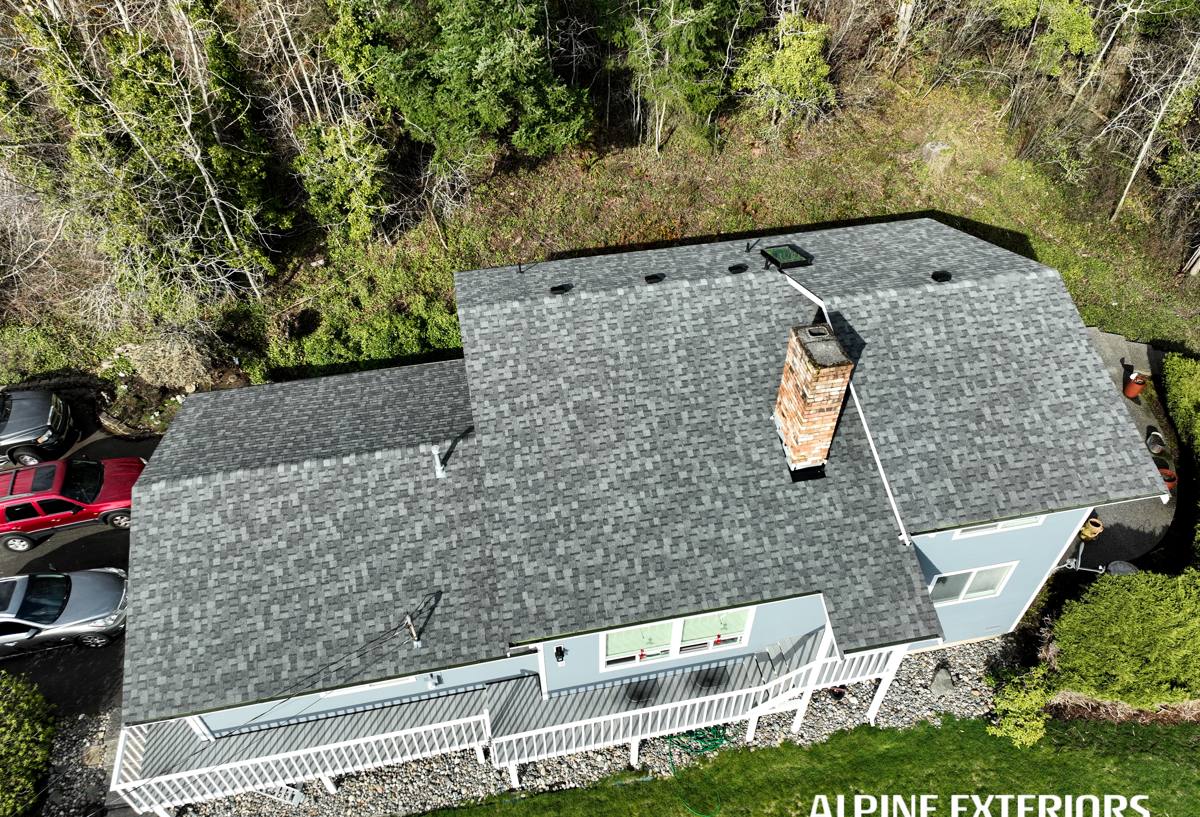
What Salt Air, Rain, and Moss Actually Do to a Deck
Salt Air and Fasteners
Salt-laden air accelerates corrosion in metal — fasteners, joist hangers, structural screws, and railing hardware all corrode faster near the water than they would further inland. A corroding fastener doesn't just look bad; it loses holding strength gradually, and by the time it's visibly rusted through, it may have already been under-performing structurally for a while. This is one of the least visible problems on a deck because it's happening underneath boards and inside joist connections, not on the surface where you'd notice it during a casual walk-around.
Driving Rain and Standing Water
A deck surface is horizontal, which means it collects water in a way a vertical wall never does. Add wind-driven rain — common here during fall and winter storm systems — and water gets pushed into board gaps, ledger connections, and post bases from angles a flat roof or gutter system was never meant to handle. Where water can't drain and dry between storms, it sits against wood fibers and fastener heads longer than it should, and that extended wet time is what drives rot rather than any single storm event.
A Long Moss Season
Mild, damp conditions across most of the year keep moss and algae active on shaded deck surfaces, north-facing sections, and anywhere tree cover blocks the sun. Moss doesn't just make boards slippery and unattractive — it holds moisture against the wood surface for days at a time, which extends every wet cycle the deck goes through and speeds up decay in the boards underneath it.
The Parts of a Deck That Fail First — and Why
Not every part of a deck ages at the same rate. Understanding which components take the brunt of Ferndale's climate helps explain why a deck can look mostly fine from a distance while having real problems in specific spots.
- Ledger board connection — where the deck attaches to the house; a common point for hidden rot if flashing wasn't installed or has failed, since water can run down the house wall and collect right at this joint
- Deck boards near grade or shaded by the house — slower to dry, more exposed to standing water and moss growth than sections in open sun
- Post bases and any wood-to-concrete contact points — where moisture wicks up from below and often causes rot from the inside out, hidden until the post is probed or the wood gives way
- Railing posts and connections — subject to lateral stress every time someone leans on them, which is exactly when a weakened connection becomes a safety issue rather than just a cosmetic one
- Fastener heads and joist hangers — corrode from repeated wet-dry cycling and salt exposure, often before the wood around them shows obvious damage
- Stair stringers — carry concentrated point loads and are frequently under-flashed or left with end grain exposed, which absorbs water readily
What a Correct Deck Repair Assessment Involves
A real assessment goes past a visual walk-around. Rot and fastener failure both tend to hide beneath the surface until they're advanced, so a thorough inspection includes probing suspect areas with a screwdriver or awl to check for soft wood, checking railing posts for lateral movement under load, and getting underneath the deck where possible to look at joists, hangers, and the ledger connection directly rather than guessing from above. Surface staining, a spongy feel underfoot, boards that have started to cup, and any visible gap or rust streaking around fasteners are all signs worth investigating further rather than just resurfacing over.
The point of an assessment isn't to find a reason to recommend a full rebuild — it's to figure out honestly how much of the structure is sound and how much genuinely needs to be addressed. A deck with solid framing and a failing ledger connection is a very different repair than one with rot working through multiple joists. Both are common in this area; they just call for different scopes of work.
Deck Repair Scopes: Matching the Fix to the Damage
| Repair Scope | What It Typically Addresses | When It's the Right Call |
|---|---|---|
| Spot repair | Replacing individual rotted boards, tightening or replacing corroded fasteners, resetting a loose railing post | Framing and ledger are sound; damage is isolated to a few components |
| Ledger and flashing correction | Re-flashing the ledger connection, correcting missing or failed water diversion at the house wall | Rot or staining is concentrated near where the deck meets the house |
| Structural repair | Sistering or replacing damaged joists, upgrading hangers and fasteners to corrosion-resistant hardware | Framing shows soft spots, sagging, or corroded connectors but posts and footings are sound |
| Railing and guard rebuild | Replacing posts, connections, and rail sections to meet code and restore safe lateral load capacity | Railing moves under hand pressure or shows visible rot at post bases |
| Full deck replacement | Removing and rebuilding the structure | Multiple structural members are compromised, or repair costs approach a meaningful share of rebuild cost |
How We Handle Deck Repair in Ferndale
The process starts with the assessment described above — a direct look at the deck's actual condition, not an estimate based on age or appearance alone. From there we walk through what we found, what's driving the damage, and what the realistic repair options are, including the trade-offs between a targeted fix and a broader rebuild if the framing is genuinely compromised. We don't default to recommending full replacement when a repair will hold up; we also don't recommend patchwork fixes on a deck where the underlying structure has already failed, because that just delays a bigger problem and spends money on something that won't last.
Where corrosion-prone hardware is part of the problem — which it often is this close to the water — we replace it with fasteners and connectors rated for the exposure rather than matching whatever was originally installed. Where flashing at the ledger is missing or has failed, we correct that as part of the repair rather than covering over it, since a repair that ignores the water source it's exposed to won't hold up any better than what failed before it.
What to Expect During a Repair
- An on-site walk-through and probing of suspect areas before any work begins or pricing is finalized
- A clear explanation of what's structural versus cosmetic, in plain language
- Removal of damaged boards, framing, or hardware down to sound material — not just covering over soft spots
- Correction of any flashing or drainage issue found at the ledger or other water entry points
- Use of fasteners and connectors suited to a marine climate, not generic hardware
- A final walk-through so you can see and understand what was done and why
Materials: What Holds Up and What Doesn't in This Climate
Repair material choice matters as much as the workmanship. Untreated or minimally treated lumber used for spot repairs will simply repeat the failure pattern that damaged the original boards, just on a shorter timeline given the exposure here. For structural repairs we use lumber rated for ground contact or exterior structural use where it's called for, and for fasteners and hardware we favor stainless or heavily corrosion-resistant coatings over standard galvanized in areas with direct salt air exposure, since the cost difference is small relative to the labor of doing the repair a second time in a few years.
For decking surfaces themselves, homeowners are often deciding between replacing in-kind with wood or switching sections to composite decking during a repair. Both have a place. Wood is generally less expensive up front and easy to spot-repair board by board later, but it needs regular refinishing and stays more vulnerable to moss and moisture absorption without upkeep. Composite decking resists moisture absorption and doesn't need refinishing, but it costs more initially and, on some products, individual board replacement can be less straightforward to match years later if the product line has changed. Neither is the automatically "correct" choice — it depends on your maintenance appetite and budget, and we're glad to walk through the trade-offs for your specific deck rather than push one material by default.
Signs It's Time to Call, Not Wait
Some deck problems are cosmetic and can reasonably wait for a scheduled repair. Others shouldn't wait, because they involve load-bearing capacity or safety. It's worth calling sooner rather than later if you notice:
- Any noticeable bounce, sag, or give underfoot that wasn't there before
- Railings that move, wobble, or flex when you lean on them
- Soft or spongy spots when you press on deck boards, especially near the house or post bases
- Visible gaps, staining, or rust streaking around fasteners and connectors
- Persistent moss or algae on shaded sections that keeps returning after cleaning
- Stair treads or stringers that feel less solid than the rest of the deck
None of these automatically mean a full rebuild, but all of them are worth a direct look rather than waiting for the next season to see if it gets worse.
Why a Crew That Already Works Ferndale Matters Here
Deck repair done right depends on correctly identifying which of the climate factors above is actually driving the damage on a given deck — and that judgment gets sharper with repeated exposure to the same conditions. A crew that works regularly in Ferndale and the surrounding Whatcom County waterfront communities has already seen how salt air affects fastener choice, how wind-driven rain finds its way into ledger connections that look fine from a distance, and how fast moss reestablishes itself on a shaded north wall versus an open, sunny deck. That pattern recognition is what separates a repair that addresses the actual cause from one that just replaces what's visibly damaged and leaves the underlying moisture problem in place to cause the same failure again in a few years.
It also means realistic timelines and material recommendations suited to this specific coastal exposure, not generic advice pulled from a climate zone that doesn't match what your deck is actually up against every winter.
If your deck has soft boards, a wobbly rail, or you just want an honest look at what shape it's really in, we're happy to come take a look. Reach out below for a free, no-pressure estimate.