 Birch Bay Siding
 Why Ferndale's Climate Is Hard on Siding
Ferndale sits close enough to Birch Bay and the Strait of Georgia that homes here deal with a combination most inland siding contractors never have to think about: salt-laden air rolling in off the water, driving rain that hits walls sideways instead of straight down, and a wet season that stretches long enough for moss and algae to take hold on anything that stays shaded and damp. None of these factors is dramatic on its own. Together, over years, they're exactly what breaks down siding that wasn't built or installed for this kind of exposure.
Salt Air and Slow Corrosion
Salt in the air doesn't just affect homes sitting right on the water. It travels inland with the wind and settles on exterior surfaces, fasteners, and trim. Over time it accelerates corrosion on lower-quality fasteners and speeds up the breakdown of finishes that weren't engineered to handle it. This is one of the reasons fastener choice and finish quality matter as much as the siding material itself.
Wind-Driven Rain and Wall Assemblies
Whatcom County storms often push rain at an angle rather than straight down, which means water gets forced into laps, seams, and butt joints that would stay dry in a calmer climate. If the weather-resistive barrier behind the siding, the flashing details, or the caulking at joints aren't done correctly, wind-driven rain will find the one weak spot and work it over time.
Moss, Shade, and Prolonged Dampness
Mature trees and long overcast stretches keep north-facing and shaded walls damp for extended periods. That's ideal for moss and algae growth, which not only looks bad but holds moisture against the siding surface longer than it would otherwise sit there. Siding that absorbs moisture or has a finish that traps it underneath will show staining, swelling, or paint failure faster in these conditions than in a drier climate.
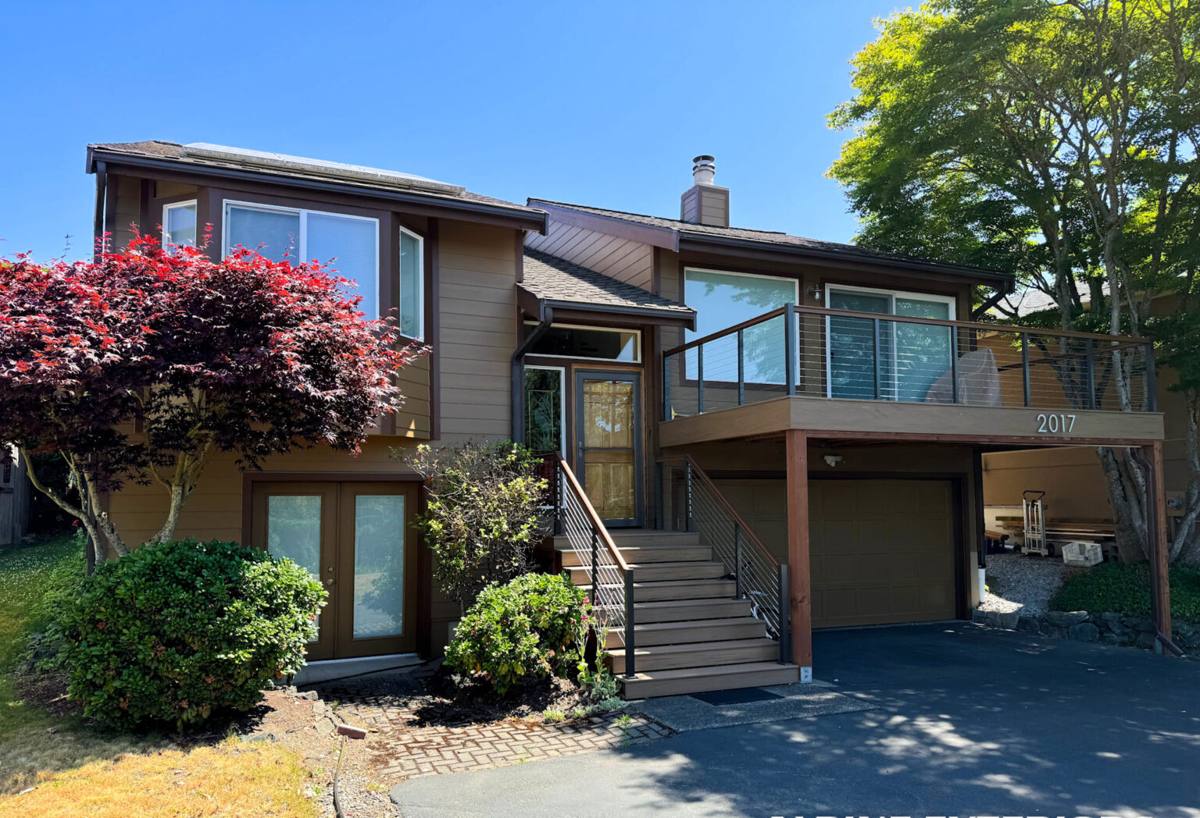
Why We Only Install James Hardie
We standardized on James Hardie fiber cement siding and don't install vinyl, LP SmartSide, Cemplank, Allura, primed spruce, or cedar. That's a deliberate choice, not a lack of options. Hardie is non-combustible, which matters in a region with wildfire risk creeping closer every summer. It's engineered in climate-specific product lines rather than a one-size-fits-all formula, and its ColorPlus factory finish is baked on under controlled conditions rather than applied on-site or left to a field paint job. For homes exposed to salt air and constant moisture, that consistency is worth more than any single feature on a spec sheet.
We're not going to tell you vinyl or engineered wood products are junk — they have real uses and real customers. But we've made a professional decision that for the climate we work in, the trade-offs of those materials (seam and moisture behavior, field-applied finishes, repainting cycles, warranty structure) aren't what we're willing to put our name behind. Hardie is what we install, and it's what we stand behind.
Choosing the Right Hardie Line and Profile for Ferndale
James Hardie makes climate-engineered product lines, and homes in this part of Washington fall into the HZ5 zone — formulated for wetter, cooler climates prone to moisture cycling rather than the HZ10 formula built for hot, humid southern states. Beyond the engineering zone, the profile you choose affects how the house handles wind and rain exposure and how it looks against Ferndale's mostly wooded, semi-rural setting.
| Profile | Best Suited For | Coastal / Moss-Climate Considerations |
|---|---|---|
| Lap Siding (HardiePlank) | Most home styles, straightforward walls | Sheds wind-driven rain well when laps and flashing are installed to spec; most common and most tested profile in this climate |
| Panel / Board & Batten (HardiePanel) | Modern or mixed-material facades | Fewer horizontal laps means fewer potential water entry points, but vertical seams need careful flashing |
| Shingle (HardieShingle) | Accent walls, gables, craftsman-style homes | More surface texture can hold moisture and moss longer in shaded areas; needs a clear plan for upkeep |
There's no universally "correct" profile — it depends on the home's exposure, roofline, and how much shade the walls sit in. Part of our job on a Ferndale estimate is walking the property and telling you honestly which profile will perform best on your specific walls, not just what looks good from the street.
What a Correct Installation Actually Involves
Fiber cement siding is only as good as the installation behind it. Hardie's own warranty is tied to installation meeting their published specifications, and in a wet, wind-exposed climate like this one, skipping steps shows up faster than it would somewhere drier. A correct install includes:
- A continuous weather-resistive barrier behind the siding, lapped correctly with no gaps
- Proper flashing at every window, door, roofline, and penetration — not caulk used as a substitute for flashing
- Correct fastener type, spacing, and placement per Hardie's fastening schedule
- Factory-primed or field-primed cut edges sealed before installation, especially at butt joints
- Proper clearance from grade, roofing, decks, and other transitions so water has somewhere to go
- Panel and lap gaps sized correctly to allow for expansion without forcing water behind the plane
Any one of these done wrong won't necessarily cause a visible problem in year one. It usually shows up two, five, or ten years later as staining, soft trim, or a warranty claim that gets denied because the installation didn't match spec. That gap between "looks fine now" and "was actually done right" is where a lot of siding problems in this region originate.
Our Process for a Ferndale Project
Assessment First
We start by looking at the existing wall assembly, not just the old siding. Wood sheathing that's been damp for years, undersized or missing flashing, and trim that's already soft near grade all change the scope of the job. We'd rather tell you about a moisture problem before we cover it up than have it resurface behind new siding.
Proper Tear-Off and Prep
We don't install over old siding that's hiding moisture damage or that would compromise the new weather barrier. Tear-off lets us confirm the sheathing is sound, replace anything that isn't, and install the barrier and flashing correctly from the framing out.
Installation to Spec
Siding goes on following Hardie's fastening and clearance requirements for our HZ5 zone, with attention to the details that matter most in wind-driven rain — flashing, laps, and joint sealing.
Final Walkthrough
We walk the finished job with you, checking trim lines, caulk joints, and clearances before we consider it done.
Common Issues We See on Existing Ferndale Homes
Older homes in this area tend to show a few recurring problems tied directly to the local climate: dark moss or algae staining on shaded north walls, caulk and paint failure at butt joints on older wood or vinyl siding, and soft or rotting trim near grade where water has been sitting against the wall for years without anyone noticing. On homes with vinyl or field-painted siding, we also regularly see fading and chalking from years of exposure that a factory-baked finish resists far better.
Maintaining Hardie Siding in This Climate
James Hardie with a ColorPlus finish is genuinely lower-maintenance than field-painted alternatives, but "low-maintenance" doesn't mean "no maintenance," especially with salt air and moss pressure in the mix. A simple annual routine goes a long way: a gentle rinse to knock off salt residue and organic buildup before it stains, keeping gutters and downspouts clear so water isn't dumping down a wall, and trimming back vegetation that's keeping a section of wall in permanent shade. None of this is difficult, but skipping it is how moss gets a foothold that's much harder to remove later.
Why Hiring a Crew That Already Works Ferndale Matters
Installing Hardie correctly in Whatcom County isn't the same as installing it in a dry inland climate. It means knowing how much wind exposure a given wall orientation gets, understanding which details need extra attention because of driving rain, and scheduling cut-edge sealing and caulking around actual dry weather windows instead of hoping it doesn't rain that afternoon. A crew that already works this specific area has already made the adjustments that matter here — the kind of thing you only learn by doing the work in this climate, not by reading a manual once.
If you're weighing siding options for a Ferndale home, we're happy to take a look and give you a straight answer about what your walls actually need. Reach out for a free, no-pressure estimate — there's a form right below this page.