 Birch Bay Siding
 Siding Repair Built for Ferndale's Climate, Not a Generic Patch Job
Ferndale sits inland from Birch Bay and the open water along the Whatcom County coastline, close enough that homes still catch salt-laden marine air on windy days, plus the same driving rain and long moss season that define exterior work across this part of the county. That combination is harder on siding than most homeowners realize. Salt accelerates corrosion of fasteners and trim, wind-driven rain gets pushed sideways into seams and laps instead of just running down the wall, and shaded or tree-covered lots stay damp long enough for moss and mildew to take hold on almost any surface that isn't actively shedding water.
Siding repair in this environment isn't just about matching a color and covering a hole. Done right, it means understanding why the damage happened in the first place, checking what's happening behind the siding, and putting back a system that will actually hold up to another Whatcom County winter — not just look fixed until the next storm.
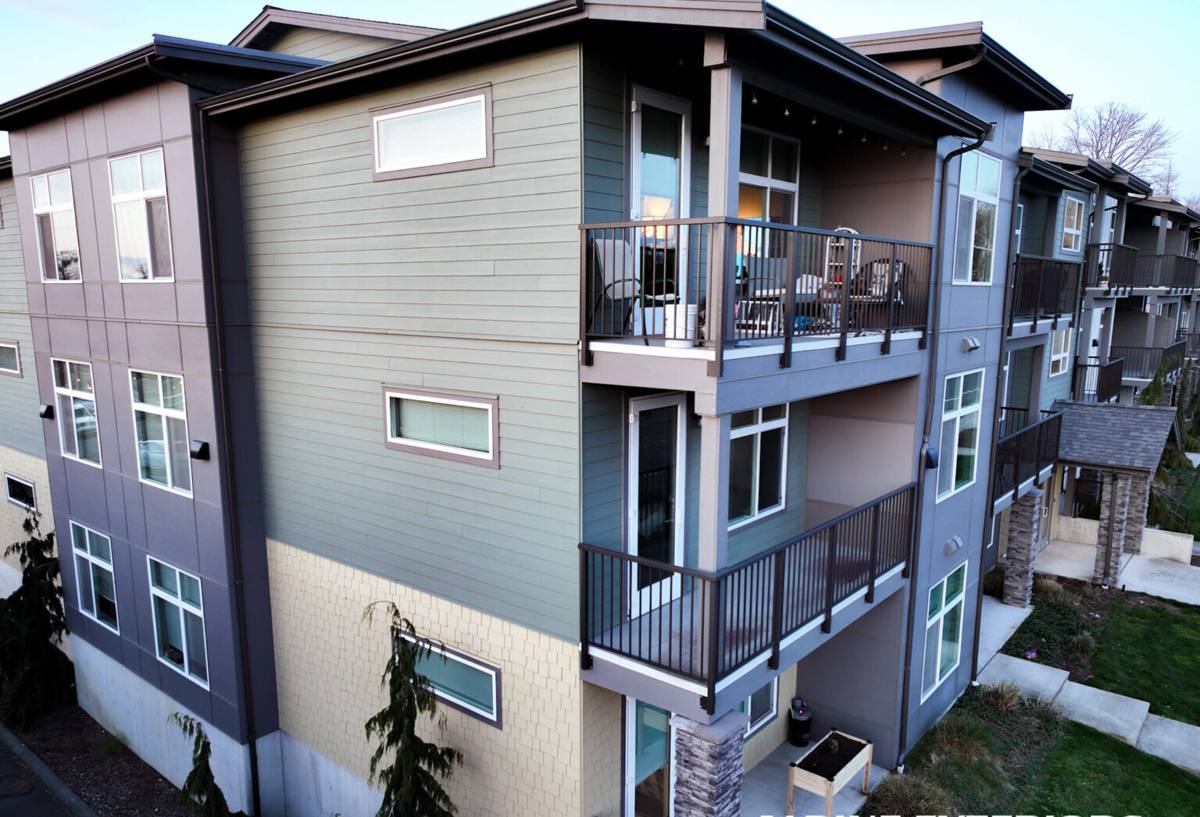
What This Climate Does to Ferndale Siding Over Time
Wind-Driven Rain and Moisture Intrusion
A lot of siding damage in this area isn't storm damage in the dramatic sense — it's slow water intrusion from rain that gets pushed sideways into laps, seams, and trim joints during wind events. Over years, that moisture can swell wood-based products, degrade caulking, and work its way behind panels that were installed with tight or nonexistent gaps. By the time it's visible from the outside, there's often already some level of moisture damage to the sheathing or house wrap underneath.
Moss, Mildew, and Organic Growth
Ferndale's mix of open and tree-shaded lots means some walls dry out quickly after rain while others stay damp for days. Those shaded, north-facing, or tree-covered sections are where moss and mildew show up first, and they're also where porous or lower-grade siding materials tend to hold moisture against the substrate longest. Growth on the surface is a cosmetic problem; growth that's been left long enough to hold water against the wall assembly is a durability problem.
Salt Air and Hardware Corrosion
Even a few miles inland from Birch Bay, homes still get periodic exposure to salt-carrying wind, especially during winter storms. Salt speeds up corrosion on fasteners, flashing, and any exposed metal trim. A repair that reuses corroded fasteners or skips corrosion-resistant hardware is a repair that's going to need doing again sooner than it should.
Signs Your Siding Needs Repair
Some of these are obvious from the ground; others take a closer look. If you're seeing any of the following, it's worth having it looked at before the next wet season:
- Visible cracking, splitting, or buckling in individual panels or boards
- Soft or spongy spots when you press on the siding, especially near the bottom courses
- Paint or finish that's peeling, bubbling, or chalking well before the rest of the wall
- Persistent moss, algae, or dark streaking that keeps coming back after cleaning
- Gaps opening up at seams, corners, or where siding meets window and door trim
- Staining or discoloration on interior walls or ceilings near an exterior wall
- Visible rust streaking below fasteners or metal flashing
- Warping or separation where siding meets the foundation or a lower course
What a Correct Siding Repair Actually Involves
A quick patch — cutting out a bad section and nailing up a new piece — can look fine from the curb and still fail within a couple of seasons if it skips the steps underneath. A repair done to spec includes:
Checking What's Behind the Damage
Before replacing anything, we look at the house wrap or weather-resistive barrier, the sheathing, and the framing in the damaged area. If water has been getting in for a while, the visible siding damage is often just the most obvious symptom, not the whole problem.
Matching Material and Profile
A patch that doesn't match the existing siding's profile, reveal, and finish sticks out and can also create a spot where water behaves differently than the surrounding wall. Getting a clean match matters as much for performance as it does for appearance.
Flashing and Water Management
Repairs around windows, doors, and butt joints need proper flashing and correctly lapped house wrap, not just caulk. Caulk is a backup layer, not the primary defense against water intrusion — if a repair relies on caulk alone, it's not going to hold up through a Whatcom County winter.
Fastening to Spec
Fastener type, spacing, and placement all affect how a repaired section performs, especially under wind load. Corrosion-resistant fasteners, set correctly, are non-negotiable this close to the coast.
Where Ferndale Homes Typically Show Damage First
We consistently see the same pattern of failure points across homes in this area, largely driven by shade, drainage, and wind exposure rather than age alone:
Lower Courses Near Grade
Siding closest to the ground stays wetter longer from splashback, snow, and poor drainage, and is often the first place to show soft spots or staining.
North-Facing and Tree-Shaded Walls
These sections dry out slowest after rain, making them the most common spots for moss, mildew, and long-term moisture damage.
Trim, Corner Boards, and Window Flashing
Transitions and joints are where water intrusion usually starts, since they depend on flashing and sealant details doing their job correctly the first time.
Repair or Replace? What Actually Determines It
Not every damaged section needs a full re-side, and not every problem area is a good candidate for a spot repair. These are the factors that actually drive the decision:
| Factor | Favors Repair | Favors Replacement |
|---|---|---|
| Extent of damage | Isolated to one or two sections | Spread across multiple walls |
| Underlying moisture | Sheathing and framing are sound | Water has damaged sheathing or framing |
| Material age and condition | Existing siding is otherwise in good shape | Existing siding is near end of service life |
| Material match | Discontinued product can still be closely matched | Product is unmatched or long discontinued |
| Root cause | Cause was localized and correctable | Cause is systemic (bad wrap, poor original install) |
An honest assessment sometimes means telling a homeowner that a repair will hold up fine, even when a full replacement would be a bigger job for us. We'd rather give you the accurate answer than the bigger invoice.
Our Process for Ferndale Siding Repairs
- Inspection: We assess the damaged area and check for moisture behind the siding, not just the visible symptom.
- Root cause diagnosis: We identify why the damage happened — flashing failure, wind exposure, drainage, or material breakdown — so the repair addresses the cause, not just the symptom.
- Written scope and estimate: You get a clear explanation of what's being repaired, what it involves, and what it costs before any work starts.
- Repair or replacement: We open up the area, address any underlying moisture or flashing issues, and install matched material with correct fastening and water management details.
- Final check: We walk the repair with you and confirm it's watertight and finished to match the surrounding wall.
Why We Repair and Patch Only With James Hardie Fiber Cement
When we're called out for a siding repair in Ferndale, we're often looking at damage on wood-based, vinyl, or lower-grade fiber cement products that struggled with exactly the conditions this area produces: sustained moisture, shade, and periodic salt exposure. That experience is why we install James Hardie fiber cement exclusively, including on repair and patch work where the existing product allows a match.
Hardie's fiber cement is non-combustible, resists moisture-driven swelling and warping far better than wood-based siding, and holds its factory-applied ColorPlus finish without the repeated repainting that wood or lower-grade products often need in this climate. Its HZ5 product line is engineered specifically for regions with heavy moisture exposure and freeze-thaw cycling, which describes Whatcom County well. When a repair calls for new material, matching into existing Hardie siding is usually straightforward; matching into other products sometimes means the most durable long-term fix is replacing a larger section than the original damage alone would require.
We don't say this to talk every repair into a bigger job. It's the honest tradeoff: a patch is only as good as the material and the details underneath it, and we're not going to install something we don't trust to hold up through the next several wet seasons.
Why Hiring a Crew That Already Works Ferndale Matters
Siding repair is detail work, and the details that matter change with the climate. A crew that mostly works drier, more sheltered areas may not think twice about a small gap at a seam or a slightly under-spec fastener — details that matter a lot more here, where wind-driven rain and salt exposure punish shortcuts faster. A contractor who already works this part of Whatcom County has seen how local conditions actually play out on real houses: which walls fail first, which details hold up, and which shortcuts come back to bite a homeowner within a few years.
That local pattern recognition is part of what you're paying for with a repair — not just the labor to cut out and replace a damaged section, but the judgment to diagnose it correctly and fix it so it doesn't come back.
If you're seeing damage, staining, or persistent moss on your siding, we're happy to take a look and give you an honest read on whether it needs a repair or something bigger. Reach out for a free, no-pressure estimate using the form below.