 Birch Bay Siding
 Why Decks Near Lummi Island Wear Out Faster
Decks in the Lummi Island area take a beating that decks fifty miles inland never see. The combination of salt-laden air, wind-driven rain, and a moss season that can run from fall through spring wears down fasteners, framing, and decking surfaces at a pace that catches a lot of homeowners off guard. A deck that might last three decades in a dry inland climate can start showing structural problems in half that time out here if it wasn't built with these conditions in mind.
Salt air is the big one people underestimate. It doesn't just dull metal finishes — it actively accelerates corrosion in fasteners, brackets, and any exposed hardware, especially where two different metals meet and set off galvanic reaction. Add in near-constant moisture from rain and fog, and you get wood that never fully dries out between storms. That's the exact condition moss and algae need to take hold, and once moss establishes itself on a deck surface, it holds even more moisture against the wood and turns the boards slick and dangerous underfoot.
None of this means a deck on or near Lummi Island can't last. It means the build has to account for the environment from the ground up — material selection, fastener choice, flashing details, and drainage all matter more here than they would somewhere drier.
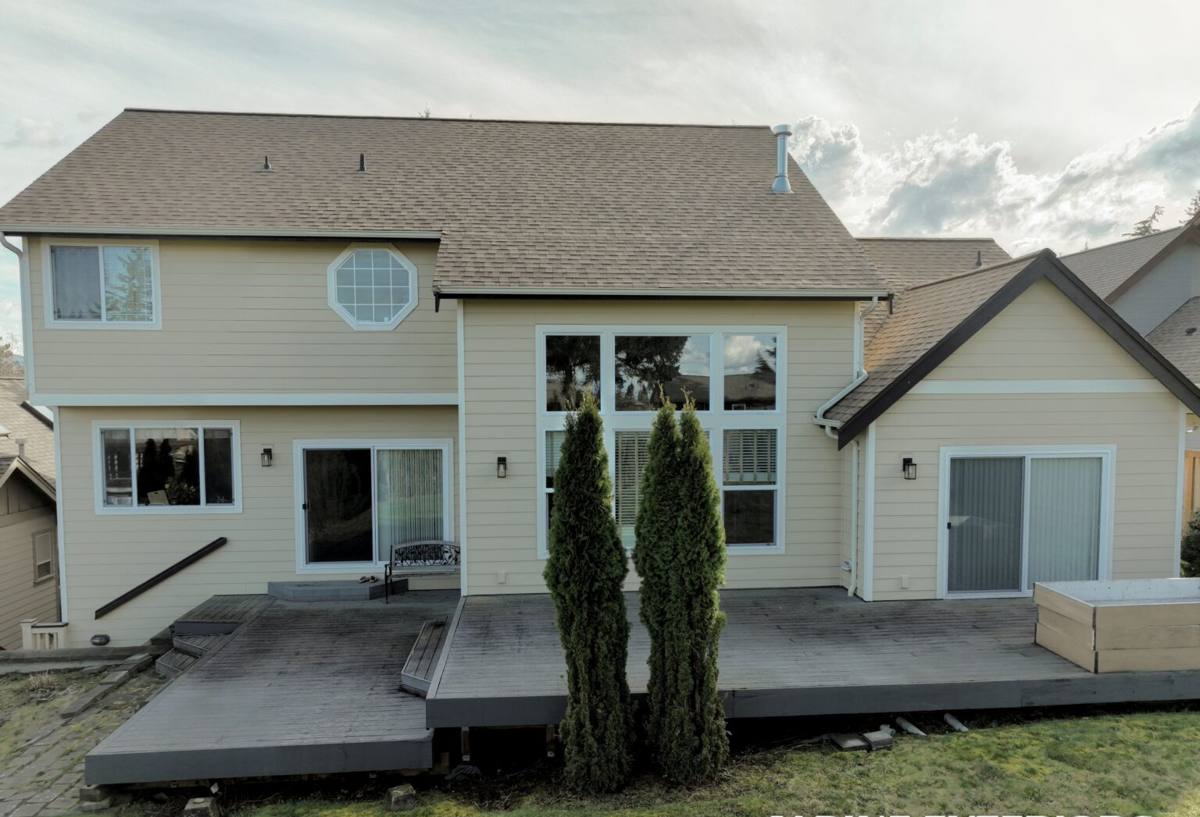
Signs Your Deck Needs Replacement, Not Another Repair
Repairing a board here and there is normal maintenance. But there's a point where patching stops making sense, and pushing past that point usually means paying for repairs and a full replacement anyway. The framing and structural connections are what really decide this — decking boards are the cheap part to replace, but if the frame underneath is compromised, no amount of new decking fixes the underlying problem.
- Soft, spongy, or spring-loaded spots when you walk across the deck
- Rust streaking around fasteners or visibly corroded screws and brackets
- The ledger board (where the deck attaches to the house) shows rot, gaps, or water staining
- Support posts that are checking, splitting, or soft at the base where they meet the ground or a footing
- Guardrails that flex or wobble under normal pressure
- Moss or algae that returns within weeks of cleaning, which usually points to a moisture problem in the wood itself, not just the surface
- You've replaced the same boards more than once in the last few years
If more than one or two of these apply, it's worth having someone look at the structure before spending more money on surface-level fixes.
What a Correct Deck Replacement Actually Involves
A proper replacement isn't just pulling old boards and screwing down new ones. It starts underneath, with the parts of the deck you don't see once it's finished.
Tear-Off and Inspection
Removing the old decking is also the best chance to inspect the framing, ledger connection, and posts while everything is exposed. This is where a lot of hidden problems get found — rot behind the ledger board, undersized or corroded joist hangers, footings that have shifted or never met code to begin with.
Footings and Structural Framing
Footings need to sit below frost depth and bear on stable soil, and framing needs to be sized correctly for the deck's span and expected load — including snow load in winter. If the existing footings or framing are undersized or deteriorated, this is the stage where they get corrected, not patched around.
Ledger Attachment and Flashing
The ledger board connection to the house is one of the most common failure points on any deck, and it's especially unforgiving in a wet climate. Done right, it's lag-bolted or through-bolted into the house's rim joist (never just into siding), with proper flashing installed above and behind it to keep water from tracking into the house framing. This detail alone prevents a lot of the rot and water damage we see on older decks in this area.
Decking Installation
Boards get installed with consistent gapping for drainage and airflow underneath, which matters more here than in a dry climate because trapped moisture is what drives rot and moss growth. Fastening pattern, board orientation, and ventilation under the deck all factor into how long the surface actually lasts.
Decking Material Options for This Climate
There's no single "best" decking material — it's a trade-off between upfront cost, maintenance commitment, and how the material handles constant moisture and salt exposure. Here's how the common options generally compare for a coastal Whatcom County property:
| Material | Moisture & Salt-Air Behavior | Maintenance | Typical Lifespan |
|---|---|---|---|
| Pressure-treated wood | Resists rot reasonably well if sealed and maintained; still needs protection from standing moisture | Annual cleaning and periodic re-sealing/staining | 15-20 years with upkeep |
| Cedar | Naturally rot- and insect-resistant, but softer and more prone to surface weathering in constant damp | Regular sealing to maintain color and resist moss | 15-25 years with consistent care |
| Composite | Doesn't absorb moisture like wood, resists rot and moss staining better, but still needs proper drainage underneath | Occasional washing, no sealing or staining required | 25-30+ years, backed by manufacturer warranty |
Composite typically costs more upfront but less over the life of the deck since it skips the annual sealing cycle. Wood costs less to install but asks for more ongoing attention — which matters if the deck is at a property you're not visiting every week to maintain, which is common for owners with a place near Lummi Island.
Fasteners and Flashing: The Details That Actually Prevent Failure
Most premature deck failures we see near the water don't start with the decking boards — they start with the hardware. Standard fasteners that aren't rated for coastal or treated-lumber contact will corrode faster here than almost anywhere else in the county, and once a fastener starts rusting, it weakens the connection it's holding and stains the wood around it.
- Stainless steel or coated fasteners rated for use with treated lumber and coastal exposure
- Flashing tape or membrane on the ledger board and any exposed framing joints
- Hidden fastener systems where appropriate, weighed against how easy they make future board replacement
- Adequate airflow and drainage space under the deck so moisture doesn't sit against the framing
- Compatible metals throughout — mixing dissimilar metals in fasteners and hardware speeds up corrosion
None of this is visible once the deck is finished, which is exactly why it's worth asking a contractor directly what fasteners and flashing they're using before work starts.
Our Process for Lummi Island Projects
Working on or near Lummi Island comes with a few logistics that don't apply to a job in town, and planning for them ahead of time keeps the project on schedule.
Site Visit and Assessment
We start by walking the existing deck, checking the framing and ledger connection where accessible, and talking through what you actually need from the new deck — size, material, and how you use the space.
Permitting
Deck replacements of most sizes require a permit through Whatcom County, and the structural details (footings, framing, guardrails) need to meet current code even if the deck being replaced was built under older rules. We handle this as part of the project rather than leaving it for the homeowner to sort out.
Material and Crew Logistics
Because island access runs through a ferry, material deliveries and crew scheduling get planned around that in advance rather than figured out on the fly. This is one of the more overlooked details in a deck project out here — a crew unfamiliar with the ferry schedule can lose real time mid-project waiting on materials or equipment that could have been staged ahead of time.
Demolition, Build, and Walkthrough
Old decking and framing get removed and hauled away, the new structure goes in following the sequence above, and we walk the finished deck with you before calling the job done.
Permits, Codes, and Safety Requirements
Deck safety isn't optional, and it isn't just a permit formality — guardrail height, baluster spacing, and stair dimensions exist because deck failures and falls are genuinely common when these get skipped. Generally, guardrails need to be at least 36 inches tall with baluster spacing tight enough that a 4-inch sphere can't pass through, and stairs need consistent rise and run so they're safe to use without thinking about it.
Footings also need to be sized and set to the depth required for this region's frost and soil conditions, and framing needs to account for the area's snow load requirements in winter. A deck built to code isn't just about passing inspection — it's what keeps the structure sound for the next twenty years instead of five.
Maintenance After Replacement
A well-built deck still needs some upkeep to get its full lifespan out of it, especially this close to salt water. None of this is complicated, but skipping it is how a good deck turns into an early replacement.
- Rinse off salt spray and debris periodically, especially after storms
- Keep gaps between boards clear of leaves, needles, and dirt so drainage isn't blocked
- Treat moss and algae early — waiting until it's established makes it harder to remove and more damaging
- Reseal or restain wood decking on a regular schedule rather than waiting until it looks weathered
- Check fasteners and railings periodically for movement, rust, or loosening
- Trim back overhanging vegetation that keeps the deck surface shaded and damp longer than necessary
Why a Crew That Already Works Lummi Island Matters
A deck replacement out here isn't the same job as one three miles inland, even though it looks identical on paper. A crew that already works this area knows the ferry schedule and plans deliveries around it instead of losing days to it. They know which fastener and flashing choices actually hold up against sustained salt air instead of just meeting the minimum code requirement. They've dealt with Whatcom County's permitting process for this specific type of work before, which keeps the paperwork from becoming its own delay.
More than anything, a local crew has seen how decks in this exact environment fail over time — which details cause callbacks in year two versus which ones hold up for twenty years — and builds accordingly the first time. That experience is hard to substitute with a crew that's never worked island logistics or coastal exposure before.
If your deck is showing its age or you're planning ahead for a replacement, we're happy to take a look and give you a straightforward assessment. Reach out for a free, no-pressure estimate using the form below.