 Birch Bay Siding
 Lummi Island's Climate Is Harder on Siding Than Most Homeowners Realize
Lummi Island sits out in the marine air of Whatcom County, surrounded by saltwater on nearly every side. That location is part of what makes the island beautiful, and it's also exactly why siding here fails faster than it does on homes twenty minutes inland. Salt-laden wind, near-constant winter rain driven sideways off the water, and a moss season that can stretch from October into May put a level of stress on exterior cladding that a lot of siding products simply weren't built to handle long-term.
We work on homes across Birch Bay and the surrounding Whatcom County coastline, and Lummi Island jobs have their own personality. The exposure is more direct, the humidity holds longer in shaded areas under trees, and getting materials and crews to the site takes real planning since everything crosses by ferry. A siding replacement here isn't just a swap of old boards for new — it's a chance to put a system on the house that's actually engineered for this specific environment.
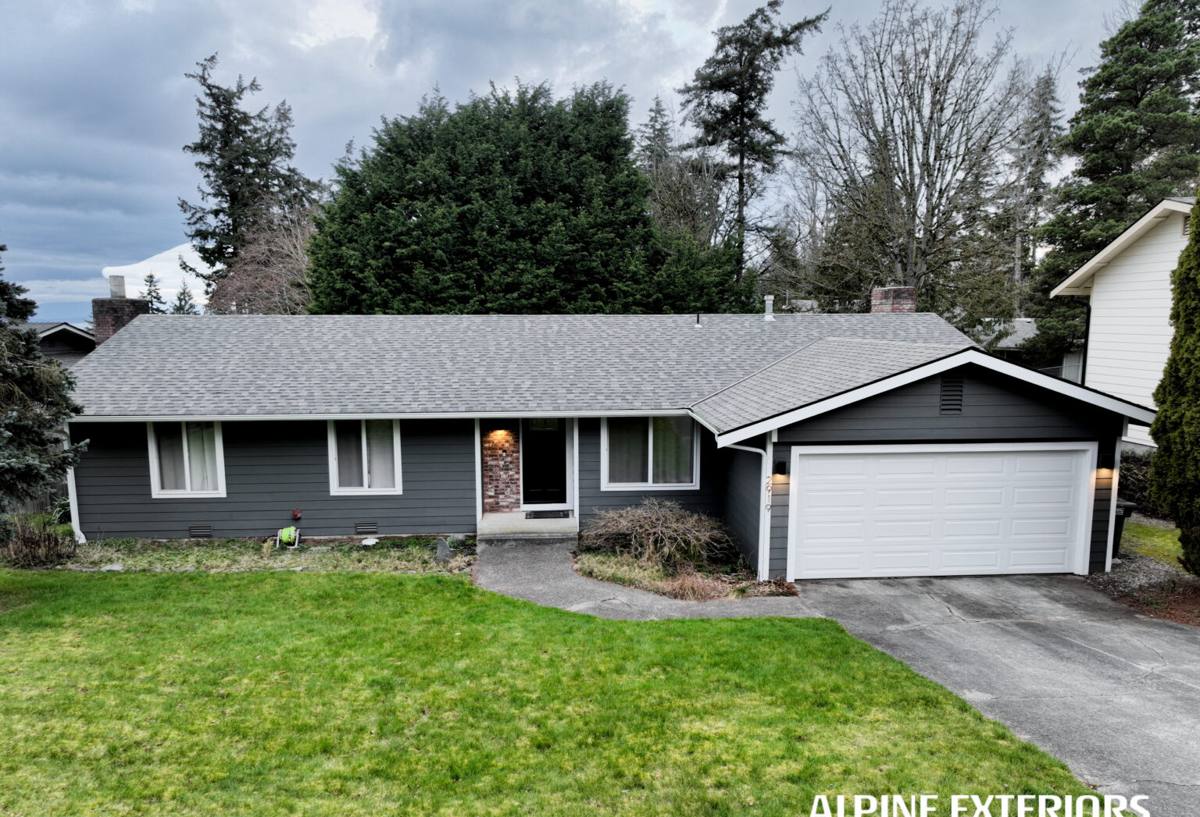
What Salt Air, Driving Rain, and Moss Actually Do to Exterior Walls
Salt Air
Airborne salt doesn't just sit on the surface — it works into seams, fastener heads, and any spot where paint or factory finish has thinned. Over years, that accelerates corrosion of exposed fasteners and trim, and it breaks down lower-quality coatings faster than a manufacturer's inland test data would ever predict.
Wind-Driven Rain
On an exposed island lot, rain doesn't fall straight down — it gets pushed sideways into wall assemblies, especially around windows, corners, and under eaves with limited overhang. Siding and flashing details that would hold up fine in a sheltered inland yard get tested constantly here. Any gap, any lapped seam installed backward, any missing kick-out flashing becomes a water path.
Moss and Sustained Moisture
Whatcom County's long wet season keeps north-facing and tree-shaded walls damp for months at a stretch. Moss and algae take hold on any siding surface that stays cool and moist, and on wood-based products that organic growth holds moisture against the substrate — which is exactly the condition that leads to swelling, soft spots, and rot underneath.
None of this means Lummi Island is an impossible place to side a house. It means the product and the installation details both have to be chosen for this exposure, not for a catalog photo taken somewhere dry.
Signs Your Lummi Island Home May Need Siding Replacement
A lot of siding damage in this climate hides in plain sight until it's advanced. Here's what we tell homeowners to walk their exterior and look for:
- Soft, spongy, or bubbling spots when you press on the siding, especially near the bottom courses and under windows
- Visible cupping, warping, or separation at seams and butt joints
- Paint that's peeling, chalking heavily, or that needs repainting far more often than it used to
- Persistent moss, algae, or dark streaking that comes right back after cleaning
- Soft trim boards or corner boards, especially where they meet the ground or a deck
- Visible gaps at seams, corners, or around penetrations where caulking has failed or shrunk away
- Rising energy bills or drafts that suggest the wall assembly behind the siding is no longer doing its job
Any one of these on its own might just need a repair. Several at once, especially on the weather-exposed sides of the house, usually means the siding system itself has reached the end of its useful life.
Why We Install Only James Hardie Fiber Cement
We don't install vinyl, LP SmartSide, primed spruce, cedar, or other fiber cement brands like Cemplank or Allura. That's a deliberate standard, not a sales pitch, and it matters more on a site like Lummi Island than almost anywhere else we work.
Vinyl siding can look fine for a while, but it's a thin plastic product that becomes brittle in cold snaps, expands and contracts a lot with temperature swings, and offers essentially no fire resistance — a real consideration on a wooded island where wildfire risk and emergency response times both factor in. Engineered wood products like LP SmartSide perform reasonably well when the installation and maintenance are perfect, but they're wood-based at the core, and wood-based siding is exactly the wrong material to fight a losing battle against constant moisture and moss. Primed spruce and cedar are beautiful but demand a maintenance schedule most homeowners can't realistically keep up with in a climate this wet, and both are combustible.
James Hardie fiber cement is non-combustible, dimensionally stable in wet-dry cycling, and comes from the factory with a baked-on ColorPlus finish that resists fading and doesn't rely on the homeowner repainting every few years to keep water out. Hardie also engineers specific product lines — its HZ5 designation — for harsher, wetter climates like ours, which is a meaningful difference from a generic siding product sold the same way nationwide.
Comparing Common Siding Options in This Climate
| Material | Moisture Behavior Here | Fire Resistance | Maintenance Burden |
|---|---|---|---|
| James Hardie Fiber Cement (HZ5) | Dimensionally stable, engineered for wet marine climates | Non-combustible | Low — factory finish, no repainting cycle needed |
| Vinyl | Doesn't rot, but seams and gaps allow water behind panels; brittle in cold | Poor — melts/burns readily | Low upkeep, but limited repair options once damaged |
| LP SmartSide / Engineered Wood | Wood-based core is vulnerable if moisture gets past the coating | Combustible | Moderate — coating and caulking need regular inspection |
| Cedar / Primed Spruce | Absorbs moisture, prone to swelling and rot without diligent upkeep | Combustible | High — repainting/staining and moss treatment needed regularly |
What Correct Installation Looks Like on an Island Property
Getting the material right is half the job. The other half is installing it correctly for the exposure, and that starts before a single board goes up.
Weather-Resistive Barrier and Flashing
On a wind-driven-rain site, the water-resistive barrier behind the siding and the flashing details around every window, door, and penetration matter as much as the siding itself. We lap everything shingle-style so water is always directed out and down, never into a seam.
Fastener Placement and Gapping
Hardie panels and lap siding have manufacturer-specified fastener patterns and clearance gaps at trim, corners, and butt joints. Skipping these details is one of the most common ways an otherwise good product fails early — and it's invisible from the ground once the job is done, which is exactly why it matters who's doing the installing.
Ground and Roof Clearances
We keep proper clearance between siding and grade, decks, and roof lines so splashback and ponding water never sit against the bottom edge of the material — a common failure point we see on older installs during moss season.
Logistics for an Island Job
Material deliveries, dumpsters, and crew scheduling all have to account for the ferry from the mainland. We build that into the project timeline up front so a Lummi Island job isn't slowed down by something as simple as missing a sailing with a truckload of siding.
Our Siding Replacement Process
- On-site assessment — we walk the full exterior, check for hidden moisture and sheathing damage, and note exposure differences wall by wall
- Tear-off and sheathing inspection — old siding comes off and we inspect the wall assembly underneath before anything new goes up
- Repair and prep — any soft sheathing or framing is repaired, and the weather barrier and flashing are installed or upgraded
- Hardie installation — panels or lap siding installed to manufacturer spec, with correct fastening, gapping, and flashing at every penetration
- Trim, caulking, and final detail — corners, trim boards, and joints finished and sealed
- Walkthrough — we go over the finished work with the homeowner before calling the job done
Cost Factors for a Lummi Island Siding Replacement
| Factor | Why It Affects Cost |
|---|---|
| Condition of sheathing underneath | Hidden rot from long-term moisture found during tear-off adds repair scope |
| Home size and wall complexity | More corners, dormers, and trim details mean more labor and material cuts |
| Siding profile chosen | Lap siding, panel systems, and trim/color combinations vary in material cost |
| Access and logistics | Ferry scheduling, staging area, and site access can affect crew time |
| Existing exterior details | Windows, trim, and fascia needing coordination or minor repair during the swap |
We give a firm, itemized quote after the on-site assessment rather than a ballpark over the phone — there's too much variation from house to house to do it any other way honestly.
Why Hiring a Crew That Already Works on Lummi Island Matters
Siding replacement on an island isn't logistically identical to a mainland job, even one a few miles away in Birch Bay or elsewhere in Whatcom County. Ferry sailing schedules affect how material deliveries and dumpster pickups are timed. Crews need to plan their day around sailings rather than just driving back for a forgotten tool. A contractor who's already worked the island knows this rhythm and builds it into the schedule instead of discovering it mid-project.
Just as important is knowing the exposure differences house to house. A wall facing open water takes a different beating than one tucked behind trees on the leeward side, and that should change decisions about flashing detail and product line, not just paint color. A crew with real Lummi Island experience has already seen how salt air, wind-driven rain, and moss play out on homes like yours, not just in a training manual.
If your Lummi Island home is showing signs of aging siding, or you're planning ahead before the next wet season sets in, we're happy to come take a look. We offer a free, no-pressure estimate — walk the house with us, get a straight answer on what's going on, and decide from there with real information in hand.