 Birch Bay Siding
 Lynden's Climate Puts Real Demands on Exterior Siding
Lynden sits inland from Birch Bay but still gets the full weather package that defines this corner of Whatcom County: marine-influenced humidity, long stretches of driving rain off the Pacific systems, and a moss season that can run from fall through spring. Add the salt-laden air that moves in from the bay and the Strait of Georgia on windy days, and you have a set of conditions that will find every weakness in a home's exterior over time. Siding here isn't just decorative — it's the first line of defense against moisture intrusion, and the product and installation both have to be matched to what this specific climate does to a house year-round.
Homes in Lynden tend to see more standing dampness on north- and west-facing walls, more shaded, moss-prone rooflines and trim, and more freeze-thaw cycling than people expect from a "mild" Pacific Northwest winter. None of that is dramatic on its own, but it adds up fast when siding wasn't built or installed for it.
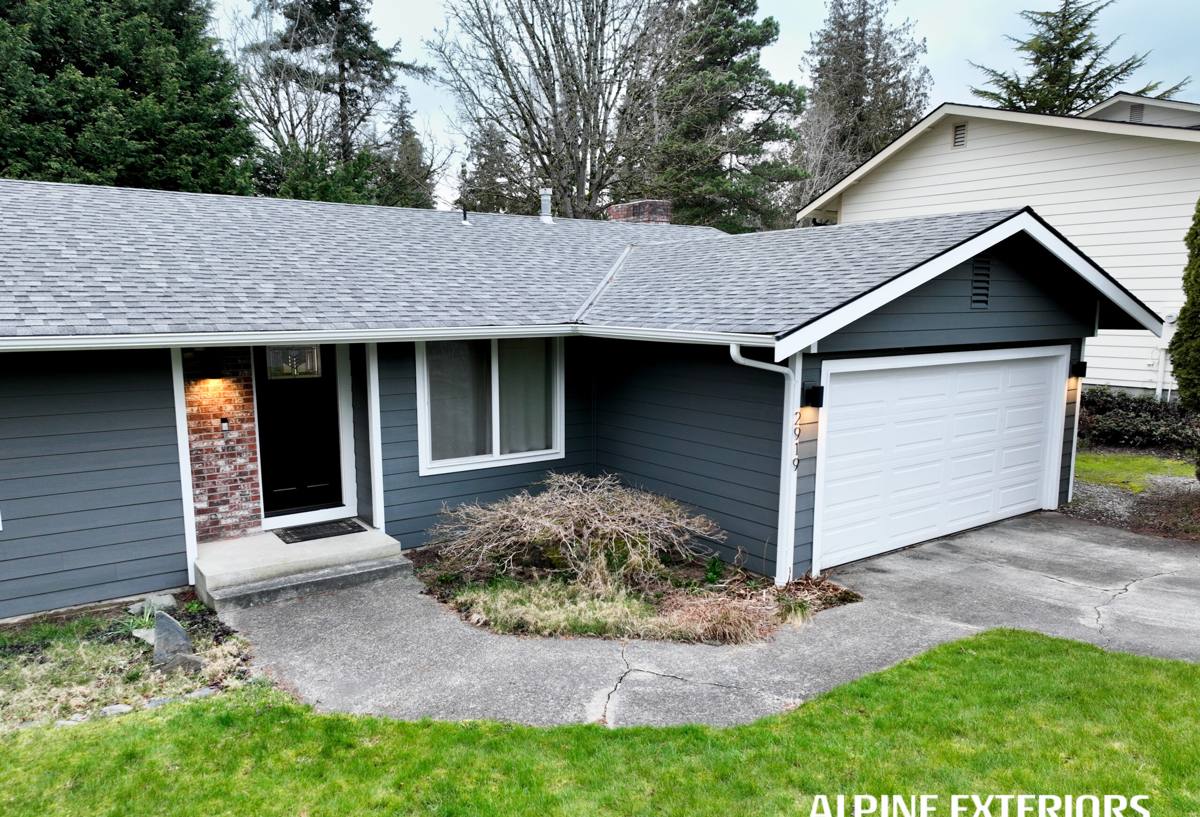
What Local Homes Actually Need From Their Siding
Three things matter more here than in drier climates:
- Moisture resistance that holds up over decades, not just through the warranty period on paper
- A factory finish that resists the fading and streaking caused by constant damp-dry cycling and salt-tinged air
- Material stability so panels don't swell, cup, or delaminate when they're wet more often than they're dry
Wood-based and wood-composite products are especially vulnerable to the second and third points. Even well-maintained cedar or primed spruce siding in this area needs frequent recoating and vigilant caulk maintenance to keep water out of end grain and seams. Once moisture gets behind those products, the damage is often hidden until it's significant.
Why We Only Install James Hardie
We made the decision to install James Hardie fiber cement exclusively — no vinyl, no LP SmartSide, no Cemplank, no Allura, no primed spruce or cedar. That's not a marketing position, it's a practical one built around what actually performs in Whatcom County's weather:
- Fiber cement is non-combustible, which matters for insurance and long-term risk, not just fire codes
- James Hardie's ColorPlus factory finish is baked on under controlled conditions, which holds color and resists moisture-driven fading far better than field-applied paint
- Hardie engineers specific product lines for different climate zones — the HZ5 line used in this region is formulated for freeze-thaw cycling and sustained moisture exposure
- The warranty is transferable and backed by a manufacturer with decades of fiber cement manufacturing behind it, not a newer or thinner-margin competitor
We're not going to tell homeowners that vinyl or LP SmartSide are bad products in every application — they have real cost advantages and can perform reasonably in the right setting. But for what this climate does to a house over 20-30 years, we won't put our name behind an installation we don't think will hold up. That's the standard, and it's why every job we do in Lynden is Hardie.
Product Lines That Fit This Region
| Product | Typical Use | Why It Fits Here |
|---|---|---|
| HardiePlank lap siding (HZ5) | Primary wall cladding | Traditional lap profile, engineered for Pacific Northwest moisture and freeze-thaw exposure |
| HardiePanel vertical siding | Accent walls, gables, modern facades | Clean vertical lines, same moisture and impact resistance as lap product |
| HardieTrim boards | Corners, fascia, window and door trim | Resists the rot and swelling that plagues wood trim in damp shaded areas |
| HardieSoffit panels | Eaves and overhangs | Moisture and pest resistant in the shaded, moss-prone areas under rooflines |
What a Correct Installation Actually Involves
James Hardie siding performs to spec only when it's installed to spec. A lot of the moisture problems we see on older homes in this area trace back not to the siding material itself but to installation shortcuts. A correct job includes:
- A properly lapped and taped weather-resistive barrier behind the siding, with all seams and penetrations sealed before the first plank goes up
- Correct starter strip placement so the bottom course sheds water the way the whole system is designed to
- Manufacturer-specified nailing patterns and fastener depth — over-driven or under-driven nails are one of the most common causes of premature siding failure
- Proper flashing at every window, door, and roofline intersection, since these are the points where wind-driven rain actually gets behind cladding
- Correct gapping and sealant at butt joints and trim intersections to allow for expansion without letting water in
- Field-cut edges primed and painted before installation, since raw cut edges are more vulnerable to moisture absorption than factory-finished faces
Skipping any one of these steps doesn't usually show up as a problem in year one. It shows up in year eight or ten, as staining, soft trim, or moisture damage that's expensive to trace and repair. Correct installation is the difference between siding that lasts the full length of its warranty and siding that needs premature attention.
Our Process for a Lynden Siding Project
1. On-Site Assessment
We look at the home's current siding condition, existing moisture damage (especially around windows, corners, and low-clearance areas), and how the house is oriented relative to prevailing wind and rain. This tells us where extra flashing or detailing attention is needed.
2. Tear-Off and Substrate Check
Once old siding is removed, we inspect the sheathing underneath for rot or moisture damage before anything new goes up. Covering a compromised substrate with new siding just delays a bigger problem.
3. Weather Barrier and Flashing
This is the step that matters most for long-term performance and the one that's easiest to shortcut. We install and tape the weather-resistive barrier and flash every penetration before any Hardie product is installed.
4. Installation to Manufacturer Spec
Panels, planks, and trim go up following James Hardie's published fastening, clearance, and gapping requirements — not generic best guesses.
5. Final Inspection and Walkthrough
We walk the finished job with the homeowner, checking sealant lines, trim details, and touch-up painting on any field cuts.
What Drives Cost on a Lynden Project
| Factor | Why It Matters |
|---|---|
| Home size and wall complexity | More corners, dormers, and gables mean more trim, flashing, and cut waste |
| Current siding condition | Hidden rot or moisture damage found during tear-off adds substrate repair work |
| Product line and profile | Lap width, panel style, and trim selections vary in material cost |
| Accessibility | Steep rooflines, tall gables, or tight lot access affect labor and equipment needs |
| Color and finish selection | Standard ColorPlus colors versus premium or custom options |
We give straightforward, itemized estimates rather than vague lump-sum numbers, so homeowners can see exactly what they're paying for and why.
Maintaining Hardie Siding Through a Whatcom County Moss Season
One advantage of fiber cement over wood-based siding is how little routine maintenance it actually needs — but "little" isn't "none," especially in a climate where moss and moisture linger for months at a time.
- Rinse siding annually with a garden hose to clear pollen, dust, and early moss growth before it takes hold
- Keep gutters and downspouts clear so overflow doesn't run directly down wall sections
- Trim back shrubs and trees that keep siding shaded and damp longer than it needs to be
- Inspect caulking at trim and joints once a year and touch up any cracked or missing sealant
- Avoid pressure washing directly into seams or under panel edges — it can force water where it shouldn't go
Done consistently, this keeps siding looking clean and performing well without the recoating and sealing schedule that wood products demand in this climate.
Why Local Installation Experience Matters
Correct flashing details, fastener spacing, and moisture barrier work aren't things you can fully verify by looking at finished siding — they're built in during installation, and they're exactly the details that determine whether a house handles Whatcom County winters well or poorly. A crew that already works regularly in Lynden and the greater Birch Bay area knows what this specific climate does to a home over time, because we see the results of both good and bad installations on older houses throughout the region. That local pattern recognition shapes how carefully we handle the details that don't show up until years later.
If you're considering new siding for a Lynden home, we're happy to take a look and walk you through what we'd recommend and why. There's no pressure and no obligation — just a straightforward assessment and an honest estimate using the form below.