 Birch Bay Siding
 Marietta's Climate Is Harder on Siding Than Most Homeowners Realize
Marietta sits close enough to the water that salt air is a daily fact of life, not an occasional nuisance. Add Whatcom County's long wet season, driving rain off the Strait, and months of shade and dampness that feed moss and algae growth, and you have a climate that quietly wears down the wrong siding material year after year. Paint chalks and peels faster near the water. Wood-based products absorb moisture at seams and end cuts. Vinyl becomes brittle and can warp under repeated temperature swings and wind-driven rain. None of this shows up as a dramatic failure in year one — it shows up as a siding job that looked fine at installation and needs real money spent on it by year eight or ten.
That's the backdrop for every siding decision we make in Marietta. It's also why we install exclusively James Hardie fiber cement siding on Birch Bay-area homes. We don't offer vinyl, LP SmartSide, Cemplank, Allura, primed spruce, or cedar as alternatives — not because those products have no merit anywhere, but because we've made a professional judgment that fiber cement from Hardie is the right standard for this specific coastal, moss-prone corner of Washington.
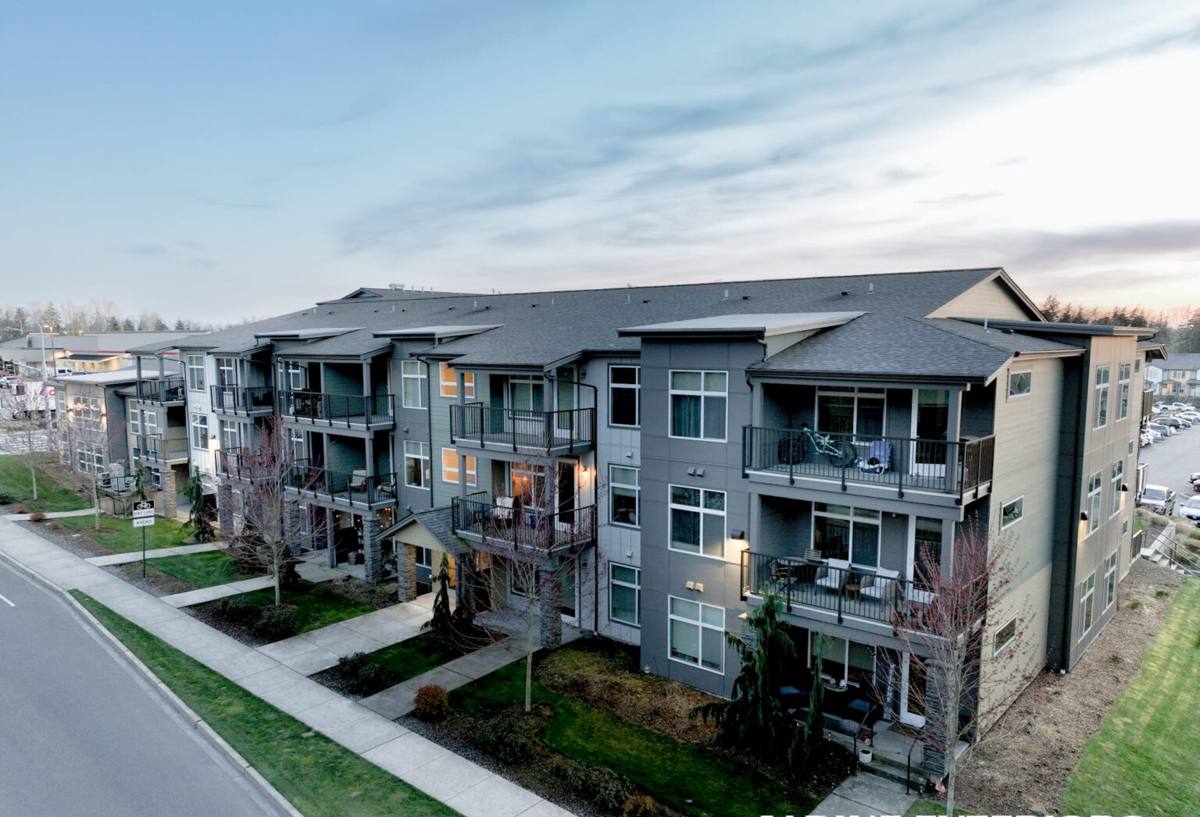
What Local Homes Actually Need From Their Siding
Strip away the marketing language and a Marietta home needs a siding system that does three things well: shed salt-laden moisture without absorbing it, hold a factory finish through repeated wet-dry cycles, and resist the organic growth that thrives in shaded, damp exterior walls near the coast.
Moisture Resistance That Doesn't Depend on Paint
Fiber cement is dimensionally stable and doesn't swell, rot, or delaminate the way wood-based sidings can when moisture finds a seam. That matters here because driving rain doesn't just fall on a wall — wind pushes it sideways and up under laps and trim if the details aren't right.
A Finish That Holds Up Near Salt Air
Salt air accelerates the breakdown of ordinary field-applied paint. A factory-cured finish that's baked on under controlled conditions holds color and adhesion far longer than paint applied on-site in variable Pacific Northwest weather.
Non-Combustible Material
Fiber cement is non-combustible, which matters for wildfire-adjacent insurance considerations and simply as a durability baseline — it isn't a material that degrades from UV and heat the way some plastics and untreated woods do over decades.
Why We Standardized on James Hardie Specifically
James Hardie is not the only fiber cement manufacturer, but it's the one we've chosen to install exclusively, for reasons that hold up under scrutiny rather than sales pitch.
ColorPlus Technology
Hardie's ColorPlus finish is baked onto the board at the factory in a controlled process, which produces more even color and better adhesion than most field-painted finishes can match — an advantage that compounds in a salt-air, high-moisture climate like Marietta's.
HZ5 Climate-Engineered Formulation
Hardie engineers its boards by climate zone. The HZ5 line is formulated for wet, freeze-prone regions, which fits Whatcom County's combination of heavy rainfall and winter cold snaps better than a one-size-fits-all fiber cement product.
Warranty Backing
Hardie backs its products with a transferable limited warranty on the substrate and a separate finish warranty on ColorPlus products — the kind of manufacturer commitment that matters when a homeowner eventually sells and a buyer's inspector asks about the exterior.
What a Correct Installation Involves in Marietta
Fiber cement siding is only as good as the installation behind it. In a high-moisture, wind-driven-rain environment, a handful of details separate a siding job that lasts decades from one that traps water behind the wall.
Drainage Plane and Rain Screen Gap
A weather-resistive barrier with a proper drainage gap behind the siding lets any moisture that does get past the cladding drain and dry out instead of sitting against the sheathing. This is non-negotiable in a climate where wind pushes rain sideways for months at a time.
Flashing at Every Penetration
Windows, doors, hose bibs, light fixtures, and vents all need proper flashing integrated with the water-resistive barrier — not just caulk. Caulk is a maintenance item; flashing is a permanent detail.
Fastener Placement and Clearances
Hardie specifies exact fastener spacing, board overlap, and minimum clearance from grade, decks, and roof lines. Skipping these clearances is one of the most common ways a technically "Hardie" installation still ends up with moisture problems at the bottom courses.
Field-Cut Sealing
Any cut edge exposes the raw substrate. Those cut ends need to be sealed with the manufacturer-approved product before installation — an easy step to rush on a job site and an easy one to skip if a crew isn't used to doing it every time.
Our Process, Start to Finish
- Walkthrough and assessment — we look at the current siding, trim, flashing, and any moisture or moss damage before quoting anything.
- Product and color selection — choosing the right Hardie board profile (lap, shingle, or panel) and ColorPlus color for the home and its exposure.
- Tear-off and sheathing check — removing old siding and inspecting the sheathing underneath for rot or damage before anything new goes up.
- Weather barrier and rain screen install — the step most responsible for long-term performance in this climate.
- Flashing and trim — windows, doors, and penetrations detailed before siding closes them in.
- Hardie board installation — fastened, spaced, and sealed to manufacturer specification.
- Final walkthrough — reviewing the finished job with the homeowner before we consider it done.
Comparing Siding Options for a Marietta Home
We get asked, reasonably, why we don't offer cheaper alternatives. Here's an honest look at the trade-offs as they apply to this specific coastal, moss-heavy climate.
| Material | Strength | Trade-off in Marietta's Climate |
|---|---|---|
| Vinyl | Low upfront cost | Can warp or become brittle with temperature swings and wind-driven rain; color isn't as UV/salt stable long-term |
| LP SmartSide | Lighter, engineered wood product | Wood-based core is more sensitive to sustained moisture exposure at cut ends and seams than fiber cement |
| Cedar | Natural look, renewable | Needs ongoing sealing/staining; more vulnerable to moss, mildew, and rot in shaded, damp exposures |
| Primed Spruce | Low material cost | Field-primed finish breaks down faster in salt air; higher long-term maintenance burden |
| James Hardie Fiber Cement | Non-combustible, factory-cured finish, climate-engineered formulation | Higher upfront cost; requires correct installation to realize its full lifespan |
What Drives the Cost of a Hardie Siding Project
There's no honest flat number for a siding job — every home is different — but the real cost drivers on a Marietta project are consistent:
- Home size and wall complexity — more corners, gables, and dormers mean more cutting and detailing.
- Current siding condition — tear-off and any sheathing repair add time before new siding can go up.
- Board profile and color — lap siding, shingle-style, and panel systems price differently, and some ColorPlus colors carry a premium.
- Trim and accessory work — corner boards, fascia, and soffit work done alongside the siding.
- Access and site conditions — steep lots, limited access, or extensive scaffolding add labor.
The only way to get real numbers is a walkthrough of the actual home — square footage math on a website is never accurate enough to act on.
Signs a Marietta Home Needs New Siding Now
- Persistent moss or algae staining that returns within a season of cleaning
- Soft spots, bubbling, or visible warping in wood-based siding panels
- Paint that's chalking, peeling, or fading noticeably faster on the water-facing side of the house
- Visible gaps or separation at seams, corners, or trim boards
- Rising energy bills that suggest the wall assembly is no longer doing its job
- Interior signs of moisture — musty smells or staining on walls that share an exterior wall
Why Hiring a Crew That Already Works Marietta Matters
Siding installation isn't a generic skill applied the same way everywhere. A crew that already works Birch Bay and the surrounding Whatcom County coastline knows how far to size the rain screen gap for this specific wind-driven rain pattern, which sides of a house need extra attention for moss and shade exposure, and how the local building department handles siding and moisture-barrier inspections. That local familiarity shows up in the details — the ones a homeowner won't notice until year five, when a job installed to spec is still performing and a rushed one isn't.
If you're weighing a siding replacement or new build in Marietta, we're happy to walk the property, look at what's there now, and give you a straight, no-pressure estimate for James Hardie siding done right for this climate. Use the form below to get started.