 Birch Bay Siding
 Why Metal Roofing Behaves Differently in Bellingham
Bellingham sits close enough to Bellingham Bay and the Strait of Georgia that salt-laden air is a real factor in how any roofing material ages, and it sits far enough north and west that rain comes sideways more often than most homeowners expect. A metal roof can be one of the best-performing options for this stretch of Whatcom County, but only if it's specified and installed with those two facts in mind. The same panel that works fine in a dry inland climate can underperform here if the underlayment, flashing, and fastener choices aren't matched to what this coastline actually does to a house.
We install metal roofing across the Bellingham and Birch Bay area regularly enough to know which details matter and which are marketing. This page covers what a Bellingham home actually needs from a metal roof, what a correct installation looks like, and how we approach the job from first estimate to final walkthrough.
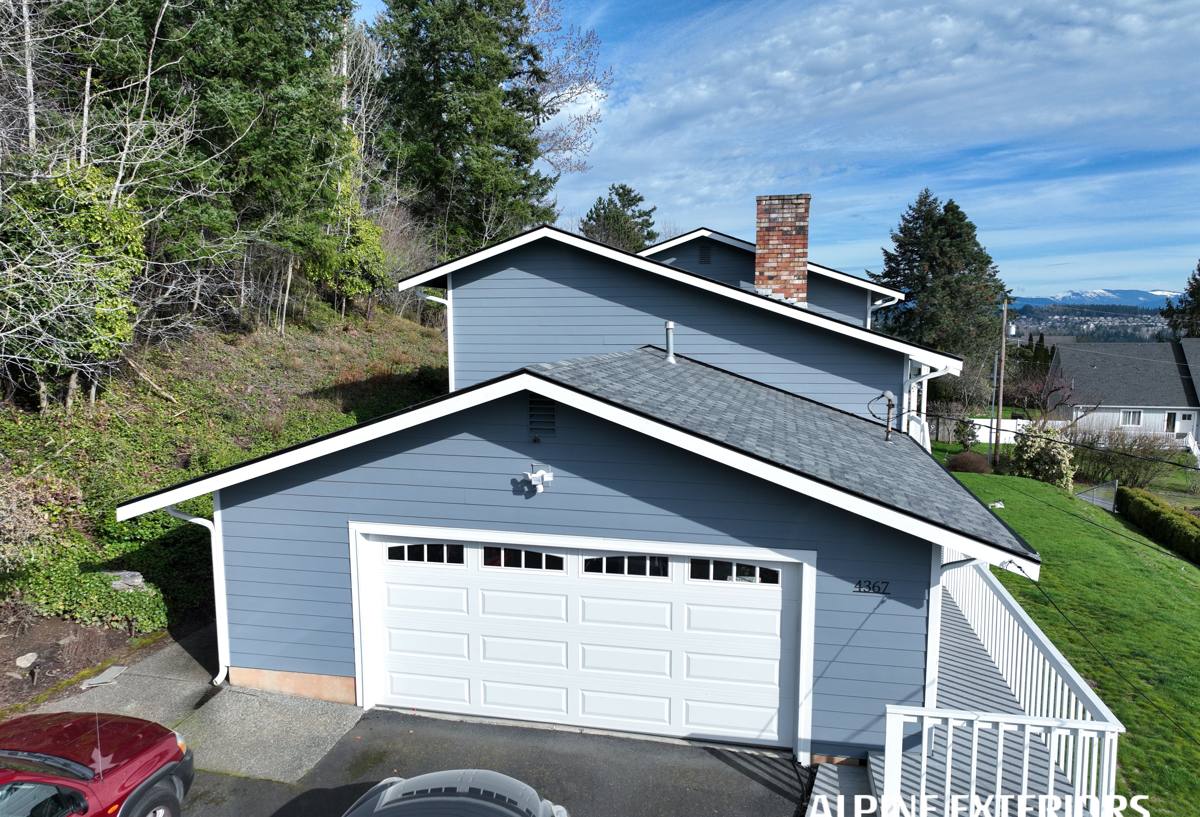
What Salt Air, Driving Rain, and Moss Season Do to a Roof
Salt Air and Coastal Exposure
Homes closer to the water deal with a fine layer of salt-bearing moisture settling on every exterior surface, roofs included. Over years, that accelerates corrosion on unprotected metal edges, exposed fasteners, and lower-grade coatings. It's not usually dramatic — it shows up as premature rust streaking at cut edges, screw heads, and flashing seams long before the panel field itself fails. The fix isn't a thicker panel, it's the right coating system and fastener hardware for a coastal-influenced climate.
Driving Rain and Wind-Driven Water
Whatcom County storms frequently push rain sideways rather than straight down, which means water gets tested at every seam, lap, and penetration on a roof, not just the open field. A roof that would shed water fine in a calmer climate can leak at a poorly lapped flashing or an under-sealed penetration once wind-driven rain gets involved. This is where installation quality matters more than the brand name on the panel.
Moss and Organic Growth
Extended damp, shaded stretches of the year give moss and algae plenty of time to establish, especially on north-facing slopes and under tree cover, both of which are common around Bellingham. Moss holds moisture against a roof surface and, on old shingle roofs, works its way under tabs and lifts them over time. Metal roofing doesn't give moss the same foothold, but valleys, ribs, and low-slope transitions can still collect debris and organic buildup if the roof geometry and gutter system aren't set up to shed it.
Metal Roofing Systems That Make Sense Here
Not every metal roofing product is a good fit for this climate, and not every home needs the most expensive option on the market. Here's how the common systems compare for a Bellingham property:
| System | How It's Fastened | Best Fit | Trade-Offs |
|---|---|---|---|
| Standing seam | Concealed clips, no exposed fasteners | Homes wanting the longest service life and cleanest look, especially closer to the water | Higher material and labor cost; needs an experienced crew to seam and flash correctly |
| Exposed-fastener panel (corrugated/ribbed) | Screws through the panel face into the deck or purlins | Budget-conscious projects, outbuildings, shops, some simpler roof shapes | Fasteners and washers wear over time and need periodic inspection, especially in salt air |
| Stone-coated steel | Concealed and lapped, mimics shingle or tile profile | Homeowners who want a metal roof's durability with a more traditional look | More seams and profile detail means installation accuracy matters even more |
We'll walk you through which of these actually fits your roof's slope, exposure, and budget rather than pushing whichever system carries the best margin. On a lot of Bellingham homes, a well-installed exposed-fastener or stone-coated system is the right call — standing seam isn't automatically "better" for every roof.
What a Correct Metal Roofing Installation Actually Involves
Metal roofing is unforgiving of shortcuts in a way asphalt shingles sometimes aren't — a shingle roof can hide a mediocre detail for a while, but a metal roof will usually show a bad flashing lap or wrong fastener within a season or two of real weather. A correct install in this climate includes:
- Full synthetic underlayment across the deck, with self-adhered ice-and-water membrane at eaves, valleys, and any low-slope transitions
- Closed or vented ridge detailing appropriate to the panel profile, so attic moisture actually gets out instead of condensing under the metal
- Corrosion-appropriate fasteners and flashing metal matched to the panel material, not mixed metals that can react with each other over time
- Proper panel overlap and end-lap sealant at every horizontal joint, since this is where wind-driven rain gets tested hardest
- Room for thermal expansion and contraction built into the fastening pattern, especially on longer panel runs
- Kickout flashing and step flashing at every wall and chimney intersection, tied correctly into the water-resistive barrier below
Skipping any one of these doesn't usually cause an immediate problem. It shows up two, five, or ten years later as a leak that's traced back to a detail that should have taken an extra twenty minutes to do right.
What Drives the Cost of a Metal Roof in Bellingham
| Factor | Why It Matters |
|---|---|
| Tear-off vs. overlay | Removing old roofing and inspecting the deck costs more upfront but avoids trapping moisture or damage under the new roof |
| Roof complexity | Valleys, dormers, and multiple slopes mean more flashing labor and material waste, which adds cost beyond simple square footage |
| Panel and coating grade | Coastal exposure justifies spending more on coating quality; it's cheaper than repainting or replacing fasteners early |
| Deck condition | Rot or sagging discovered during tear-off needs repair before any panel goes down — this is the most common source of surprise cost on older Whatcom County homes |
| Ventilation upgrades | Older attics often need improved intake or exhaust ventilation to perform correctly under a new roof system |
We give a written estimate that separates these line items so you can see exactly what you're paying for, rather than one lump number. If we find deck damage once tear-off starts, we stop and talk to you before proceeding — no surprise change orders after the fact.
How Our Process Works
1. On-Site Inspection
We look at the existing roof, attic ventilation, and any trouble spots you've noticed — staining, drafts, past leaks — before recommending a system.
2. Written Estimate
You get a clear breakdown of panel choice, tear-off scope, flashing detail, and timeline. No pressure to sign on the spot.
3. Tear-Off and Deck Check
Old roofing comes off and the deck gets inspected before anything new goes down. Any rot or damage gets addressed and documented.
4. Underlayment and Flashing
This is the stage that determines whether the roof actually performs in wind-driven rain — it happens before a single panel is visible, and it's the part worth asking your contractor about directly.
5. Panel Installation
Panels go down to manufacturer spec with the fastening pattern and expansion allowance appropriate to the run length and local wind exposure.
6. Final Walkthrough
We go over the finished roof with you, including what maintenance (if any) it needs going forward.
Maintaining a Metal Roof Through Whatcom County's Moss Season
One of the real advantages of metal roofing here is how little seasonal maintenance it needs compared to shingles, but "little" isn't "none." A short annual checklist keeps a correctly installed metal roof performing for the long haul:
- Clear gutters and valleys of needles and leaf debris before the fall rains set in
- Trim back overhanging branches that keep a section of roof shaded and damp longer than the rest
- Do a visual check of fastener heads and flashing laps every year or two, especially on exposed-fastener systems
- Rinse off any accumulated organic buildup in shaded valleys rather than letting it sit season after season
- Watch for any granular rust discoloration at cut edges or fasteners, which is worth addressing early rather than later
Why Hiring a Crew That Already Works Bellingham Matters
Metal roofing manufacturers publish installation specs, but those specs assume a generic climate. The judgment calls — how much ice-and-water membrane to run at a valley, which fastener coating to spec for a home three blocks from the water, how to detail a low-slope dormer that catches wind-driven rain — come from having actually worked on roofs in this specific stretch of Whatcom County. We're not learning Bellingham's weather patterns on your project; we've already priced, flashed, and finished roofs dealing with the same salt air, rain angles, and moss pressure your home faces every winter.
If you're weighing a metal roof for a Bellingham property, we're happy to walk your roof, answer honest questions about what it will and won't need, and put together a written estimate with no pressure attached. The form below gets you a straightforward, no-cost assessment to start from.