 Birch Bay Siding
 Building New in Ferndale? The Windows Deserve as Much Attention as the Framing
Ferndale sits in the part of Whatcom County where marine air off the Salish Sea meets river-bottom moisture from the Nooksack lowlands. That combination means new homes here take on a steady diet of wind-driven rain, salt-tinged humidity, and long stretches of gray, damp weather where moss and mildew have every opportunity to take hold. When a house is going up from the studs out, the window installation is one of the few chances to get this right before siding, trim, and interior finishes cover up the details. Get it wrong at this stage and you're not looking at a small fix later — you're looking at torn-out siding, rotted sheathing, and a warranty headache.
We install new-construction windows on homes throughout Whatcom County, including a steady run of work in and around Ferndale. This page is about that specific job: what the local climate asks of a new window opening, what a correct install actually involves, and why it matters to hire a crew that already knows how Ferndale weather behaves against a house.
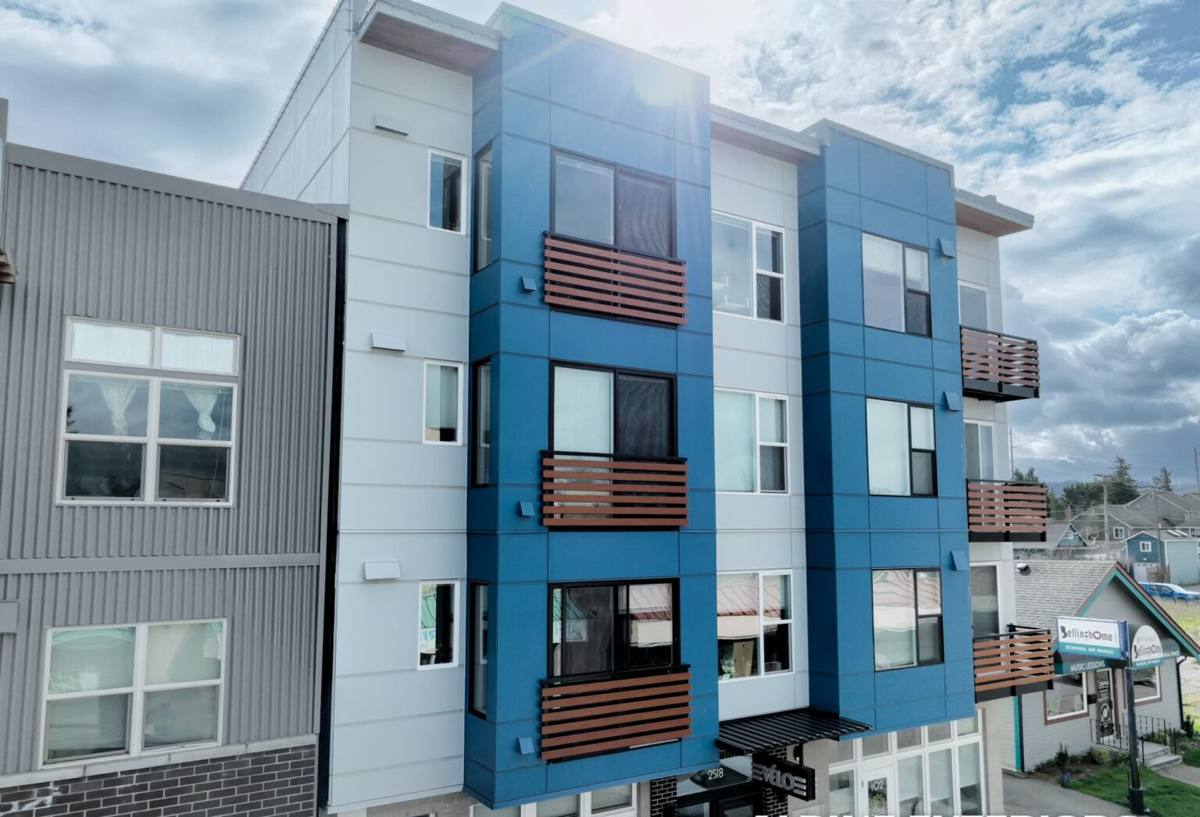
What "New-Construction" Windows Actually Means
New-construction windows are built with a nailing flange (fin) around the perimeter of the frame. That flange gets fastened directly to the wall sheathing and then integrated into the home's weather-resistive barrier — house wrap, flashing tape, and pan flashing — before siding goes on. This is different from a replacement window, which is designed to drop into an existing, already-finished opening without disturbing the exterior cladding.
Because a new-construction window is installed before the house is weathered in, it gives us full access to the rough opening, the sheathing, and the flashing details. Done correctly, this is actually the strongest, most weathertight way to install a window — but only if every layer is sequenced correctly. Skip a step, and the flange itself becomes the thing that channels water into the wall instead of keeping it out.
Why This Stage Gets Rushed on New Builds
On a lot of new construction schedules, window installation happens during a busy stretch — framers are wrapping up, siding crews want the walls ready, and the general schedule is pushing forward. Windows can end up installed quickly, with flashing details treated as an afterthought instead of the actual weatherproofing system they are. We build our process around getting this stage right the first time, since it's far cheaper to do it correctly during framing than to fix it after the home is sided and trimmed.
What Ferndale's Climate Actually Demands From a Window Install
Three things define window performance requirements in this part of Whatcom County:
- Driving rain: Storms here regularly come in sideways off the water, pushing rain against window heads and sills at an angle rather than straight down. Flashing has to be built to shed water that's moving horizontally, not just vertically.
- Persistent moisture and moss season: Long stretches of overcast, damp weather mean anything that traps water — a poorly lapped flashing detail, a missing weep path, caulk used in place of proper flashing — stays wet far longer than it would in a drier climate. That's exactly the environment moss, algae, and wood rot need to establish themselves.
- Salt-influenced air: Proximity to the Salish Sea means the air carries more salt content than you'd find well inland. Over years, this accelerates corrosion on hardware, fasteners, and lower-grade cladding finishes if they weren't chosen with that exposure in mind.
None of this means Ferndale needs exotic materials or a radically different window. It means ordinary details — pan flashing, flange integration, sealant placement, fastener choice — have to be executed correctly every time, because the climate here doesn't forgive shortcuts the way a drier region might.
Getting the Rough Opening and Flashing Right
This is the part of the job that never shows once the house is finished — and the part that determines whether the window performs for the next 20-plus years. Our sequence on a new-construction opening generally follows this order:
- Confirm the rough opening is square, level, and sized correctly for the window unit before it ever goes in — a common source of long-term air and water leaks is an opening that was framed slightly out of tolerance.
- Install a sloped sill pan so any water that gets past the window is directed back outside the wall assembly, not down into the framing.
- Set the window and fasten the nailing flange per the manufacturer's schedule — proper fastener spacing matters for both structural performance and warranty compliance.
- Flash the sides and head using a shingle-lap sequence (bottom to top, side-then-head) so every layer overlaps the one below it, the way roofing shingles do.
- Seal and tape all seams with a flashing product rated for the temperature range and UV exposure it will see before siding covers it.
- Check the operation of the window — square, plumb, and free of racking — before final fastening, since a slightly twisted frame will bind, leak, or fail prematurely.
Each of those steps sounds simple in a list. In practice, driving rain and salt air are exactly the conditions that expose whichever one got skipped.
Choosing Materials That Hold Up in This Climate
Homeowners often come to us focused on the glass package, but frame material and hardware quality matter just as much for long-term performance in a marine climate. Here's how the common options generally compare for a new build in this area:
| Frame Material | Moisture Behavior | Maintenance | Typical Fit for Ferndale |
|---|---|---|---|
| Vinyl | Won't rot; seams and welds are the main long-term watch point | Low — occasional cleaning | Solid, budget-friendly choice for most new builds |
| Fiberglass | Very stable in wet/dry cycling; minimal expansion or contraction | Low | Strong option where the wall assembly sees frequent moisture cycling |
| Wood-clad | Interior wood needs protection from any moisture intrusion at the cladding seams | Higher — cladding and seals need periodic inspection | Works well when detailing and upkeep are prioritized; appearance-driven choice |
| Aluminum | Prone to condensation and corrosion without thermal breaks | Moderate | We use it selectively, mainly with thermally broken products |
We don't push homeowners toward one brand or material across the board — the right choice depends on budget, the home's design, and how much upkeep the owner wants to take on. What we do insist on is hardware and fasteners rated for coastal or marine exposure, since standard interior-grade hardware corrodes faster than it should this close to the water.
Energy Performance and Washington Code Requirements
New construction in Washington has to meet the Washington State Energy Code, which sets minimum performance targets for window U-factor (how well the window resists heat loss) and, in some cases, solar heat gain coefficient. Every window we install carries an NFRC label documenting its rated performance, and we confirm those ratings meet or exceed what's required for the project before it ever goes in the wall.
Beyond the code minimum, a window's real-world performance in this climate also depends on installation quality — a well-rated window installed with gaps in the flashing or insulation will underperform a mid-grade window installed correctly. We treat the U-factor number as one input, not the whole story.
Our New-Construction Window Process
For a Ferndale build, our process generally runs:
- Review the plans and rough openings with the builder or homeowner before framing is finalized, so sizing and swing direction are confirmed early.
- Order windows to match the confirmed schedule, verifying U-factor and sizing against the plans.
- Install using the sequenced flashing method described above, on every opening — no shortcuts based on which wall gets the most weather exposure.
- Document the install with photos of the flashing before it's covered, so there's a record behind the wall if it's ever needed.
- Walk every window with the builder or homeowner before we consider the job finished — checking operation, seals, and trim fit.
Mistakes We Commonly Correct or Prevent on New Builds
Most window problems we get called out to inspect on newer homes trace back to a handful of recurring issues:
- Caulk used as a substitute for proper flashing tape or pan flashing — caulk fails long before flashing does, especially with the UV and temperature swings this region sees.
- Reverse-lapped flashing (head flashing tucked under the side flashing instead of over it), which channels water into the wall instead of away from it.
- Missing or undersized sill pans, especially on lower-floor windows that see the most splash-back from ground-level rain.
- Fasteners driven through the flange at the wrong spacing or angle, which can void manufacturer warranties and compromise structural performance in wind events.
- Standard-grade hardware and screws used where marine-rated fasteners should have been specified.
Why Hiring a Crew That Already Works in Ferndale Matters
Building code minimums are the same across Whatcom County, but the practical judgment calls — how aggressive to be with flashing on a west-facing wall, which sill details hold up best against driving rain, how much margin to build in for moss and mildew exposure — come from having actually installed windows in this specific weather pattern, not just a general marine climate. A crew that regularly works Ferndale and the surrounding Birch Bay area has already seen which details hold up over years here and which ones come back as callbacks. That's not something a manufacturer's install manual alone can tell you.
It also matters for coordination. New-construction window installation touches the builder's framing schedule, the siding crew's timeline, and sometimes the homeowner's own decisions on trim and finish. A crew familiar with how Whatcom County builds typically sequence these stages tends to keep the project moving without the gaps in scheduling that lead to windows sitting exposed to weather longer than they should.
Keeping New Windows Performing After Move-In
A correct install sets the window up to last, but a little homeowner attention keeps it performing at its best through Whatcom County's wet seasons:
- Rinse frames and glass periodically to clear salt residue and organic buildup before it etches finishes or feeds moss growth on nearby trim.
- Check exterior caulking lines at trim (not the flashing itself) annually, since surface caulk is a maintenance item even when the flashing behind it is sound.
- Keep gutters and downspouts clear so roof runoff isn't sheeting down across window heads.
- Operate hardware seasonally — locks and hinges that sit unused can seize or corrode faster in salt-influenced air.
- Watch for soft trim or bubbling paint near window corners, an early sign of moisture getting behind the finish rather than shedding off it.
If you're framing a new home or addition in Ferndale and want windows installed the way this climate actually requires, we're happy to walk the plans with you and put together a straightforward, no-pressure estimate — just fill out the form below.