 Birch Bay Siding
 Roofing Built for the Terrell Creek Environment
Homes along Terrell Creek and the surrounding Birch Bay area sit in one of the more demanding roofing environments in Whatcom County. You've got salt-laden air rolling in off the water, wind-driven rain that finds its way under poorly sealed roofing, and a wet season that stretches long enough for moss to take hold and stay established. A roof that would perform fine forty miles inland can fail early out here if it wasn't installed with this specific climate in mind. We install new roofs for homeowners in this area regularly, and the details we pay attention to are shaped by what actually goes wrong with roofs near Terrell Creek — not a generic checklist.
This page covers what a correctly installed roof needs to hold up here, what our installation process looks like from tear-off to final inspection, and what to think about when you're choosing materials and a contractor for a new roof in this specific neighborhood.
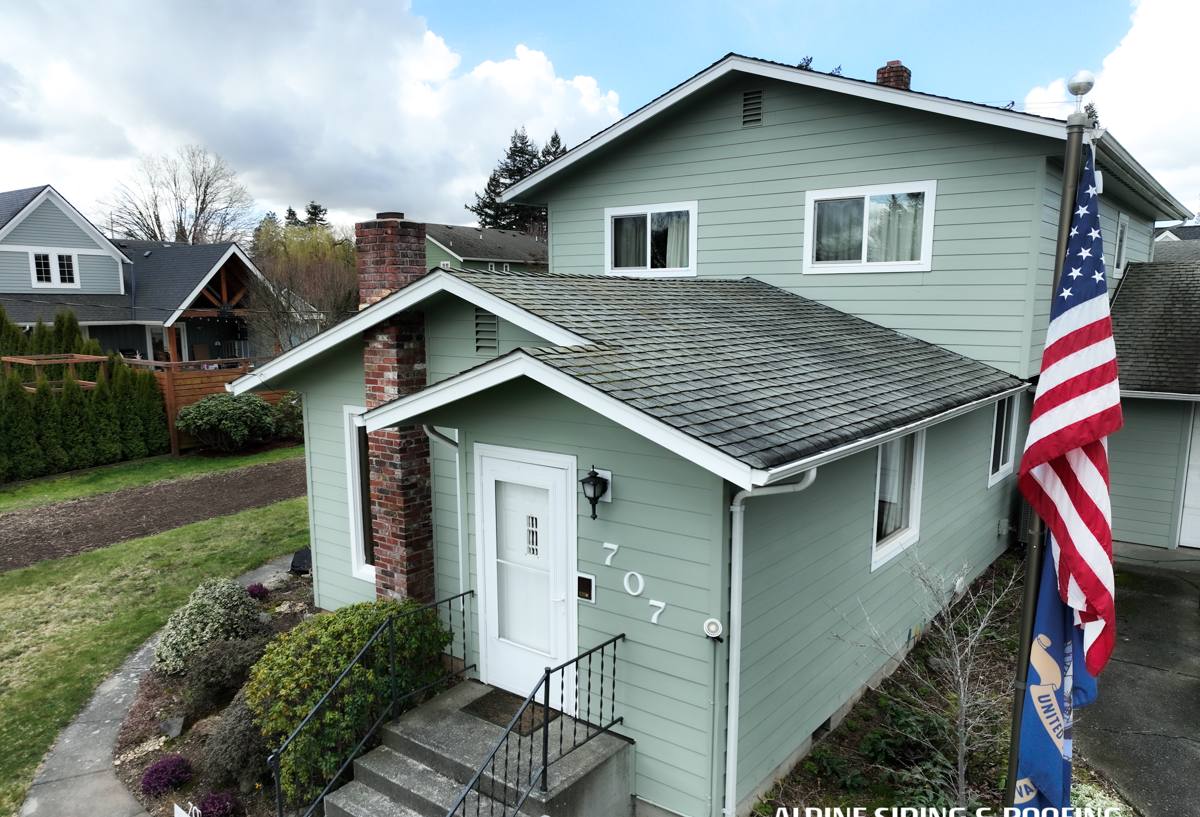
What Salt Air, Rain, and Moss Actually Do to a Roof
Salt Air and Metal Fatigue
Airborne salt from Birch Bay doesn't just affect siding and window frames — it accelerates corrosion on any exposed metal on a roof system: flashing, fasteners, vent caps, and gutter hardware. Standard galvanized fasteners can start showing rust streaks well before their expected service life in a coastal-influenced zone like this. That's why fastener and flashing material choice matters more here than it would on a roof twenty miles east.
Wind-Driven Rain
Rain in this part of Whatcom County rarely falls straight down. Storms off the water push rain sideways, which means it gets driven up under shingle tabs, around chimney flashing, and into any gap in the underlayment that a calmer climate could get away with ignoring. A roof here needs to be detailed as if every seam will see wind-driven water at some point, because it will.
Moss and Sustained Moisture
Birch Bay's wet season runs long, and shaded, north-facing roof slopes near tree cover — common on lots near Terrell Creek — stay damp for extended stretches. That moisture holds moss spores in place and gives them time to establish. Once moss roots into a shingle mat, it lifts the tabs, traps water underneath, and shortens the life of the roofing material significantly faster than sun exposure or age alone would.
What a Correctly Installed New Roof Actually Includes
A new roof is more than shingles nailed to plywood. The parts you don't see are what determine whether the roof performs for its full expected lifespan in this climate.
Underlayment and Water Barrier
We install a synthetic underlayment rated for high wind and moisture exposure across the full roof deck, with self-adhering ice-and-water barrier at eaves, valleys, and any roof-to-wall transition — the spots where wind-driven rain is most likely to intrude.
Flashing Details
Chimneys, skylights, vent pipes, and wall intersections all get step flashing and counter-flashing sized and lapped correctly for water to shed outward, not just laid flat and caulked. Caulk is a backup, not the primary seal — flashing geometry is what actually keeps water out over time.
Fastening for Wind Exposure
Shingles get nailed per manufacturer spec for the wind zone, not the minimum pattern. Homes with more open exposure toward the water get the higher fastener count the manufacturer allows for, which also keeps the warranty intact.
Ventilation
Balanced intake and exhaust ventilation keeps the attic dry and temperature-regulated, which reduces condensation on the underside of the roof deck and slows moss growth from the inside out — more on that below.
Comparing Roofing Materials for This Climate
There's no single "best" roofing material — the right choice depends on your roof's exposure, slope, budget, and how much maintenance you're willing to keep up with. Here's how the common options stack up for a home near Terrell Creek specifically.
| Material | Moss Resistance | Wind/Rain Performance | Typical Lifespan | Relative Cost |
|---|---|---|---|---|
| Architectural asphalt shingle | Moderate — benefits from zinc/copper strips | Good with proper fastening | 25–30 years | $ |
| 3-tab asphalt shingle | Lower — thinner mat holds moss more readily | Fair, more wind-vulnerable | 15–20 years | $ |
| Standing seam metal | High — moss struggles to root on smooth panel | Excellent, strong wind rating | 40–50+ years | $$$ |
| Synthetic/composite shake | Moderate to high | Good | 30–40 years | $$ |
We're honest with homeowners about trade-offs rather than pushing one product. Architectural shingles remain the most common and cost-effective choice for Terrell Creek homes and perform well when installed with the right underlayment and flashing details. Metal costs more upfront but sheds moss and handles wind-driven rain better than any other option, which is worth considering on north-facing or heavily shaded roof planes where moss has been a repeat problem.
Our New Roof Installation Process
- On-site assessment: we inspect the existing roof deck, ventilation, flashing points, and any moss or moisture damage before quoting anything.
- Material selection: we walk through options based on your roof's exposure and your budget — no pressure toward the most expensive product.
- Tear-off and deck inspection: old roofing is removed down to the deck so we can check for soft spots, rot, or prior water damage that needs repair before new roofing goes on.
- Underlayment and flashing installation: ice-and-water barrier, synthetic underlayment, and all flashing go in per the details above.
- Roofing material installation: shingles, metal panels, or shakes installed per manufacturer spec and local wind exposure.
- Ventilation check: intake and exhaust venting confirmed balanced for the attic size.
- Final walkthrough: we go over the finished roof with you, including care and maintenance specific to your material and roof layout.
Ventilation and Moss Prevention on a New Roof
A new roof is the best time to correct ventilation problems, because the deck and vents are fully exposed during installation. Poor attic ventilation lets warm, moist air condense against the underside of the roof deck, which keeps shingles damp from below even when the outside surface is dry. That trapped moisture is a major contributor to moss and premature shingle failure — arguably as much as rain exposure from outside.
On new installations, we also offer zinc or copper strip options near the ridge on shaded roof planes. These metals release trace ions when it rains that inhibit moss and algae growth on the shingle surface below them. It's not a substitute for good ventilation and drainage, but it's a useful extra layer on roofs that have had a persistent moss problem in the past.
Signs a Terrell Creek Roof May Need Replacing, Not Patching
Not every roof problem calls for full replacement, but these signs usually mean patching won't hold for long in this climate:
- Granule loss heavy enough that shingles look patchy or bald in spots
- Moss established across large sections rather than a light surface dusting
- Shingle edges curling, cupping, or lifting at the tabs
- Daylight visible through the attic roof deck, or damp insulation below it
- Repeated leaks around the same chimney, vent, or valley despite past patch repairs
- Roof is approaching or past the expected lifespan for its material
- Visible sagging along the ridge or roof plane
If you're seeing one or two of these, a targeted repair might still make sense. If several apply at once, a new roof is usually the more cost-effective path — repeated patch repairs on a roof that's failing broadly tend to add up to more than a full replacement over a few years.
Permits, Timeline, and What to Expect
Most residential re-roofing projects in Whatcom County require a building permit, and we handle that process as part of the job rather than leaving it to the homeowner. Timeline depends on roof size, material, and current weather, but a typical single-family home re-roof runs a few days of active work once material is on site — we schedule around Birch Bay's wetter stretches where possible to avoid an exposed deck sitting under an open sky longer than necessary.
We also account for site access and disposal in the quote up front, so there aren't surprise charges once tear-off starts. If the deck inspection turns up rot or damage once old roofing is removed, we'll show it to you directly and get approval before any additional repair work begins.
Why Working With a Crew That Already Knows Terrell Creek Matters
A roofing crew that mainly works drier, inland areas doesn't have the same working knowledge of how salt exposure, wind-driven rain, and long moss seasons interact on a roof over time. We work on homes throughout Birch Bay and the surrounding Whatcom County shoreline regularly, which means we're not guessing at flashing details or fastener specs for this exposure — we're applying what consistently holds up on roofs in this specific area. That translates into fewer callbacks, fewer surprise leaks in year three or four, and a roof that's actually sized to the climate it has to survive, not a generic install.
If you're weighing a repair against a full replacement, or you just want a straight assessment of what your current roof needs, we're happy to take a look. Request a free, no-pressure estimate using the form below, and we'll walk your roof and give you an honest read on what it actually needs.