 Birch Bay Siding
 Asphalt Shingle Roofing for Nooksack Homes
Nooksack sits inland from Birch Bay but shares the same Whatcom County weather pattern that wears down roofs faster than homeowners expect: long stretches of steady rain, damp air that never fully dries out between storms, and shaded rooflines that stay wet longer than they should. Asphalt shingle roofing remains the most practical choice for most homes here because it's proven, repairable, and reasonably priced — but only when it's installed and maintained with this climate in mind. A shingle roof put on the same way you'd do it in a dry inland state will not hold up the same way here.
This page covers what asphalt shingle roofing work actually involves for a Nooksack home, what tends to go wrong when it's done without local knowledge, and how we approach the job so it lasts.
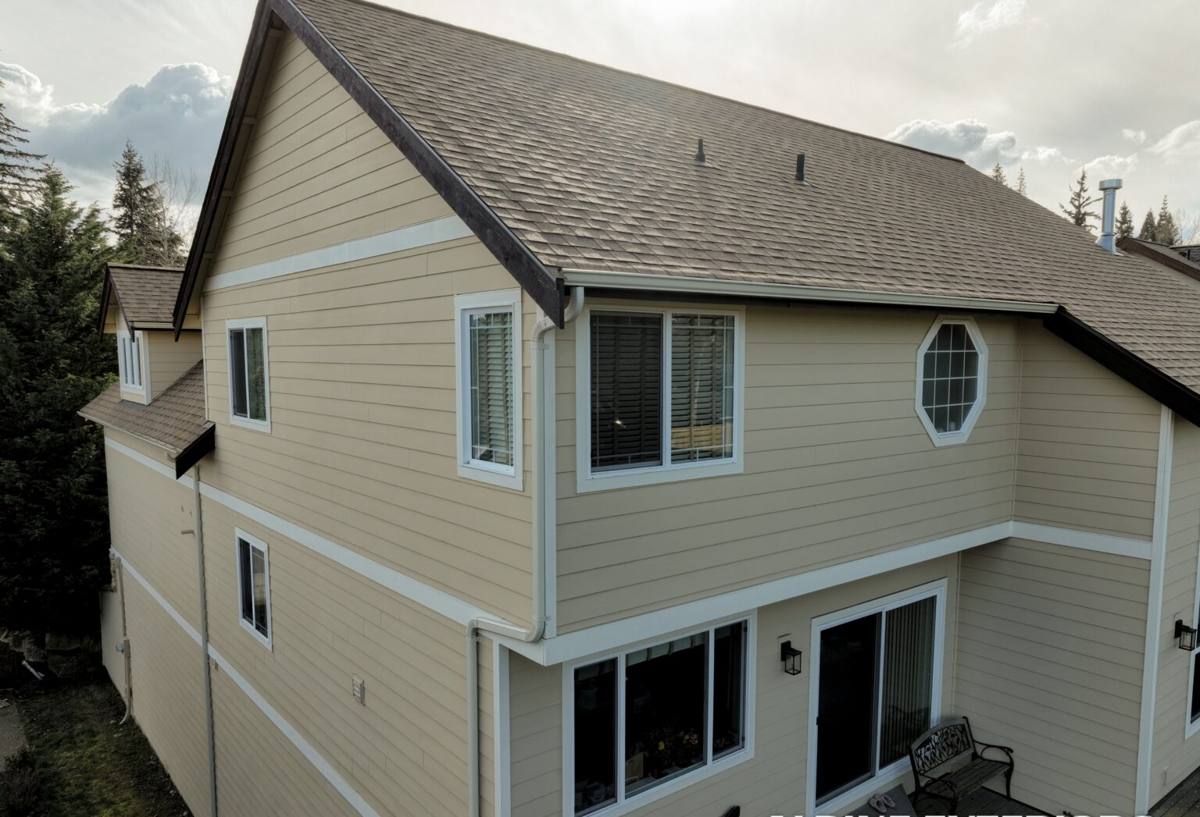
What Nooksack's Climate Does to a Roof
Whatcom County's weather is defined by moisture, not extremes. That distinction matters for roofing more than most homeowners realize.
- Long moss season: Shaded roof planes, especially on the north and east sides of a house, can stay damp for months at a stretch. Moss and algae get a foothold in valleys, behind chimneys, and under overhanging branches.
- Driving rain: Wind-driven rain doesn't just fall straight down — it pushes up under shingle tabs and around flashing details that weren't sealed with that in mind.
- Repeated wet-dry cycling: Even without freezing temperatures, shingles that stay saturated and then dry out over and over lose granules faster and can curl at the edges years before their rated lifespan.
- Debris load: Conifers and maples common in this area drop needles and leaves that clog valleys and gutters, holding water against the shingle surface.
None of this means asphalt shingles are a poor fit for Nooksack — it means the installation details and the maintenance schedule need to account for moisture that lingers rather than moisture that comes and goes quickly.
What a Correct Asphalt Shingle Job Looks Like Here
Underlayment and Ice-and-Water Protection
In a climate this wet, the underlayment matters as much as the shingle brand. We use synthetic underlayment across the full roof deck and install self-adhered ice-and-water membrane at the vulnerable spots — eaves, valleys, and around every penetration — so that if wind-driven rain does get past the shingles, it doesn't reach the deck.
Flashing Done Right
Most roof leaks in this region trace back to flashing, not the shingles themselves. Step flashing at wall intersections, properly lapped valley flashing, and correctly sealed pipe boots are what actually keep a roof dry through a wet Whatcom County winter. We flash to shed water in every direction the wind can push it from, not just straight down.
Ventilation That Matches the Climate
A roof deck that can't breathe traps moisture from inside the house against the underside of the sheathing, which leads to rot and shortens shingle life from below. Balanced intake and exhaust ventilation is part of every reroof we do, not an upsell.
Nail Pattern and Fastening
Underdriven or overdriven nails are a common cause of early shingle failure and warranty denial. We follow the manufacturer's fastening pattern and nail placement exactly, because a shingle that's fastened wrong will fail wrong — usually in the next windstorm.
Choosing the Right Shingle for a Nooksack Roof
Not every asphalt shingle product is built the same, and the differences matter more here than in a dry climate.
| Shingle Type | Typical Lifespan | How It Performs in Wet, Mossy Conditions |
|---|---|---|
| 3-tab asphalt | 15–20 years | Lowest cost, but thinner profile sheds moss and algae protection faster; usually the first to show granule loss |
| Architectural (laminated) asphalt | 25–30 years | Heavier, more wind resistance, better algae-resistant granule options — our most common recommendation locally |
| Algae-resistant (AR) shingles | Same as base product | Copper- or zinc-infused granules slow moss and algae growth on shaded, damp roof planes — worth the small upcharge here |
| Impact-rated shingles | Same to slightly longer | Not a major factor for Whatcom County storms, but adds durability against falling branches from mature trees |
For most Nooksack homes, we recommend a mid-to-upper-tier architectural shingle with algae-resistant granules. It costs more upfront than 3-tab, but given how much moss pressure this area sees, it holds its appearance and performance far longer — which matters more here than in a drier climate where that upgrade is purely cosmetic.
Signs a Nooksack Roof Needs Attention
- Moss visibly growing on shingles, not just in the gutters
- Granules collecting in downspouts or at the base of gutters
- Shingles that look curled, cupped, or are missing tabs after a windstorm
- Dark streaking across the roof plane, especially on shaded sides
- Soft spots or sagging noticeable from the ground
- Daylight or water staining visible in the attic
- A roof approaching or past 20 years old with the original shingles
Catching these early usually means a repair. Waiting on them usually means a full reroof, because sustained moisture intrusion damages the deck underneath, not just the shingles on top.
Repair, Partial Reroof, or Full Replacement
Not every roofing issue on a Nooksack home requires tearing the whole roof off. We assess honestly and lay out the real options:
Repair
Makes sense for isolated damage — a section of missing shingles after a storm, a single failed flashing detail, or a localized leak — on a roof that's otherwise in reasonable shape and not near the end of its service life.
Partial Reroof
Sometimes one slope takes the brunt of the weather (typically the side facing prevailing wind and rain) and wears out well before the rest of the roof. Where the shingle line and age allow for a clean match, replacing that section alone can be the right call.
Full Replacement
Once a roof is showing widespread granule loss, multiple leak points, or deck damage, patching becomes a short-term fix that costs more over time than doing the job once, correctly. This is also the point where upgrading underlayment, flashing, and ventilation to current standards makes the most sense.
We'll tell you which category your roof falls into and why — including when a repair is genuinely the better financial decision, even if it's the smaller job.
How We Approach the Work
- On-site assessment: We inspect the roof deck, existing flashing, ventilation, and shingle condition in person before recommending anything.
- Clear scope and written estimate: You'll know exactly what's being replaced, what underlayment and flashing details are included, and what it costs before work begins.
- Tear-off and deck inspection: Old material comes off down to the deck so we can check for rot or soft spots that need to be addressed before new shingles go on — this is where hidden moisture damage gets found and fixed, not covered up.
- Installation to manufacturer spec: Underlayment, ice-and-water membrane, flashing, proper nailing pattern, and ventilation, in that order.
- Final walkthrough: We go over the finished roof with you, including gutter and downspout condition, before calling the job complete.
Why a Locally Experienced Crew Matters in Nooksack
Roofing crews that mainly work drier regions sometimes underbuild for what this area actually throws at a roof — lighter underlayment, minimal ice-and-water coverage, or ventilation that's adequate on paper but not for a climate where moisture is a near-constant presence rather than an occasional event. A crew that already works Whatcom County knows which roof details cause problems here specifically, and builds for that from the start rather than learning it from a callback.
We're also familiar with the practical side of working in this area — permitting expectations, typical roof pitches and access on homes in and around Nooksack and Birch Bay, and how to schedule around the wetter months so the job isn't rushed between rain systems.
Maintaining an Asphalt Shingle Roof in This Climate
- Keep gutters and valleys clear of needles and leaves, especially heading into fall and winter
- Have moss treated or gently removed before it works under shingle tabs — never pressure-washed, which strips granules
- Trim back overhanging branches to reduce shade and debris on north- and east-facing slopes
- Schedule a visual inspection every couple of years, or after any major windstorm
- Address small leaks or missing shingles promptly rather than waiting for the next dry stretch
A little consistent maintenance goes further here than in drier climates, simply because the window for a small problem to become a bigger one is shorter when the roof rarely gets a chance to fully dry out.
If your roof is showing moss, granule loss, or you're just not sure what condition it's really in, we're happy to take a look. Fill out the form below for a free, no-pressure estimate — we'll give you a straight answer about what your roof needs, whether that's a repair, a partial reroof, or a full replacement.