 Birch Bay Siding
 Custom Decks Built for Nooksack's Weather, Not Just Nooksack's Views
A deck in Nooksack has to earn its keep in ways a deck in a drier climate never has to think about. Between the rain that settles in for months at a time, the humidity that never fully lifts off the Nooksack River valley, and the moss that will colonize any surface that stays damp long enough, a custom deck out here is as much a moisture-management project as it is a carpentry project. We build decks for homeowners throughout Whatcom County, and Nooksack properties get the same attention to drainage, fasteners, and material choice as everything closer to the water — because inland doesn't mean dry, it just means the problems show up a little differently.
This page is about what a custom deck actually needs to hold up in this specific area, what a correctly built one involves, and how we approach the work from first visit to final walkthrough.
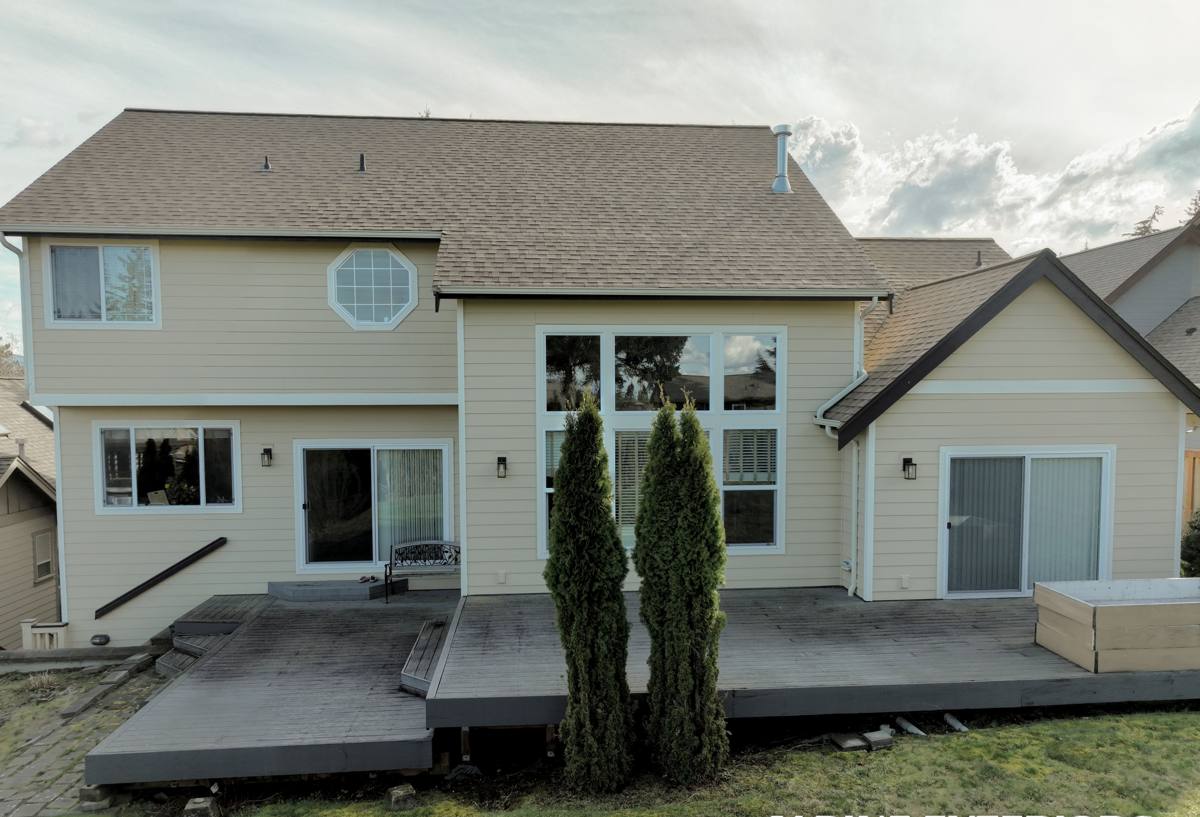
What Nooksack's Climate Actually Does to a Deck
Nooksack sits inland from Birch Bay, but it's still squarely inside the same wet, marine-influenced weather pattern that defines Whatcom County. A few things about the local environment matter more than most homeowners expect when they're planning a deck:
Persistent moisture and shade
Long stretches of overcast, drizzly weather mean deck surfaces often don't get a real chance to dry out between rain events, especially on the north or east side of a house, or under mature trees. That standing dampness is exactly what moss, algae, and mildew need to take hold, and it's what slowly breaks down decking that wasn't properly sealed, gapped, or ventilated underneath.
Outflow winds and temperature swings
The Nooksack area, sitting near the Sumas Gap, is known locally for cold outflow winds that funnel down from the Fraser Valley in winter. Those cold snaps, combined with the region's damp air, mean occasional freeze-thaw cycles even though hard freezes aren't the norm here. Wood that's holding moisture when a freeze hits is more prone to checking and fastener pop than wood that was detailed to shed water in the first place.
Moss season is a long season
In this part of Whatcom County, moss isn't a once-a-year cleaning chore — it's closer to a year-round condition that ramps up hard in fall and winter. A deck that isn't designed with airflow and drainage in mind will start growing moss in board gaps and low spots well before most homeowners think to look for it.
Choosing a Decking Material That Matches This Climate
There's no single "best" decking material — there's the material that fits your budget, your maintenance appetite, and how much the site is exposed to shade and moisture. Here's how the common options actually compare for a Nooksack property:
| Material | Moisture Behavior | Maintenance | Typical Lifespan |
|---|---|---|---|
| Pressure-treated wood | Absorbs and releases moisture; needs sealing to control checking/cupping | Annual cleaning, re-seal every 1-3 years | 15-20 years with upkeep |
| Cedar | Naturally rot- and insect-resistant, but still moisture-sensitive without finish | Cleaning plus re-oiling or sealing regularly | 15-25 years with upkeep |
| Composite decking | Won't rot, but can hold surface moisture and grow moss/mildew if not cleaned | Periodic washing, no sealing required | 25-30+ years |
| PVC/capped composite | Fully moisture-resistant surface, sheds water well | Occasional washing | 25-30+ years |
Wood is still the right call for a lot of homeowners here — it's less expensive up front and has a look composite can't fully replicate. But we're honest about the trade-off: wood in this climate is a material you maintain, not one you install and forget. Composite and PVC cost more initially but take the sealing and re-staining cycle off your plate, which matters if the deck sits in heavy shade where wood struggles to dry.
What a Correctly Built Deck Actually Involves
The parts of a deck that fail first in this climate are almost never the visible decking boards — they're the structural and moisture-management details underneath that nobody sees until something goes wrong. A deck built correctly for Nooksack conditions includes:
Footings set below frost depth
Footings that aren't set deep enough can heave slightly during a freeze-thaw cycle, which over time throws the whole structure out of level. We size and set footings to local code requirements, not to whatever's fastest.
Proper ledger board flashing
Where a deck attaches to the house, the ledger board is one of the most common failure points on decks in wet climates. Without correct flashing and a moisture barrier between the ledger and the house's siding or sheathing, water works its way behind the deck and into the wall framing — a slow, hidden problem that's expensive to fix once it's found.
Joist spacing and hardware rated for the job
Joist spacing needs to match the decking material's span rating — composite and PVC often require tighter spacing than solid wood. Fasteners and structural hardware should be stainless steel or hot-dip galvanized, rated for treated lumber contact, so they don't corrode and streak the wood or lose holding strength over the years.
Airflow and drainage underneath
Decking boards need consistent gapping so water sheds through rather than pooling, and the framing underneath needs enough clearance and airflow to actually dry out between rain events. Decks built tight to grade, or without any slope for drainage, are the ones that stay damp long enough to grow moss and rot joists from below.
Our Process for a Nooksack Deck Project
- Site visit and assessment. We look at sun and shade exposure, drainage patterns on the property, existing structure condition if it's a replacement, and how the deck will connect to the house.
- Design and material selection. We walk through the material comparison above in the context of your specific site — a shaded, low-airflow lot changes the recommendation compared to an open, sunny one.
- Permitting. We handle the Whatcom County permit application and inspection scheduling for projects that require it, so you're not the one tracking down paperwork.
- Construction. Footings, framing, flashing, and decking, built to the details above rather than the fastest path to a finished-looking surface.
- Final walkthrough. We go over the finished deck with you, including what maintenance schedule makes sense for the material you chose and the way your lot drains and shades.
Permits and Code Considerations in This Area
Most decks attached to a house and elevated above a certain height require a building permit and inspection in Whatcom County, and there are standard code requirements around guardrail height, baluster spacing, and stair construction once a deck is elevated enough to need railing. Requirements can vary based on your exact parcel and the deck's height and footprint, so we confirm the specifics with the county for your project rather than assuming a one-size answer. Skipping the permit step on a deck that requires one isn't just a compliance issue — it can also complicate things if you sell the house down the line and the deck shows up as unpermitted work.
Keeping a Nooksack Deck Ahead of Moss Season
Even a well-built deck needs some seasonal attention in this climate. A short annual routine goes a long way toward keeping moss, mildew, and moisture damage from getting ahead of you:
- Sweep debris out of board gaps regularly — trapped leaves and needles hold moisture against the wood or composite surface.
- Wash the deck surface at least once a year, and more often in shaded areas, to remove early moss and algae growth before it takes hold.
- Check and clear any drainage paths underneath the deck so water isn't pooling against footings or ledger flashing.
- Inspect fasteners and hardware periodically for corrosion, especially on older decks not built with stainless or hot-dip galvanized hardware.
- Re-seal or re-stain wood decking on the schedule appropriate to the product — don't wait until graying and checking are already visible.
- Trim back overhanging branches where possible to improve sun exposure and airflow across the deck surface.
Why Hire a Crew That Already Works in Nooksack
A deck built by a crew that hasn't worked much in Whatcom County's climate tends to get the visible parts right and the moisture-management details wrong — because those details matter more here than in most parts of the country. We work throughout the Birch Bay and greater Whatcom County area regularly, which means we're not guessing at how a given site drains, how much shade a lot actually gets through the winter, or which materials hold up versus which ones look good on day one and struggle by year five. That familiarity shows up in footing depth, flashing details, fastener selection, and the honest conversations we have with homeowners about maintenance before the project starts, not after.
If you're planning a new deck or replacing one that's showing its age, we're happy to take a look at your Nooksack property and talk through what makes sense for your site, budget, and how much upkeep you want to take on. Use the form below to request a free, no-pressure estimate.