 Birch Bay Siding
 Board & Batten Siding Built for Point Roberts' Marine Climate
Point Roberts sits in a unique spot on the map — a small peninsula community bordered by water on three sides and cut off from the rest of Whatcom County by an international boundary. That geography means homes here take a beating that inland siding never has to deal with: salt-laden air rolling off the water, driving rain pushed sideways by marine winds, and a long, damp moss season that can stretch for most of the year. Board and batten siding, when it's the right material and it's installed correctly, handles that environment better than almost any other exterior style. When it's the wrong material or a rushed install, it fails faster here than it would almost anywhere else in the county.
This page is about board and batten specifically for Point Roberts properties — what the climate demands from it, what a correct installation actually involves, and why we only install James Hardie fiber cement for this look rather than the wood or engineered-wood alternatives you'll see marketed for the same style.
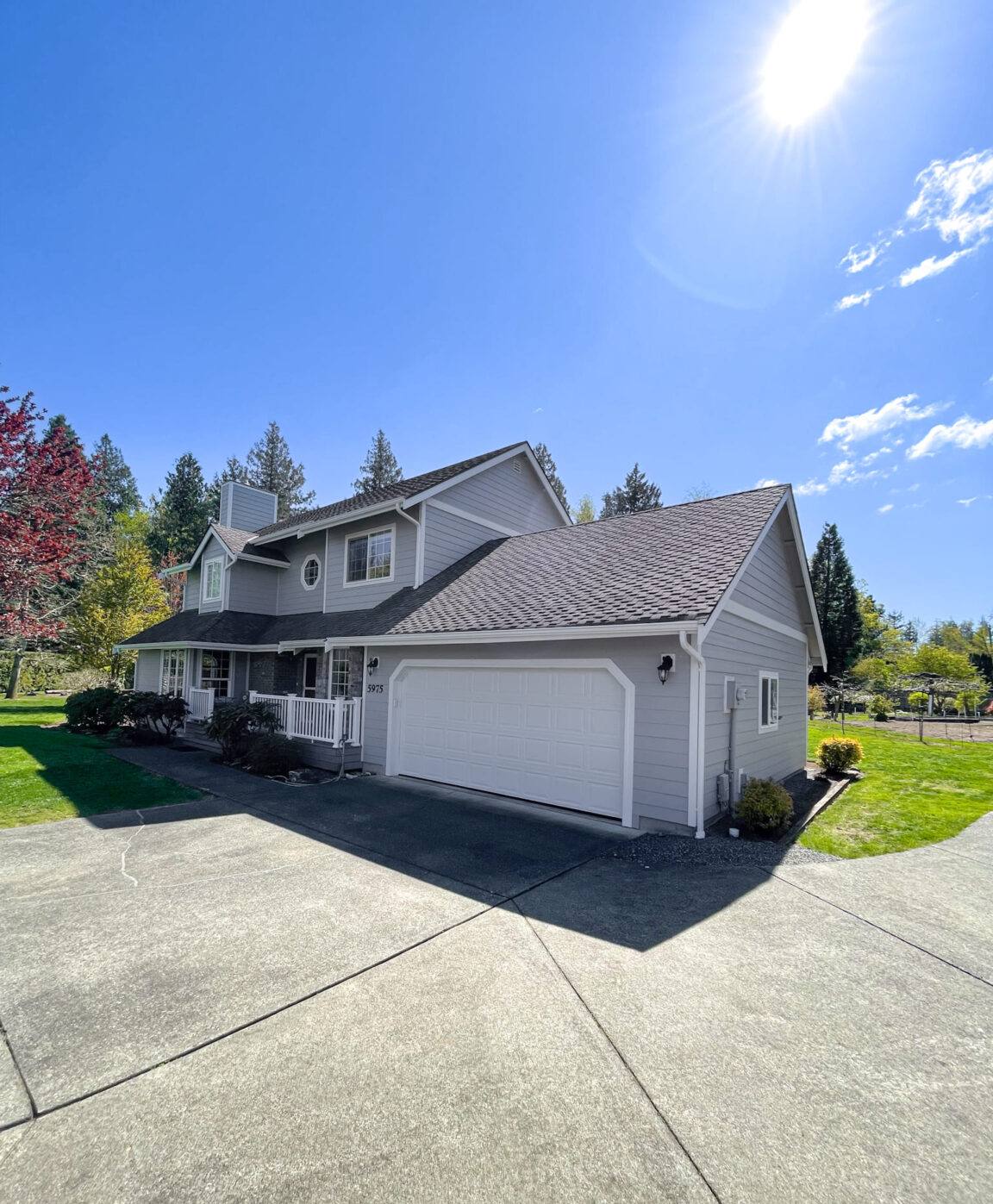
Why Point Roberts Is Tougher on Siding Than a Typical Whatcom County Lot
Every coastal property in this region deals with moisture. Point Roberts adds a few extra variables on top of that:
- Salt air exposure: Being surrounded by water on multiple sides means airborne salt reaches siding, fasteners, and trim year-round, not just during storms.
- Wind-driven rain: Peninsula homes catch weather from more directions than a sheltered inland lot, and board and batten's vertical battens and exposed seams are only as good as the water management behind them.
- Extended moss and algae season: Shaded, tree-lined lots combined with persistent damp conditions give moss and algae a long growing window on north- and west-facing walls.
- Limited quick-access for emergency repair: Because Point Roberts is an exclave, getting a contractor out fast for storm damage or a moisture emergency isn't as simple as a same-day inland callout — which makes getting the installation right the first time even more important.
None of these factors are unique in isolation, but combined they mean board and batten siding here has to be chosen and installed with the assumption that it will spend more time wet, more time salted, and more time growing moss than the same product would inland.
Why Board & Batten Specifically — and What It Needs to Perform
Board and batten is a popular choice on Point Roberts because the vertical lines suit both traditional cabin-style homes and newer builds, and it reads well against a wooded or waterfront backdrop. But the style itself creates a few performance requirements that flat lap siding doesn't have:
More seams to manage
Every batten strip covering a joint is another seam where water can find its way behind the cladding if the underlying water-resistive barrier and flashing aren't detailed correctly. In a driving-rain environment, that's not a minor detail — it's the difference between a wall that sheds water and one that slowly saturates from the inside.
Fastener exposure
Board and batten typically uses more face-nailing or through-fastening than lap siding. In a salt-air environment, fastener corrosion resistance matters more here than almost anywhere else in the region — the wrong fastener spec shows up as rust streaking and loosening boards within a few seasons.
Vertical water paths
The vertical board orientation channels water straight down the wall face, which is generally good for drainage, but only if the bottom terminations, transitions, and trim are flashed properly. A sloppy termination detail at the foundation line or a window head is where board and batten installations most commonly fail.
Why We Install James Hardie for Board & Batten — Not Wood or Engineered Wood
Board and batten is traditionally a wood look, and there's no shortage of contractors who will install real cedar or engineered wood products to get it. We don't, and it comes down to how those materials hold up under Point Roberts' specific conditions rather than any general dislike of the products.
Real wood board and batten needs regular refinishing, is vulnerable to moisture absorption at cut ends and seams, and in a persistent-moss environment requires ongoing maintenance to keep organic growth from taking hold and holding moisture against the board. Engineered wood products close some of those gaps but are still wood-based at the core, meaning they carry installation-sensitivity around field-cut edges, caulking, and paint maintenance that a salt-air, high-moss climate will test constantly.
James Hardie fiber cement gives us the same crisp vertical board-and-batten look without those maintenance dependencies. It's non-combustible, doesn't swell or rot when it takes on moisture, and holds a factory-applied ColorPlus finish that isn't relying on a homeowner's repainting schedule to keep water out. For a peninsula property where storm damage repair or emergency contractor access isn't a same-day guarantee, that durability margin matters more than it would on a sheltered inland lot.
How We Approach a Board & Batten Project on Point Roberts
1. Site and exposure assessment
We look at which walls face the water and prevailing wind, where moss and algae are already established, and where the existing siding or trim shows salt or moisture wear. This tells us where to focus extra attention on flashing and drainage detailing.
2. Water-resistive barrier and flashing plan
Before a single board goes up, we plan the drainage plane, window and door flashing, and termination details — the parts of the job that determine whether board and batten performs for twenty years or needs rework in five.
3. Correct fastening for a marine environment
Fastener selection and placement follow James Hardie's published specifications for coastal exposure, not a generic interior-grade fastener schedule.
4. Batten spacing and board installation to spec
Board and batten only looks right — and sheds water correctly — when spacing, fastening pattern, and butt joint treatment follow the manufacturer's installation instructions. We don't shortcut this to save labor time.
5. Trim, transitions, and final detailing
Corners, foundation transitions, and roofline terminations get the same flashing attention as the field of the wall — these are the spots most likely to leak if rushed.
What Correct Installation Prevents
| Installation Shortcut | What It Leads To on a Point Roberts Property |
|---|---|
| Skipped or minimal flashing at batten seams | Water intrusion behind cladding during wind-driven rain events |
| Wrong fastener type for coastal exposure | Corrosion staining and loosening boards within a few years |
| Poor bottom termination detailing | Moisture wicking into the wall assembly at grade level |
| Ignoring shaded, moss-prone wall faces | Accelerated organic growth trapping moisture against the siding |
| Field cuts without proper sealing | Localized moisture entry points that are hard to spot until damage shows |
What a Homeowner Should Expect From a Proper Estimate
A serious estimate for board and batten siding on a Point Roberts home should account for more than square footage. Before we quote a project, we walk the exterior and note:
- Which walls face prevailing wind and water spray, and whether those elevations need extra flashing attention
- Existing moss, algae, or moisture staining and what that tells us about drainage and shading conditions
- Condition of the existing water-resistive barrier, sheathing, and trim underneath the current siding
- Window, door, and roofline transitions that will need new flashing as part of the reside
- Whether any rot or moisture damage exists that needs repair before new siding goes on
Skipping this walk-through and quoting off a satellite measurement is a common shortcut — and it's exactly how avoidable moisture problems get built into a brand-new siding job.
Cost Factors Specific to Board & Batten on a Peninsula Property
Board and batten generally costs somewhat more than lap siding to install because of the additional board layer and detailing labor, and Point Roberts jobs can carry a modest premium tied to access and logistics given the exclave's location. Beyond the material itself, a few things move the price:
- Amount of existing moisture or moss damage requiring sheathing repair before new siding goes on
- Number of wall penetrations, transitions, and trim details that need flashing
- Home height and roofline complexity affecting access and staging
- Whether existing siding needs to be removed and disposed of versus a newer substrate ready for direct install
We give a clear, itemized quote up front rather than a flat per-square-foot number that hides where the cost is really going.
Why Local Experience on Point Roberts Specifically Matters
Point Roberts isn't just "another coastal job." Its access logistics, its particular mix of sun-starved and wind-exposed wall faces, and the fact that emergency repairs aren't a quick same-day trip all change how a siding project should be planned and executed. A crew that already knows this community knows which elevations typically need the most flashing attention, how moss establishes on local lots, and how to plan material and scheduling around the realities of working here — rather than treating it like a standard mainland job and hoping the details translate.
If you're considering board and batten siding for a Point Roberts home, we're glad to walk the property, look at your specific exposure and moisture history, and put together a straightforward, no-pressure estimate using the form below.