 Birch Bay Siding
 Building Decks for a Community That Takes a Beating
Point Roberts sits on a small peninsula surrounded by water, which means every deck built out here deals with conditions that inland Whatcom County homes simply don't face. Salt-laden air off the bay works its way into wood fibers and metal hardware year-round. Driving rain off the water hits decks at an angle, not just straight down, which pushes moisture into joints and connections that a typical deck design assumes will stay dry. And the moss season here isn't a few weeks in spring — in this marine climate it can run most of the year on any surface that stays shaded or damp.
A deck built without those specifics in mind might look fine for a season or two. Then the fasteners start bleeding rust, the boards cup, and moss takes hold in the low spots. We build decks for Point Roberts homeowners with all of that baked into the plan from day one, not treated as an afterthought.
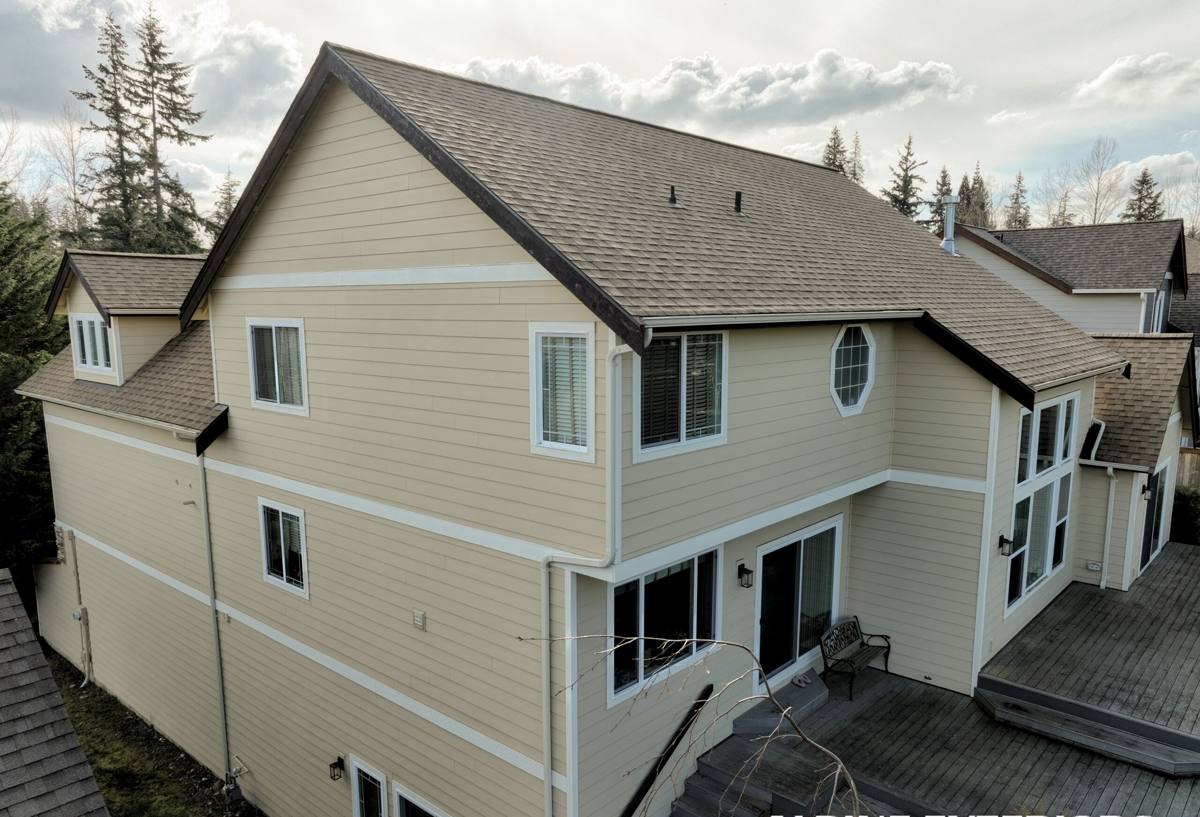
What Point Roberts Weather Actually Does to an Ordinary Deck
It helps to understand the specific failure points before you understand the fix. Salt air accelerates corrosion on anything less than a properly rated fastener or connector — screws, joist hangers, and ledger bolts are usually the first things to fail, often well before the decking itself shows wear. Driving rain doesn't just wet the surface; it drives sideways into board gaps, around railing posts, and behind ledger boards where flashing is thin or missing. And prolonged dampness plus shade — common on the north or water-facing side of a house — is exactly what moss and algae need to establish themselves on decking, stair treads, and railings.
None of this means a deck out here can't last. It means the build has to account for moisture and salt exposure as the default condition, not the exception.
Material Choices That Actually Hold Up Here
There's no single "best" decking material for every home — it depends on your budget, how much upkeep you want to do, and how exposed the site is to wind and spray off the water. Here's how the common options compare for a Point Roberts application specifically:
| Material | Moisture & Salt Resistance | Moss/Algae Resistance | Maintenance | Typical Lifespan |
|---|---|---|---|---|
| Pressure-treated lumber | Good with proper sealing | Fair — needs regular cleaning | Annual sealing/staining | 15-20 years |
| Western red cedar | Naturally decay-resistant | Fair — same, needs cleaning | Periodic oiling/staining | 20-25 years |
| Composite decking | Excellent, won't rot or absorb moisture | Good — smooth-surface boards resist buildup better than wood grain | Occasional washing | 25-30+ years |
| Tropical hardwoods (e.g. ipe) | Excellent, very dense | Good with proper drainage/spacing | Periodic oiling to hold color | 30+ years |
Cost ranges shift with lumber and composite pricing, so we'll walk through current numbers for your project during the estimate rather than quote a figure here that may already be out of date. What we can tell you honestly: composite and hardwood options cost more up front but ask less of you in maintenance, which matters a lot in a climate where skipping a season of sealing shows up fast.
Why We're Careful About Certain Wood Products
Some lower-grade or improperly kiln-dried lumber looks fine on the rack but moves, cups, or checks once it's exposed to repeated wet-dry cycling — which is exactly what this climate delivers. Our standard is to spec lumber and fasteners rated for the exposure the deck will actually see, not the minimum that will pass inspection.
The Parts Nobody Sees: Framing, Flashing, and Fasteners
A deck's finish surface gets all the attention, but the framing underneath is what determines whether it's still solid in ten years. For Point Roberts builds, that means:
- Stainless steel or coated structural screws and bolts instead of standard galvanized, especially anywhere close to the water side of the property
- Joist tape or flashing over the tops of joists to keep standing water out of end grain
- Proper ledger board flashing where the deck attaches to the house, since this is the single most common source of hidden water damage on any deck
- Corrosion-resistant joist hangers and post bases rated for exterior, high-moisture use
These details cost more than the budget-grade equivalent, but they're the difference between a deck that needs framing repairs in eight years and one that doesn't.
Designing Against Moss Before It Starts
Moss and algae need moisture, shade, and something to grip onto. Deck design can work against all three. Proper board spacing lets water drain through instead of pooling on the surface. Adequate slope in the substructure moves water away instead of letting it sit. Where a site is heavily shaded — common on the north or water-facing sides of Point Roberts homes — we'll talk through options like increased board gapping, under-deck ventilation, or material choices that resist buildup better than rough-sawn wood grain.
We won't promise a deck that never needs cleaning — nothing in this climate qualifies for that. But a well-designed deck needs a seasonal wash-down, not a fight against established moss growth.
Our Process, Start to Finish
Every custom deck starts with a site visit, not a phone quote. We need to see your yard's sun exposure, drainage patterns, soil conditions, and how the space connects to your home before we can recommend a design or material honestly.
What to Expect
- Site assessment — we walk the property, check grade and drainage, and talk through how you actually plan to use the space
- Design and material selection — we lay out size, layout, railing style, and materials, with honest trade-offs explained for each option
- Permitting — we handle the paperwork with the appropriate local building authority so you don't have to chase it down
- Construction — framing first, with all the hidden details covered above, then decking, railings, and stairs
- Final walkthrough — we go over the finished deck together and cover the maintenance it'll need going forward
Permits and Practical Considerations for This Location
Deck construction in Whatcom County typically requires a building permit once you're past a certain size or height above grade, and waterfront-adjacent properties can carry additional setback or shoreline review requirements depending on the parcel. We handle this as part of the project rather than leaving you to figure out what applies to your specific lot.
Point Roberts also has a practical wrinkle most contractors never have to think about: it's separated from the rest of Washington by water and by Canada, so every material delivery and every crew trip involves planning around that crossing. It's not a complication for homeowners to worry about — it's ours to manage — but it's part of why timelines here need to be planned honestly rather than promised optimistically.
Keeping Your Deck Ready for the Next Season
Whatever material you choose, a little seasonal attention goes a long way in this climate. A basic maintenance routine for a Point Roberts deck should include:
- Sweeping debris off the surface regularly, especially in fall and during the wetter months, so organic matter doesn't sit and feed moss growth
- Washing down the deck surface at least once or twice a year to clear early moss and algae before it establishes
- Checking fastener heads and hardware for early rust or corrosion, particularly on railings and stair connections
- Resealing or restaining wood decking on the schedule appropriate to that product — skipping a year in this climate shows up faster than it would inland
- Keeping gutters and downspouts near the deck clear so roof runoff isn't adding extra water load to the structure
- Checking under-deck ventilation and drainage paths aren't blocked by plantings or stored items
Why It Matters to Hire a Crew That Already Works in Point Roberts
A deck built by a contractor unfamiliar with this specific location tends to make the same mistakes: standard-grade fasteners, minimal flashing, and material choices that work fine forty miles inland but struggle here. Working regularly in Point Roberts means we already know which details are non-negotiable — the fastener grade, the flashing at the ledger, the drainage slope — because we've seen what happens when they're skipped.
It also means we've built the logistics of working in this location into how we schedule and source materials, so a project here isn't treated as an inconvenient outlier. That familiarity is worth more than it sounds like on paper, especially once the deck is a few years old and you need a contractor who understands what your specific site is asking of it.
If you're planning a new deck or replacing one that hasn't held up to Point Roberts weather, we're happy to take a look and give you a straight, no-pressure estimate. Use the form below to get started.