 Birch Bay Siding
 Siding Built for a Peninsula, Not Just a Zip Code
Point Roberts sits on its own finger of land at the bottom of the Tsawwassen Peninsula, with saltwater on three sides and nothing between the neighborhood and the open water of Boundary Bay and the Strait of Georgia. That geography is what makes siding decisions here different from siding decisions ten miles inland. Homes take on salt-laden air, wind-driven rain that finds every gap in a wall system, and a moss season that runs long into what other parts of Whatcom County would call summer. Birch Bay Siding Companies works this stretch of coastline regularly, and Point Roberts is one of the toughest environments we see for exterior materials.
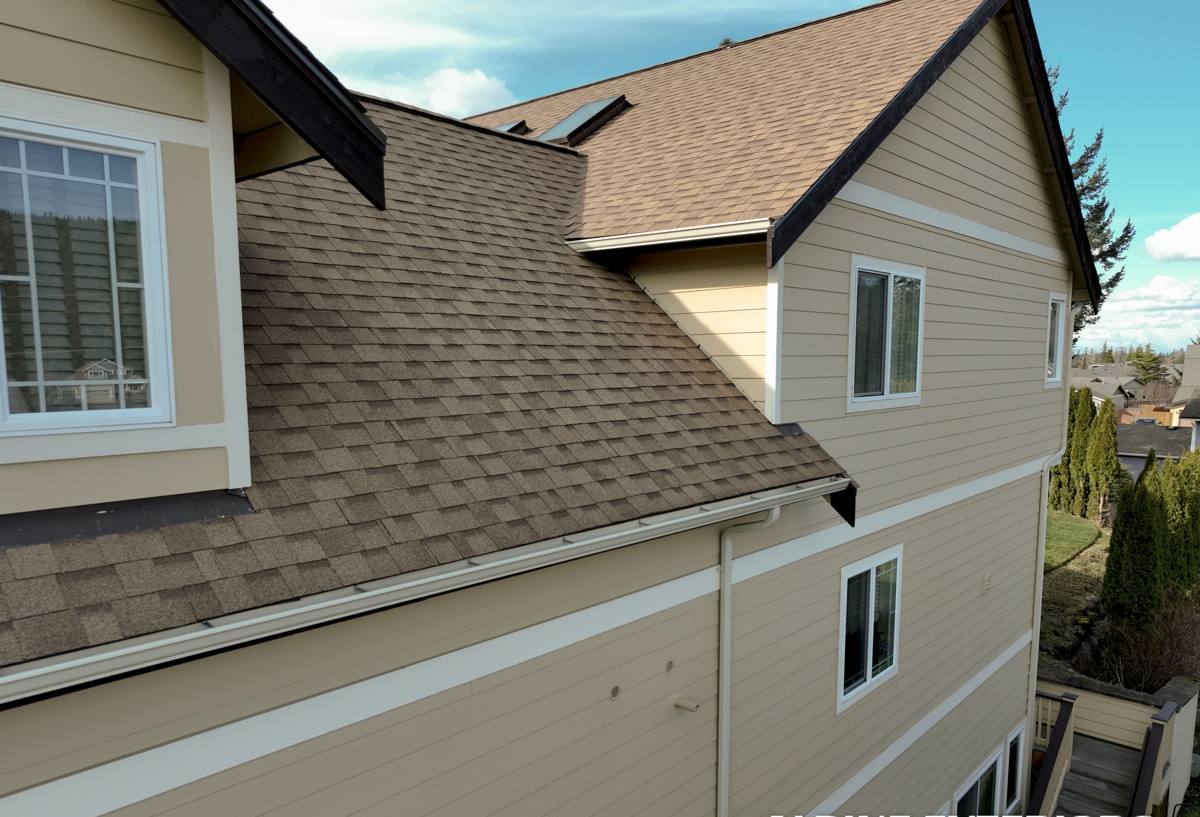
This page is specifically about installing fiber cement siding on Point Roberts homes: what the climate demands, what a correct installation actually looks like, and why the product and the crew both matter more here than in a typical subdivision.
What the Point Roberts Climate Does to Siding
Salt Air and Corrosion
Airborne salt from the surrounding water settles on every exterior surface, including siding, trim, and fasteners. Over years, that salt film accelerates corrosion on anything metal and slowly breaks down materials that aren't engineered to shed moisture and resist swelling. It also means paint and factory finishes have to hold up to more than just UV — they have to resist a steady coating of salt residue that gets rinsed and reapplied with every rain and every breeze off the water.
Driving Rain
Because there's no windbreak of hills or dense forest between Point Roberts and open water, rain here often comes in sideways rather than straight down. Wind-driven rain pushes water into laps, seams, and fastener penetrations that would stay dry on a more sheltered lot. A siding system that isn't detailed correctly at those points doesn't just look bad — it lets water behind the cladding, where it can sit against sheathing and framing for weeks at a time.
A Long Moss Season
The Pacific Northwest is known for moss, but the combination of marine humidity, shade from mature trees, and mild temperatures keeps Point Roberts damp enough for moss and algae to establish on north-facing and shaded walls for most of the year, not just the wet months. Moss holds moisture against a wall surface and, left unchecked, works its way into any gap in the siding or trim.
Why Fiber Cement Fits This Environment
Fiber cement is a mix of cement, sand, and cellulose fibers, engineered to be dimensionally stable. It doesn't expand and contract with moisture the way wood-based products do, and it doesn't corrode the way metal siding can. That stability matters directly on Point Roberts: a material that swells and shrinks with every wet-dry cycle eventually opens gaps at the seams, and those are exactly the gaps that wind-driven rain and salt air will find first.
Fiber cement also holds paint and factory finishes far longer than wood siding does, which matters when the air itself is working against the finish every day. And because it's non-combustible, it adds a layer of protection that wood-based sidings simply can't offer, which is worth factoring in on any coastal or wooded property.
James Hardie: The Only Fiber Cement System We Install
Not all fiber cement is built the same way, and Birch Bay Siding Companies installs James Hardie products exclusively. We don't install LP SmartSide, vinyl, Cemplank, Allura, primed spruce, or cedar. That's a deliberate standard, not a brand preference for its own sake.
James Hardie engineers its HardieZone products by climate region, and the Pacific Northwest falls into a wet-climate designation that accounts for exactly the conditions Point Roberts sees: sustained moisture exposure, freeze-thaw cycling in winter, and long stretches of damp weather. The ColorPlus finish is baked on at the factory under controlled conditions, which gives it more consistent coverage and better resistance to fading and moss staining than a field-applied paint job typically achieves. Hardie also backs its siding with a long, transferable product warranty — a meaningful detail for homeowners who may eventually sell, since the coverage moves with the house.
We'd rather turn down a job than install a product we don't think will hold up on a site like this. That standard is why every Point Roberts installation we quote is James Hardie fiber cement, plank or panel, in the product line that fits the specific exposure of that wall.
What a Correct Installation Involves
Fiber cement is only as good as the installation behind it. On a coastal, high-exposure site like Point Roberts, a handful of details separate a siding job that lasts decades from one that fails at the seams within a few years.
- Proper water-resistive barrier and flashing at every window, door, and penetration, lapped correctly so water sheds outward rather than behind the barrier
- Correct fastener type, spacing, and depth, since factory finishes and warranty coverage depend on following the manufacturer's fastening schedule
- Minimum clearance between the bottom of the siding and grade, decks, or roof lines, so splash-back and standing water don't sit against the material
- Properly caulked and primed cut edges on every field cut, since an uncoated edge is the fastest way for moisture to get into the material
- Correct panel and lap gaps to allow for expansion without opening a path for wind-driven rain
- Rainscreen or drainage gap detailing where the wall assembly calls for it, giving any moisture that does get behind the cladding a way to drain and dry
Skipping any one of these doesn't show up on day one. It shows up two or three winters later, after the wall has been through a full cycle of driving rain and salt exposure, which is why installation quality matters as much as the product choice on this stretch of coastline.
Our Process for Point Roberts Projects
Point Roberts' location adds a few practical steps to a siding project that don't come up on a typical inland job, and we plan around them rather than treating them as surprises.
- On-site assessment. We walk the exterior wall by wall, noting exposure direction, existing moisture damage, moss buildup, and any trim or flashing that needs to be addressed as part of the job, not patched around it.
- Product and line selection. We match the Hardie product line and profile to each wall's exposure — a wall facing open water may call for different detailing than a sheltered, tree-shaded wall.
- Material staging and logistics. Because Point Roberts is reached by road only through Canada, we plan material delivery and crew scheduling in advance so the job runs on a predictable timeline instead of being at the mercy of last-minute logistics.
- Tear-off and wall inspection. Once the old siding is off, we inspect the sheathing and water-resistive barrier underneath before anything new goes on — this is where hidden moisture damage from years of driving rain typically shows up.
- Installation to manufacturer spec. Flashing, fastening, gapping, and caulking are done to James Hardie's published installation requirements, which is also what keeps the product warranty intact.
- Final walkthrough. We review the finished exterior with the homeowner before calling the job complete.
Fiber Cement Compared to Other Siding Options
Homeowners on Point Roberts often ask how fiber cement stacks up against the other materials they see used around the peninsula. Here's an honest comparison based on how each performs in a marine, high-moisture environment:
| Material | Moisture Behavior | Salt Air Resistance | Finish Longevity |
|---|---|---|---|
| James Hardie Fiber Cement | Dimensionally stable; doesn't swell or rot | Does not corrode; unaffected by salt film | Factory ColorPlus finish resists fading and staining |
| Vinyl | Doesn't absorb water, but can warp or crack with wind and temperature swings | Generally stable, though seams can loosen over time | Color is molded-in but can chalk and fade with UV and salt exposure |
| Wood / Cedar | Absorbs moisture, swells and contracts, prone to rot without diligent upkeep | Salt air accelerates weathering and finish breakdown | Field-applied finishes need reapplication every few years |
| Engineered Wood (LP SmartSide) | Resin-treated but still wood-based; edge and seam moisture intrusion is the main failure point | Can be more vulnerable at cut edges and seams if not perfectly sealed | Factory finish holds up reasonably well but is sensitive to installation quality |
This is why our standard for a coastal environment like Point Roberts is fiber cement, specifically James Hardie's system, rather than the alternatives above.
What Affects the Cost of a Fiber Cement Project Here
Every home is different, but a few factors consistently move the price of a Point Roberts siding project up or down:
| Factor | Why It Matters |
|---|---|
| Wall exposure and orientation | Walls facing open water or prevailing wind often need more attention to flashing and drainage detail |
| Existing moisture damage | Rot or damaged sheathing found during tear-off adds repair work before new siding can go on |
| Product line and profile | Plank width, texture, and panel style affect material cost and installation time |
| Trim and detail work | Corners, window and door surrounds, and fascia detailing add labor beyond the flat wall area |
| Site access and logistics | Material delivery and staging on a peninsula reached only through Canada can affect scheduling more than an easily accessed inland lot |
We provide a specific, written estimate after walking the actual property. Broad ranges without seeing the walls and trim in person aren't useful to a homeowner trying to plan a project.
Living With Fiber Cement Siding in a Marine Climate
Fiber cement asks for less maintenance than wood, but "less" isn't "none," especially with Point Roberts' moss season and salt exposure. A periodic soft wash to remove salt film, moss, and algae buildup keeps the ColorPlus finish looking like it did on installation day and prevents organic growth from getting a foothold at seams and trim edges. Keeping gutters clear and vegetation trimmed back from exterior walls also reduces the shade and standing moisture that let moss establish in the first place. None of this is heavy upkeep — it's the kind of periodic attention that protects the investment in a durable siding system rather than the constant recoating that wood-based siding demands.
Why a Crew That Already Works Point Roberts Matters
Point Roberts isn't like the rest of Whatcom County when it comes to getting a project done. Road access runs through Canada, which means material deliveries, crew scheduling, and any mid-project adjustments all take more planning than a job ten minutes off the highway. A contractor who hasn't worked the peninsula before is learning those logistics on the homeowner's timeline. A crew that already does this work has the delivery routes, scheduling buffers, and crossing logistics worked out before the first panel goes up.
There's also a technical reason local experience matters: a crew that has installed and later revisited fiber cement siding on this peninsula has seen firsthand which walls take the worst of the wind-driven rain, where moss establishes first, and which flashing details actually hold up over a few winters of real exposure. That's knowledge you don't get from a spec sheet — it comes from doing the work in this specific environment, repeatedly.
What to Look for When Hiring a Point Roberts Siding Contractor
- Manufacturer training or certification on the specific fiber cement product being installed
- A written scope that specifies flashing, fastening, and gapping details, not just "install siding"
- A clear plan for tear-off inspection and how hidden moisture damage will be handled if it's found
- Experience with coastal or marine-exposure sites, not just general residential siding
- A real, in-person walkthrough before any estimate is finalized
- Straight answers about warranty coverage — both the manufacturer's product warranty and the contractor's workmanship coverage
If you're weighing a siding project on Point Roberts, we're glad to walk the property, look at what your walls are actually dealing with, and put together a specific, no-pressure estimate — just fill out the form below to get started.