 Birch Bay Siding
 Point Roberts Takes Weather From Three Sides
Point Roberts sits on a small peninsula bounded by Boundary Bay and the Strait of Georgia, which means most homes here face open water exposure on more than one side. That matters for siding in a way it doesn't in a sheltered inland neighborhood. Wind-driven rain off the water hits walls at an angle instead of falling straight down, salt spray rides in on the marine air, and the same cool, wet weather that makes this stretch of Whatcom County beautiful also keeps exterior walls damp for long stretches of the year. Siding that isn't built and installed for that combination shows it early — through cupping, soft spots, peeling paint, or moss creeping in along the laps.
We install James Hardie fiber cement siding on Point Roberts homes because it's the one product we trust to hold up to that combination without turning into a maintenance project. This page covers what that actually means for a Point Roberts property specifically — not siding in general.
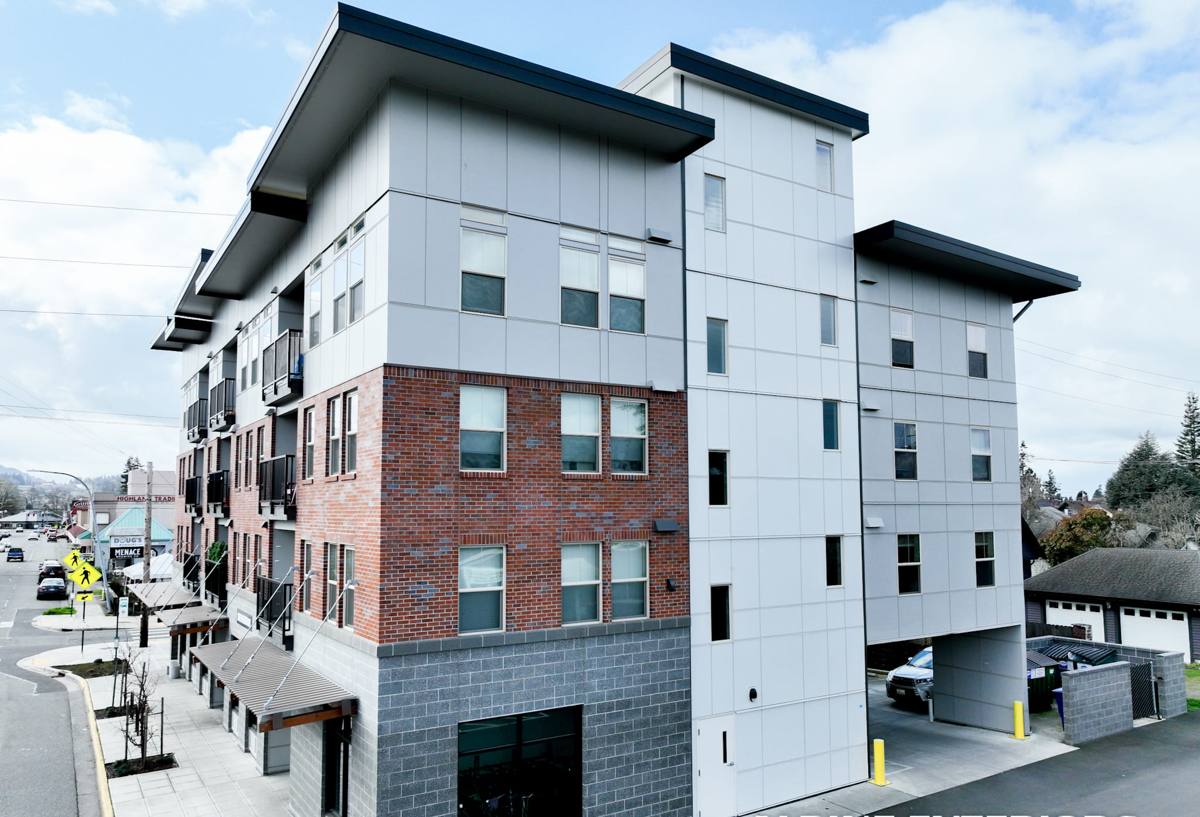
Why We Only Install James Hardie Out Here
We don't install LP SmartSide, vinyl, Cemplank, Allura, primed spruce, or cedar, and on a property like this the reasons aren't abstract. Wood-based products, including engineered wood, depend on paint and caulking staying intact to keep water out of the substrate — and in a marine climate with a long moss season, that maintenance window is shorter than most homeowners expect. Vinyl doesn't rot, but it expands and contracts more than fiber cement, and long-term UV and salt exposure tends to show up as fading and brittleness sooner than most owners want to deal with on a coastal property. Cedar looks great new but is the most maintenance-intensive option we could put on a house exposed to this much moisture.
James Hardie fiber cement is cement, sand, and cellulose fiber — it doesn't rot, it isn't attractive to insects, and it's non-combustible. It doesn't eliminate maintenance entirely, but it removes the two biggest failure points we see on wood and engineered-wood siding in wet coastal areas: moisture absorption into the substrate and paint failure that exposes bare material to the weather.
The HZ5 System and Factory Finish We Use
James Hardie engineers its siding by climate zone, and the Pacific Northwest falls into the HZ5 category — the version of the product built around cold, wet, moisture-heavy conditions rather than the hot, dry version sold in the Southwest. That's a real engineering difference in the cement formulation, not a marketing label.
We also specify ColorPlus factory-applied finish rather than field-painted siding wherever a homeowner is open to it. The finish is baked on under controlled conditions before the boards ever reach the site, which gives a more consistent, more UV- and salt-resistant top coat than most job-site paint jobs can match, and it comes with its own finish warranty separate from the substrate warranty. On a property that's taking direct salt air, that finish durability is one of the more practical reasons to go factory-finished instead of choosing a primed board to paint later.
What a Correct Installation Involves
Fiber cement siding is only as good as the installation behind it. Most of the failures we get called out to inspect on other people's Hardie jobs aren't product problems — they're installation shortcuts that let water get behind the siding instead of shedding off the front of it.
Rainscreen Gap
On a home taking this much wind-driven rain, we install over a drainage gap — typically furring strips or a purpose-built rainscreen product — rather than nailing siding directly to the weather-resistive barrier. That gap lets any moisture that does get past the siding drain and dry out instead of sitting against the wall assembly.
Flashing at Every Penetration
Windows, doors, hose bibs, light fixtures, deck ledgers — every point where something interrupts the siding plane is a place water can get in if it isn't flashed correctly. We flash and lap every penetration so water is directed out and down, never trapped behind the board.
Fastening and Gaps
James Hardie specifies exact nailing patterns, minimum gaps between boards, and clearances off rooflines, decks, and grade. We follow those specs to the letter, because they're what keeps the manufacturer's warranty valid and what keeps the siding performing the way it's designed to over the following decades — not just the first few years.
Moss and the Long Wet Season
Whatcom County's wet season runs long, and Point Roberts' exposure keeps surfaces damp even longer than more sheltered parts of the county. Moss and algae growth tends to show up first on north- and west-facing walls, under roof overhangs that don't get direct sun, and along the bottom courses where splash-back from ground level or gutter overflow keeps the siding wet. Fiber cement doesn't feed mold or rot the way wood does, but moss and algae can still take hold on the surface of any siding material if it stays damp long enough, and left alone it holds moisture against the wall and traps grime in the paint. Correct grading, gutter maintenance, and keeping vegetation pulled back from the walls do more to prevent this than any siding product choice by itself — but starting with a material that doesn't absorb moisture into the substrate means a season of neglected moss doesn't turn into a structural repair.
Cost Factors for a Point Roberts Siding Job
Every job is priced on the specifics of the house, but these are the factors that move the number most on properties out here:
| Factor | Why It Matters Here |
|---|---|
| Existing siding removal | Tear-off and disposal of failed wood, vinyl, or damaged siding adds labor before installation even starts |
| Hidden moisture damage | Sheathing or framing softened by long-term water intrusion behind old siding may need repair before new siding goes on |
| Siding profile | Lap siding, shingle-style panels, and board-and-batten all price differently in material and labor |
| Factory finish vs. field paint | ColorPlus pre-finished boards cost more up front but remove a full paint job from the project |
| Site access and staging | Waterfront lots, steep grades, or limited driveway access can affect scaffolding and material staging |
| Trim and detail work | Corner boards, window trim, and fascia detail add labor time beyond flat wall coverage |
We walk every property and give an honest, itemized estimate before any work starts — no guessing over the phone.
Signs Your Point Roberts Home May Need New Siding Soon
- Moss or dark streaking building up along the bottom courses or under overhangs
- Paint that's peeling, bubbling, or chalking rather than just fading
- Boards that feel soft, or siding that flexes when pressed near the base of the wall
- Visible gaps opening up between boards or at seams
- Warping, cupping, or bowing panels, especially on wood or engineered wood siding
- Rising heating bills that suggest the wall assembly is no longer holding heat the way it used to
- Siding that's original to a home built more than 20-25 years ago and has never been fully replaced
Any one of these on its own isn't necessarily an emergency, but a few together usually mean the siding is past the point where patching makes sense.
How Our Process Works for a Point Roberts Job
Point Roberts is a U.S. exclave — the only way to reach it by road is by crossing into Canada and back — which changes how we plan a job compared to a house a few miles inland. We stage materials and schedule crews so the work happens in efficient blocks rather than a lot of small back-and-forth trips, and we account for that logistics reality when we quote a timeline, not just when the job is already underway.
Beyond that, our process on a Point Roberts job looks like any siding job done right: a full walk-around inspection of the existing exterior, an honest conversation about what's actually driving the need for replacement, a written estimate that spells out material, labor, and any repair work the tear-off uncovers, and a crew that follows James Hardie's installation specs rather than cutting corners to move faster. We pull the required permits through Whatcom County before work starts, and we plan around the weather rather than fighting it — exterior work goes faster and holds up better when it isn't rushed during a wet stretch.
Why a Local Crew That Already Works Point Roberts Matters
A contractor who's never worked on the peninsula has to learn its logistics on your job — the border crossing for materials and crew, the wind exposure specific to a waterfront or near-waterfront lot, the way moss behaves on this particular stretch of coastline. We've already worked through that on other Point Roberts homes, which means less guesswork, fewer surprises mid-project, and a crew that shows up knowing what this property is up against before the first board goes on.
If you're dealing with aging, failing, or moisture-damaged siding on a Point Roberts home, we'll come out, take an honest look, and give you a straightforward estimate for a James Hardie installation built for this exact climate — no pressure, no obligation.