 Birch Bay Siding
 Why Point Roberts' Setting Puts Extra Demands on Siding
Point Roberts sits on a peninsula in Whatcom County, surrounded by water on three sides and reachable by land only through Canada. That geography isn't just a curiosity for the people who live there — it directly shapes what siding has to withstand. Homes here sit closer to open water than most properties elsewhere in the county, which means more direct exposure to marine wind, salt-laden air, and driving rain coming off the water with little to break it up. A siding installation that would hold up fine a few miles inland can fail early on a wall that faces open water in Point Roberts.
Any honest discussion of siding installation in this area has to start with that exposure. The product choice, the installation details, and the maintenance plan all need to account for conditions that are more aggressive than a standard suburban lot.
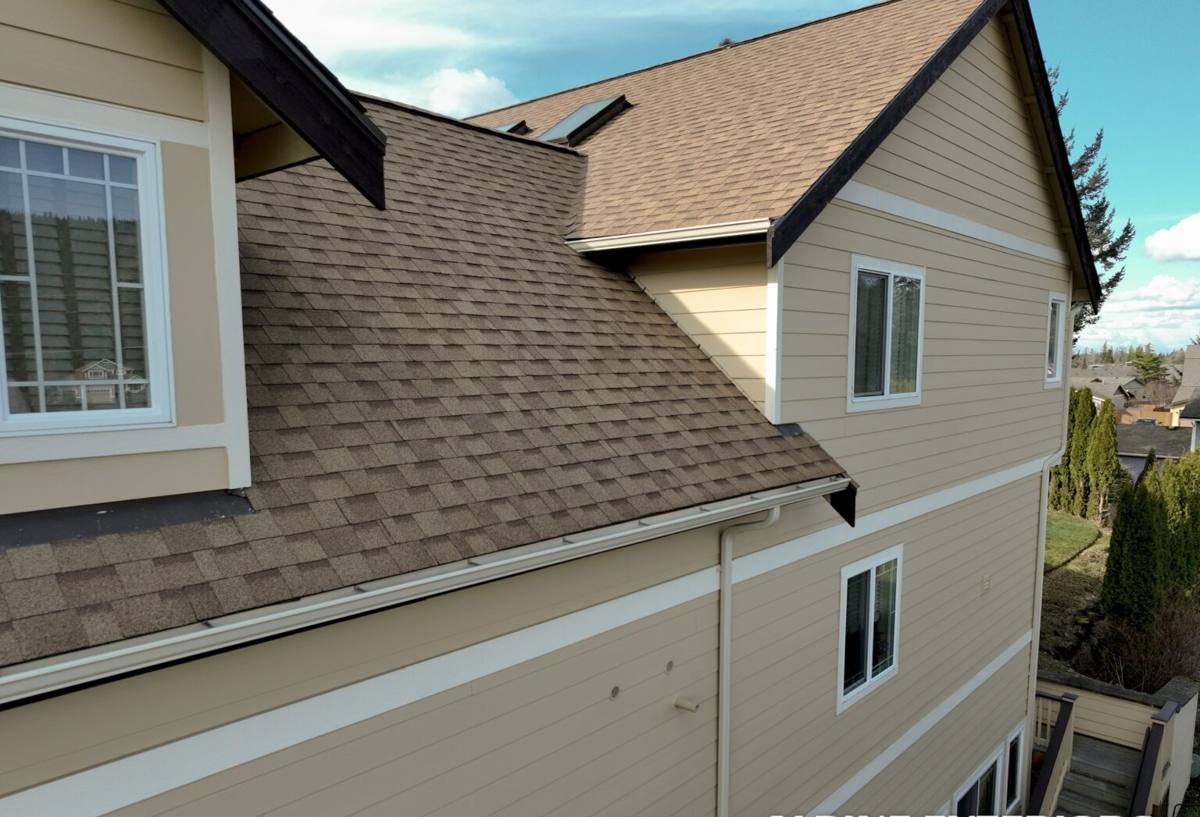
Salt Air, Driving Rain, and a Long Moss Season
Three environmental forces do most of the damage to siding in Point Roberts, and they work together rather than in isolation.
Salt Air
Airborne salt from the surrounding water settles on exterior surfaces and accelerates corrosion of fasteners, trim, and hardware. It also breaks down field-applied paint finishes faster than in drier, inland locations, leading to chalking and fading well before a homeowner would expect to repaint.
Driving Rain
Wind off open water doesn't just bring rain — it pushes it sideways, forcing water into laps, seams, and trim joints that would stay dry in a calmer setting. Siding systems here need to manage water that's actively being driven into the wall assembly, not just falling straight down it.
A Long Moss Season
Whatcom County's marine climate already supports moss and algae growth for a good part of the year, and shaded or north-facing walls in Point Roberts hold moisture even longer. Moss and algae don't just look bad — they trap water against the siding surface, keeping it damp long after the rain has stopped and giving any weak point in the installation more time to fail.
What Real-World Exposure Looks Like Wall by Wall
The severity of these forces is rarely uniform on a single house. The wall facing open water and prevailing wind takes the worst of the salt and driving rain, while a shaded, tree-lined wall on the opposite side of the same house is more likely to develop persistent moss and algae. A correct installation plan treats each elevation according to its actual exposure rather than applying one generic approach to every wall.
What a Correct Siding Installation Involves Here
Given that exposure, the details of the installation matter more in Point Roberts than they would on a sheltered inland lot. A few things we treat as non-negotiable:
Drainage and Moisture Management
A proper weather-resistive barrier, correctly lapped and sealed, is the last line of defense if wind-driven rain gets past the siding surface. A drainage gap behind the siding lets any water that does get in find its way back out instead of sitting against the sheathing.
Flashing at Every Penetration
Windows, doors, hose bibs, light fixtures, and any other penetration through the siding is a place water can concentrate. Flashing at each of these points, installed in the correct order relative to the weather barrier, is what actually keeps driving rain from finding its way behind the wall.
Fasteners and Clearances
Corrosion-resistant fasteners matter more here than in a low-salt environment, since standard fasteners can corrode and stain the siding face over time. Proper clearance from grade, roof lines, and decks also keeps splashback and standing moisture away from the bottom edge of the siding, which is usually the first place a marginal installation starts to fail.
Sealing Cut Edges
Factory-finished siding is more durable than field-painted siding, but any edge cut on site during installation exposes raw material that needs to be properly sealed. Skipping this step is a common shortcut that shows up as premature deterioration a few years down the road, especially in a salt-air environment.
Why We Install Only James Hardie Fiber Cement
We don't install vinyl, LP SmartSide, Cemplank, Allura, primed spruce, or cedar. That's a deliberate standard, not a lack of options, and it comes down to how each of those products performs under the specific conditions Point Roberts homes face.
Vinyl siding is affordable and low-maintenance in mild conditions, but it expands and contracts with temperature swings, can become brittle and crack under wind-driven impact, and doesn't hold paint if a homeowner ever wants to change the color. Wood-based products, including engineered wood and cedar, can look great and perform well when maintenance stays current, but they depend on an intact factory or field coating to keep moisture out — and in a climate with this much salt air, driving rain, and moss-holding moisture, any gap in that maintenance schedule shows up as rot faster than it would inland.
James Hardie fiber cement is non-combustible and doesn't have the same relationship with moisture that wood-based sidings do — it won't swell, rot, or feed insects the way untreated or under-maintained wood products can. The ColorPlus factory finish is baked on under controlled conditions, which holds color and resists the chalking and fading that salt air causes in field-applied paint. Hardie's HZ5 product line is specifically engineered for regions like the Pacific Northwest, where moisture exposure is a constant rather than an occasional storm. That combination — non-combustible material, a factory finish built for weather, and a product line engineered for wet coastal climates — is why we standardized on it and don't install alternatives, even when a homeowner asks for something cheaper up front.
Our Process From Estimate to Finished Wall
- Site assessment. We look at each elevation separately — which walls face open water and prevailing wind, which stay shaded and damp, and where existing moss or algae growth signals a moisture problem.
- Material selection. We confirm the right Hardie product line and color for the home's exposure and the homeowner's preferences.
- Tear-off and inspection. Removing the old siding lets us check the sheathing underneath for hidden moisture damage before anything new goes on — a step that matters more in a high-moisture environment than it would elsewhere.
- Weather barrier and flashing. We install a new weather-resistive barrier and flash every penetration and horizontal trim transition before any siding goes up.
- Installation. Siding goes on with correct fastening, clearances from grade and other surfaces, and properly sealed cut edges.
- Final walk-through. We review the finished job with the homeowner and cover what routine maintenance looks like for their specific exposure.
Cost Factors for a Point Roberts Siding Project
Every home is different, but the same handful of factors tend to drive the cost of a siding installation in this area up or down:
| Factor | Why It Matters |
|---|---|
| Water and wind exposure | Walls facing open water often need more attention to flashing and drainage detailing than sheltered walls |
| Condition of sheathing underneath | Hidden moisture damage found at tear-off can require repair before new siding goes on |
| Home size and number of stories | More surface area and more difficult access both add labor time |
| Trim and accessory scope | Corner boards, window trim, and other accessories add material and installation time |
| Color and finish selection | Some ColorPlus finishes and specialty profiles cost more than standard options |
| Site logistics | Point Roberts' access via Canada can affect material delivery and crew scheduling on a project |
Signs Your Current Siding Is Already Losing the Fight
Homeowners often wait too long to address siding problems because the damage isn't visible from the street. In an environment like this, a few warning signs are worth acting on early:
- Soft or spongy spots when you press on the siding, especially near the bottom edge
- Paint that's chalking, peeling, or fading unevenly across a wall, particularly one facing open water
- Dark staining or streaking at seams, corners, or below windows
- Moss or algae that keeps coming back in the same spot no matter how often it's cleaned
- Cracked or separated caulking at trim joints and penetrations
Any one of these can be a minor maintenance item on its own, but together — or left unaddressed for a season or two in this climate — they're usually a sign the siding is no longer doing its job of keeping moisture out of the wall.
A Maintenance Checklist for Salt Air and High-Moss Conditions
Even correctly installed Hardie siding benefits from a bit of seasonal attention in a marine environment. A simple annual routine goes a long way:
- Rinse salt residue off exterior walls, especially on elevations facing open water
- Keep gutters and downspouts clear so water isn't overflowing onto the siding below
- Trim back vegetation and tree limbs that keep walls shaded and damp
- Gently wash off moss and algae growth before it has a chance to hold moisture against the surface
- Inspect caulking at trim, windows, and penetrations once a year and replace anything cracked or pulling away
- Walk the property after major windstorms to check for loose or damaged trim pieces
Why Hiring a Crew That Already Works Point Roberts Matters
Point Roberts' geography creates practical challenges that a crew unfamiliar with the area won't have planned for — border-crossing logistics for material deliveries, scheduling around limited access, and knowing from experience which elevations on a typical local lot take the worst of the wind and salt exposure. A contractor who already works in this community has already solved those logistics and knows how to plan a project so it isn't derailed by them partway through.
Beyond logistics, familiarity with how homes in this specific setting age matters. A crew that has seen how salt air, driving rain, and moss behave on Point Roberts homes over time can flag problem areas during the estimate that a contractor without that local experience might miss entirely.
If you're weighing a siding project for a Point Roberts home, we're happy to walk the property, look at how each wall is holding up against the local climate, and put together a straightforward, no-pressure estimate. There's a form below to get that conversation started.