 Birch Bay Siding
 Point Whitehorn Sits Right in the Weather's Path
Point Whitehorn is one of the more exposed stretches of shoreline in the Birch Bay area, and the windows on homes out here take a beating that inland Whatcom County houses simply don't experience. The bluffs and beach frontage put buildings directly in line with wind coming off the Strait, and that wind rarely arrives alone — it brings salt spray, driving rain, and long stretches of damp, shaded air that never quite dries out. Add in the tree cover common to the area and you get a climate that's genuinely hard on window frames, seals, hardware, and finishes.
Custom windows in this setting aren't a luxury item — they're often the only way to get a window that actually fits an older opening correctly, seals properly against wind-driven rain, and holds up to years of salt exposure without turning into a maintenance headache. This page covers what we've learned installing and replacing windows for homes in and around Point Whitehorn, and what actually matters when you're choosing a window for this specific stretch of coastline.
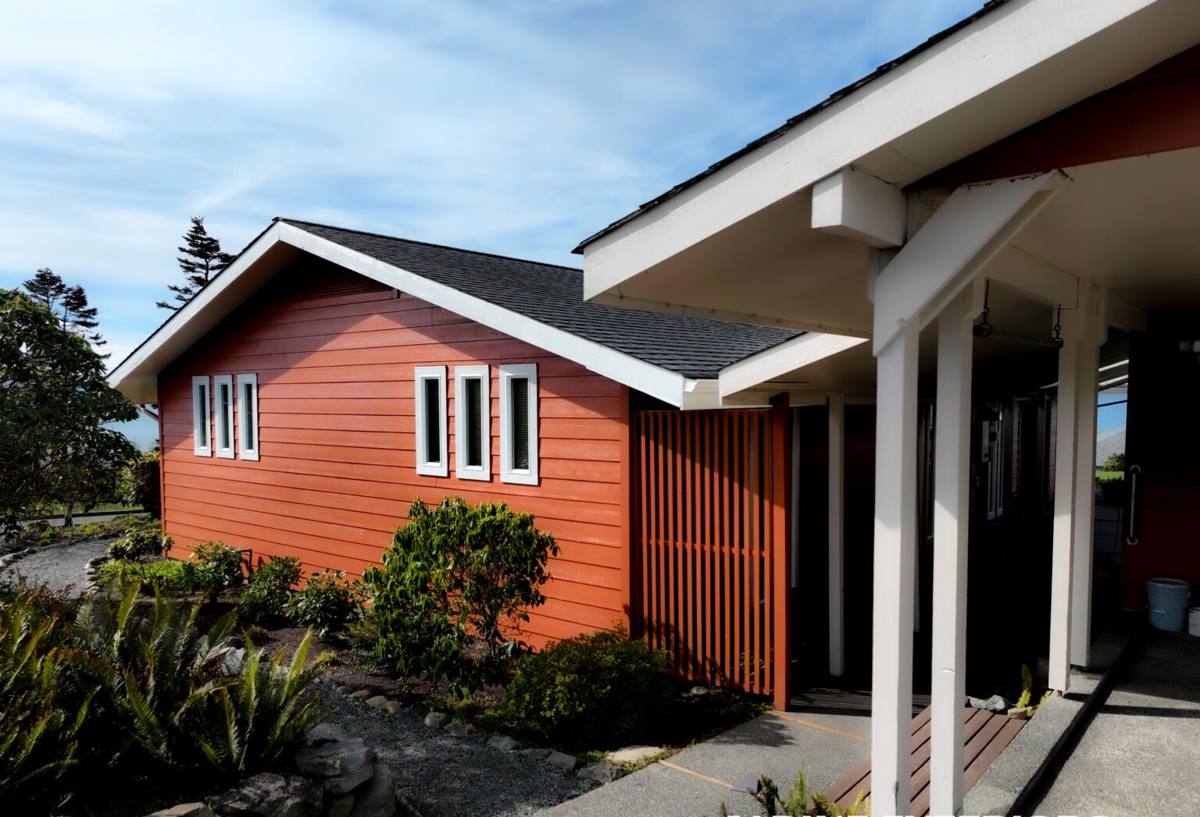
What Salt Air, Rain, and Moss Actually Do to a Window
Salt Air
Salt-laden air is corrosive to metal hardware — hinges, locks, balance systems, and screws — and it accelerates the breakdown of certain sealants and finishes faster than a few miles inland. Windows that aren't specified with this in mind can develop stiff or failing hardware, pitted or discolored metal components, and premature caulk failure years before a comparable window would fail in a more sheltered location.
Driving Rain
Wind-driven rain doesn't just hit a window — it gets pushed sideways and upward, testing every seam, sill, and flashing detail in ways a calm rainfall never would. A window that's watertight in a still rain can still leak in a Point Whitehorn windstorm if the flashing, sill pan, and sealant details weren't built for lateral wind pressure. This is one of the most common failure points we find on older installs out here — not bad windows, but flashing and sealing details that were never suited to this exposure in the first place.
Moss and Persistent Moisture
Tree-shaded lots and the long damp season common to Birch Bay and Point Whitehorn keep exterior surfaces wet longer than they'd be in full sun. That moisture holds onto wood trim, cladding, and even window sills, feeding moss and algae growth that traps still more moisture against the building. Around windows specifically, this shows up as soft trim, staining below the sill, and slow rot at end grain and joints if the original detailing didn't account for drainage.
What a Correctly Built Custom Window Needs Here
"Custom" doesn't just mean a non-standard size — though that matters, especially in older Point Whitehorn homes where openings were often framed to whatever lumber was on hand at the time. It also means the window and its installation are specified for the actual conditions the house faces. For this location, that generally means:
- Frame materials and hardware finishes rated for coastal/marine exposure, not just standard residential grade
- Sill pan flashing and back-dam details that shed wind-driven rain rather than relying on caulk alone
- Corrosion-resistant fasteners and hardware, not standard zinc-plated steel
- Weep systems sized to actually drain, not just meet a minimum code detail
- Glass and gas-fill packages chosen for condensation control given the persistent humidity
- Exterior trim and sealant products chosen for UV and moisture durability, not just cost
Skipping any one of these on a Point Whitehorn install tends to show up within a few winters, not a few decades.
Frame Material: What Actually Holds Up Out Here
There's no single "best" frame material for every home — it depends on the house's style, budget, and how exposed the specific wall is. Here's how the common options actually perform in this climate, as a matter of our own installation standards rather than any manufacturer's marketing claims:
| Frame Material | Salt/Moisture Behavior | Maintenance Burden | Best Fit |
|---|---|---|---|
| Vinyl | Won't corrode or rot; seams and welds are the main watch point | Low — occasional cleaning | Most homes, budget-conscious replacements |
| Fiberglass | Excellent dimensional stability, handles wet/dry cycling well | Low | Larger openings, higher-exposure walls |
| Aluminum-clad wood | Good exterior protection, but any breach in the cladding exposes wood to rot | Moderate — cladding seams need periodic checking | Homes wanting a wood interior look with some exterior protection |
| Solid wood | Handsome, but highest vulnerability to moisture and moss in shaded, damp exposures | High — regular refinishing and sealing | Sheltered walls, historic-style homes with owners committed to upkeep |
For fully exposed, waterfront-facing walls in Point Whitehorn, we generally steer homeowners toward vinyl or fiberglass. Wood and wood-clad products can still work well on more sheltered elevations of the same house — it's a wall-by-wall decision as much as a whole-house one.
Glass and Sealing Details That Matter Here
Glass Package
Double-pane, low-E glass with an argon or krypton gas fill is the baseline we recommend for this area — it cuts down on interior condensation, which matters when the outside air is damp for weeks at a stretch. On more exposed north- or water-facing rooms, a higher-performance glass package can also reduce that cold, clammy feel that comes with single-digit-degree temperature differences across older glass.
Sealing and Flashing
The glass and frame only do half the job — the other half is how the window is sealed into the wall. We use sill pan flashing under every unit, integrate it with the house's weather-resistive barrier rather than just caulking around the trim, and use sealants rated for sustained UV and moisture exposure. This is the detail that separates a window that's watertight on day one from one that's still watertight after five Point Whitehorn winters.
Our Process for a Point Whitehorn Window Job
- On-site assessment. We check actual opening sizes, existing flashing condition, sill and trim moisture damage, and how exposed each wall is to wind and rain.
- Product selection. We recommend frame material, glass package, and hardware finish based on that specific wall's exposure — not a one-size answer for the whole house.
- Precise measurement and ordering. Custom sizing means the unit is built to the actual opening, not forced into a standard size with shims and extra caulk.
- Removal and inspection. Once the old window is out, we check the framing and sheathing behind it for hidden rot or moisture damage before anything new goes in.
- Flashing and installation. Sill pan, integration with the weather barrier, and air-sealing are done before trim goes back on — this is the step that determines how the window performs in a storm, not just how it looks.
- Exterior finish work. Trim, caulking, and any cladding repair are finished with materials suited to sustained damp and salt exposure.
- Walkthrough. We go over operation, hardware care, and what to watch for given the local climate before we consider the job done.
Signs Your Windows Are Losing the Battle
Homeowners in Point Whitehorn often live with a slowly failing window for years before addressing it, mostly because the early signs are easy to write off. Worth checking for:
- Stiff, sticky, or hard-to-latch hardware — often an early sign of corrosion rather than just age
- Staining or soft wood on the sill or trim below a window
- Moss or algae building up on the sill, trim, or lower frame
- Condensation between the panes (a sign the seal has failed, not just normal humidity)
- A noticeable draft or cold spot at the frame during windstorms
- Visible gaps or cracked caulk where the frame meets the siding or trim
Any one of these on its own isn't an emergency, but a few showing up together usually means the window and its flashing are due for a real look, not just a re-caulk.
Maintenance That Actually Matters in This Climate
Custom windows built for this exposure still need some upkeep — the difference is how much and how often. A simple annual routine goes a long way: rinse salt residue off exterior frames and glass, keep weep holes clear of debris and moss, check hardware for stiffness, and look at exterior caulk lines for cracking before the wet season sets in. Homes with heavy tree cover should also keep gutters and nearby drainage clear, since standing water near a window is what feeds the moss and rot problems in the first place.
Why Local Experience in Point Whitehorn Actually Matters
A window that's correctly specified and installed for a dry, sheltered inland lot can still fail quickly on an exposed Point Whitehorn wall — the difference isn't the product line, it's whether the flashing, hardware, and glass package were chosen for what this specific coastline does to a building. Working this area regularly means we've seen which details hold up and which ones fail early, on real Whatcom County homes facing this exact combination of salt air, wind-driven rain, and long moss seasons. That's the judgment that goes into every recommendation, not a generic spec sheet applied to every house on the list.
If you're dealing with stiff hardware, a drafty frame, staining below a sill, or you're simply planning ahead for a home that's showing its age against this climate, we're happy to take a look. Reach out for a free, no-pressure estimate — we'll walk the exterior with you, point out what we actually see, and give you a straight answer on what your windows need.