 Birch Bay Siding
 Building Decks for the Point Whitehorn Stretch of Birch Bay
Point Whitehorn sits on the exposed northern edge of Birch Bay, where the shoreline catches wind and weather straight off the Strait of Georgia with very little to slow it down. Homes here deal with a different set of conditions than a deck built a few miles inland in Whatcom County — more salt in the air, more sustained wind-driven rain, and a longer stretch of the year where moss and algae have the moisture and shade they need to take hold. A deck built for this specific stretch of coastline has to be planned differently from day one, not just built well in general.
We work decks in this area regularly, which means we're not guessing at what holds up here. We've seen which fastener finishes actually resist the salt exposure, which framing details keep water from pocketing under a Point Whitehorn deck through a wet Pacific Northwest winter, and which surface materials stay slip-resistant once moss season sets in. This page covers what a Point Whitehorn deck actually needs, what a correct build looks like, and how we run the job from first look to final walkthrough.
What the Point Whitehorn Climate Does to a Deck
Salt Air and Metal Fasteners
Proximity to the water means airborne salt settles on every exposed surface, including the deck itself. Salt accelerates corrosion in fasteners, connectors, and any metal hardware that isn't rated for it. A deck built with standard interior-grade screws or generic joist hangers will show rust streaking and weakening hardware years before it should. This is one of the most common shortcuts we see on older decks in this area, and it's almost always the first thing to fail.
Driving Rain and Water Management
Birch Bay's exposed shoreline gets rain that doesn't just fall straight down — wind pushes it sideways and up under ledger boards, railings, and stair stringers. Without the right flashing and gaps, water gets trapped against the house or pools on the deck surface instead of draining off. Trapped moisture is what actually rots a deck; open exposure to rain that can drain and dry out is far less damaging than water that sits.
Moss, Algae, and the Long Wet Season
Whatcom County's wet season runs long, and a shaded or north-facing deck in Point Whitehorn can stay damp for weeks at a stretch. That's exactly the environment moss and algae need. Beyond looking bad, moss holds moisture against the decking surface and turns boards slick and genuinely dangerous underfoot, especially on stairs.
What a Correctly Built Deck Needs Here
- Corrosion-resistant, coastal-rated fasteners and structural connectors — not standard exterior-grade hardware
- Proper ledger flashing where the deck meets the house, so wind-driven rain can't get behind the siding
- Joist and beam spacing that accounts for local snow and wind load requirements, not just the material manufacturer's minimum spec
- Decking material and gap spacing chosen to shed water and resist moss growth rather than trap it
- Railing and post connections engineered for wind exposure, not just code minimums for a sheltered lot
- Stair treads and surface texture selected with slip resistance in mind for a wet climate
- Ventilation underneath the deck so the framing can dry out between rain events instead of staying damp
Decking Material Options for a Point Whitehorn Deck
There's no single "right" material for every home here — it depends on budget, how much upkeep you want to take on, and how exposed the deck is to wind and salt. Here's how the common options actually perform in this specific environment.
| Material | How It Handles Salt Air & Moisture | Moss/Algae Behavior | Maintenance |
|---|---|---|---|
| Pressure-treated lumber | Holds up reasonably well if fasteners are corrosion-resistant; needs a quality sealant to perform long-term | Prone to moss if not cleaned and resealed on a schedule | Regular cleaning, periodic staining/sealing |
| Cedar | Naturally moisture-resistant, but coastal salt exposure will still gray and weather it faster than inland use | Still needs periodic cleaning to prevent moss in shaded areas | Moderate — occasional cleaning and oiling to maintain appearance |
| Composite decking | Very good — doesn't absorb moisture or corrode, handles salt exposure well | Surface texture matters; smoother composite profiles resist moss buildup better than heavily wood-grained ones | Low — periodic washing, no sealing or staining |
| PVC decking | Excellent moisture and salt resistance since it doesn't absorb water at all | Resists moss well, though any organic debris left sitting on the surface should still be rinsed off | Low — mainly surface cleaning |
We'll walk through these trade-offs honestly during your estimate rather than steering you toward whatever's easiest for us to install. A cedar deck can be the right call for a homeowner who wants the look and doesn't mind the upkeep; a composite or PVC deck makes more sense for someone who wants to spend their weekends doing something other than resealing a deck every year.
Framing and Structure: The Part You Don't See
The decking surface is what you look at, but the framing underneath is what determines whether the deck is still solid in ten or fifteen years. In a wind-and-rain-exposed area like Point Whitehorn, we pay particular attention to a few structural details that get skipped on cut-rate builds:
Post and Footing Depth
Footings need to go below the local frost line and bear on solid, stable ground. On sloped or uneven Birch Bay-area lots, that sometimes means deeper or more numerous footings than a flat-lot deck of the same size would require.
Ledger Attachment
Where the deck attaches to the house is the single most common failure point on older decks in wet climates. We flash it correctly and fasten it to resist both the structural load and the water intrusion risk that comes with driving rain.
Hardware Selection
Every bracket, hanger, bolt, and screw is chosen for the coastal exposure this deck will actually see, not the minimum the building code allows for a generic build inland.
Railings, Stairs, and Everyday Safety
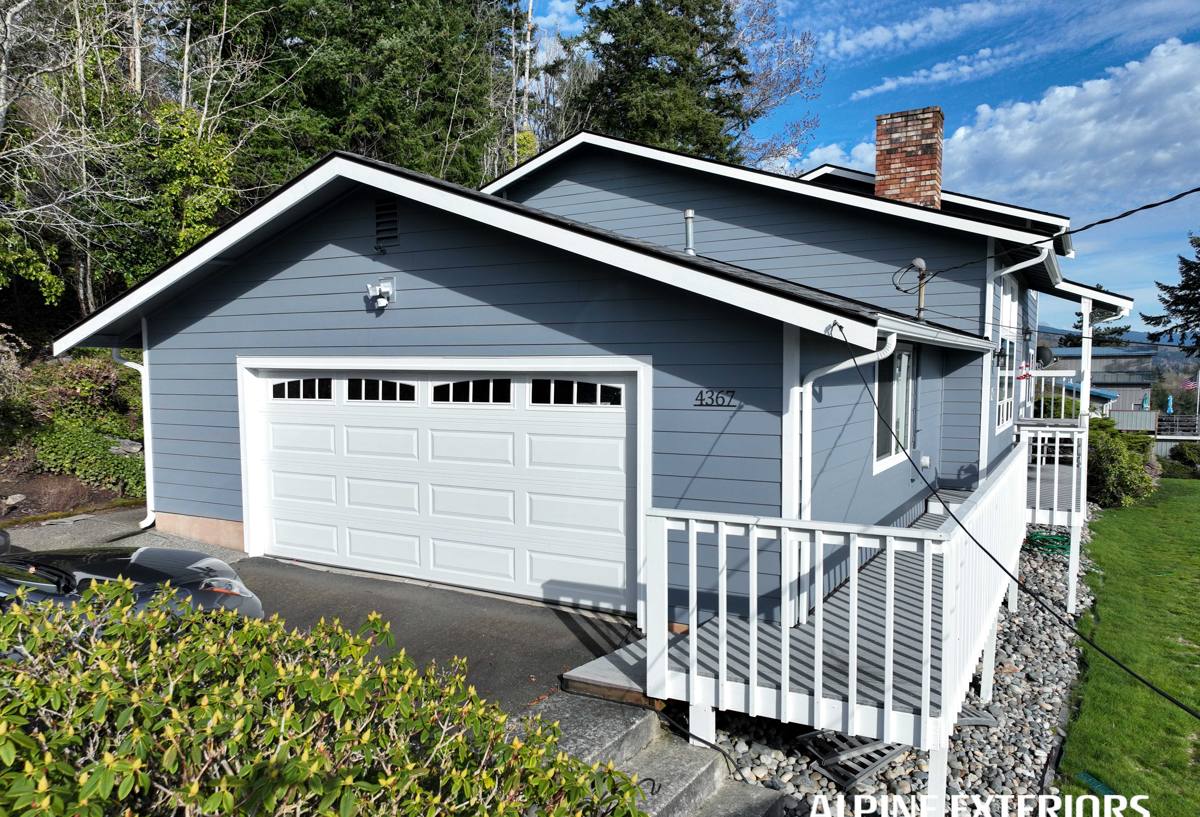
A deck at Point Whitehorn often has stairs leading down a slope toward the water or yard, and those stairs see more rain and moss exposure than the main deck surface because they're frequently in shade and get less airflow. We build stair treads and railing systems with that in mind — surface texture that stays gripable when wet, railing posts anchored to handle wind load, and spacing and height that meet current code. None of this is exotic; it's just easy to skip if a crew isn't used to building for this specific kind of exposure.
How We Approach a Point Whitehorn Deck Project
- On-site assessment. We look at your lot's specific exposure — how much direct wind and salt spray it gets, drainage patterns, shade, and slope — before recommending materials or a layout.
- Honest material conversation. We explain the real trade-offs between wood and composite/PVC options for your specific situation, including upkeep and long-term cost, not just upfront price.
- Permitting and engineering. Deck permits and structural requirements are handled correctly from the start so you're not dealing with issues at resale or insurance time.
- Build with coastal-appropriate materials and hardware. Framing, fasteners, and flashing are chosen for this environment, not a generic inland spec.
- Final walkthrough. We go over the finished deck with you, including what maintenance (if any) the material you chose will need going forward.
Why Local Experience on This Stretch Matters
A deck built by a crew that's never worked this exact shoreline will often look fine on day one and start showing problems — rusting hardware, water staining under the ledger, slick moss buildup on stair treads — within a few wet seasons. Building for Point Whitehorn isn't fundamentally different work than building a deck anywhere else in Whatcom County, but it does require knowing which details actually matter for salt air, sustained wind-driven rain, and a long moss season, and not treating those as optional upgrades. We build decks throughout the Birch Bay area, and this stretch of coastline is part of our regular route, not a special trip.
Maintaining a Deck Once It's Built
Whatever material you choose, a little regular attention goes a long way in this climate:
- Sweep debris and organic matter off the deck surface regularly, especially in shaded corners where moss starts first
- Rinse salt residue off periodically, particularly after storms with heavy onshore wind
- Check railing and stair connections annually for any looseness or corrosion
- Reseal or restain wood decking on the schedule appropriate to the product — don't wait until it's visibly gray and dry
- Keep gutters and downspouts near the deck clear so runoff isn't dumping extra water onto the structure
If you're planning a new deck or replacing one that's showing its age at Point Whitehorn, we're happy to take a look and walk you through your options. Reach out for a free, no-pressure estimate using the form below.