 Birch Bay Siding
 Siding Built for the Point Whitehorn Shoreline
Homes along Point Whitehorn sit close to the water, and that location shapes almost every decision that goes into a siding replacement here. The combination of salt-laden air off the strait, wind-driven rain that hits walls sideways instead of falling straight down, and a long, damp moss season that runs from fall through spring puts more stress on exterior siding than most inland Whatcom County neighborhoods ever see. Siding that would hold up fine a few miles inland can fail early out here if it isn't matched to the exposure and installed correctly the first time.
This page is specifically about replacing siding on homes in and around Point Whitehorn, not a general overview of siding work. If you own a home in this area, the goal is to explain what your siding is actually up against, what a correct replacement job looks like, and why the details matter more here than they do in a lot of other parts of Birch Bay.
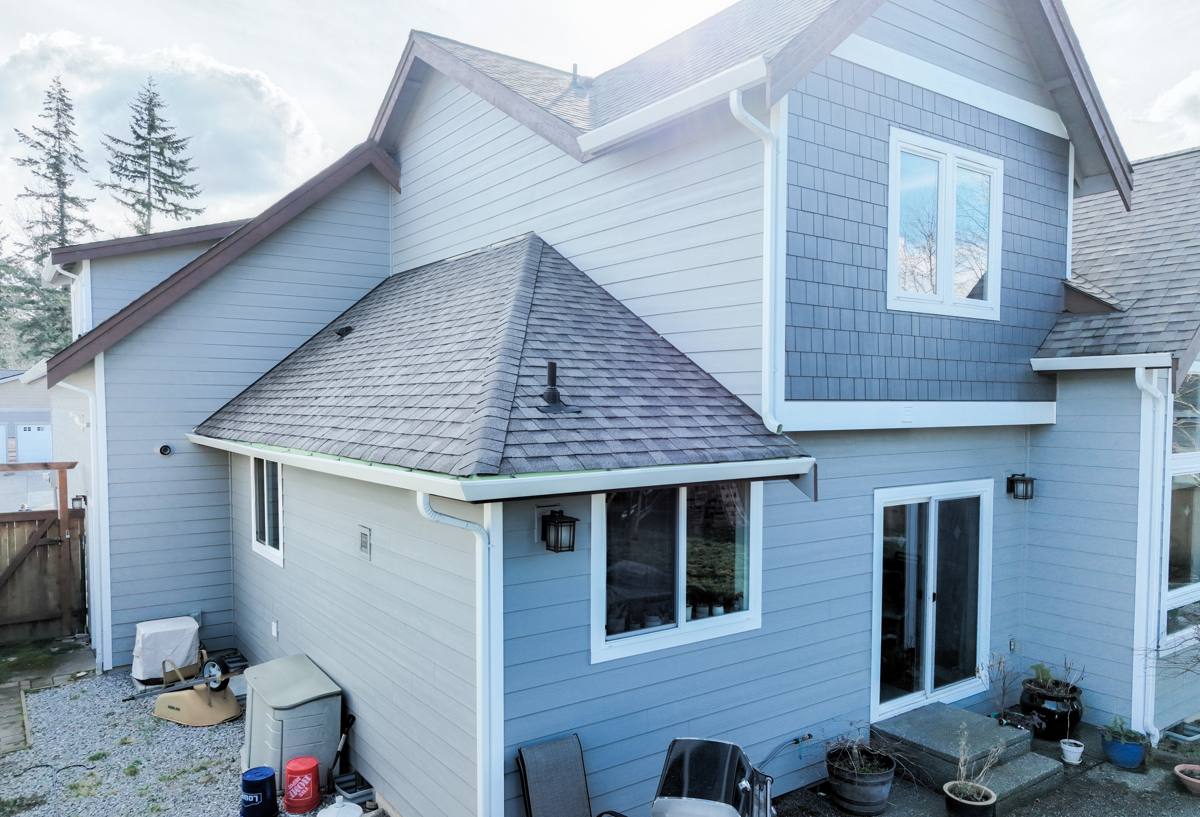
What the Climate Does to Siding Out Here
Salt Air
Airborne salt from the water settles on exterior surfaces year-round, not just during storms. Over time it accelerates corrosion on unprotected fasteners and trim, and it can degrade certain siding materials and finishes faster than manufacturers' standard warranties assume. Materials and hardware chosen for this stretch of coastline need to be rated for that kind of exposure, not just "exterior grade" in a generic sense.
Driving Rain
Point Whitehorn's exposure means storms often arrive with real wind behind them, which pushes rain into seams, laps, and penetrations that would stay dry in a calmer setting. This is a water-management problem as much as a material problem — the siding itself is only one layer of the system that keeps a house dry.
Moss and Prolonged Dampness
Tree cover and marine humidity keep north- and west-facing walls damp for long stretches of the year. Moss and algae take hold wherever siding stays wet and can't dry out between rain events, and once established they hold moisture against the wall surface, which shortens the life of paint, caulk, and the substrate underneath.
Signs a Point Whitehorn Home Needs Siding Replaced, Not Just Patched
- Soft or spongy spots when you press on siding near the bottom courses or around window trim
- Persistent moss or algae staining that comes back within a season of cleaning
- Visible gaps, cupping, or warping in lap siding, especially on the water-facing side of the house
- Paint that's peeling or bubbling rather than just fading, which usually points to moisture trapped behind the surface
- Rust streaking from fasteners or trim corners
- Interior signs — musty smell, discoloration, or soft drywall near exterior walls — that suggest water has already gotten past the siding
One or two of these on their own might be a repair. Several at once, or any sign that moisture has reached the sheathing, usually means the siding system as a whole has reached the end of its useful life and patching would just be delaying a bigger repair.
Why We Install Only James Hardie Fiber Cement
We don't install vinyl, LP SmartSide, Cemplank, Allura, primed spruce, or cedar. That's not a marketing position — it's a standard we hold to because of what we've seen these products do (and not do) in coastal, wet-climate exposure like Point Whitehorn's. Vinyl expands and contracts with temperature swings and can crack or warp under sustained wind-driven rain and UV exposure. Wood-based and wood-composite products need more diligent maintenance to keep moisture out at seams and cut edges, and if that maintenance lapses even for a season or two in a damp, mossy environment, the consequences show up fast. Fiber cement alternatives to Hardie can perform reasonably well, but we've standardized on one manufacturer so our crews install one system to one spec, every time, with warranty coverage we can stand behind.
James Hardie fiber cement is non-combustible, doesn't support moss growth the way wood-based products can, and holds a factory-applied ColorPlus finish that's engineered to resist fading and moisture intrusion far better than field-applied paint. Hardie's HZ5 product line is specifically engineered for climates with heavy moisture and freeze-thaw cycling, which fits the Whatcom County coast. The combination of the material itself and a transferable warranty backing it is why we put it on homes instead of the alternatives.
What a Correct Siding Replacement Involves
Tear-Off and Sheathing Inspection
Every replacement starts with removing the old siding down to the sheathing and actually looking at what's underneath — not assuming it's fine. In a damp, salt-exposed area like Point Whitehorn, it's common to find soft sheathing, rusted fasteners, or water staining behind siding that looked okay from the outside. Any compromised sheathing gets replaced before anything new goes back up; installing new siding over damaged sheathing just locks the problem inside the wall.
Weather-Resistive Barrier and Flashing
The house wrap, flashing at windows and doors, and kick-out flashing at roof-wall intersections are what actually keep bulk water out of the wall assembly — the siding is the second line of defense, not the first. Given how much wind-driven rain this area gets, flashing details around every penetration and transition matter as much as the siding itself.
Installing to James Hardie's Fastening and Clearance Specs
Hardie's warranty depends on installation to its published specifications: correct fastener type and spacing, proper clearance from grade, decks, and roof lines, and correctly sized gaps at butt joints and trim to allow for the material's normal expansion and contraction. Skipping these details is the single most common way a fiber cement job fails early, and it's also the most common reason a manufacturer warranty gets denied later.
Caulking, Touch-Up, and Finish Details
ColorPlus finish is factory-cured and far more durable than job-site paint, but cut edges and any field-touch-up areas still need to be sealed with the manufacturer-approved products to maintain that protection. This is a small step that's easy to rush and important not to.
Our Process for Point Whitehorn Projects
- On-site estimate: We walk the house, check current siding condition, and look for any signs of moisture already behind the walls before quoting anything.
- Scope and product selection: We spec the right Hardie line and profile for the home's exposure — water-facing walls, north-side shade, and roofline wind exposure all factor in.
- Prep and protection: Landscaping, walkways, and windows get protected before tear-off starts.
- Tear-off and sheathing repair: Old material comes off, sheathing gets inspected, and any damaged sections are replaced before moving forward.
- Weather barrier and flashing installation: This step doesn't get rushed — it's the layer that actually keeps water out.
- Hardie installation to spec: Fastening, clearances, and joint spacing follow manufacturer requirements so the warranty stays intact.
- Final inspection and cleanup: We walk the finished job with the homeowner and clear the site of debris and old material.
What Affects the Cost of a Siding Replacement Here
| Factor | Why It Matters at Point Whitehorn |
|---|---|
| Sheathing condition | Salt air and prolonged dampness increase the chance of hidden rot that needs repair before new siding goes on |
| Wind and water exposure by elevation | Water-facing and north walls may need more attention to flashing and clearances than sheltered sides |
| Home size and complexity | Corners, trim details, and dormers all add labor and material beyond simple wall square footage |
| Siding profile and color | Lap width, shingle-style panels, and ColorPlus color selections vary in material cost |
| Access and site conditions | Sloped or wooded lots common near the shoreline can affect staging, equipment, and labor time |
| Existing moisture damage | Any rot or mold found during tear-off adds repair scope that's better addressed than covered up |
We don't quote a number without walking the property first, because two homes of similar size in this same neighborhood can have very different scopes once we see what's actually behind the old siding.
Why It Matters That We Already Work in Point Whitehorn
A crew that already works this stretch of the Birch Bay coastline knows what to expect before the tear-off even starts — where moss buildup tends to be worst, which elevations typically take the brunt of the weather, and what kind of sheathing condition is common in homes of a given age out here. That's not a substitute for inspecting each house individually, but it does mean fewer surprises and a scope of work that's realistic from the first estimate rather than getting revised mid-project. It also means we're a known, reachable local business if a warranty question or follow-up comes up years down the road, not a crew that worked the area once and moved on.
Keeping New Siding Performing Long-Term
- Rinse siding periodically, especially shaded and water-facing walls where moss and salt residue accumulate fastest
- Keep gutters clear so runoff doesn't sheet down wall surfaces
- Trim back vegetation and tree limbs that keep siding shaded and damp
- Reapply caulk at trim and penetration points if it starts to crack or pull away
- Address any new moss growth early rather than letting it establish
- Have siding and flashing points checked after major windstorms
None of this is heavy maintenance — it's the kind of upkeep that lets a correctly installed Hardie system reach the long service life it's designed for, even in a demanding coastal spot like this one.
If your siding is showing wear, or you just want an honest read on how much life it has left, we're happy to come out to your Point Whitehorn property, take a real look, and put together a straightforward, no-pressure estimate. Use the form below to get started.