 Birch Bay Siding
 Roof Repair Built for the Cherry Point Stretch of Birch Bay
Cherry Point sits on one of the more exposed shorelines in Whatcom County, and the homes out there take a different kind of beating than a roof ten miles inland. Between the salt-laden wind off the Strait of Georgia, the driving rain that comes sideways more often than straight down, and a moss season that seems to start earlier and last longer every year, roofs in this pocket of Birch Bay wear out on their own schedule. We repair roofs specifically with that environment in mind, not a generic checklist written for a drier part of the state.
This page covers roof repair as its own service — patching, flashing work, leak tracing, and targeted section replacement — for homeowners in and around Cherry Point who need a problem fixed correctly rather than papered over.
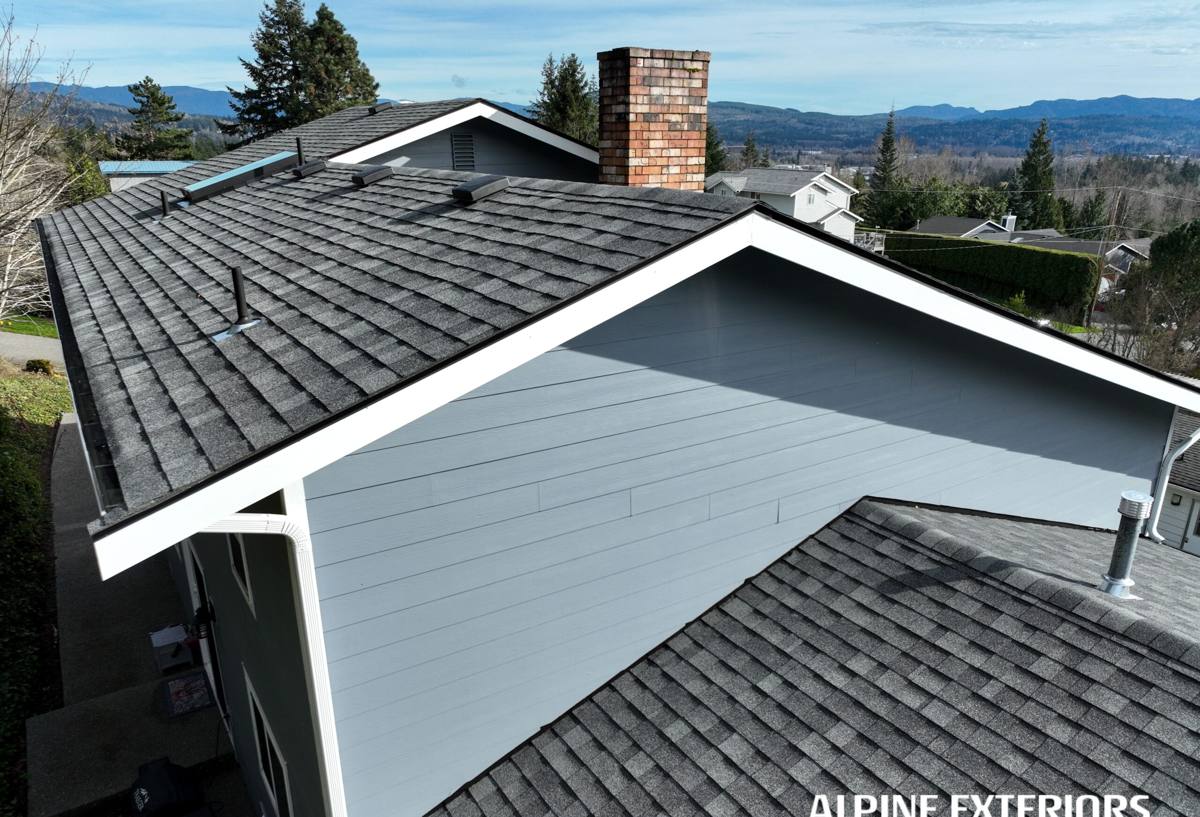
Why Cherry Point Roofs Fail Differently
Salt Air and Metal Fatigue
Airborne salt accelerates corrosion on anything metal on your roof: flashing, fasteners, vent caps, gutter hangers. A nail that would last decades in a drier inland yard can start weeping rust streaks in a fraction of that time out here. When we find a leak near a chimney, skylight, or wall-to-roof transition in this area, we assume the flashing and fasteners are suspect until proven otherwise, because that's usually where salt exposure shows up first.
Driving Rain and Wind-Driven Water
Whatcom County storms coming off the water don't just drop rain straight down — wind pushes it sideways and up under laps, ridge caps, and poorly sealed penetrations. A roof that would shed water fine in a calm rain can still leak in a Cherry Point windstorm if the underlayment, lap spacing, or fastening pattern wasn't done with wind-driven water in mind. This is one of the most common reasons we get called to a roof that "looks fine" from the ground.
Moss, Shade, and Moisture Retention
The tree cover and marine moisture around Birch Bay create long moss seasons. Moss holds water against the roof surface far longer than the material was designed to tolerate, and it works its way under shingle tabs and into seams. Left alone, it doesn't just look bad — it shortens the life of the roofing material underneath it and can mask a leak until the damage has already spread into the decking.
What a Correct Roof Repair Actually Involves
A lot of roof "repairs" are really just a patch over a symptom. Ours start with finding the actual cause, because a leak repaired in the wrong spot will simply reappear a season later, usually after more damage has been done to the decking or interior finishes underneath.
Our Repair Process
- Diagnose from the source, not the stain. Interior water stains rarely sit directly under the roof defect — water travels along rafters and decking before it shows up on a ceiling. We trace the path back to the actual entry point.
- Inspect the surrounding material, not just the failure point. If one section of flashing or shingle has failed from salt exposure or age, the material right next to it is usually close behind. We check adjacent areas so you're not paying for a repair that needs a repeat visit in a year.
- Repair with materials suited to this climate. That means corrosion-resistant fasteners and flashing, proper underlayment at repair seams, and attention to how the patch integrates with the surrounding roofing so it isn't a weak point of its own.
- Clear moss and debris as part of the job, not an afterthought. If moss contributed to the failure, we address it in the repair area so the fix isn't sitting under the same conditions that caused the original problem.
- Document what we find. If your roof has more wear than the immediate repair area, we'll tell you plainly what we saw and what it means for planning ahead — no pressure, just information.
Common Cherry Point Roof Repair Calls
| Issue | Typical Cause in This Area | What the Repair Involves |
|---|---|---|
| Leak near chimney or skylight | Corroded or failed flashing from salt air exposure | Remove and replace flashing, check surrounding underlayment |
| Leak after windstorms specifically | Wind-driven rain forced under laps or ridge caps | Re-seat and reseal affected courses, check fastening pattern |
| Soft or spongy roof deck | Prolonged moisture retention under moss or debris | Cut back affected decking, replace, and re-roof the section |
| Granule loss / bald patches | Age combined with sustained damp conditions | Assess remaining material life; patch or recommend section replacement |
| Rusted fasteners or gutter hangers | Salt air corrosion | Replace with corrosion-resistant hardware, inspect nearby fasteners |
Repair vs. Replacement: An Honest Read
Not every roof that's leaking in Cherry Point needs a full replacement, and not every roof that "just needs a patch" should stop there. We look at three things before recommending either direction.
When Repair Makes Sense
- The failure is localized to flashing, a single penetration, or a small section of material
- The roof deck underneath is still sound once the covering is pulled back
- The rest of the roofing has reasonable remaining life left in it
- The repair can be tied into the existing material without creating a mismatched patchwork of ages
When Replacement Is the More Honest Answer
- Multiple areas are failing independently, suggesting the material itself is at the end of its service life
- The decking has widespread moisture damage, not just at one leak point
- Repeated repairs would end up costing close to what a properly sequenced replacement would
- The roof's age and exposure history make further patching a short-term fix at best
We'll tell you which category your roof falls into and explain why — including if that means recommending you hold off on spending money until it's actually needed.
Roofing Materials We Work With for Repairs
Most Cherry Point homes are roofed in asphalt composition shingle, with some cedar and standing-seam metal mixed in around the area. Repair approach differs by material:
Asphalt Composition Shingle
The most common material we repair locally. Individual shingles and flashing sections can usually be replaced without disturbing the whole roof, provided matching material is available and the surrounding shingles are still flexible enough to work with.
Cedar Shake and Shingle
Cedar in a marine climate needs repairs that respect its need to breathe and dry out between wet periods. We avoid sealing cedar in ways that trap moisture against the wood, since that shortens its life rather than extending it — a common mistake with quick-fix repairs on cedar roofs.
Standing-Seam and Metal Roofing
Metal repairs in a salt-air environment come down to fastener and seam integrity. We use corrosion-resistant hardware and pay close attention to any point where dissimilar metals meet, since that's where galvanic corrosion tends to start.
What to Check Before You Call Anyone
A few things you can look for yourself that help us diagnose faster and help you avoid unnecessary damage while you wait for an estimate:
- Water stains on interior ceilings or walls, and roughly where they sit relative to exterior features like chimneys or vents
- Visible moss buildup, especially in shaded or north-facing sections of the roof
- Sagging or soft-looking spots when viewed from the ground or a safe vantage point
- Granules collecting in gutters or at downspout outlets
- Any daylight visible through the attic if you can safely check it
- Timing of the leak — does it show up during wind-driven storms specifically, or with any rain?
None of this replaces a proper inspection, but it helps us come prepared and gives you a head start on describing the problem accurately.
Why a Crew That Knows Cherry Point Matters
Roof repair isn't one-size-fits-all across Whatcom County. A crew that mostly works drier, more sheltered inland neighborhoods can still do competent work, but they may not default to corrosion-resistant fasteners, may not budget extra time for moss removal, and may not think to check for wind-driven water intrusion patterns that are routine out here. Working this stretch of Birch Bay regularly means we've seen how the salt air, the storm direction, and the moss season actually play out on real roofs over time — and we build the repair accordingly instead of relearning it on your roof.
Get a Straightforward Estimate
If you're dealing with a leak, visible moss damage, or storm-related roof issues at your Cherry Point property, we're glad to take a look and give you an honest read on what it needs — repair, partial replacement, or just monitoring for now. Use the form below to request a free, no-pressure estimate and we'll get back to you to schedule a look at the roof.