 Birch Bay Siding
 Roof Repair Built for Custer's Conditions
Custer sits close enough to the water that salt-laden air is a fact of life for roofs in this part of Whatcom County. Add in driving rain that comes sideways off winter storms and a moss season that can run most of the year in shaded, north-facing sections of a roof, and you have a climate that wears on roofing systems in ways that inland homes never experience. A roof repair here isn't just patching a leak — it's addressing the specific combination of moisture, salt exposure, and organic growth that causes most of the damage we see.
We work on homes throughout Custer and the greater Birch Bay area regularly, and the failure patterns repeat themselves. Understanding why helps homeowners make better decisions about what actually needs fixing and what can wait.
Why Roofs in This Area Fail the Way They Do
Salt Air and Metal Components
Flashing, fasteners, vents, and any exposed metal on a roof are the first things to show wear near Birch Bay. Salt in the air accelerates corrosion on unprotected or lower-grade metal, which is why we pay close attention to flashing condition on every repair call, even when the reported problem is something else entirely, like a shingle that blew off.
Driving Rain and Wind-Driven Water Intrusion
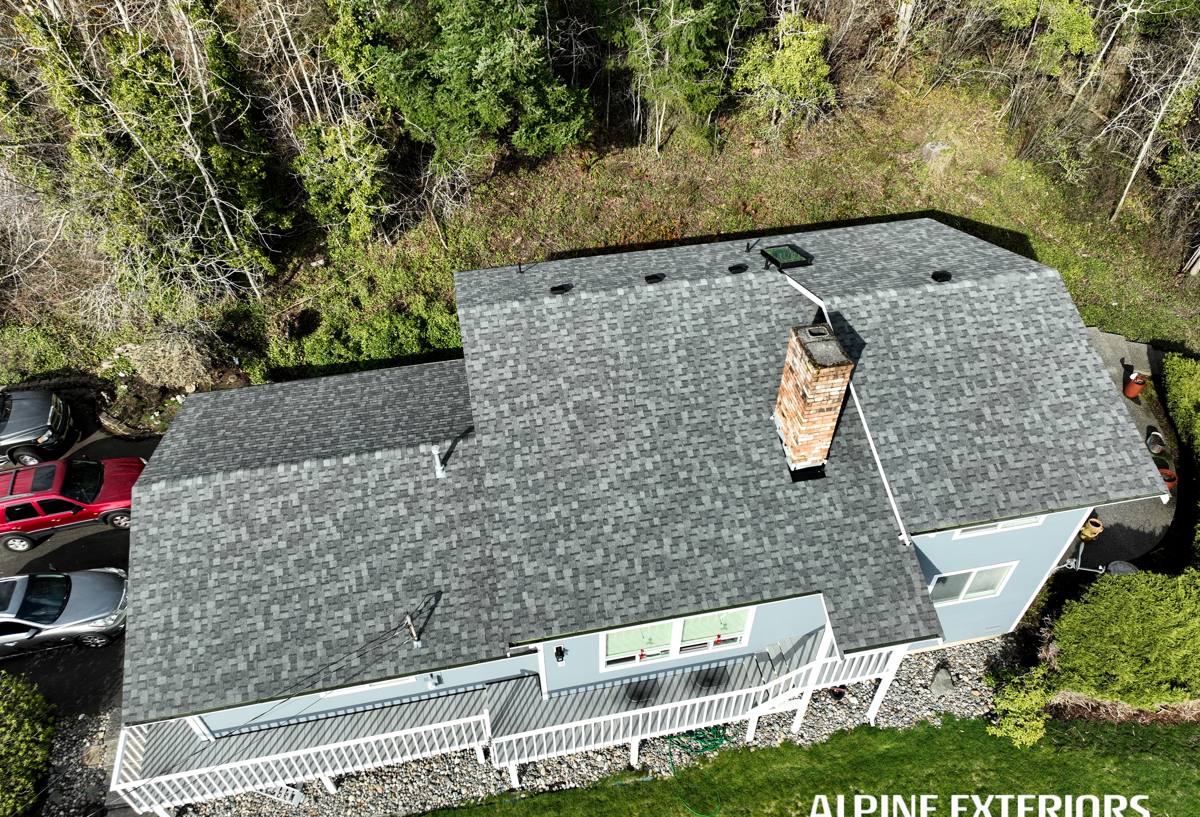
Standard rain falls straight down and sheds off a roof the way it's designed to. Driving rain — the kind that comes in at an angle during a Pacific storm — gets pushed up under shingle edges, around vent boots, and into flashing laps that would otherwise stay dry. This is why leaks in Custer often show up at penetrations (chimneys, plumbing vents, skylights) rather than in open field areas of the roof.
Moss, Shade, and Moisture Retention
Moss doesn't just look bad. It holds moisture against the roofing material, lifts shingle edges as it grows, and can work its way under flashing over time. Homes with mature trees or north-facing roof slopes in Custer tend to see moss establish faster and stay wetter longer into the spring, which shortens the life of the roofing material underneath it.
Common Repairs We're Called Out For in Custer
- Flashing repair or replacement around chimneys, skylights, and vent penetrations
- Shingle replacement after wind events, especially on exposed or corner sections
- Moss removal and treatment along with repair of the shingle damage it caused
- Fixing leaks at roof-to-wall transitions where wind-driven rain gets pushed uphill
- Repairing or resealing gutter and roof edge details that have started letting water track back under the roofing
- Addressing soft spots or sagging decking found during a leak investigation
What a Correct Repair Actually Involves
A roof repair done right starts with finding the actual source of the problem, not just patching where the water is showing up inside the house. Water can travel along decking or framing for several feet before it drips through a ceiling, so a repair that only addresses the visible interior stain often misses the real entry point and the leak comes back within a season or two.
Diagnosis First
Before any material comes off the roof, we trace the leak or damage to its source. That usually means checking flashing laps, penetration seals, shingle condition, and the state of the underlayment in the affected area. In Custer's climate, we're also checking for moss intrusion and salt-related corrosion on metal components even if that isn't the reason for the service call.
Matching Materials and Technique
Repairs need to integrate with what's already on the roof — matching shingle profile and color where possible, using flashing details appropriate to the existing roof design, and following manufacturer installation methods so the repaired section performs and ages the same way as the surrounding roof. A repair that looks fine but wasn't tied into the existing water shedding path correctly will fail again, often in the same spot.
Ventilation and Moisture Checks
Because this region deals with sustained damp weather, we also look at attic ventilation when we're up on a roof for a repair. Poor ventilation traps moisture, which speeds up decking rot and can mimic or worsen the effects of an actual roof leak. Fixing a leak without addressing a ventilation problem is a half-measure.
Repair or Replace? How We Help Homeowners Decide
Not every roof problem in Custer means a new roof, and not every leak is a simple fix. The table below outlines the general signals we look at when advising a homeowner one way or the other. These are guidelines, not guarantees — every roof needs an actual inspection before a real recommendation.
| Signal | Repair Is Often Enough | Replacement Should Be Considered |
|---|---|---|
| Roof age | Well within its expected service life | At or past the end of its typical lifespan for the material |
| Extent of damage | Isolated to one section or penetration | Spread across multiple slopes or the whole roof |
| Decking condition | Solid, no rot found during inspection | Soft, delaminated, or rotted decking discovered |
| Shingle condition overall | Granule loss and wear limited to the repair area | Widespread granule loss, curling, or brittleness roof-wide |
| History of leaks | First occurrence or a clear, single cause | Recurring leaks in different spots over time |
| Moss/moisture damage | Surface-level, hasn't reached the decking | Moisture has tracked into the decking or framing |
When a repair is the right call, we say so — there's no reason to sell a full replacement when a properly done repair will hold up. When the damage points to something bigger, we'll explain exactly why, in plain terms, before recommending it.
Our Roof Repair Process in Custer
- Inspection. We look at the reported problem area plus the rest of the roof, since related issues (moss, flashing wear, ventilation) are common in this climate and often connect to the main complaint.
- Straightforward quote. You get a clear explanation of what's actually wrong, what we recommend, and what it costs — before any work starts.
- The repair itself. We remove and replace only what's damaged, using materials and techniques that match the existing roof and hold up to local wind and rain exposure.
- Cleanup. Old materials, debris, and any moss or organic material removed during the repair get cleared from the roof and property.
- Follow-through. If a repair doesn't hold — which is rare when the diagnosis is done right — we come back and make it right.
Moss and Debris Management: An Ongoing Part of Roof Care Here
Because moss season is long in this part of Whatcom County, a single repair visit often isn't the end of the story for a roof with moss problems. We treat moss removal as part of the repair when it's contributing to the damage, but we also talk to homeowners honestly about maintenance — periodic moss treatment and debris clearing extends the life of a repair and the roof as a whole. A roof that gets checked and cleared once or twice a year holds up noticeably better than one that doesn't get looked at until there's a leak.
Why It Matters to Hire a Crew That Already Works in Custer
Roofing crews that mainly work drier, inland areas don't always account for how aggressively salt air and driving rain attack flashing and penetration seals near the water. A crew that regularly works Custer and the Birch Bay shoreline knows which details tend to fail first in this specific environment and inspects those areas as a matter of habit, not an afterthought.
Local, regular presence also means faster response when a storm causes damage and a straightforward path back to the same crew if a question comes up after the repair. We're not driving in from out of the area to do a one-off job and disappearing — we're working this community's roofs on an ongoing basis.
Signs You Should Have a Roof Repair Looked At Now
- Water stains on ceilings or interior walls, especially after a windy rainstorm
- Visible moss buildup, particularly on shaded or north-facing roof sections
- Missing, cracked, or curling shingles anywhere on the roof
- Rust staining or visibly corroded flashing around chimneys or vents
- Granules collecting in gutters or downspouts in larger amounts than usual
- Daylight visible through the roof deck when viewed from inside the attic
- Soft or spongy spots felt when walking the attic floor near the roofline
If any of these sound familiar, it's worth getting a look before the next storm rolls through rather than after.
Get a Straightforward Look at Your Roof
If you're dealing with a leak, storm damage, or a roof that's showing its age in Custer or anywhere around Birch Bay, we're happy to come take a look and tell you honestly what it needs. The estimate is free, there's no pressure attached to it, and you'll get a clear explanation of what's going on before you decide anything. Use the form below to get started.