 Birch Bay Siding
 Why California Creek Roofs Wear Differently
California Creek sits close enough to Birch Bay and the Salish Sea that homes here take on a different set of stresses than roofs further inland. Salt-laden air off the water speeds up corrosion on exposed metal — flashing, fasteners, pipe boots, and vent caps all age faster when they're breathing salt spray year-round. Add in Whatcom County's driving, wind-pushed rain during fall and winter storms, and you've got water testing every seam and lap on a roof, not just falling straight down onto it. Then there's moss. Between the tree cover common in this area and a wet season that stretches from October well into spring, shaded or north-facing roof sections stay damp far longer than they would in a drier climate, and moss gets a real foothold.
None of these factors are unusual on their own. What makes California Creek roofs behave differently is that all three show up together, on the same roof, at the same time. A shingle rated for a 25-30 year lifespan in a dry inland climate often falls short of that here, not because the product is bad, but because the environment is asking more of it.
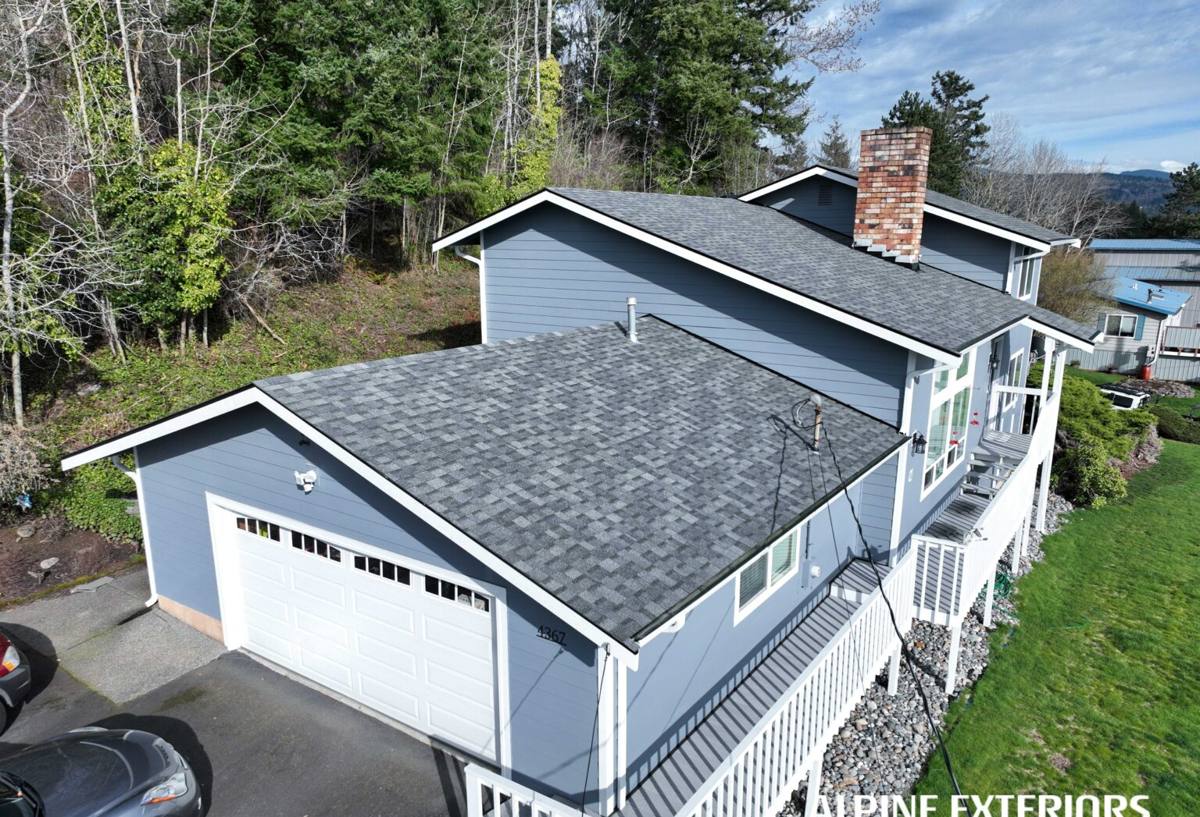
Signs a Replacement Makes More Sense Than Another Repair
Most homeowners don't wake up one day and decide to replace a roof — it's usually a string of small issues that finally add up. Here's what we look for when deciding whether a repair still makes sense or whether it's time to talk replacement:
- Granule loss heavy enough that you can see bald or shiny patches on multiple slopes, not just one spot
- Shingles that are curling, cupping, or cracking, especially on the sun- and wind-exposed sides
- Moss growth that's established enough to lift shingle edges, not just surface staining
- Soft or spongy decking felt underfoot during inspection, a sign moisture has reached the plywood or boards
- Flashing leaks that keep coming back in the same spot after repair, often around chimneys or valleys
- Interior staining or damp drywall that shows up specifically after wind-driven rain events, not steady downpours
- A roof already on its second layer of shingles, which limits future repair options
- Asphalt shingles pushing past the 18-22 year mark in this climate, even if they look okay from the ground
One or two of these on their own might still be repairable. Several together, especially combined with age, usually mean the underlying materials are failing faster than any patch can keep up with.
Choosing a Roofing System for This Climate
There isn't one "right" material for every California Creek home — it depends on your roof's pitch, how much shade and tree cover you have, and your budget. What matters is picking a system with your specific exposure in mind rather than whatever's cheapest at the yard that week.
| Material | Moss & Moisture Behavior | Salt Air / Wind Durability | Typical Lifespan Here |
|---|---|---|---|
| Architectural asphalt shingle | Good with proper ventilation; algae-resistant granules help but don't eliminate moss risk in heavy shade | Solid when fastened and flashed correctly; wind rating matters more than brand | 18-25 years |
| Standing seam metal | Sheds moss and moisture very well due to smooth, steep-shedding surface | Strong wind uplift resistance; fasteners and coatings should be marine-rated near the water | 40-50+ years |
| Synthetic/composite shingle | Resists moisture absorption better than organic-mat products | Good wind ratings available; performance varies more by manufacturer | 30-40 years |
We don't push one product on every job. A heavily shaded, low-slope section of roof is a different problem than a steep, open, wind-exposed slope facing the water, and sometimes the right answer is a different material or detail on different parts of the same house.
Why We're Selective About Certain Products
Some roofing products that work fine in drier, calmer climates don't hold up as well once you add constant moisture and salt exposure to the mix — not because they're poorly made, but because their maintenance needs or moisture behavior don't match this environment well. Our standard is to install systems and details that stay low-maintenance for the homeowner here, even if that means steering away from a product that's popular elsewhere.
What a Correct Tear-Off and Replacement Actually Involves
Tear-Off and Deck Inspection
Every job starts with a full tear-off down to the decking, not a layover. That's the only way to actually see what's underneath — soft plywood, rotted boards, or old damage hidden by the shingles above it. Any compromised decking gets replaced before anything new goes down; installing a new roof over a weak deck just guarantees problems later.
Underlayment and Water Barrier
Given how much wind-driven rain this area sees, underlayment choice and placement matter more than most homeowners realize. Self-adhered water-and-ice barrier at eaves, valleys, and around penetrations gives an extra layer of protection in the spots most likely to take on wind-pushed water, backed by synthetic underlayment across the rest of the field.
Flashing Details
Flashing is where most roof leaks actually start, not in the field of the shingles. Chimneys, sidewalls, valleys, and plumbing vents all need properly formed, correctly lapped flashing — and in a salt-air environment, that flashing should be a material that resists corrosion over time, not just at install.
Fasteners and Hardware
Standard fasteners can start showing rust streaks within a few years this close to the water. We use corrosion-resistant fasteners and hardware suited to a marine-influenced climate, which costs a little more upfront and saves a lot of headache later.
Ventilation and Moisture Control
A roof replacement is also a chance to fix ventilation, and in a climate this wet, it shouldn't be skipped. Balanced intake and exhaust ventilation — typically soffit vents paired with a ridge vent — lets warm, moist air escape the attic instead of condensing against the underside of the roof deck. Poor ventilation traps moisture, which shortens the life of new shingles from underneath and can contribute to mold or rot in the attic long before the roofing material itself fails. It's one of the most overlooked parts of a replacement, and one of the cheapest to get right while the roof is already open.
Our Process, Start to Finish
1. On-Site Assessment
We walk the roof, check the decking condition where accessible, look at existing ventilation, and note exposure — how much shade, wind, and moss history the roof has.
2. Written Estimate
You get a clear, itemized estimate covering material, tear-off, decking allowances, flashing details, and ventilation work — no vague lump-sum guessing.
3. Scheduling Around the Weather
Given how much of the year is wet here, we plan installs around realistic dry-weather windows and keep the roof protected if conditions shift mid-job.
4. Tear-Off and Installation
Full tear-off, deck inspection and repair, water barrier and underlayment, flashing, ventilation, and material installation, done in sequence with nothing rushed to beat weather.
5. Cleanup and Walkthrough
Full debris haul-away, a magnetic sweep of the yard and driveway for stray nails, and a walkthrough so you can see the finished work and ask questions before we call it done.
What Affects the Cost
Every roof is priced individually, but these are the main factors that move the number up or down:
| Factor | Why It Matters |
|---|---|
| Roof size and pitch | Steeper roofs take longer to work safely and use more material for the same footprint |
| Material choice | Asphalt, synthetic, and metal carry different material and labor costs |
| Decking condition | Rotted or soft decking found during tear-off adds repair cost that can't be known until the old roof is off |
| Number of existing layers | Tearing off multiple layers takes more labor and disposal than a single layer |
| Roof complexity | Valleys, dormers, chimneys, and multiple planes all add flashing work and time |
| Access | Trees, fencing, or tight lot lines can limit equipment and slow the job |
We'd rather walk you through these factors on your specific roof than quote a number over the phone that doesn't hold up once we're actually up there.
Why It Matters to Hire a Crew That Already Works This Area
A roof replacement done by a crew unfamiliar with Whatcom County's coastal conditions can look fine on day one and still underperform within a few years — wrong fastener grade, missed flashing detail, or ventilation that doesn't account for how wet the shoulder seasons get here. A crew that regularly works Birch Bay and the surrounding communities already knows which details matter most in this exposure, understands local permitting expectations, and isn't guessing at how a product will hold up against salt air and driving rain because they've already seen it happen.
That local familiarity doesn't replace good workmanship, but it does mean fewer surprises — for us and for you.
If you're weighing a repair against a full replacement, or just want an honest read on where your roof stands, we're happy to take a look and walk you through what we find. Fill out the form below for a free, no-pressure estimate.