 Birch Bay Siding
 Roof Replacement Built for Marietta's Climate
Marietta sits on the water side of Birch Bay, and that location puts a specific kind of pressure on a roof that homes a few miles inland simply don't deal with. Salt-laden marine air moves across the neighborhood most of the year, driving rain gets pushed sideways into roof-to-wall transitions and eaves during fall and winter storms, and shaded or north-facing roof planes stay damp long enough to grow moss for most of the calendar. None of that is unusual for this part of Whatcom County — it's just the baseline a roof has to survive, and it's why a roof replacement done right here looks a little different than the same job done in a drier, more sheltered location.
This page covers what a correct roof replacement involves for a Marietta home specifically: the materials and details that hold up to this environment, how our process works, and why hiring a crew that already works this stretch of coastline matters more here than it would somewhere calmer.
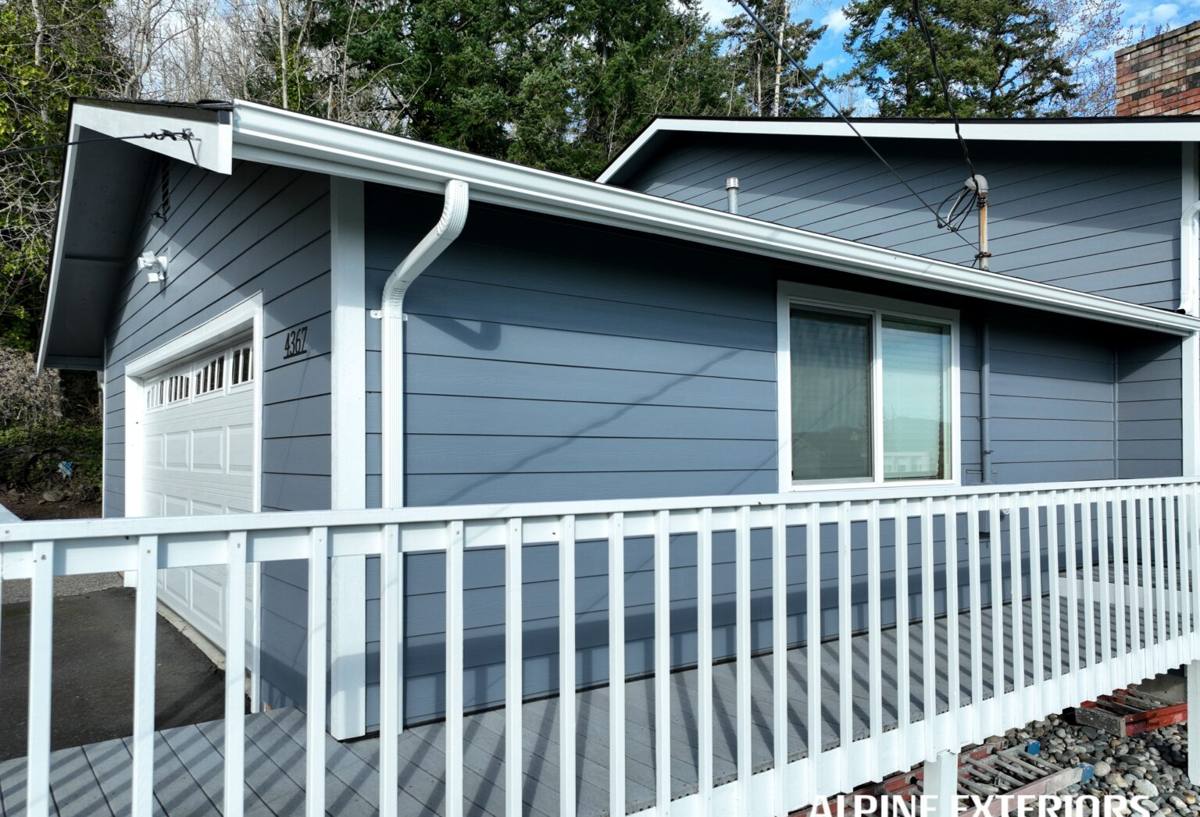
What Marietta's Climate Actually Does to a Roof
Salt Air and Corrosion
Waterfront exposure means more airborne salt than most inland Whatcom County homes see. Salt accelerates corrosion on standard fasteners, flashing, and any exposed metal trim. A roof that looks fine from the ground can have fasteners losing their grip years before the shingles or panels themselves are due for replacement, simply because the hardware underneath wasn't rated for this level of exposure.
Wind-Driven Rain
Being this close to the water also means more wind, and wind-driven rain doesn't behave like a normal straight-down rainfall. It gets forced sideways and upward under shingle tabs, around vent penetrations, and into valleys and roof-to-wall intersections where a lighter-duty underlayment or a rushed flashing detail would otherwise hold up fine. A roof spec that's adequate in a sheltered location can be genuinely undersized for what Marietta sees in a typical winter storm cycle.
A Long Moss Season
Mild temperatures, persistent moisture, and plenty of shaded rooflines add up to a moss and algae season that runs most of the year here, not just a few wet months. Moss doesn't just look bad — it holds moisture against the roof surface, works its way under shingle edges, and shortens the service life of whatever's underneath it. North-facing slopes and anything shaded by trees or a neighboring roofline are usually the first places it shows up and the last places homeowners think to check.
Signs a Marietta Roof Is Due for Replacement
Coastal exposure tends to age a roof faster than its printed warranty number suggests, and by the time interior signs of a leak show up, the underlying damage is often more advanced than it looks. Watch for:
- Granule loss showing up in gutters or downspout runoff, especially after wind events
- Curling, cupping, or cracked shingles, particularly on sun- and wind-exposed slopes
- Heavy moss buildup that's lifting shingle edges rather than just sitting on the surface
- Rusted or corroded flashing around chimneys, vents, and roof-to-wall transitions
- Soft spots, sagging, or visible daylight in the attic around valleys and penetrations
- Repeated small leaks in the same general area after storms, even if each one seems minor
- A roof approaching or past 20-25 years old for asphalt shingle, especially with this level of coastal exposure
Any one of these on its own isn't necessarily an emergency, but a combination of two or three is usually a sign it's time for an honest inspection rather than another round of patch repairs.
What a Correct Roof Replacement Includes Here
Full Tear-Off to Bare Decking
We don't roof over an existing layer. Full tear-off lets us actually see the decking, identify moisture damage that's been building quietly under the old roofing, and start the new roof on a clean, verified surface instead of hiding problems underneath it. In a climate this wet, that inspection step matters more than it would somewhere drier.
Decking Repair, Priced Honestly
Plywood or board decking can't be fully assessed until the old roofing is off. It's common to find soft or delaminated sections around valleys, chimneys, and old vent penetrations on Marietta homes — spots where water has been finding small gaps for years. We show homeowners any damaged sections before replacing them and price additional decking per sheet rather than folding a vague allowance into the original number.
Upgraded Underlayment and Ice-and-Water Shield
Given how much wind-driven rain this stretch of coastline sees, we don't treat underlayment as a minimal-code checkbox. Self-adhered ice-and-water shield at eaves, valleys, and every penetration, paired with a full synthetic underlayment across the field, gives the roof a real second line of defense if wind ever pushes water past the primary roofing surface.
Corrosion-Resistant Fasteners and Flashing
Standard galvanized hardware doesn't hold up as long this close to the water. We spec fasteners and flashing rated for salt-air exposure, which costs more per box than standard hardware but avoids the premature corrosion failures we see on roofs where that detail got skipped to save money upfront.
Moss-Resistant Materials and Ventilation
Algae-resistant shingle granules and copper or zinc strips at the ridge meaningfully slow moss regrowth on shaded slopes, which is close to a necessity rather than an upgrade on a lot of Marietta rooflines. We also check attic ventilation during every replacement — many older homes in this area were built with less intake and exhaust venting than current practice calls for, and correcting that during a re-roof reduces the moisture buildup that leads to premature decking rot.
Material Options for Marietta Homes
| Material | Relative Cost | Fit for Marietta's Climate |
|---|---|---|
| 3-tab asphalt shingles | Lowest | Shortest realistic lifespan in salt air and heavy moss; not our recommendation for waterfront exposure |
| Architectural (laminate) asphalt shingles | Moderate | Best value for most homes here; look for algae-resistant granules given the local moss pressure |
| Standing seam metal | Highest upfront | Long service life if fasteners and flashing are detailed correctly for salt-air exposure; lowest long-run maintenance |
| Composite/synthetic shingle | Moderate to high | Good moisture and impact resistance; check warranty terms carefully since they vary by manufacturer |
Most Marietta homeowners land on architectural asphalt shingles with algae-resistant granules — it's the strongest balance of upfront cost and real-world performance in this climate. Standing seam metal is worth a serious look for anyone planning to stay in the home long-term and wanting to minimize maintenance, particularly on more exposed waterfront lots.
How Our Process Works
- Inspection and honest assessment: We look at the roof, the attic, and the ventilation as one system, not just the shingles on top.
- Written estimate: A clear scope of work covering tear-off, underlayment, flashing, decking allowance, and material — no vague lump-sum guessing.
- Permitting: We pull the required permit and build any code-driven ventilation or detail work into the bid upfront.
- Tear-off and decking inspection: Full removal to bare decking, with any damaged sections shown to the homeowner before replacement.
- Installation: Underlayment, flashing, and roofing material installed to spec, with attention to every detail that matters in a coastal climate, not just the parts that are visible from the street.
- Final walkthrough: We review the finished work and the warranty paperwork with the homeowner before calling the job complete.
Reading a Roof Replacement Estimate
The lowest number on paper isn't the best value if it's missing scope another bid includes. Before comparing totals, check that each estimate covers the same ground:
- Is full tear-off and disposal included, or is it priced as an add-on?
- Does it name the underlayment type, or just say "synthetic underlayment" with no detail?
- Is a decking replacement allowance included, with a stated per-sheet rate for anything beyond it?
- Are fasteners and flashing specified as corrosion-resistant, given the salt-air exposure here?
- Is moss-resistant material or ridge treatment included, or is that an unmentioned upgrade?
- Does it include the permit, or is that left for the homeowner to arrange separately?
- Is the manufacturer warranty explained in writing, including what installation practices are required to keep it valid?
A written estimate that answers all of those clearly is usually a sign of a contractor who's done enough roofs in this exact environment to know where the real costs and risks live.
Why Local Experience in Marietta Matters
A roofing crew that mostly works drier, more sheltered inland areas can still do competent work, but they're less likely to default to the details that matter most on the water — corrosion-rated hardware, upgraded underlayment at every eave and valley, and moss-resistant material as a standard spec rather than an optional add-on. A crew that already works Marietta and the surrounding Birch Bay waterfront has seen what happens when those details get skipped, because we're the ones who get called back to fix it. That experience shows up in the spec sheet before the first shingle ever goes down, not just in how the finished roof looks on day one.
Get an Honest Number for Your Roof
Every roof's real cost and scope depends on its size, pitch, current condition, and site access — factors that only show up in an in-person look, not a generic online estimate. We offer free, no-pressure estimates for Marietta and the surrounding Birch Bay area, with a written breakdown that spells out exactly what your roof needs and why. Use the form below to get started.