 Birch Bay Siding
 Windows Built for Sandy Point's Shoreline Exposure
Sandy Point sits right up against the water in Birch Bay, and that location comes with a real cost to the building envelope. Homes here take a steady diet of salt-laden air, wind-driven rain off the Strait, and a long, damp moss season that can run from fall into spring. Windows are one of the first parts of a house to show that wear — corroded hardware, foggy glass, soft trim, drafts that weren't there five years ago. A window installation done for Sandy Point needs to account for all of that from the start, not just match whatever went in the last time.
This page covers what local homes actually need from a window installation, what a correct job looks like underneath the trim, how we run the project, and why it matters to hire a crew that already understands this stretch of Whatcom County shoreline.
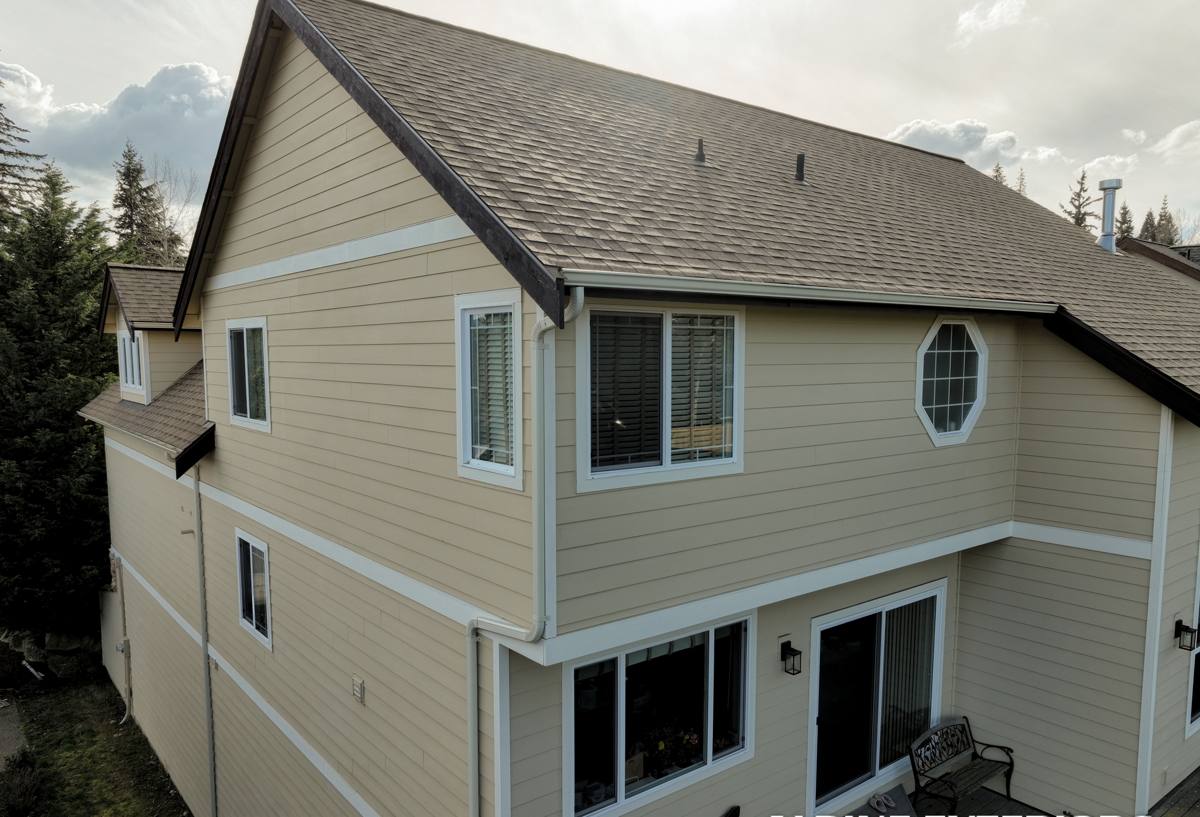
What the Marine Climate Does to Windows Over Time
Salt Air and Corrosion
Airborne salt doesn't just affect homes right on the water — it travels on wind and settles on everything in its path, including window hardware. Cranks, hinges, locks, and aluminum tracks corrode faster near the shoreline than they would a few miles inland. Once hardware seizes or pits, a window stops sealing tightly even if the glass and frame are otherwise fine.
Wind-Driven Rain
Winter storms in Birch Bay routinely push rain sideways, not straight down. That matters because most water intrusion around windows doesn't come from rain landing on the glass — it comes from wind forcing water sideways and upward, under trim and behind flashing that was never detailed to handle it. Stained wall panels below a window, or drywall that feels soft to the touch, are usually a sign that this has already been happening for a while.
Moss and Trapped Moisture
The long moss season here means algae and moss take hold on sills, trim, and north-facing exterior walls and simply don't dry out for months at a time. That constant moisture sitting against wood trim or a poorly sealed frame accelerates rot in a way that drier inland climates don't experience. By the time moss is visibly growing on a windowsill, moisture has usually been sitting there long enough to affect the wood underneath.
Signs a Sandy Point Home Needs Window Replacement
Some of these show up gradually, and homeowners often adjust to them without noticing how much has changed. Worth checking for:
- Fogging or haze between panes (a failed seal on double- or triple-pane glass)
- Trim or sill that feels soft, spongy, or discolored
- Windows that stick, won't latch fully, or need force to open and close
- A noticeable draft near the frame on windy days
- Visible corrosion, pitting, or white residue on hardware
- Energy bills creeping up with no other explanation
- Paint or caulk that's cracked and pulling away from the frame
- Moss or dark staining building up on the sill or trim year after year
Any one of these on its own isn't necessarily an emergency. Several together, especially on a wall that takes the brunt of the weather, usually means it's time to look closer.
What a Correct Window Installation Involves
The window unit itself is only part of the job. Most window failures we see in this area trace back to how the opening was flashed and sealed, not to the window brand. Get the details below wrong and even a good window will let water in eventually.
Flashing and Moisture Management
Every window opening needs a sill pan to catch any water that gets past the glass and hardware, plus flashing tape sequenced correctly — sill first, then jambs, then head flashing lapped over the sides — so water is always directed outward and down, never trapped behind the siding. This sequencing is the single most important detail for a home taking direct, wind-driven rain, and it's also the step that gets rushed on lower-effort jobs because it doesn't show once the trim goes back on.
Air Sealing and Insulation
The gap between the window frame and the rough opening needs to be filled with low-expansion foam or backer rod and sealant — not just caulked around the outside edge. A window that's only sealed on the visible trim can still leak air and moisture into the wall cavity behind it.
Frame Material Choices
Frame material affects how a window holds up to salt air and constant moisture over the long run. We walk homeowners through the trade-offs rather than push one option:
| Frame Material | How It Handles Salt Air & Moisture | Maintenance | Relative Cost |
|---|---|---|---|
| Vinyl | Won't corrode; hardware quality varies by manufacturer | Low — occasional cleaning | Lower to mid |
| Fiberglass | Very stable in moisture and temperature swings, holds up well to coastal exposure | Low | Mid to higher |
| Wood-clad | Attractive, but cladding seams and end grain need careful detailing or driving rain can find a way in | Higher — periodic inspection and touch-up | Higher |
There's no single "right" answer for every home — a sheltered wall can handle a material that a windward wall shouldn't get, which is part of why we assess each opening rather than quote a whole house the same way sight unseen.
Our Window Installation Process
- On-site assessment of each opening — checking existing flashing, sheathing condition, and the sill for hidden rot before quoting anything
- Product selection matched to that specific wall's exposure, not a blanket choice for the whole house
- Careful removal with a structural check — we open the wall enough to inspect framing and sheathing before closing it back up
- Sill pan and flashing tape installed in the correct sequence
- Window set, shimmed level and plumb, and fastened to manufacturer specifications
- Gap sealed with low-expansion foam and backer rod, not just surface caulk
- Flashing integrated with the existing weather-resistant barrier or siding so water sheds outward at every layer
- Interior and exterior trim finished and sealed
- Final walkthrough so the homeowner sees the finished opening operate before we consider the job done
Choosing the Right Window for a Sandy Point Home
Beyond frame material, glass package and orientation both matter more here than in a typical inland install. Dual-pane low-E glass is the standard baseline for energy performance; triple-pane adds further insulation value and can noticeably cut down on wind noise, which is worth considering on a wall facing open water. Which walls take the worst of the weather also affects the recommendation — a west- or southwest-facing wall exposed to the water usually warrants a more weather-tolerant frame and more careful flashing than a sheltered side of the same house.
| Cost Factor | Why It Matters |
|---|---|
| Window size and number of openings | More glass and more openings mean more material and labor |
| Glass package (dual- vs. triple-pane, coatings) | Higher-performance glass costs more up front, pays back in comfort and lower energy use |
| Frame material | Vinyl, fiberglass, and wood-clad sit at different price points, as shown above |
| Condition found behind the old window | Hidden rot or damaged sheathing, if discovered, needs repair before the new window goes in |
| Exposure and accessibility | Upper-floor or hard-to-access windows on exposed walls take more time to detail properly |
Why Hiring a Crew That Already Works Sandy Point Matters
A contractor who works this specific area regularly already knows which walls in this kind of setting take the worst of the wind-driven rain, how long a window install can realistically stay open to the weather before it needs to be dried in, and what Whatcom County permitting requires for the scope of work. That's different from general window experience — a crew unfamiliar with shoreline exposure can install a window correctly by inland standards and still leave it vulnerable to the specific way weather behaves at Sandy Point.
Caring for New Windows Through Moss Season
A correctly installed window still benefits from basic upkeep in this climate. A few habits go a long way:
- Keep weep holes at the base of the frame clear of debris so water can drain out as designed
- Rinse salt film off exterior glass and frames periodically, especially after storms
- Check exterior caulking once a year and touch up anywhere it's cracked or pulled away
- Keep moss and vegetation from building up against sills and trim, particularly on shaded, north-facing walls
None of this replaces a good installation — it just protects the investment once the work is done.
If you're weighing whether your windows in Sandy Point need attention, or you're ready to plan a replacement before the next wet season sets in, we're happy to take a look and give you a straight answer. Use the form below to request a free, no-pressure estimate.