 Birch Bay Siding
 Semiahmoo Siding Faces a Tougher Fight Than Most
Homes around Semiahmoo sit in one of the more exposed pockets of Whatcom County when it comes to what the weather does to exterior siding. The proximity to open water means salt-laden air is a near-constant presence, not an occasional visitor. That salt settles on painted surfaces, works into seams and fastener heads, and quietly accelerates corrosion and finish breakdown in ways homes twenty minutes inland simply don't experience at the same rate.
Layer on wind-driven rain coming off the water, and you get moisture pushed sideways into laps, joints, and trim edges — not just falling straight down where siding is designed to shed it easiest. Then there's the moss and algae season, which around Birch Bay and the surrounding coastline runs long, thanks to the region's mild, wet winters and shaded, slow-drying walls. Moss doesn't just look bad — it holds water directly against the siding surface for months at a time, which is exactly the condition that turns a small paint or caulk failure into hidden rot.
None of this means Semiahmoo homes are doomed to constant siding trouble. It means siding repair here has to account for three compounding stressors — salt, driving rain, and prolonged dampness — instead of treating every job like a generic patch-and-paint fix.
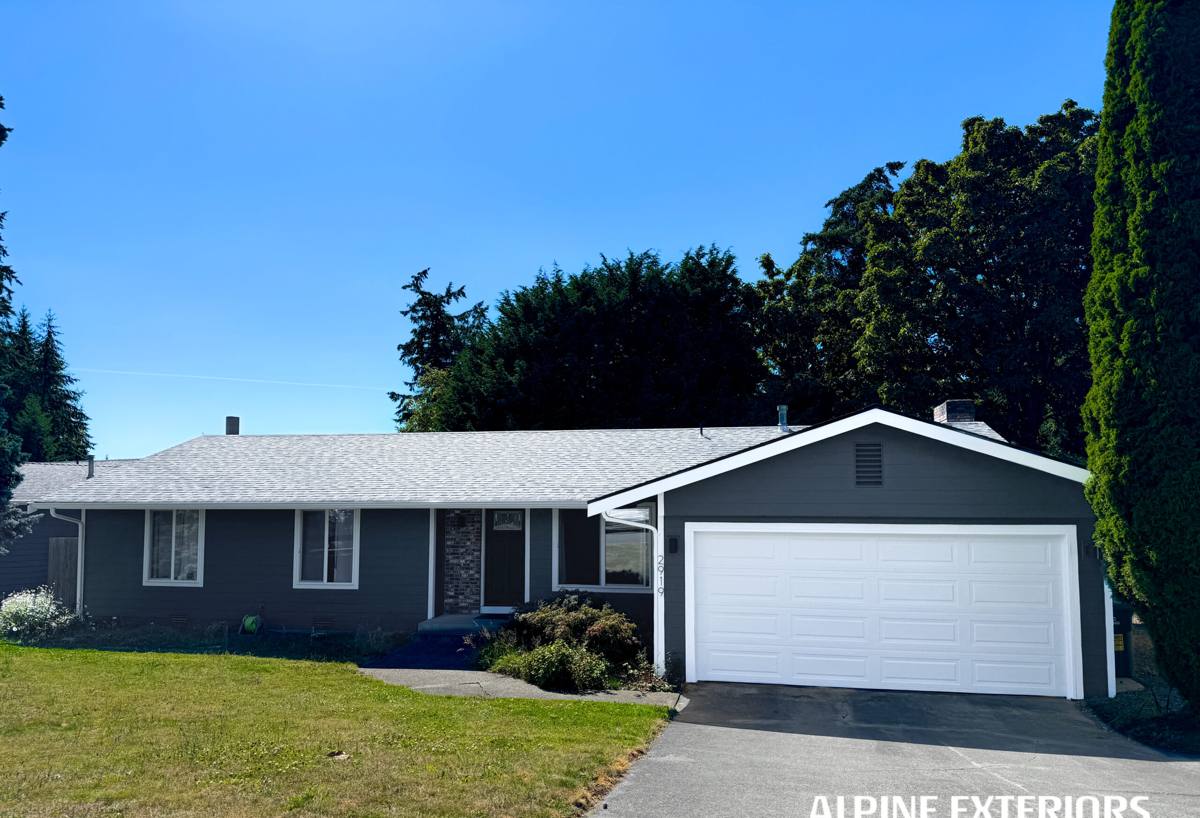
Signs a Semiahmoo Home Needs Siding Repair (Not Full Replacement)
Most siding problems don't start as an emergency. They start small, and catching them early is what keeps a repair a repair instead of turning it into a full re-side. Walk your exterior periodically and watch for:
- Soft or spongy spots when you press on the siding, especially near the bottom courses or below windows
- Bubbling, peeling, or flaking paint concentrated on one wall or elevation rather than spread evenly
- Dark staining or streaking running down from panel seams, trim edges, or fastener lines
- Visible gaps, separation, or movement at butt joints and corner boards
- Nail pops or fasteners backing out as the material behind them swells and shrinks
- Cracked, shrunken, or missing caulk at trim, window edges, and penetrations
- Persistent moss or algae growth holding a damp film against the wall surface
- Small areas of visible rot or crumbling material near grade or in splash zones below downspouts
Any one of these on its own is usually a straightforward repair. Several of them together, especially spread across multiple elevations, is a sign the underlying material or original installation has broader issues worth a closer look.
What a Correct Repair Actually Involves
There's a version of "siding repair" that's really just cutting out the visibly bad piece and caulking around the new one. That approach might look fine for a season, but it doesn't address why the damage happened in the first place — and on a home exposed to Semiahmoo's combination of salt air and driving rain, whatever caused the first failure is still there, working on the next section.
Testing Before Cutting
Before we remove anything, we check moisture levels beyond just the visibly damaged area. Water travels sideways and downward behind siding far more than most homeowners expect, so a stain at one panel can mean the actual saturation extends a foot or more beyond what's visible from the outside. We want to know the real boundary of the problem before we cut, not after.
Checking What's Behind the Siding
Once material comes off, we look at the sheathing and framing underneath. If the water-resistive barrier has failed or the sheathing has softened, patching the siding without addressing that layer just seals the moisture back in. This is the step that separates a repair that lasts from one that fails again in a year or two.
Matching Material the Right Way
A repair should be functionally and visually consistent with what's already on the wall — same profile, same reveal, same fastening pattern, and a finish that blends into the existing paint or factory color line rather than standing out as an obvious patch.
Where We See the Most Damage on Semiahmoo Homes
Certain areas take a disproportionate share of the wear, and knowing where to look first speeds up an accurate diagnosis:
- Water-facing elevations — walls oriented toward the open water absorb the brunt of wind-driven rain and salt spray
- North and shaded walls — these dry out slower after rain, giving moss and algae a foothold and extending how long moisture sits against the surface
- Base-of-wall splash zones — areas near grade, patios, or below downspouts where water repeatedly hits the same low courses
- Trim and soffit intersections — caulk joints here are usually the first line of defense to fail, letting water track behind the field siding
Repair or Replace? How We Help You Decide
Not every damaged section calls for the same answer, and an honest contractor should be willing to tell you when a repair is the smarter move — and when it isn't. Here's roughly how we weigh it:
| Factor | Leans Toward Repair | Leans Toward Replacement |
|---|---|---|
| Extent of damage | Isolated to one or two sections | Recurring across multiple elevations |
| Sheathing condition behind siding | Sound, no widespread rot | Soft or compromised in several spots |
| Age of existing siding | Well within expected service life | Nearing or past its practical lifespan |
| Underlying cause | A single identifiable failure point (flashing, caulk) | Systemic issue with the material itself |
| Cosmetic consistency | Matching material is available and will blend | Original material discontinued or badly weathered |
When the honest answer is "repair," that's what we recommend. We're not in the business of upselling a full re-side when a targeted fix will genuinely hold up.
When Repair Uncovers a Bigger Problem
Sometimes what looks like a single bad section turns out to be a pattern — the same failure showing up on wall after wall because the original siding material simply isn't holding up to Semiahmoo's exposure. When that happens, we'll tell you plainly rather than keep billing you for one-off patches on a losing battle.
This is also where our position on materials matters. We only install James Hardie fiber cement siding for full installations, and when a repair requires new panels on a home already sided in Hardie, we match using the correct Hardie profile and ColorPlus finish so the repaired section performs — and looks — identically to the surrounding wall. For homes currently sided in other materials, we'll still repair what's there honestly and competently. But if the conversation turns to a broader re-side, we'll explain why we've standardized on Hardie: it's non-combustible, engineered for wet coastal climates, backed by a strong transferable warranty, and far less prone to the moisture-driven failures that bring us out to repair vinyl, engineered wood, or untreated wood siding in the first place. That's not a knock on every product we don't install — it's a reflection of what holds up best, specifically, in an environment like Semiahmoo's.
Our Process for a Semiahmoo Siding Repair Call
- On-site inspection, including probing beyond the visible damage and checking moisture levels
- A written scope explaining exactly what we found, what needs to be repaired, and why
- Sourcing matching material — profile, texture, and finish as close to the original as possible
- Careful removal of damaged siding and inspection of the sheathing and water-resistive barrier behind it
- Repair or replacement of any compromised sheathing or framing before new siding goes back on
- Correct flashing and moisture-barrier integration at the repair area, not just a cosmetic cover
- Installation of new material to manufacturer fastening specifications
- Finish work — caulking, trim detailing, and paint or color matching
- A final walkthrough so you can see exactly what was done and why
Why Hiring a Crew That Already Works Semiahmoo Matters
Siding repair is one of those trades where local exposure knowledge changes the outcome. A crew that regularly works this stretch of Whatcom County already knows which elevations take the worst of the wind off the water, how fast moss returns on a shaded wall in this specific microclimate, and which fastener and flashing details actually hold up against sustained salt exposure rather than corroding out in a few seasons.
That familiarity also means fewer surprises during the job itself — we're not guessing at how this area behaves, we're applying what we've already seen work and fail on homes with the same exposure. And because we're local, follow-up if something needs a second look isn't a scheduling ordeal.
Keeping Repaired Siding Ahead of Moss and Salt Air
A quality repair buys you a lot of time, but a little maintenance keeps it that way. After a repair — or as general upkeep for any Semiahmoo home — we recommend:
- An annual soft wash (not high-pressure) to remove moss and algae before it establishes and holds moisture
- Trimming back branches and vegetation that shade walls and slow drying time after rain
- Checking caulk at trim, windows, and penetrations once a year and resealing as it shrinks or cracks
- Keeping gutters and downspouts clear so runoff doesn't repeatedly wash down and pool at the same wall sections
- Keeping an eye on bottom courses near grade, since splash-zone areas are typically the first to show renewed wear
If you're noticing soft spots, staining, or persistent moss on your Semiahmoo home's siding, we're happy to take a look and give you a straight answer — repair, replace, or leave it alone for now. Reach out for a free, no-pressure estimate using the form below.