 Birch Bay Siding
 Semiahmoo's Waterfront Setting Puts Extra Demands on Siding
Out on the spit at Semiahmoo, homes sit closer to open water than almost anywhere else in Whatcom County. That waterfront position is exactly why people build here — and exactly why siding fails faster here than it does a few miles inland. Salt-laden air moves off Semiahmoo Bay and Drayton Harbor and settles on exterior walls day after day. Add the driving rain that comes with Pacific storm systems and a moss season that can stretch from fall through spring, and you have a set of conditions that will find every weak point in a siding system within a handful of years, not decades.
This isn't a page about siding in general. It's about what siding replacement specifically needs to look like for a home in Semiahmoo and the surrounding Birch Bay area — what wears out, what a correct job addresses, and why the material and the installer both matter more here than they would in a drier, more sheltered part of the state.
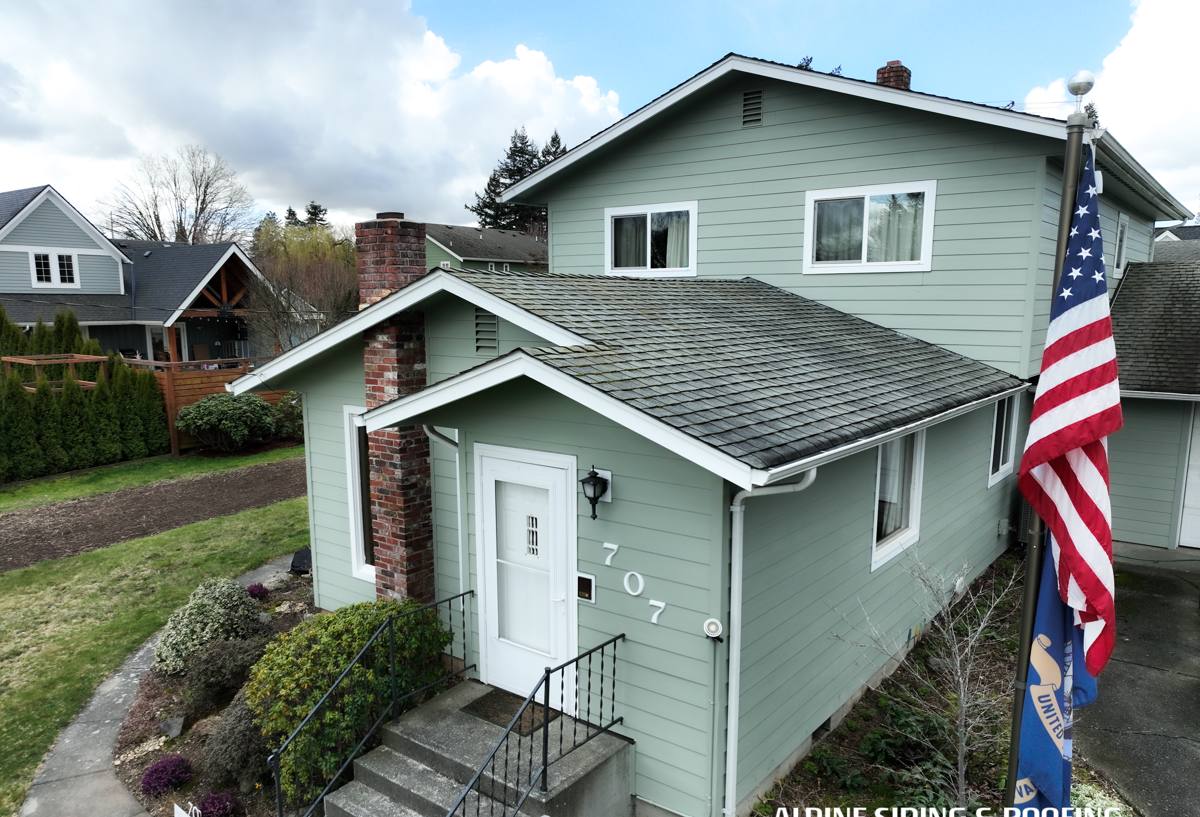
What Salt Air, Driving Rain, and Moss Season Actually Do to Siding
Salt Air
Airborne salt is corrosive and hygroscopic — it pulls moisture out of the air and holds it against whatever surface it lands on. On siding, that means fasteners, trim, and any exposed edges stay damp longer than they would inland. Over time this accelerates rot in wood-based products and speeds up fastener corrosion on anything not rated for coastal exposure.
Driving Rain
Semiahmoo's exposure to wind off the water means rain doesn't just fall here, it's pushed sideways into wall assemblies. That matters enormously for siding, because most siding failures aren't failures of the siding surface itself — they're failures of what's behind it. Wind-driven rain finds gaps in flashing, unsealed laps, and poorly caulked penetrations, and once water gets behind the cladding, sheathing and framing can start to degrade long before the siding looks obviously bad from the curb.
Moss and Persistent Dampness
Whatcom County's long wet season keeps north-facing and shaded wall sections damp for extended stretches, which is ideal growing conditions for moss and algae. Beyond the cosmetic issue, sustained surface moisture is hard on paint film and can work into seams and butt joints, especially on materials that weren't engineered with this kind of climate in mind.
Signs a Semiahmoo Home Needs Siding Replacement, Not Just a Repair
Not every issue means a full tear-off. But certain signs point to system-wide failure rather than a spot repair:
- Soft or spongy areas when you press on the siding, especially near the bottom courses or around windows
- Persistent moss or dark staining that returns within a season of cleaning
- Paint that's peeling or bubbling rather than just fading
- Visible gaps, warping, or cupping in individual boards or panels
- Rust streaks running down from fasteners or trim
- Interior signs — musty smell, discoloration on interior walls, or soft drywall near exterior corners
- Siding that's original to a home built more than 20-25 years ago in this exposure
If you're seeing two or more of these, it's worth having the wall assembly inspected before deciding between repair and replacement.
What a Correct Siding Replacement Job Actually Involves
Tear-Off and Sheathing Inspection
Replacement starts with full removal of the old siding, not installation over it. That's the only way to actually see what's happening behind the cladding — soft sheathing, compromised framing, or old moisture damage that's been hidden for years. Any of that gets addressed before a single new piece goes up.
Weather-Resistive Barrier and Flashing
This is the layer that matters most in a wind-driven-rain climate like Semiahmoo's. A properly lapped weather barrier, correctly integrated window and door flashing, and careful detailing at every penetration — vents, hose bibs, light fixtures — determines whether water that gets past the siding surface drains back out or works its way into the wall.
Fastening and Clearances
Coastal exposure calls for corrosion-resistant fasteners and correct nailing patterns, not whatever happens to be in the gun. Clearances also matter: siding held too close to grade, decks, or roof lines traps moisture against the bottom edge and is one of the most common causes of early rot, regardless of what material is used.
Finish and Sealant Details
Factory-applied finishes hold up far better in salt air than field-applied paint, because the coating is cured under controlled conditions rather than sprayed on-site and left to weather immediately. Joints, laps, and trim intersections get sealed with products rated for the exposure, not generic caulk that will shrink and crack within a couple of winters.
Why We Install Only James Hardie Fiber Cement Here
We install exclusively James Hardie fiber cement siding. We don't install vinyl, LP SmartSide, Cemplank, Allura, primed spruce, or cedar — not because those products don't have their place, but because in a coastal, high-moisture, moss-prone climate like Semiahmoo's, we've made fiber cement our standard and we stand behind that choice.
Wood-based products like cedar and primed spruce look good going up, but they're organic materials in a climate that's actively working to rot organic materials — sustained dampness, salt exposure, and moss growth all shorten their service life and raise their maintenance burden. Vinyl is low-maintenance but it's a thin material that can warp, crack in cold snaps, and fade under UV, and it doesn't hold paint if you ever want to change the look. Engineered wood products like LP SmartSide perform reasonably in moderate climates but are still wood-fiber composites, which means the same moisture sensitivity at cut edges and joints that plagues other wood-based sidings. Other fiber cement brands like Cemplank and Allura are legitimate competitors to Hardie, but we've standardized on one manufacturer, one warranty structure, and one set of installation specs so we can guarantee our work to it.
| Material | How It Handles Salt Air & Driving Rain | Maintenance Burden |
|---|---|---|
| James Hardie fiber cement | Non-combustible, dimensionally stable, engineered HZ product lines for wet marine climates | Low — factory ColorPlus finish resists fading and doesn't need repainting on the same cycle as wood |
| Cedar / primed spruce | Organic material; salt and sustained moisture accelerate rot at joints and fastener points | High — regular refinishing, caulking, and moisture monitoring |
| Vinyl | Can warp, crack, or fade under UV and temperature swings; seams can allow water intrusion | Low upfront, but limited repair options and no repainting |
| LP SmartSide / other engineered wood | Better than raw wood but still wood-fiber based; edge and joint sealing is critical | Moderate — periodic inspection of seams and cut edges |
James Hardie's HZ5 product line is engineered specifically for wetter, more variable climates like the Pacific Northwest, which is exactly the profile Semiahmoo sits in. It's non-combustible, holds its factory finish far longer than field-painted alternatives, and comes with a strong transferable warranty that follows the house if you sell.
Our Process, Start to Finish
- On-site assessment — we walk the exterior, check problem areas you've noticed, and look at sheathing condition where accessible
- Written estimate — scope, material, and timeline laid out clearly, no vague allowances
- Tear-off and inspection — old siding comes off, sheathing and framing get evaluated and repaired as needed
- Weather barrier and flashing installation — the layer that does the real work of keeping water out
- Hardie installation to manufacturer spec — correct fastening, clearances, and joint treatment
- Final walkthrough — we go over the finished job with you before calling it done
Cost Factors for a Semiahmoo Siding Replacement
Every home is different, but the same handful of factors drive most of the variation in price on a job like this:
| Factor | Why It Matters |
|---|---|
| Extent of hidden damage found at tear-off | Rotted sheathing or framing has to be repaired before new siding goes on — this is the biggest source of change orders on older waterfront homes |
| Home size and wall complexity | More corners, dormers, and trim detail means more labor per square foot |
| Siding profile and accessory selection | Lap width, trim boards, and factory color all affect material cost |
| Access and site conditions | Waterfront lots, steep grades, or tight setbacks can affect staging and labor time |
| Existing moisture barrier condition | Whether the weather-resistive barrier can stay or needs full replacement |
We don't quote a number without seeing the home first — anyone who does is guessing, and on an older coastal home that guess is usually wrong in one direction or the other.
Why Local Experience in Semiahmoo and Birch Bay Matters
A crew that's worked this stretch of Whatcom County knows which wall orientations take the worst of the wind-driven rain, where moss builds up fastest, and how much fastener corrosion to expect on a home that's been exposed to salt air for a couple of decades. That's not something you learn from a spec sheet — it's something you learn by tearing off enough siding on enough waterfront homes to see the pattern repeat. It also means realistic expectations from the start: what's actually causing the problem, what a correct fix costs, and what maintenance the new siding will genuinely need in this climate, rather than a generic answer that doesn't account for where the house actually sits.
Keeping Your New Siding Performing After Installation
Fiber cement is low-maintenance, not no-maintenance, especially in this exposure. A yearly rinse to knock down salt residue and moss growth, a look at caulking around windows and penetrations every couple of years, and prompt attention if you ever notice a soft spot or a persistent damp patch will keep a correctly installed Hardie system performing for decades. The upfront installation quality is what determines whether that maintenance stays light or turns into a recurring problem.
If your Semiahmoo home is showing signs of siding failure, or you just want an honest read on what shape it's in, we're happy to take a look. The estimate is free, there's no pressure, and you'll get a straight answer about what your home actually needs.