 Birch Bay Siding
 Siding Built for Life on Lummi Island
Lummi Island sits out in the marine air of Whatcom County, and that location shapes everything about how a home's exterior ages. Homes here take a steadier beating from salt-laden wind, wind-driven rain, and shade-grown moss than a house fifteen miles inland ever will. Siding that looks fine in a showroom in Bellingham can start showing real problems within a few years once it's facing the water, the wind, and the damp shoulder seasons that define this part of the county.
We install siding on Lummi Island the way we install it everywhere in our service area: with the site conditions driving the material choice and the detailing, not the other way around. That means paying close attention to which side of the house takes the weather, how close the structure sits to the water, how much tree cover shades the walls, and how the existing siding actually failed before we ever price a job.
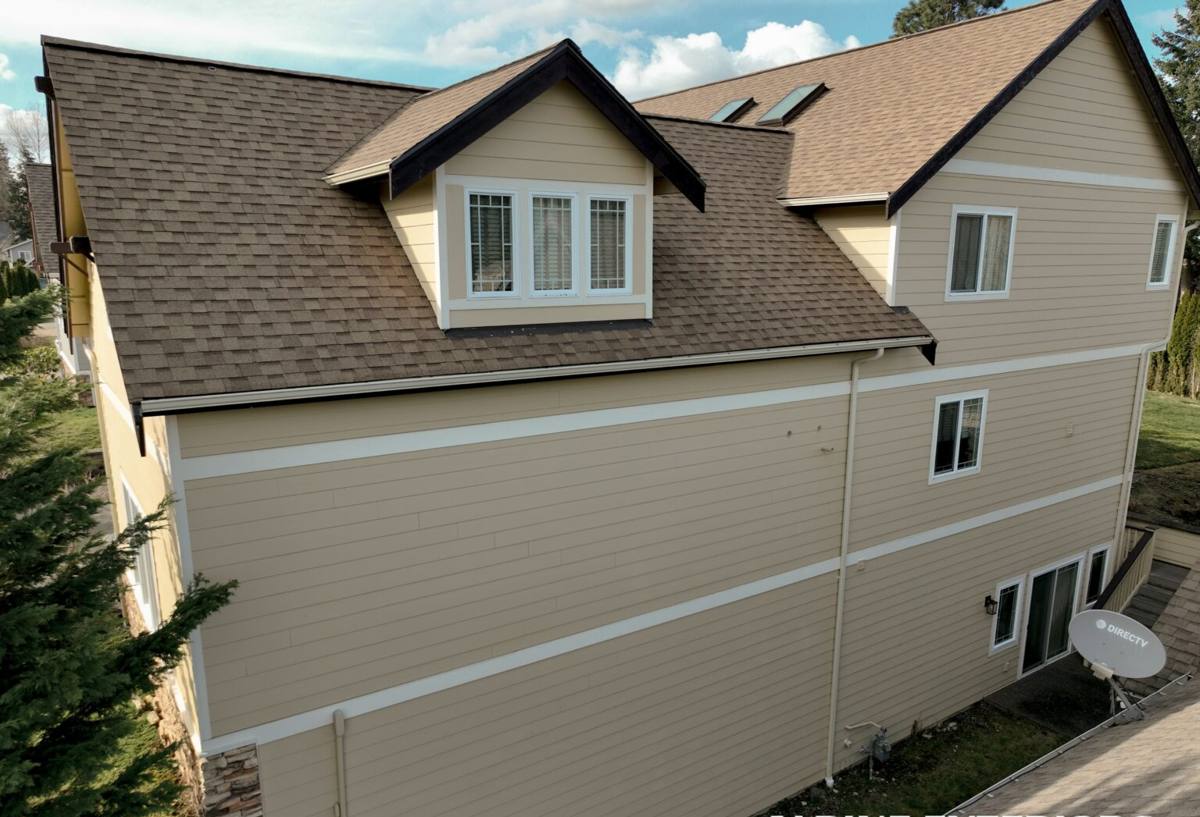
What Salt Air, Rain, and Moss Actually Do to Siding
These three conditions don't act alone — they compound each other, and that's what makes island and shoreline exteriors age faster than the same house set back from the water.
Salt Air
Airborne salt is corrosive to exposed metal fasteners, trim flashing, and hardware, and it accelerates the breakdown of paint films and lower-grade coatings. Siding products that rely on a thin factory coat or field-applied paint tend to chalk, fade, and lose adhesion faster in a marine environment than the same product would inland.
Driving Rain
Wind off the water doesn't just wet a wall — it drives water sideways and upward, forcing moisture into laps, seams, and butt joints that would stay dry in a calmer climate. Any weakness in flashing, caulking, or panel overlap gets tested repeatedly over a wet season instead of occasionally.
Moss and Sustained Dampness
Whatcom County's long, mild, wet stretch of the year keeps north-facing and shaded walls damp for extended periods. Moss and algae take hold on rough or absorbent surfaces, holding moisture against the siding and, over time, against the wall assembly behind it. On wood-based products, that sustained dampness is what eventually leads to swelling, softening, and rot at edges and fastener points.
Why We Install Only James Hardie Fiber Cement
We standardized on James Hardie fiber cement siding because it holds up to exactly this combination of conditions better than the alternatives we used to install. It's non-combustible, it doesn't swell or rot the way wood-based products can when they stay damp, and its factory-applied ColorPlus finish is baked on and warranted against fading — which matters on a wall that's fighting salt air and UV bounce off open water for years at a stretch.
Hardie's HZ5 product line is engineered specifically for harsher climate zones, which describes Lummi Island's exposure well: freeze-thaw cycles, sustained moisture, and coastal wind. We're not selling a single "good for everywhere" product — we're matching a climate-rated line to a climate that actually demands it.
Fiber cement's density also matters for moss. It doesn't absorb water the way wood or wood-composite siding does, so it doesn't stay soft and hospitable to moss and algae growth the way a porous surface can. It still needs occasional cleaning on shaded, damp walls — no siding is maintenance-free in this climate — but it isn't feeding a moisture problem from the inside out.
What a Correct Installation Involves
Fiber cement siding is only as good as the water management system behind it. A rushed or under-detailed install on a coastal property will fail at the flashing and fastening long before the panels themselves wear out. On Lummi Island jobs specifically, we treat the following as non-negotiable:
- A continuous, correctly lapped weather-resistive barrier behind the siding, with all penetrations properly flashed and sealed
- Rigid flashing — not just caulk — over windows, doors, and any horizontal trim transitions exposed to driving rain
- Proper starter strip and first-course height so the bottom edge sheds water instead of wicking it
- Correct fastener type, spacing, and embedment per Hardie's published installation instructions — this is what keeps the warranty valid
- Minimum clearances from grade, roofing, and decks so siding never sits in standing water or constant splash-back
- Caulking only at the joints Hardie specifies, with a product rated for exterior, marine-adjacent exposure
- Back-priming and sealing of all field cuts before the piece goes on the wall
None of this is unique to fiber cement — it's the same water-management discipline any siding needs — but the margin for error is smaller here than on a sheltered, inland lot. A gap or shortcut that would take a decade to cause a problem in a dry climate can show up in a few wet seasons on an exposed island wall.
Our Process, Start to Finish
We walk every Lummi Island project through the same sequence, adjusted for how exposed the specific walls are:
1. On-Site Assessment
We look at the existing siding condition wall by wall — not just from the ground, but at trim, corners, and any areas showing moss, staining, or soft spots — and note which elevations take the worst of the wind and rain.
2. Scope and Product Selection
We spec the Hardie plank, panel, or shingle profile and HZ line that fits the home's exposure and the look the owner wants, and we build the estimate around the actual water-management work required, not just square footage.
3. Tear-Off and Sheathing Check
Old siding comes off and we inspect the sheathing underneath. Any rot, soft spots, or prior moisture damage gets addressed before a single new panel goes up — covering a wet sheathing problem with new siding just hides it.
4. Weather Barrier and Flashing
This is where a marine-climate install earns its keep — proper barrier, proper laps, proper flashing at every penetration and transition.
5. Installation
Hardie planks, panels, or trim go on per manufacturer spec: correct fasteners, correct spacing, correct clearances.
6. Final Walkthrough
We go over the finished work with the homeowner, confirm caulking and paint touch-ups are complete, and review basic care — including how to handle moss on shaded walls without damaging the finish.
Comparing Siding Materials Under Coastal Conditions
| Factor | James Hardie Fiber Cement | Vinyl | Wood / Untreated Cedar |
|---|---|---|---|
| Salt air / coastal wind | Engineered HZ lines for harsh exposure | Can become brittle and fade faster in strong coastal UV/wind | Coatings break down faster; grain absorbs salt-laden moisture |
| Driving rain resistance | Dense material resists moisture intrusion at properly flashed joints | Depends heavily on installation; panels can flex and gap over time | Vulnerable at joints and fastener points once coatings fail |
| Moss / algae in shade | Low absorption; occasional cleaning keeps it in check | Doesn't feed moss growth, but can trap moisture behind panels | Absorbs moisture readily, feeding sustained moss and rot |
| Fire resistance | Non-combustible | Combustible, can melt or deform | Combustible |
| Finish longevity | Factory-baked ColorPlus finish, warranted against fading | Color molded through, but can chalk and fade over decades | Field-applied paint/stain needs recoating every few years |
Signs Your Current Siding Is Losing the Fight
If any of the following show up on a Lummi Island home, it's worth having the siding looked at before small issues turn into sheathing damage:
- Persistent moss or algae staining that returns quickly after cleaning
- Soft, spongy, or bubbling areas, especially near the ground or at trim joints
- Visible gaps, warping, or buckling in panels or lap siding
- Peeling paint or chalky, faded finish on walls facing the water or prevailing wind
- Rust streaking from fasteners or corroded trim accessories
- Interior signs — musty smells, damp drywall, or staining on walls that back up to exterior siding
Why Local Experience on Lummi Island Matters
An island community adds real logistical variables that a mainland Whatcom County job doesn't have — ferry scheduling for material delivery, tighter staging on some lots, and weather windows that can close faster out on the water. A crew that already knows how to plan a Lummi Island job around the ferry schedule and material staging isn't guessing on install day, and that keeps the project moving instead of stalling out waiting on a delivery that missed its sailing.
Just as important is knowing the exposure patterns specific to this stretch of coastline — which elevations take the worst wind-driven rain, where moss tends to establish fastest, and how prior installers in the area have handled (or mishandled) flashing details in these conditions. That local pattern recognition is what turns a generic install into one that's actually built for where it sits.
If you're planning a siding project on Lummi Island, we're happy to walk the property, look at what your current siding is telling us, and put together a straightforward, no-pressure estimate for a James Hardie installation built for this exposure. Use the form below to get started.