 Birch Bay Siding
 Siding Repair in Custer: Catching Problems Before They Become a Full Re-Side
Custer sits inland in the flat agricultural country north of Ferndale, a few miles removed from the direct waterfront exposure that Birch Bay and Drayton Harbor properties deal with. That distance matters, but it doesn't exempt Custer homes from the climate that defines this whole corner of Whatcom County. Marine air still moves inland on winter storms, driving rain still gets pushed sideways by open, wind-exposed farmland with little natural break, and the long moss and mildew season that shapes exterior maintenance across the region still shows up on shaded walls and north-facing trim. Siding repair here is rarely about one dramatic failure. It's almost always about small, unresolved moisture problems that had months or years to work on a wall before anyone noticed.
We do repair work throughout this stretch of Whatcom County, and on siding specifically, most of what we get called out for started as something minor — a cracked caulk joint, a piece of trim that pulled away, a fastener that rusted and let a panel shift. Left alone through one or two wet seasons, minor problems like that turn into rot, sheathing damage, and repair bills that are a lot bigger than they needed to be. Catching it early is the whole point of a repair call, and it's usually the difference between patching a section of wall and replacing a much larger area.
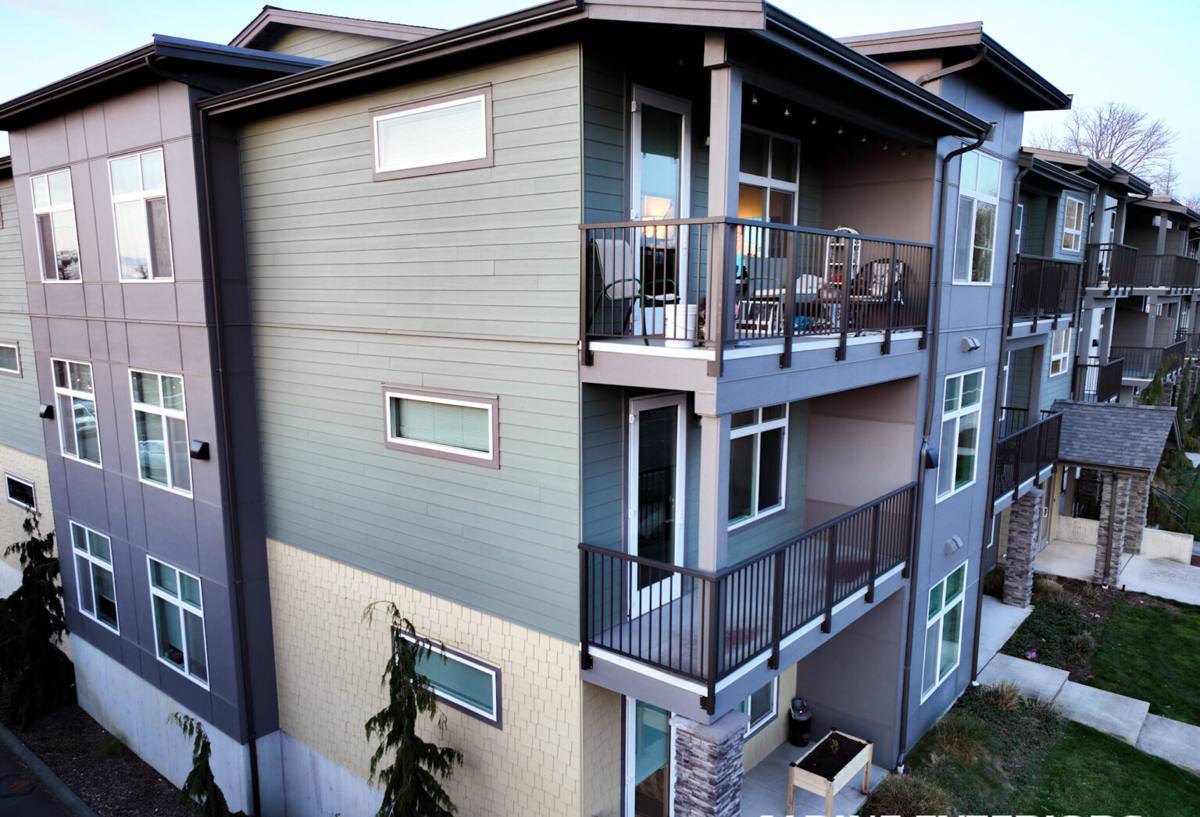
What Custer's Climate Does to Siding
Wind-Driven Rain at Seams, Trim, and Butt Joints
Open, flat terrain around Custer doesn't slow wind down the way tree cover or hills do closer to town, and storms coming off the Strait of Georgia push rain sideways into wall assemblies instead of straight down. Siding is built to shed water moving downward. It's a lot less forgiving of water forced horizontally into seams, butt joints, and the transitions around windows, doors, and trim. Those are the exact spots where we find the most repair work — not because the siding material failed outright, but because a joint that was never sealed or flashed correctly finally let water through after enough wind-driven storms.
Marine Air Reaching Inland
Custer doesn't take direct salt spray the way a true waterfront lot does, but there's still enough marine air moving inland to accelerate corrosion on fasteners, trim flashing, and lower-grade hardware over years of exposure. A rusted or failing fastener doesn't just look bad — it stops holding the panel tight against the wall, which opens a gap for water to get behind the siding instead of running off the face of it. A lot of the repair calls we get start with exactly that: a handful of failed fasteners that let one section of wall move independently from the rest.
Moss, Mildew, and Prolonged Moisture
Mild temperatures and near-constant dampness through fall, winter, and spring give moss and mildew a long season across Whatcom County, and shaded or north-facing walls in Custer are no exception. Moss itself isn't usually what damages siding directly, but it holds moisture against the surface longer than an exposed, sun-facing wall would see, and that prolonged wetness is hard on lower-grade materials, caulk joints, and any spot where the finish has already started to break down.
Signs a Custer Home Needs Siding Repair
- Panels that look warped, bowed, or separated from the wall at one section
- Caulk that's cracked, shrunk, or pulled away from joints and trim
- Soft spots when you press on siding near the bottom of walls or below windows
- Visible rust streaking below fasteners or metal trim pieces
- Peeling, bubbling, or unevenly faded finish limited to one area of the house
- Interior signs like a musty smell, staining, or soft drywall near an exterior wall
- Moss or mildew that keeps returning to the same spot after cleaning
Repair or Replace? How We Make the Call
Not every siding problem calls for tearing off a whole wall, and we don't default to replacement just because it's the bigger job. The call usually comes down to how far the damage has spread and whether the sheathing underneath is still sound.
| Condition | Repair Usually Makes Sense | Replacement Usually Makes Sense |
|---|---|---|
| Isolated cracked or damaged panel, sound sheathing | Yes — panel or section replacement | Not needed on its own |
| Failed caulk or flashing at one trim detail | Yes — reseal and reflash | Only if water already reached sheathing |
| Rust-streaked or backed-out fasteners | Yes — refasten with corrosion-resistant hardware | Not on its own |
| Soft, rotted sheathing behind siding | Rarely a lasting fix on its own | Yes, for the affected section at minimum |
| Widespread warping, staining, or finish failure across most walls | Diminishing returns | Yes — full re-side is usually more cost-effective |
What a Correct Siding Repair Actually Involves
Finding the Real Cause, Not Just the Symptom
A siding repair that only addresses the visible damage tends to fail again within a season or two. Before we touch a panel, we look at why that spot failed — a flashing detail that was never lapped right, a fastener grade that couldn't hold up to the exposure, grading or drainage pushing water back toward the wall. Replacing the damaged material without fixing what let water in means the same repair call again down the road.
Matching Material and Finish
On homes with existing James Hardie siding, repair work means matching the plank profile and using the correct ColorPlus-matched product where possible, since Hardie's factory finish is designed to hold color and texture in a way field-applied paint doesn't match over time. On older sections where an exact ColorPlus match isn't available, we're upfront about what the repaired area will look like next to weathered original panels rather than promising an invisible patch.
Flashing and Drainage Repair
Most of the repair work that actually prevents a repeat problem happens in the flashing and drainage details, not in the visible panel itself. That means re-lapping flashing correctly at the repaired section, making sure water is directed out and away from the wall rather than trapped behind the new material, and using sealants rated for sustained moisture exposure rather than a general-purpose caulk.
When the Existing Siding Isn't Hardie
We get repair calls on homes sided in LP SmartSide, vinyl, Cemplank, Allura, and cedar, and we're straightforward about what we can and can't do. Minor repairs — a fastener, a caulk joint, isolated trim work — we can often handle regardless of the existing material. But we install fiber cement exclusively, specifically James Hardie, so we won't source or install replacement panels in a discontinued vinyl profile or a wood product we don't stand behind long-term. If the damage on a non-Hardie home is extensive enough that true replacement is the better answer, we'll say so plainly and explain why we'd recommend Hardie for that section or the full wall, rather than patching a product we don't believe holds up as well in this climate.
Common Repair Mistakes We See
The most common mistake on older repair jobs around Custer isn't the siding material failing — it's caulk used as a substitute for proper flashing instead of a supplement to it. Caulk breaks down and cracks over a few wet seasons; it was never meant to be the only barrier against wind-driven rain. The other recurring mistake is a mismatched patch job — a different panel profile, texture, or unmatched paint slapped over a repair — that solves the moisture problem but leaves an obvious seam in the wall for anyone to notice.
Why a Local Custer Crew Matters
A contractor who works this part of Whatcom County regularly already knows how wind-driven rain, marine air, and a long moss season behave on inland farmland differently than they do on a true waterfront lot, and differently again than a drier region would see. That shows up in the small decisions on a repair job — how much lap a flashing detail gets, whether a fastener grade is upgraded during the repair instead of just replaced in kind, whether the drainage behind a wall gets corrected instead of just resealed on the surface. Those decisions are what determine whether a repair holds for one season or for years.
A Simple Checklist Before Hiring for Siding Repair in Custer
- Ask what caused the damage, not just what it will cost to patch it
- Confirm current Washington contractor licensing and active liability insurance
- Ask specifically how they'll handle flashing and drainage at the repair, not just the visible panel
- Get a written scope that states what material will be used and how closely it will match the existing siding
- Ask whether they think repair is the right call or if they'd recommend a larger scope, and why
Our Repair Process
We start with an on-site look at the damaged area and the surrounding wall, checking how far moisture has actually traveled behind the siding rather than just assessing what's visible on the surface. From there we give a straightforward read on whether repair, partial replacement, or a larger scope is the right call, along with a written estimate before any work begins. Flashing and drainage correction are treated as standard practice on every repair we do, not as an optional upgrade, because a repair that doesn't fix the underlying water path is just a delay on the same problem.
If you've got a section of siding on a Custer property that's cracked, warped, or showing signs of water damage, we're happy to take a look and give an honest read on what it actually needs. Reach out below for a free, no-pressure estimate.