 Birch Bay Siding
 Cherry Point's Climate Is Rougher on Siding Than Most Homeowners Realize
Cherry Point sits right up against the marine air of the Salish Sea, and that location shapes everything about how siding performs here. Homes get a steady dose of salt-laden air, wind-driven rain that hits walls at an angle instead of falling straight down, and long stretches of gray, damp weather that never quite dries out. Add in the shade from mature trees common to this part of Whatcom County, and you get ideal conditions for moss and algae to take hold on north- and west-facing walls. Siding that isn't built for this combination shows it early — chalking, soft spots, streaking, and premature paint failure are all common complaints we hear from Cherry Point homeowners.
Salt Air and Slow Corrosion
Salt in the air doesn't just affect metal fasteners and flashing — it accelerates the breakdown of caulk, paint film, and lower-grade siding substrates over time. Homes closer to the water take the brunt of it, but even properties set back from the shoreline get enough salt drift to matter over a 10- or 15-year span.
Moss Season Is Longer Here Than People Expect
In Whatcom County's marine climate, moss and algae growth isn't a seasonal nuisance — it's close to year-round on shaded, north-facing walls. Siding that traps moisture behind it, or that has a surface texture that holds onto organic growth, ages faster and needs more maintenance than a product engineered to shed water and resist that kind of buildup.
Signs a Cherry Point Home Needs Siding Replacement, Not Another Repair
Patching is sometimes the right call, but there's a point where repeated repairs cost more than a proper replacement — and where hidden damage behind the siding keeps getting worse. Look for these signs before deciding which route makes sense:
- Soft, spongy, or crumbling spots when you press on the siding, especially near the bottom courses and around windows
- Paint that's peeling, bubbling, or chalking heavily within just a few years of the last paint job
- Visible gaps, warping, or buckling panels, particularly on walls that face prevailing wind and rain
- Persistent moss or dark streaking that comes back within months of cleaning
- Rising energy bills that suggest wind and moisture are getting past the wall assembly
- Interior signs — stained drywall, musty smells near exterior walls, or trim that's rotting at the base
If you're seeing two or more of these, it's worth having someone look at the sheathing underneath, not just the surface layer. Surface symptoms are often the last sign of a problem that started months or years earlier.
What a Correct Siding Replacement Actually Involves
Siding replacement isn't just removing old panels and nailing up new ones. Done right, it's an opportunity to fix what's underneath before it gets covered up again for another 30-plus years.
Full Tear-Off and Sheathing Inspection
Every old panel comes off so the sheathing, framing, and any existing water-resistive barrier can be inspected directly. In a shoreline climate like this, it's common to find soft sheathing or old, degraded barrier paper hiding behind siding that looked fine from the street. This step is non-negotiable — you can't fix what you can't see.
Water-Resistive Barrier and Flashing Done Right
A new, properly lapped water-resistive barrier goes on before anything else, followed by correctly integrated flashing at every window, door, and penetration. Given the wind-driven rain common here, flashing details matter more in Cherry Point than they would in a drier inland climate — water that gets behind the cladding needs a clear path back out, not a place to sit and soak.
Installation to Manufacturer Specification
Fastener type and spacing, panel gaps, caulking at butt joints, and clearance from grade and roof lines all affect how siding performs over time. Fiber cement in particular has specific installation requirements — skipping them doesn't just void the warranty, it shortens the actual service life of the product.
Why We Install Only James Hardie Fiber Cement
We don't install vinyl, LP SmartSide, Cemplank, Allura, or primed wood siding, and that's a deliberate standard, not an oversight. Each of those products has legitimate strengths, but they also come with trade-offs — moisture sensitivity at cut edges, more frequent repainting, or performance that depends heavily on installer discipline — that we're not willing to build a Cherry Point home around given what this climate does to siding over time.
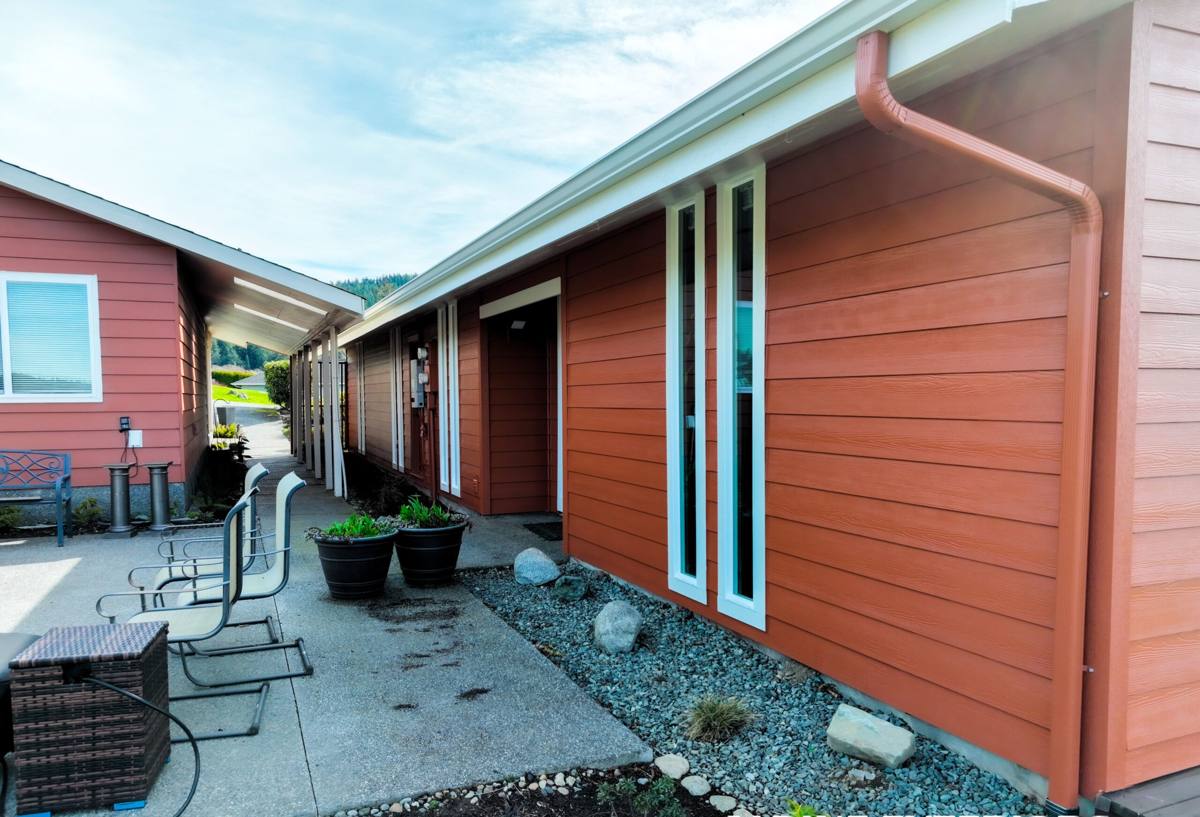
James Hardie fiber cement is a non-combustible product engineered specifically for climate zones like this one. The HZ5 product line is formulated for the Pacific Northwest's wet, moderate climate, with an emphasis on moisture and impact resistance. ColorPlus factory-applied finish is baked on under controlled conditions rather than field-applied, which means better color retention and adhesion than a job-site paint job — a real advantage when salt air and UV exposure are working against paint film year-round.
Hardie also backs its products with a strong, transferable limited warranty, which matters both for peace of mind and for resale value if you sell the home down the road. None of this means Hardie is maintenance-free — it still needs proper installation, caulking upkeep, and periodic repainting when a non-ColorPlus product is used — but it holds up to this climate better than the alternatives, and that's why it's the only product we put on homes.
Comparing Siding Options for Cherry Point's Marine Climate
| Factor | Vinyl | Wood / LP SmartSide | James Hardie Fiber Cement |
|---|---|---|---|
| Salt air resistance | Can become brittle and fade over time | Vulnerable at cut edges and joints | Engineered for moisture and impact resistance |
| Moss/algae resistance | Moderate; traps moisture behind panels if installed poorly | Prone to growth if coating fails | Dense, water-managed surface resists sustained moisture |
| Fire rating | Combustible | Combustible | Non-combustible |
| Finish longevity | Color can fade; can't be repainted easily | Depends on field-applied coating quality | ColorPlus factory finish holds color longer |
| Typical maintenance | Low, but limited repair options if damaged | Regular repainting and caulk upkeep | Periodic caulk/paint upkeep, less frequent |
Our Process for a Cherry Point Siding Replacement
We keep the process straightforward and communicate at each stage, since a full siding replacement affects your whole home for several weeks.
- On-site assessment — we walk the exterior, check for soft sheathing and moisture entry points, and talk through what we're seeing with you directly.
- Detailed proposal — scope, product selection, and a clear price before any work starts, with no surprise change orders for things we could have caught up front.
- Tear-off and inspection — old siding comes off, sheathing is inspected and repaired as needed before anything new goes on.
- Barrier and flashing installation — water-resistive barrier and flashing details go in first, sized for this area's wind-driven rain.
- Hardie installation to spec — panels installed per manufacturer fastening and clearance requirements, with attention to butt joints and trim details.
- Final walkthrough — we go over the finished work with you before calling the job done.
Cost Factors for Siding Replacement in This Area
Every home is different, so we won't quote a number without seeing the house, but a few factors consistently move the price up or down for Cherry Point projects:
- Extent of hidden sheathing damage found once old siding comes off
- Home size, wall complexity, and number of stories
- Amount of trim, window, and door detail work required
- Siding profile and finish selected within the Hardie product line
- Site access — driveway grade, staging space, and distance from the road
Broadly, siding replacement is a mid-to-upper range exterior investment relative to other home improvement projects, and it's one that pays back in reduced maintenance and better moisture protection for decades rather than years.
Why Hiring a Crew That Already Works Cherry Point Matters
Whatcom County's shoreline communities behave differently than inland neighborhoods a few miles away — wind exposure, moisture patterns, and even permitting can vary block to block. A crew that already works in and around Cherry Point knows to check for the sheathing issues this climate causes, knows how much flashing overlap is actually needed for wind-driven rain, and isn't guessing at how the local weather will treat a given installation choice. That local familiarity shows up in fewer callbacks and siding that's still performing well a decade or two later, not just on installation day.
Keeping Your New Siding Performing for the Long Run
Once new Hardie siding is installed, upkeep is modest but not zero. Rinse off accumulated salt spray and organic debris periodically, keep gutters clear so water isn't sheeting down the wall face, trim back vegetation that shades walls and encourages moss, and have caulking and paint checked every few years. None of this requires much time, but skipping it is how even good siding ages faster than it should in a climate like this one.
If your Cherry Point home is due for new siding, or you're not sure whether repair or replacement makes more sense, we're happy to take a look and give you a straight, no-pressure estimate. Use the form below to get started.