 Birch Bay Siding
 Why Siding on Point Roberts Wears Differently
Point Roberts sits surrounded by water on nearly every side, which means homes here take a version of Whatcom County's marine climate turned up a notch. Salt-laden air moves off the water and settles on exterior surfaces year-round, wind-driven rain finds its way into every gap a lesser installation leaves open, and the shaded, damp stretches of the year keep moss and algae going almost continuously. Siding that might hold up fine twenty miles inland can fail early out here, and it usually fails quietly — behind the surface, before anything looks obviously wrong.
That combination is exactly why siding replacement in this area isn't a cosmetic project. It's a decision about what's going to keep water, salt, and organic growth away from your framing for the next several decades. We treat every Point Roberts job with that in mind, starting with the material and ending with the flashing details most crews skip.
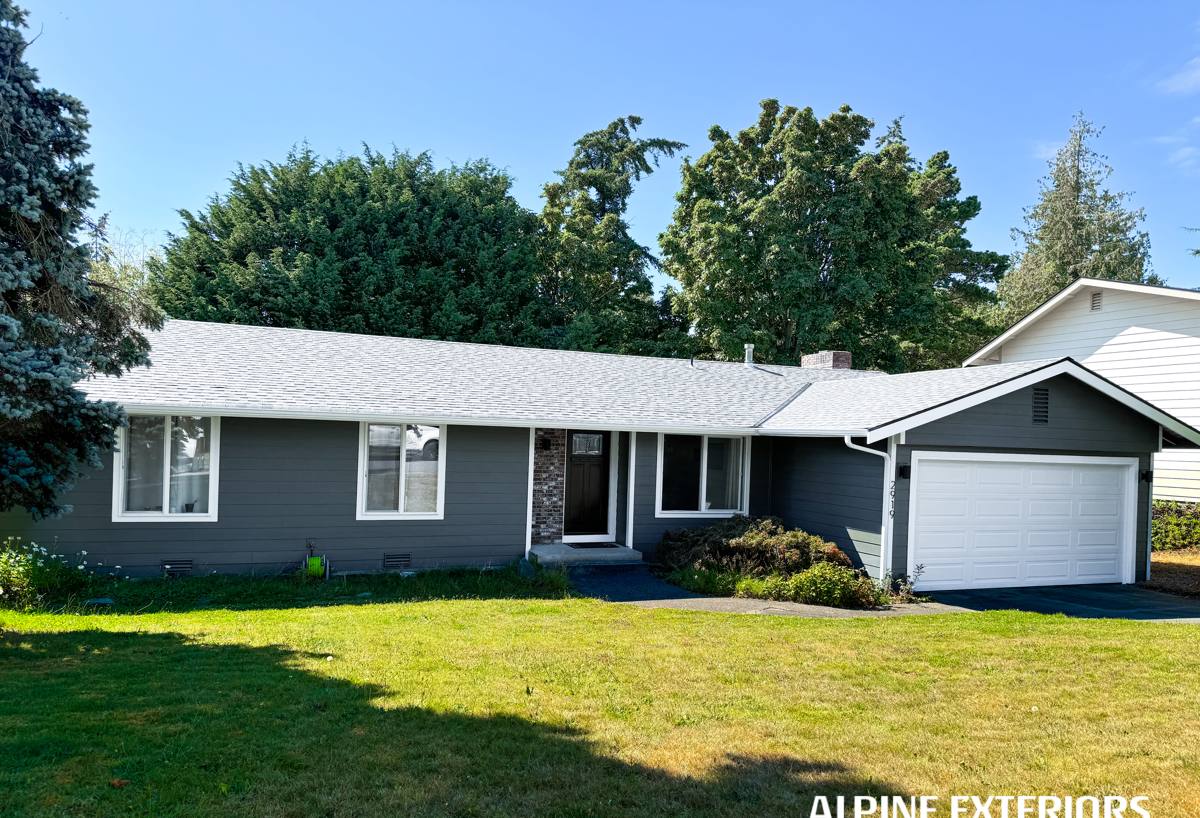
What Salt Air, Rain, and Moss Actually Do to Siding
Salt Air
Airborne salt is corrosive to metal fasteners, flashing, and trim, and it accelerates the breakdown of coatings that aren't formulated to resist it. Paint film on lower-grade siding chalks and fades faster near the water. Fastener corrosion is one of the more common hidden problems we find when we pull old siding off homes in this area — the boards look fine, but the nails holding them on don't.
Driving Rain
Wind off the water doesn't just fall on siding, it drives into it — pushing water sideways into seams, laps, and penetrations that would stay dry in a calmer climate. Any gap in the water-resistive barrier, any missed flashing detail around a window or utility penetration, becomes an entry point. Once water gets behind the cladding, it has nowhere to go but into the sheathing and framing.
Moss and Algae
Shade, moisture, and mild temperatures are a recipe for sustained moss and algae growth on north-facing and tree-shaded walls. Beyond the appearance issue, moss holds moisture directly against the siding surface for extended periods, which is hard on any material and especially hard on ones that aren't dimensionally stable when wet.
Signs a Point Roberts Home Needs Siding Replacement
- Soft, spongy, or crumbling spots when you press on the siding, especially near the bottom of walls or below windows
- Paint that keeps failing within a couple of years no matter how often it's redone
- Visible warping, buckling, or boards separating from the wall
- Persistent moss or dark staining that returns quickly after cleaning
- Rising heating bills or noticeably drafty rooms along exterior walls
- Cracked or missing caulk at seams, corners, and trim that never seems to stay sealed
- Interior signs like peeling paint, musty smell, or discoloration on walls that share an exterior wall
Any one of these on its own might just need a repair. Several at once, especially on the water-facing side of a home, usually means the siding system itself has reached the end of its useful life.
What a Correct Siding Replacement Involves
Replacing siding correctly in a climate like this is less about the visible board and more about everything underneath it. A rushed installation can look identical to a properly done one for the first year or two — the difference shows up later, usually as rot.
Full Tear-Off and Inspection
We remove the old siding down to the sheathing so we can actually see the wall, not guess at its condition. Any water damage, soft sheathing, or compromised framing gets addressed before anything new goes up. Covering over hidden rot is one of the most common shortcuts in this trade, and it guarantees a problem that resurfaces later.
Water-Resistive Barrier
A new, correctly lapped weather-resistive barrier goes over the sheathing, installed shingle-style so water is always directed outward and down, never trapped behind a seam.
Flashing at Every Penetration
Windows, doors, hose bibs, vents, and any other penetration get proper flashing integrated with the WRB — not just caulked over. In a driving-rain climate, flashing details are where most long-term failures start or get prevented.
Fastening and Clearances
Fasteners, spacing, and ground clearance all follow the manufacturer's installation spec, not shortcuts to save time. Correct clearance from grade, decks, and roof lines keeps splashback and standing moisture away from the bottom edge of the siding, which is the area most exposed to rot in this climate.
Trim, Caulking, and Finish Details
Corners, trim boards, and joints are finished to shed water on their own, with sealant used as backup rather than the primary defense.
Why We Install James Hardie Fiber Cement — And Nothing Else
We've made a deliberate decision to install only James Hardie fiber cement siding. We don't install vinyl, LP SmartSide, primed spruce, cedar, or other fiber cement brands, and in a climate like Point Roberts' the reasoning matters more than it might somewhere drier.
| Material | How It Handles This Climate | Why It's Not What We Install |
|---|---|---|
| Vinyl | Doesn't rot, but expands/contracts with temperature swings and can crack or warp in high wind exposure | Seams and panel movement create long-term water-management weak points; limited color depth and impact resistance |
| Cedar | Natural look, but absorbs moisture readily and needs consistent refinishing to resist rot and moss | High ongoing maintenance burden in a wet, shaded, salt-air environment |
| Primed Spruce/Wood Composite | Vulnerable to swelling, delamination, and rot if the factory primer coat is compromised at a cut edge | Moisture sensitivity is a poor match for driving rain and prolonged dampness |
| James Hardie Fiber Cement | Non-combustible, dimensionally stable when wet, engineered HZ formulations for moisture and freeze-thaw exposure | This is what we install |
James Hardie's fiber cement doesn't absorb water the way wood-based products do, and it doesn't move with temperature the way vinyl does. Its ColorPlus factory finish is baked on under controlled conditions, which holds up better against salt air and UV than field-applied paint. Hardie also engineers different formulations for different climate zones — the HZ5 line used in the Pacific Northwest accounts for the freeze-thaw and moisture exposure common here. Paired with a transferable warranty, it's the product we're comfortable standing behind on homes that take the kind of weather Point Roberts sees.
Our Siding Replacement Process
- On-site assessment — we walk the exterior, check for moisture damage, and evaluate which walls take the most weather exposure
- Written estimate — clear scope, product selection, and timeline before any work starts
- Tear-off and sheathing inspection — old siding comes off, and any damaged sheathing or framing gets repaired
- Water-resistive barrier and flashing — installed to manage water at every seam and penetration
- Hardie installation — fastened, spaced, and finished to manufacturer spec
- Final walkthrough — we go over the finished work with you before calling the job done
What Siding Replacement Typically Depends On
| Factor | Why It Matters |
|---|---|
| Home size and wall complexity | More corners, gables, and trim details mean more labor and material |
| Sheathing/framing condition | Hidden rot found during tear-off adds repair scope before new siding goes up |
| Siding profile and accessories | Lap width, trim style, and corner details all affect material cost |
| Access and site conditions | Waterfront exposure, wind, and tight lot lines can affect scheduling and staging |
| Existing exterior features | Decks, porches, and shutters that tie into the wall add coordination time |
Because every home and every wall's exposure is different, we walk the property and give a real number rather than a rough guess over the phone.
Why a Crew That Already Works Point Roberts Matters
Point Roberts is a small, somewhat isolated community, and that changes how a siding project should be planned. Material deliveries, crew scheduling, and even weather windows work differently out here than in a more connected part of Whatcom County. A crew that's already done work in the area knows to plan logistics around that instead of discovering it mid-project.
More importantly, a contractor who's replaced siding on other homes in this specific exposure — this much salt air, this much driving rain, this much shade-driven moss — installs differently than one seeing it for the first time. Flashing gets extra attention at the penetrations that actually leak here. Clearances get set with this rain pattern in mind. It's the difference between a crew following a generic spec sheet and one that's watched what actually fails on homes like yours.
Protecting Your New Siding Long-Term
- Rinse siding periodically to remove salt residue, especially on walls facing open water
- Keep gutters clear so water isn't overflowing directly onto siding below
- Trim back vegetation and tree cover where practical to reduce shade-driven moss growth
- Address any caulking gaps at trim and penetrations before they widen
- Have the exterior looked at after major storms, particularly if wind-driven rain was involved
- Keep an eye on ground-level clearance as landscaping, mulch, or decking gets added over time
Hardie fiber cement is engineered to hold up with minimal maintenance, but no siding is entirely maintenance-free in an exposure like this. A little attention a couple times a year goes a long way toward getting the full lifespan out of the investment.
Get a Straight Answer About Your Siding
If your Point Roberts home is showing any of the warning signs above, or you're simply planning ahead for a siding project, we're happy to take a look and give you an honest assessment — no pressure, no inflated estimate to scare you into a decision. Reach out for a free estimate using the form below, and we'll walk the exterior with you and talk through what your home actually needs.