 Birch Bay Siding
 Siding Built for the Sumas Area of Birch Bay
Homes in the Sumas area of Birch Bay sit close enough to the water that salt air is part of daily life, and far enough into a long Pacific Northwest wet season that moisture is never really off the table. Between the salt exposure, the driving rain that comes through most winters, and a moss season that can stretch across much of the year on shaded walls and roof lines, exterior siding here has to do more work than siding in a drier, inland climate. We've focused our Birch Bay crew's siding work on one product system — James Hardie fiber cement — specifically because it's the material we trust to hold up to this combination of conditions without turning into a maintenance project for the homeowner.
This page is about one service in one area: James Hardie siding installation for Sumas-area homes in Birch Bay. We're not going to give you a generic rundown of every siding option on the market. We're going to walk through what the local climate actually does to a house, what a correct Hardie installation looks like, how our process runs from first look to final inspection, and why it matters that the crew doing the work already knows this stretch of Whatcom County.
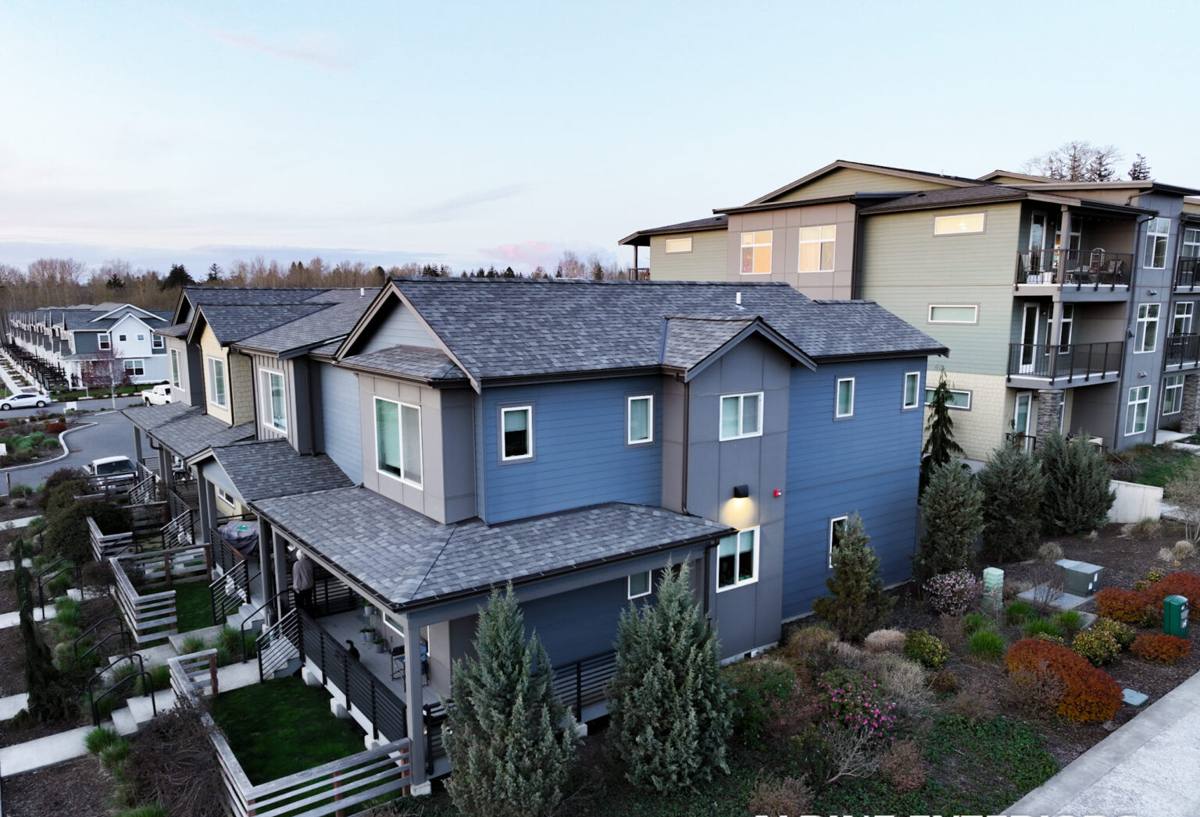
What Salt Air, Rain, and Moss Do to Siding Over Time
Salt Air and Metal Fasteners
Proximity to salt water accelerates corrosion on anything metal — fasteners, flashing, trim edges — faster than it does even a few miles inland. Siding systems that rely on exposed or lower-grade fasteners tend to show rust streaking and loosened panels years before they should. Correct fastener selection and placement matter more here than in a lot of other parts of the county, and it's one of the first things we check when we're pricing or inspecting a Sumas-area home.
Driving Rain and Wall Assemblies
Rain in this part of Washington rarely falls straight down. Wind off the water pushes it sideways into wall assemblies, window and door flashing, and the joints where siding courses meet trim. That's a heavier load on the water-resistive barrier and flashing details than a simple annual rainfall total would suggest. A siding product can be excellent and still fail early if the installation behind it doesn't account for wind-driven moisture finding its way in sideways rather than dripping straight off the wall.
A Moss Season That Runs Most of the Year
Mild temperatures, tree cover, and near-constant moisture add up to a moss and mildew season in Birch Bay that runs longer than most homeowners expect — often most of the year on north-facing walls and anything shaded by trees or a neighboring structure. Siding that's even slightly porous, or that holds water against the substrate instead of shedding it, becomes a growth surface over time. That's a cosmetic issue at first and a maintenance and moisture issue later.
Freeze-Thaw and Wind Exposure
Birch Bay doesn't see the hard winters some inland parts of the state get, but it does get cold snaps combined with wind and moisture, and that combination stresses siding seams, corner boards, and butt joints more than steady cold alone would. Materials that expand, contract, or absorb moisture unevenly through those cycles are the ones that open up gaps and let water behind the cladding.
Why James Hardie Fits This Climate
We install James Hardie fiber cement siding exclusively — not LP SmartSide, not vinyl, not Cemplank, not Allura, not primed spruce or cedar. That's a professional standard, not a sales position, and it comes down to how each of those products behaves under the specific conditions Sumas-area homes deal with.
- Non-combustible core: Fiber cement doesn't feed a fire the way wood-based products can, which matters for both safety and insurance considerations on a coastal property.
- Factory-applied ColorPlus finish: The color and protective coating are baked on under controlled conditions rather than brushed on in the field, which holds up longer against salt exposure and UV than field-applied paint.
- Climate-engineered HZ5 formulation: Hardie's HZ product line is engineered for regions with significant moisture exposure and freeze-thaw cycling, which describes a Whatcom County coastal winter well.
- Dimensional stability: Fiber cement doesn't swell, cup, or warp the way engineered wood products can after repeated wetting and drying over a wet season.
- Strong transferable warranty: Hardie backs the product with a robust warranty, provided the installation follows their published specification — which is a big "if" we'll cover below.
Every product on that "we don't install" list has a legitimate place in the market, and plenty of homeowners are satisfied with them. Our call is narrower: in a climate with this much salt exposure, sustained rain, and moss pressure, we'd rather stand fully behind one system than offer a cheaper option that shifts more long-term maintenance risk onto the homeowner.
What a Correct Hardie Installation Actually Involves
The material is only part of the equation. Most siding failures we get called out to inspect trace back to installation shortcuts, not the product itself. A correct James Hardie install in a Sumas-area home includes:
- A code-compliant weather-resistive barrier installed and lapped correctly before any siding goes up
- Proper flashing at every window, door, and roof-to-wall transition, integrated with the barrier rather than just caulked over
- Correct starter strip placement so the first course sits at the right angle and height
- Manufacturer-specified fastener type, spacing, and penetration depth — not just "close enough"
- Minimum clearance from grade, roof lines, and decks so the bottom edge of the siding never sits in standing water or snow load
- Factory-cut and field-cut edges sealed per Hardie's spec, since raw fiber cement edges are more vulnerable to moisture than the factory-finished face
- Correct panel and joint gapping to allow for expansion without caulk failure
Skip any one of these and you can still end up with a house that looks right from the curb for a year or two before problems show up behind the wall. That's the gap between "siding installed" and "siding installed to spec" — and it's also the difference between a warranty claim that gets honored and one that gets denied because the installation didn't follow the manufacturer's requirements.
Our Process, Start to Finish
| Step | What Happens |
|---|---|
| Initial assessment | We walk the exterior, check existing siding and sheathing condition, note trouble spots around windows, decks, and roof transitions, and talk through what you want out of the project. |
| Scope and estimate | You get a written scope covering tear-off vs. install-over, trim and flashing work, product line and color, and a clear price — no vague allowances. |
| Prep and protection | Landscaping, walkways, and windows get protected before demo starts. Any compromised sheathing or water-resistive barrier gets addressed before new siding goes on top of it. |
| Barrier, flashing, and fastening | This is the stage that determines whether the job lasts. Weather barrier, flashing, starter strips, and fastener schedule all go in to Hardie's published spec. |
| Siding installation | Panels or plank courses go up with correct gapping, joint treatment, and fastening, working around windows, corners, and trim details. |
| Final inspection and walkthrough | We walk the completed exterior with you, check joints and caulking, and confirm everything matches the scope before calling the job done. |
We treat siding as part of a connected exterior system rather than an isolated trade. Flashing details at a roof edge or around a deck ledger affect how the siding performs, so we look at those transitions as part of the same job rather than assuming someone else already handled them correctly.
Cost Factors for a Sumas-Area Hardie Project
Every project is different, but the same handful of factors drive most of the price variation we see on Birch Bay homes. This table covers what tends to move the number up or down — we'll always give you specifics after a walkthrough rather than a number over the phone.
| Factor | Why It Matters |
|---|---|
| Tear-off vs. install-over | Removing old siding down to the sheathing costs more up front but lets us inspect and fix hidden moisture damage before it's covered up again. |
| Siding profile | Lap siding, board and batten, and shingle-style panels all install differently and carry different material and labor costs. |
| Home size and wall complexity | More corners, dormers, and roof-to-wall transitions mean more flashing detail work, which adds labor time regardless of square footage. |
| Trim and accent work | Custom trim boards, window surrounds, and accent bands add both material and precision cutting time. |
| Existing damage | Rot or moisture damage found under old siding needs repair before new siding goes on — this is common enough in coastal Whatcom County homes that we budget for the possibility upfront. |
| Color and finish | Factory ColorPlus finishes cost a bit more than primed panels finished on site, but they hold color longer against salt air and UV, which is usually worth it here. |
Why a Local Crew Matters for This Job
A siding installer who mostly works inland, or mostly works a different climate zone, doesn't necessarily build in the same margin for salt exposure and driving rain that a Birch Bay job needs. A crew that already works the Sumas area of Birch Bay regularly has a few practical advantages:
- Familiarity with how local wind and rain patterns hit different wall orientations, so flashing and fastening decisions aren't guesswork
- A working knowledge of what "normal" moisture and moss buildup looks like here versus a sign of a bigger problem
- Fewer surprises with permitting and inspection expectations specific to Whatcom County
- Accountability — we're not driving out of the area once the invoice is paid; if something needs a warranty follow-up, we're close by
None of that replaces good installation practices, but it does mean fewer assumptions get made about conditions the crew hasn't actually dealt with before.
Maintaining Hardie Siding in a Salt Air Climate
One of the advantages of fiber cement over wood-based alternatives is how little ongoing maintenance it needs — but "little" isn't "none," especially this close to the water. A short annual routine goes a long way:
- Rinse salt residue and grime off the siding once or twice a year, especially on walls facing open water or prevailing wind
- Check caulking at trim joints and penetrations annually and touch up before gaps widen
- Keep gutters clean so overflow doesn't run down the wall face and feed moss growth
- Trim back vegetation and branches that keep a wall shaded and damp longer than it should be
- Address any moss or mildew promptly with a gentle wash rather than pressure that can force water behind panels
Homeowners who stay on top of this short list tend to get the full service life out of their siding and keep the manufacturer warranty intact, since most warranties assume basic maintenance was performed.
Signs It's Time to Talk About New Siding
Not every Sumas-area home needs siding replacement right now, but a few signs are worth a call sooner rather than later:
- Persistent moss or dark staining that comes back quickly after cleaning
- Soft spots, bubbling, or visible warping in existing siding panels
- Paint that's failing faster than it used to, especially on walls facing the water
- Visible gaps opening up at trim joints or panel seams
- Musty smells or soft drywall on interior walls that back up to exterior siding
Catching these early usually means a smaller repair scope. Waiting often means the sheathing and framing behind the siding have already taken on damage, which turns a siding job into a structural repair.
If you're weighing options for a Sumas-area home in Birch Bay, we're happy to walk the exterior with you, point out what we see, and give you a straightforward, no-pressure estimate for a James Hardie installation built for this specific climate. Use the form below to get started.