 Birch Bay Siding
 Why Terrell Creek Homes Wear Siding Out Faster Than You'd Expect
If you live in or near Terrell Creek, you already know the wood siding on older homes in this part of Birch Bay doesn't age gracefully. It's not bad luck or bad paint. It's the combination of salt-laden air coming off the water, wind-driven rain that gets pushed sideways into wall assemblies, and a moss season that stretches for months every year. Any one of those on its own is manageable. Together, they're exactly the conditions that separate siding that lasts thirty years from siding that needs attention every five.
This page is about one thing specifically: what it takes to install James Hardie fiber cement siding correctly on a Terrell Creek home, and why the details matter more here than they would in a drier, calmer part of Whatcom County.
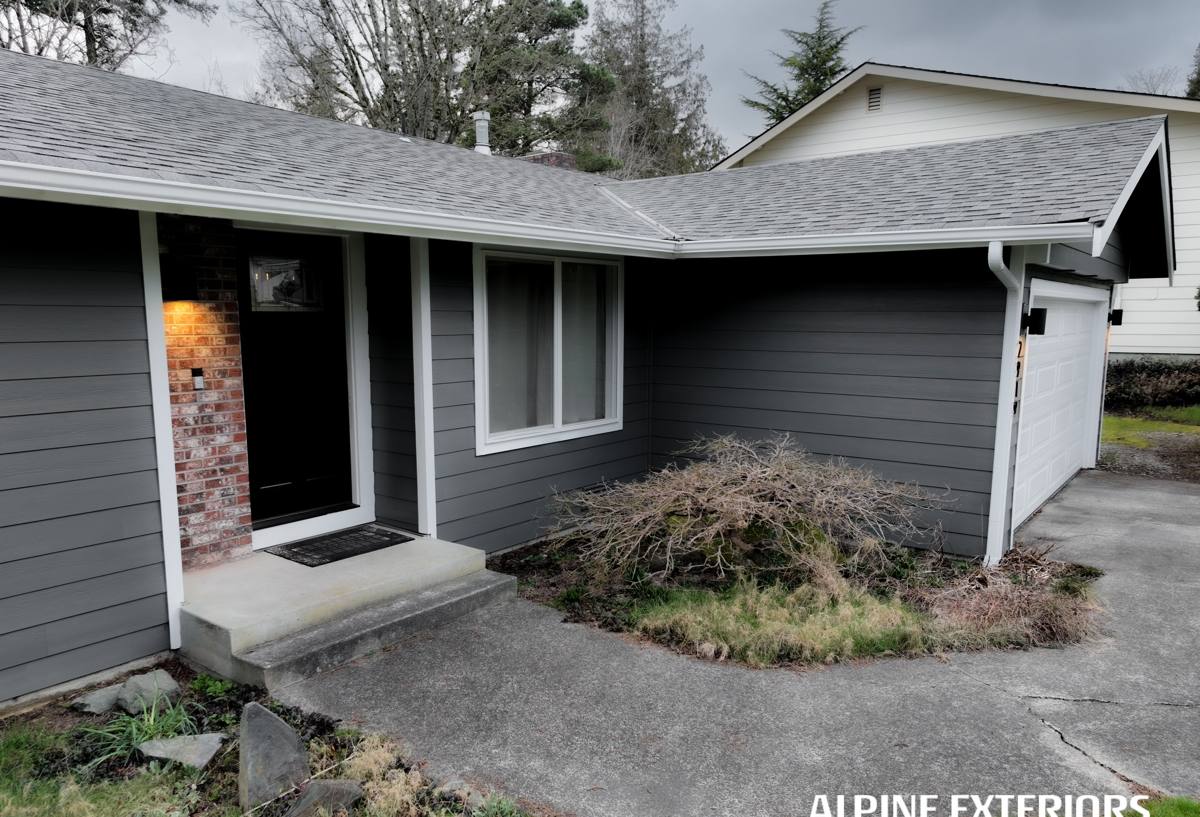
What This Climate Actually Does to a Wall System
Salt Air and Slow Corrosion
Homes near Birch Bay's shoreline take on airborne salt that settles on every exterior surface, including fasteners, flashing, and trim. Over years, salt accelerates corrosion in anything metal that wasn't specified or installed with that exposure in mind — the wrong nail, the wrong flashing metal, or an unprotected cut edge becomes a weak point long before the siding material itself would fail.
Driving Rain Under Pressure
Birch Bay doesn't just get rain — it gets rain pushed horizontally by wind coming off the water. That matters because most siding failures aren't caused by water hitting the face of the wall; they're caused by water finding a gap, a lap joint, or a fastener hole and getting behind the siding where it can sit against sheathing and framing. Wind-driven rain finds those gaps far more aggressively than a calm, straight-down rain ever would.
A Long Moss and Mildew Season
The damp, shaded, mild conditions typical of this stretch of the Washington coast are close to ideal for moss and mildew growth. Untreated wood siding and some engineered wood products stay damp longer here than they would inland, which gives organic growth more time to establish itself on north-facing walls, under eaves, and anywhere airflow is limited.
Why We Only Install James Hardie
We standardized on James Hardie fiber cement siding for every home we work on, including in Terrell Creek, because it's the one product line engineered specifically for the failure modes listed above. Fiber cement doesn't absorb moisture the way wood-based products do, it's non-combustible, and it holds a factory-applied finish far longer than field-applied paint. We don't install vinyl, LP SmartSide, Cemplank, Allura, primed spruce, or cedar — not because those products have no merit anywhere, but because we've made a professional judgment that Hardie is the better long-term investment for homes dealing with salt air, driving rain, and heavy moss pressure. A product that performs adequately in a mild, dry climate can perform very differently here, and we'd rather stand behind one system we know well than split our attention across several.
The James Hardie Product Lines That Make Sense Here
James Hardie makes several siding profiles, and they're engineered in regional formulations — Hardie calls this its HZ5 engineering for the Pacific Northwest, meaning the boards are formulated for climates with more moisture exposure than the national-average version of the same product.
| Product | Typical Use | Why It Fits Terrell Creek |
|---|---|---|
| HardiePlank Lap Siding | Primary wall covering on most homes | Most common choice; sheds wind-driven rain well when lapped and flashed correctly |
| HardiePanel Vertical Siding | Accent walls, gables, modern facades | Fewer horizontal laps means fewer potential water entry points on exposed elevations |
| HardieShingle Siding | Accent areas, Craftsman or cottage-style detailing | Gives a traditional shingle look without the moisture uptake of real wood shingles |
| HardieTrim Boards | Corners, window and door trim, fascia | Resists the rot that untreated wood trim develops first in damp coastal conditions |
ColorPlus factory finish is worth calling out specifically for this area. Because the finish is baked on at the factory rather than brushed or sprayed on-site, it holds color and resists the chalking and fading that field-applied paint shows first on salt-exposed, sun-and-rain-cycling walls. It also means touch-up, when it's ever needed, is limited and targeted rather than a full repaint.
What a Correct Installation Actually Involves
James Hardie siding is only as good as the installation behind it. The material is engineered to handle this climate; the assembly around it has to be engineered too. On a Terrell Creek home, we pay particular attention to:
- Drainage plane and rain screen gap: a proper weather-resistive barrier plus a ventilated gap behind the siding so any moisture that does get past the face can drain and dry instead of sitting against sheathing
- Flashing at every penetration: windows, doors, hose bibs, and vents all get corrosion-resistant flashing sized and lapped correctly for wind-driven rain, not just a bead of caulk
- Fastener selection: corrosion-resistant fasteners driven per Hardie's spec — the wrong nail is exactly the kind of detail that fails quietly for years before it shows on the surface
- Correct lap and clearance: proper overlap on horizontal laps, and required clearance from grade, roof lines, and decks so the bottom edge of the siding isn't sitting in standing water or splash-back
- Caulking only where Hardie specifies it: over-caulking traps moisture as often as it keeps it out; we follow Hardie's published joint treatment, not a one-size-fits-all approach
- Field-cut edge sealing: any cut edge gets sealed per manufacturer instructions to protect the factory finish's integrity at that seam
Any one of these done wrong won't necessarily show up in the first year. It shows up in year six or seven, as a soft spot near a window, a streak of moss that keeps coming back in the same spot, or a section of trim that starts to separate. That's the gap between siding that's merely "installed" and siding that's installed correctly for this specific climate.
Our Process, Start to Finish
1. On-Site Assessment
We walk the home, check the condition of the existing siding and the sheathing underneath where it's exposed, and look specifically for the kind of hidden moisture damage this climate tends to produce — soft trim, staining at laps, and moss buildup patterns that point to drainage problems.
2. Scope and Estimate
We put together a written scope covering product lines, trim details, flashing plan, and a straightforward estimate. No pressure, no artificial deadlines on the quote.
3. Tear-Off and Sheathing Check
Old siding comes off and we inspect sheathing and framing before anything new goes up. If we find rot or moisture damage behind the old siding — which is common on homes that have taken on wind-driven rain for years — we address it before covering it back up, not after.
4. Weather Barrier and Drainage Plane
House wrap or building paper goes on first, followed by the rain screen furring that creates the drainage gap behind the new siding.
5. Installation
Hardie siding, trim, and flashing go on to manufacturer spec, with attention to fastening, lap, and clearance as described above.
6. Final Walkthrough
We walk the finished job with the homeowner, point out what was done and why, and make sure everything matches what was scoped.
Why a Crew That Already Works Terrell Creek Matters
Siding installation isn't identical everywhere in Whatcom County. A crew that mostly works drier, inland jobs can install Hardie siding competently and still miss the specific things that matter on a home taking direct salt air and driving rain off Birch Bay. Knowing which elevations take the worst weather, how much rain screen ventilation actually makes a difference here, and what corrosion-resistant hardware holds up over time isn't something you learn from a spec sheet — it's something you learn by doing the work in this exact environment, repeatedly, and paying attention to how earlier jobs perform years later.
There's also a practical side: a local crew can respond quickly if something needs a look after a big storm, and understands the realistic weather windows for tear-off and installation in this area so your home isn't sitting exposed longer than it needs to be.
What Drives Cost on a Job Like This
| Factor | Why It Matters Here |
|---|---|
| Extent of hidden moisture damage | Homes with prior water intrusion often need sheathing or framing repair before new siding goes on |
| Product line and profile mix | Plank, panel, shingle accents, and trim complexity all affect material and labor |
| Home shape and elevation exposure | More corners, gables, and window/door penetrations mean more flashing detail work |
| Existing siding removal | Multiple layers of old siding or extensive rot repair adds tear-off time |
| Rain screen and drainage upgrades | Adding proper ventilated drainage behind the siding is worth the investment on wind-exposed walls |
We break all of this out in the written estimate so you can see exactly what you're paying for and why, rather than getting a single lump-sum number with no explanation.
Living With Hardie Siding After It's Installed
Correctly installed Hardie siding is low-maintenance, not zero-maintenance. A yearly rinse-down helps keep salt residue and early moss growth from building up, and it's worth a quick visual check after major windstorms for any loose trim or damaged caulk joints, the same as you'd do with any exterior. Because the ColorPlus finish is factory-applied, you're not looking at a repaint cycle the way you would with field-painted wood or fiber cement — touch-up paint from Hardie's matched system is available if a section ever needs it, but for most homeowners it simply isn't a recurring task.
If you're weighing a siding replacement on a Terrell Creek home and want a straight answer about what your specific house needs — not a generic quote — we're happy to take a look and put together a free, no-pressure estimate.