 Birch Bay Siding
 Point Roberts Windows Work Harder Than Most
Point Roberts sits on a small peninsula surrounded by water on three sides, which means homes there take a steadier beating from salt-laden air and wind-driven rain than most inland Whatcom County properties. Add in a marine climate that keeps humidity high for much of the year, and you get a long moss and algae season that colonizes anything shaded, north-facing, or slow to dry. Windows are one of the first places that shows up — streaking sills, black growth in corners, swollen wood trim, and hardware that corrodes years before it should.
None of that means windows in Point Roberts need to fail early. It means they need to be selected and installed with that exposure in mind, not treated like a standard inland install. That's the difference between a window that still opens and seals cleanly in fifteen years and one that's fogging, sticking, or rotting at the sill in five.
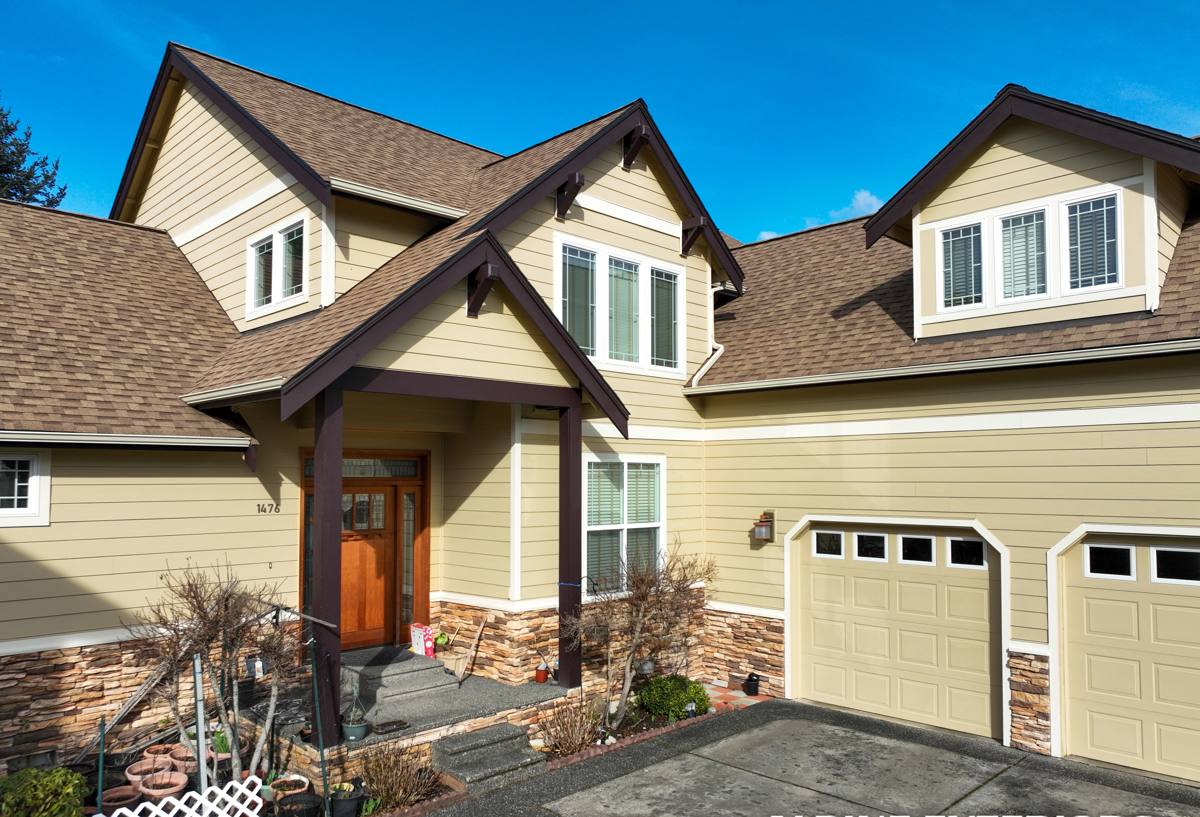
Signs Your Point Roberts Home Needs New Windows
Older windows, especially original single-pane or early dual-pane units, tend to show the same pattern of wear in this climate. Before assuming a window just needs a repaint or new caulk, walk the exterior and check for these:
- Fogging or a hazy film between panes of double-glazed glass — the seal has failed and the argon or air gap is gone
- Soft, spongy, or darkened wood at the sill or bottom corners of the frame
- Persistent drafts you can feel with a hand near the frame on a windy day
- Windows that are difficult to open, close, or lock — often a sign the frame has racked or swelled
- Visible daylight or gaps around the frame where old caulk has cracked and pulled away
- Recurring condensation on the inside of the glass, not just at the edges
- Moss, algae, or black staining building up on the sill or trim faster than a good cleaning can keep up with
Any one of these on its own might just need attention. Several together, especially rot at the sill, usually mean it's time to talk about replacement rather than another round of caulk.
Choosing a Frame Material for Salt Air and Rain
There's no single "best" window for every home, but some frame materials hold up to coastal exposure better than others, and the right pick depends on your budget, the home's style, and how exposed that particular wall is to weather off the water.
| Frame Material | Salt Air / Moisture Behavior | Maintenance | General Cost Position |
|---|---|---|---|
| Vinyl | Won't corrode or rot; performs well in coastal air | Low — occasional cleaning | Most affordable |
| Fiberglass | Very stable in moisture and temperature swings; strong coastal option | Low | Mid to upper-mid |
| Wood / Wood-Clad | Attractive but needs a sound exterior clad or diligent upkeep to resist rot near the coast | Higher — finish and joints need monitoring | Higher |
| Aluminum | Prone to corrosion and pitting in salt air unless properly coated and detailed | Moderate to high near water | Varies |
For homes with direct exposure to wind off the water, we generally steer people toward vinyl or fiberglass with marine-grade hardware — not because other materials can't work, but because they demand more upkeep to hold up the same way in this specific environment. If you love the look of wood, a well-detailed wood-clad window with a durable exterior surface can still be the right call; it's just a maintenance conversation we have honestly up front.
Glass and Hardware Details That Matter Here
Double-pane glass with a low-E coating and an insulated spacer is the practical minimum for this climate. Triple-pane can make sense on north-facing or wind-exposed walls where comfort and noise from weather off the water are bigger concerns, though it adds cost and weight. On hardware, stainless or coated corrosion-resistant fasteners and locks are worth insisting on — standard steel hardware is often the first thing to rust in a salt-air environment, sometimes before the window itself shows any wear.
What a Correct Installation Actually Involves
The window unit itself is only part of the job. In a climate with this much driving rain, how the window is flashed and sealed into the wall matters as much as what brand of window goes in. A rushed or shortcut install is usually invisible for a year or two — and then shows up as rot inside the wall cavity that's expensive to fix.
- Remove the old window and inspect the rough opening and surrounding framing for hidden rot or moisture damage before anything new goes in
- Repair or replace any damaged framing — installing a new window into a compromised opening just hides the problem
- Install sill pan flashing so any water that gets past the window has a sloped path back outside, not into the wall
- Integrate the window's flashing with the home's existing weather-resistant barrier in the correct shingle-lap order, so water sheds down and out
- Set the window plumb, level, and square, using shims at the correct load points
- Insulate the gap around the frame with low-expansion foam or backer rod — never packed tight enough to bow the frame
- Seal the exterior with a quality, movement-tolerant sealant rated for coastal UV and moisture cycling
- Finish interior trim and confirm smooth operation, a tight seal, and no visible gaps before we consider the job done
That sill pan flashing step is one of the most commonly skipped details in window replacement, and it's also the one that matters most on a wind-driven-rain site. Skipping it doesn't cause immediate problems — it causes problems in year three or four, after water has had time to work its way in behind the trim.
Energy Performance and Code Considerations
Washington's state energy code sets minimum performance requirements for replacement windows, including U-factor limits that affect how much heat a window lets escape. Whatcom County follows the state code, and while Point Roberts' isolation means some administrative steps can look a little different than in mainland Birch Bay, the performance standards themselves don't change. We size and spec glass packages to meet code as a baseline, then adjust up from there based on which direction a wall faces and how exposed it is to wind and weather — a west-facing wall catching wind off the water often benefits from a stronger glass package than code strictly requires.
What Affects the Cost of a Window Project
Every home is different, and we'd rather walk your specific windows with you than throw out a number that doesn't mean much in the abstract. That said, these are the factors that typically move a quote up or down:
| Factor | Why It Matters |
|---|---|
| Number and size of windows | More units and larger openings mean more material and labor |
| Frame material chosen | Vinyl, fiberglass, and wood-clad carry different material costs |
| Glass package | Double-pane, triple-pane, and specialty coatings each price differently |
| Condition of the existing opening | Hidden rot or framing repair adds labor beyond the window swap itself |
| Access and site conditions | Upper-story or hard-to-reach windows take more time and equipment |
| Trim and finish work | Custom interior or exterior trim adds finishing time |
We'll always walk you through where your money is going and where there's room to adjust scope without cutting corners on the parts that actually protect the wall — like flashing and sealant, which cost little relative to the window itself but do most of the work of keeping water out.
Why a Crew That Already Works Point Roberts Matters
Point Roberts is a genuine exclave — reaching it by land means crossing the Canadian border twice, and that's true for crews and material deliveries, not just visitors. A contractor who hasn't planned around that will underestimate how long materials take to arrive, or show up without the right documentation and lose a day of your project to logistics. We build border-crossing time and customs realities into scheduling from the start, so a Point Roberts job doesn't quietly run longer than the same job would in Birch Bay.
There's also a difference in reading the exposure correctly. A wall that would be moderately sheltered on the mainland can be taking direct wind and salt spray on a Point Roberts lot facing the Strait of Georgia or Boundary Bay. Crews who've worked the peninsula before know to check for that rather than defaulting to standard inland assumptions about which walls need the heaviest-duty flashing and sealant detail.
Our Process, Start to Finish
We keep the process straightforward and give you real information at each step, not surprises:
- On-site assessment of your current windows, framing condition, and each wall's actual exposure to wind and rain
- A clear, itemized estimate showing frame material, glass package, and scope — no vague allowances
- Scheduling that accounts for material delivery and border logistics specific to Point Roberts
- Removal, framing inspection and repair as needed, and correctly sequenced flashing before the new window goes in
- Careful setting, sealing, and finish work, with cleanup so you're not left with the mess
- A final walkthrough where we test every window with you before we call it complete
If you're weighing whether it's time to replace windows on a Point Roberts home, or you just want an honest read on what a wall's exposure calls for, we're happy to come take a look. Reach out for a free, no-pressure estimate using the form below.