 Birch Bay Siding
 Windows in the Terrell Creek Area: A Climate That Finds Every Weak Point
The Terrell Creek area sits low and close to the water on the edge of Birch Bay, in a part of Whatcom County where the exterior of a house does more work than it does a few miles inland. Homes here take on salt-laden marine air, long stretches of wind-driven rain through fall and winter, and a moss and mildew season that can run most of the year on shaded walls near the creek corridor. Windows sit right at the center of that exposure — they're the most common place water finds its way into a wall assembly, and they're also where corrosion, seal failure, and rot tend to show up first.
We install and replace windows for homes in and around Terrell Creek and Birch Bay, and we treat the window as one part of a connected wall system rather than a standalone product that gets set into a rough opening and caulked around the edges. That distinction matters more here than it would in a drier, calmer climate, because a window that's a good product but poorly integrated into the wall will still leak.
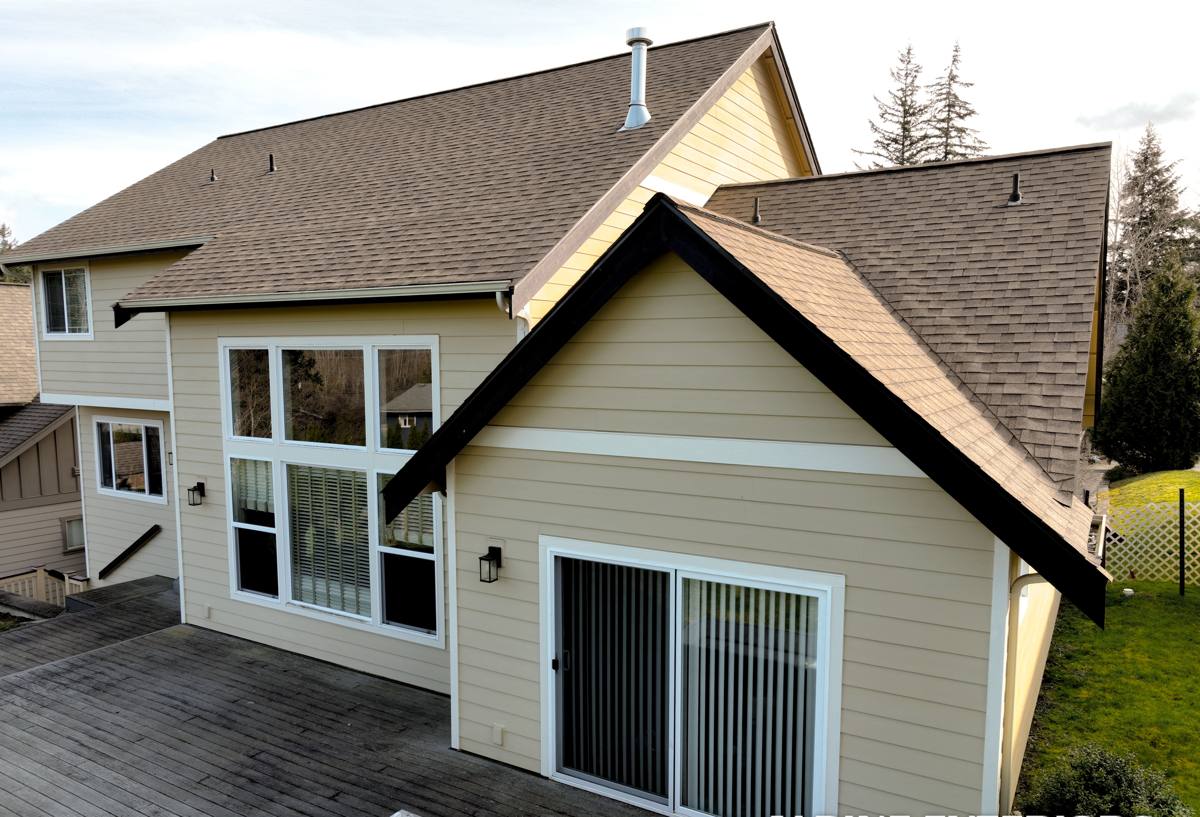
What This Climate Does to a Window
Salt-Laden Air
Proximity to Birch Bay means more airborne salt than homes further inland deal with. Salt accelerates corrosion of window hardware, screws, and lower-grade metal components, and it can break down weatherstripping and finishes faster than a sheltered inland location would. Every fastener and hardware component on a window installed near the creek and the bay needs to be chosen with that corrosion risk in mind, not just picked because it's what's on the shelf.
Driving Rain and Wind
Being close to open water also means more wind, and wind-driven rain doesn't fall straight down onto a window — it gets pushed sideways and upward into the flashing, the head, and the sill. That's a heavier moisture load than a typical rainfall total suggests, and it's the reason a window that would perform fine in a calm setting can still leak here if the flashing detail isn't right. Most of the window leaks we get called out to trace back to this kind of sideways-driven water finding a gap, not a flaw in the window unit itself.
The Long Moss and Mildew Season
Mild temperatures, shade, and near-constant moisture add up to an extended moss and mildew season across this part of the county. On windows, that shows up as green growth on sills and trim, black mildew staining around frames, and — over time — softened wood on anything with exposed, unprotected trim. Low-lying, creek-adjacent lots tend to hold moisture and shade longer than open, sun-exposed sites, which means windows here often need attention sooner than the same house would a short distance away.
Signs Your Windows Are Losing the Fight
- Fogging or a visible haze between the panes of a double-pane window, meaning the seal has failed
- Wood trim or sills that feel soft, spongy, or show paint bubbling near the frame
- Drafts or noticeable temperature difference near the window even when it's fully closed
- Difficulty opening, closing, or locking a window that used to operate smoothly
- Visible rust or corrosion on hinges, cranks, or locking hardware
- Moss or mildew staining that keeps returning on the sill or trim after cleaning
- Water staining on the interior wall or drywall below or beside a window
Any one of these on its own might just mean a window needs cleaning or minor repair. Several at once, especially on a wall facing the prevailing weather, usually means the window and its flashing have reached the end of their useful life.
What a Correct Window Installation Actually Involves
Flashing and Sill Pans
The single biggest factor in whether a window leaks in this climate isn't the window brand — it's the flashing. A correct installation includes a sloped sill pan that directs any water that gets past the window back out to the exterior instead of into the wall cavity, plus properly lapped flashing at the jambs and head so water sheds down and out at every layer, the way shingles do on a roof. Skipping or shortcutting this step is the most common cause of hidden rot behind window openings that we find on tear-outs.
Integration with the Wall Assembly
A window has to tie into the weather-resistive barrier and siding around it in the correct order — barrier, then flashing, then window, then more flashing, then siding — so water is always shedding downward and outward at every transition. Get that sequence backwards or leave a gap in it, and you've built a path for water to travel behind the siding, where it can sit against sheathing and framing for months before anyone notices.
Sealants and Fasteners That Won't Corrode
In a salt-air environment, the sealant and fastener choices matter more than they would inland. We use exterior-grade sealants rated for sustained UV and moisture exposure, and fasteners and hardware with corrosion resistance suited to coastal conditions. A window installed with the wrong fastener grade can develop rust streaks and hardware failure years before the window itself would otherwise need replacing.
Choosing a Window Material for This Exposure
There's no single "best" window material for every situation, but some hold up better than others against sustained salt air, moisture, and the freeze-thaw swings this part of Whatcom County sees. We walk homeowners through the real trade-offs rather than pushing one option across the board.
| Frame Material | Salt-Air & Moisture Behavior | Maintenance | General Notes |
|---|---|---|---|
| Vinyl | Won't rot or corrode; seals and hardware are the main wear points | Low | Cost-effective option; quality varies significantly by manufacturer |
| Fiberglass | Very stable in moisture and temperature swings; resists warping | Low | Higher upfront cost, holds paint finishes well over time |
| Wood with exterior clad | Cladding protects the exterior face; any exposed or damaged cladding lets moisture reach the wood core | Moderate | Warmer interior appearance; depends on cladding staying intact |
| Aluminum | Conducts cold and can corrode in salt air without a marine-grade finish | Moderate to high | Slim sightlines; not our first recommendation directly on the water |
For homes close to the creek and the bay, we most often steer homeowners toward vinyl or fiberglass for the balance of moisture resistance and low upkeep, but the right call also depends on the home's architecture, budget, and how exposed a given wall is to prevailing wind and rain.
New Construction vs. Replacement Windows
New Construction Windows
When a window is going into new framing or a full wall reconstruction, we have full access to build the flashing and sill pan detail from scratch, integrated directly with the weather-resistive barrier before siding goes on. This is the more thorough approach and the one we recommend whenever a remodel or addition already has the wall open.
Replacement (Retrofit) Windows
Most of our work in the Terrell Creek area is replacing existing windows in walls that aren't being opened up. There are two honest approaches: an insert replacement that fits a new window into the existing frame, which is faster and less invasive but inherits whatever condition the old flashing is in, or a full-frame replacement that removes the old unit down to the rough opening so we can inspect and rebuild the flashing and sill pan. On a home with any sign of past water intrusion, or on a wall that takes direct weather, we'll recommend full-frame replacement even though it costs more, because reusing failed or unknown flashing defeats the purpose of putting in a new window.
Our Process
We start with an on-site look at the existing windows and the walls around them, checking for soft trim, staining, or other signs of past water intrusion before we ever talk product selection. From there we walk through material options and give a straightforward read on insert versus full-frame replacement for that specific opening. Once a scope is agreed on, we handle removal, flashing and sill pan work, and installation as one sequence — not a window drop-in followed by a separate caulk-and-hope finish. We test operation and check the seal at every window before calling the job done.
Maintaining Windows in This Climate
Even a correctly installed window benefits from some seasonal attention in a salt-air, high-moisture area like this one. A little upkeep goes a long way toward getting the full service life out of the investment.
- Rinse sills and frames periodically to clear salt residue, especially on walls facing open water
- Clean moss and organic growth off sills and trim before it holds moisture against the surface
- Check and re-lubricate hardware — hinges, cranks, and locks — on an annual basis
- Inspect exterior caulk lines each fall and address any cracking or separation before winter storms
- Watch for condensation or fogging between panes, which signals a failed seal rather than something to just wipe away
- Keep gutters and downspouts clear so roof runoff isn't discharging directly onto window heads below
Why a Crew That Already Works Terrell Creek Matters
A contractor who regularly works this stretch of Whatcom County already knows how salt air, wind direction, and prolonged moisture behave on windows here, differently than they would even a few miles inland. That familiarity shows up in the small decisions — how deep the sill pan slope is cut, which fastener grade gets used, where extra flashing gets added on a wall that takes more direct weather than the rest of the house. Those details are what separate a window installation that's still tight and dry in twenty years from one that starts showing leaks in five.
If you're weighing whether to repair, replace, or just get an honest opinion on the windows in your Terrell Creek or Birch Bay home, we're glad to take a look and tell you straight what we see. Reach out below for a free, no-pressure estimate.