 Birch Bay Siding
 Ferndale Windows Work Harder Than Windows Inland
Ferndale sits close enough to Birch Bay and the Whatcom County coastline that its homes deal with a version of weather most inland siding and window crews never have to think about. Salt-laden air drifts in off the bay, driving rain comes sideways during winter storms, and a long gray moss season keeps north- and west-facing surfaces damp for months at a time. None of that is dramatic on its own, but stacked together, year after year, it's exactly the kind of slow, cumulative exposure that finds every weak point in a window installation.
A window that was installed correctly, with the right materials for this climate, can handle all of it for decades. A window that was installed with shortcuts — missing flashing, gaps in the sealant, the wrong frame material for a coastal environment — usually starts showing problems within five to ten years, sometimes sooner. The point of this page is to explain what "correctly" actually means for a Ferndale home, so you know what to look for whether you hire us or someone else.
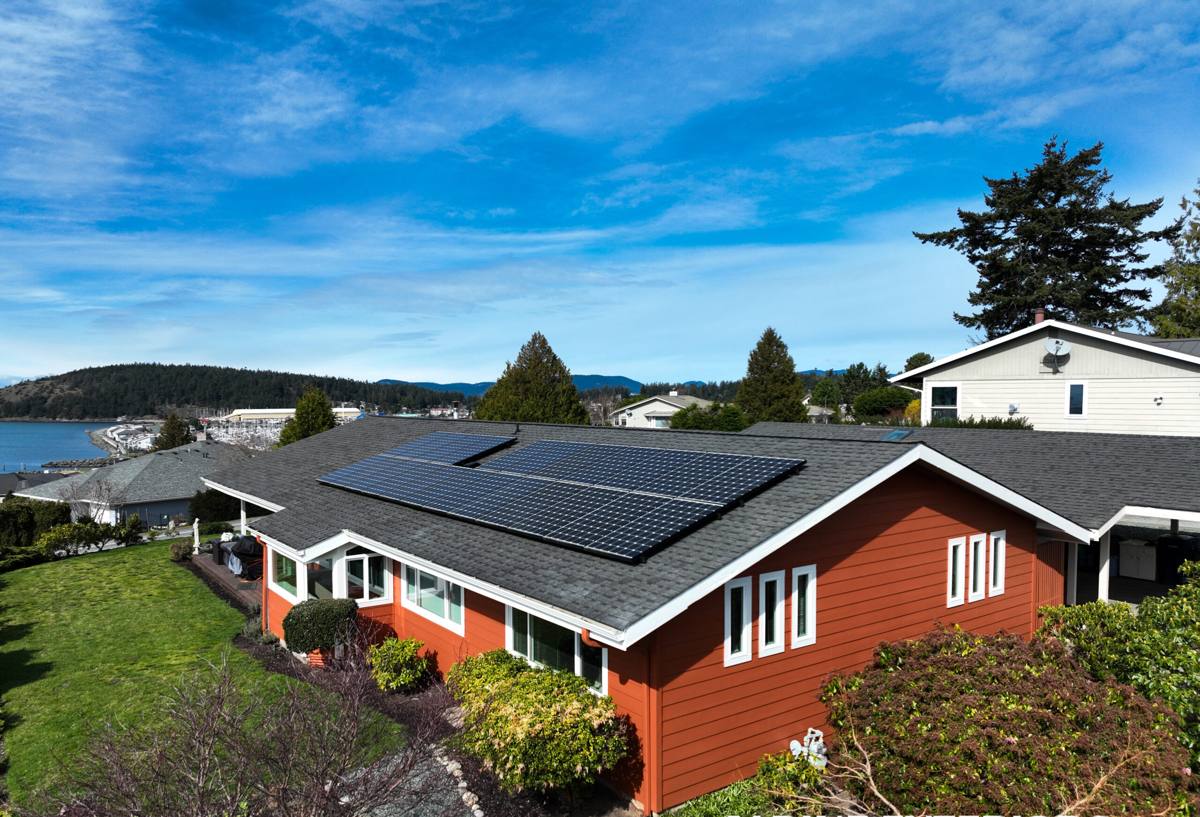
How Whatcom County's Climate Attacks a Window Over Time
Salt Air and Metal Fatigue
Salt in the air accelerates corrosion on anything metal — window balances, hardware, screws, and older aluminum frames in particular. It also breaks down certain finishes faster than a dry inland climate would. This is one of the biggest reasons frame material selection matters more here than it would fifty miles inland.
Driving Rain and Wind-Driven Moisture
Storms coming off the water don't just drop rain straight down — wind pushes it sideways into wall assemblies and window openings. If the flashing and water management details behind the trim aren't right, this is exactly the kind of weather that finds the gap and pushes water into the wall cavity, not around it.
Moss, Mildew, and Prolonged Dampness
Whatcom County's moss season isn't just a roof problem. Shaded, north-facing window trim and sills that stay damp for weeks at a time are prone to the same organic growth, which traps moisture against wood trim and speeds up rot if the surfaces underneath weren't properly sealed or primed before installation.
Temperature Swings and Condensation
Cool, humid air combined with warm interior heating creates condensation risk on older single-pane or poorly sealed windows. Beyond the annoyance of wiping down sills all winter, chronic condensation is a slow path to wood rot and mold around the frame.
Signs a Ferndale Home Needs Window Replacement, Not Just Repair
Not every window problem means full replacement. But in this climate, certain signs almost always point to a frame or seal failure that repair alone won't fix for long.
- Fog or moisture trapped between glass panes (failed seal on double- or triple-pane units)
- Soft or spongy trim, sills, or the wall surface directly below a window
- Visible gaps between the frame and siding, or daylight visible around the sash when closed
- Windows that are difficult to open, close, or lock — often a sign of frame warping
- Persistent condensation on the inside of the glass even with normal ventilation
- Noticeably higher heating bills with no other explanation
- Visible moss, algae, or dark staining concentrated around window trim
- Drafts you can feel standing next to the window on a windy day
If you're only seeing one or two of these and the frame itself is solid, a repair or re-seal may be enough for now. If you're seeing several together, that's usually a sign the original installation — or the window's service life — has run its course.
What a Correct Window Replacement Job Actually Involves
Removal and Opening Inspection
Every window opening gets inspected once the old unit is out, before anything new goes in. This is the only point in the project where you can actually see the condition of the framing, sheathing, and any existing flashing. Skipping this step is how rot gets sealed back into a wall for another fifteen years.
Flashing and Water Management
This is the single most important part of the job in a climate like this. Proper flashing directs any water that gets behind the siding back out, rather than letting it pool at the sill or migrate into the wall cavity. It has to be layered correctly — building paper or house wrap, then flashing tape or pan flashing at the sill, then the window, then flashing integrated with the surrounding weather-resistive barrier above and to the sides. Get the sequence wrong and the window can look fine for years while water quietly damages the framing behind it.
Air Sealing and Insulation
The gap between the window frame and the rough opening needs to be filled with a low-expansion foam or backer rod and sealant — not just insulation batting, and never left empty. This controls both drafts and the moisture that condenses in an unsealed gap.
Exterior Sealant and Finish Work
The exterior perimeter gets sealed with a high-quality, paintable exterior sealant rated for the siding material involved. Trim gets primed on all cut edges — including the back side, which is the part most crews skip and the part that actually touches moisture first.
Choosing the Right Window Material for a Coastal Whatcom County Home
There's no single "best" window material for every home — it depends on your siding, your home's exposure to wind and salt air, and your budget. Here's how the common options actually compare for this specific climate.
| Frame Material | Salt Air / Coastal Performance | Maintenance | Typical Lifespan |
|---|---|---|---|
| Vinyl | Good — won't corrode or rust; UV-stable formulations hold up well | Low — occasional cleaning | 20–30 years |
| Fiberglass | Excellent — very stable, resists warping and doesn't corrode | Low | 30–40+ years |
| Aluminum | Poor to fair without proper coatings — prone to corrosion and condensation in coastal humidity | Moderate — coating maintenance matters | Varies widely with coating quality |
| Wood (uncoated or site-finished) | Fair — needs diligent maintenance to resist moss, mildew, and rot in this climate | High — regular repainting/sealing | Highly dependent on upkeep |
| Wood-clad (exterior vinyl/fiberglass/aluminum clad) | Good — cladding protects the wood core from direct weather exposure | Low to moderate | 25–35 years with intact cladding |
For most Ferndale homes, we steer customers toward vinyl or fiberglass frames for anything facing prevailing weather off the bay, simply because they don't give moisture, salt, or moss anything to work with. Wood and wood-clad windows still have a place — especially where a home's look depends on them — but we're honest with customers up front about the added maintenance commitment that comes with real wood in this climate.
Cost Factors for Ferndale Window Replacement
Every home is different, so we won't quote a number here that doesn't mean anything without seeing your windows in person. What we can tell you is what actually drives the price up or down.
| Factor | Why It Matters |
|---|---|
| Frame material | Vinyl is the most budget-friendly; fiberglass and wood-clad cost more upfront but often less over the window's lifespan |
| Window size and configuration | Larger units, bays, and custom shapes cost more than standard single or double units |
| Condition of the existing opening | Rot or framing damage found during removal adds repair time before the new window can go in |
| Number of windows replaced at once | Doing multiple windows in one visit is more efficient than one-off replacements |
| Access and second-story work | Upper-floor windows and difficult access require more setup time |
| Glass package | Double-pane, low-E coatings, and gas fills all affect both cost and performance |
How Our Process Works, Start to Finish
- Free on-site estimate. We look at every window you're considering, check the condition of the trim and siding around each opening, and talk through what you actually need versus what you don't.
- Honest recommendation. We'll tell you if a window can be repaired instead of replaced, and we'll explain material tradeoffs in plain terms — no upselling on windows that don't fit your home or budget.
- Written estimate. Clear pricing, clear scope, no surprise add-ons once work starts unless we find something during removal that genuinely needs to be addressed — and we'll show you before proceeding.
- Scheduled installation. We plan around weather where we can, since a dry window for flashing and sealant work makes a real difference in a climate that doesn't always cooperate.
- Removal, inspection, and correct installation. Old windows out, opening inspected, flashing and sealing done to the standard described above, new window installed plumb, level, and square.
- Final walkthrough. We test every window with you before we consider the job done — opening, closing, locking, and checking the finish work.
Why a Crew That Already Works Ferndale Makes a Difference
A window replacement crew that mostly works dry, inland climates doesn't think about flashing sequencing or moss-prone trim the same way a crew that works this stretch of Whatcom County coastline every week does. It's not a knock on their skill — it's just not what their normal jobs demand.
Working Ferndale and Birch Bay regularly means we've already seen how salt air ages aluminum hardware, how driving rain finds gaps in a rushed flashing job, and how quickly moss takes hold on a north-facing sill that wasn't sealed on all sides. That local pattern recognition shows up in small decisions — which sealant to use, how much overlap the flashing needs, which material actually holds up here — that homeowners never see but absolutely benefit from over the life of the window.
It also means we're a known, findable local business if a question comes up five years after the install, not a name you found once and can't track down again.
Caring for New Windows in This Climate
A correctly installed window in the right material needs very little from you, but a few habits extend its life even further in a salt-air, high-moss environment.
- Rinse salt residue off frames and glass a few times a year, especially on wind-exposed sides of the home
- Keep gutters and downspouts clear so overflow doesn't run down onto window trim
- Trim back vegetation that keeps window trim shaded and damp, which encourages moss growth
- Check exterior sealant annually for cracking or gaps and have it touched up before it fails
- Wipe down interior sills during winter if you notice condensation building up
If you're weighing whether it's time to replace windows on a Ferndale home, or you just want a straight answer about what condition they're really in, we're happy to take a look. The estimate is free, there's no pressure, and you'll get a plain-English explanation of what we find — use the form below to get started.