 Birch Bay Siding
 Window Replacement Built for Lynden's Climate
Lynden sits inland from the water, but it's still very much a Whatcom County town, and that means the same wet, gray weather pattern that shapes every exterior project we do out of Birch Bay. Long stretches of driving rain, heavy fall and winter humidity, and a moss season that can run eight months out of the year all put steady pressure on old windows. Wood sashes swell and stick. Aluminum frames sweat and corrode at the corners. Vinyl that was never properly flashed lets water track behind the trim instead of off of it. None of that is dramatic on its own, but over ten or fifteen years it adds up to rot, fogged glass, and windows that cost you more in heating bills than they're worth to keep.
Our crew is based in Birch Bay, right on the water, so we deal with the full range of what this county throws at a house — from salt-tinged wind on the coast to the colder, wetter microclimate you get a little further inland around Lynden. That range matters. A window package that makes sense on a bluff above the beach isn't always the right call twenty minutes inland, and we adjust our recommendations based on where your house actually sits, not a one-size-fits-all spec sheet.
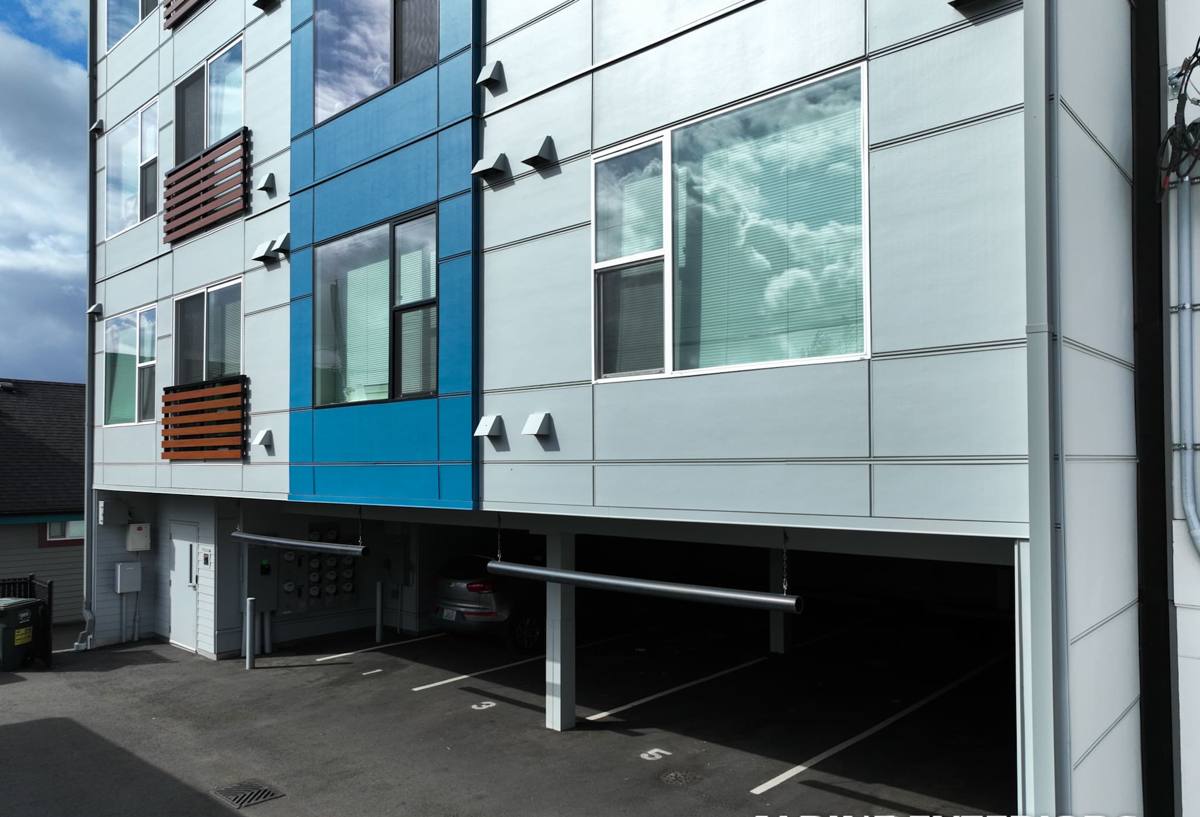
Signs a Lynden Home Actually Needs Replacement, Not Repair
Not every window problem means full replacement. Sometimes a bad seal, a cracked pane, or a worn weatherstrip is a repair job. Here's what we actually look for before recommending replacement:
- Condensation or fog trapped between the panes — the seal has failed and the insulated glass unit can't be repaired, only replaced
- Soft or spongy wood at the sill, corners, or bottom rail when you press on it
- Windows that won't stay open, won't latch, or have been painted shut
- Visible daylight or a draft at the frame when the window is closed and locked
- Frames that have swollen, warped, or separated from the siding or trim
- A noticeable cold spot or clammy feel near the window in winter, even with the heat running
- Moss or dark streaking on the sill or exterior casing that keeps coming back after cleaning
If you're only seeing one or two of these on an otherwise sound window, repair or reglazing might be the more honest answer, and we'll tell you that. Replacement makes sense when the frame itself is compromised or when the glass performance is so far gone that you're paying for it every month in energy costs.
What a Correct Window Replacement Job Involves
Removal and Opening Inspection
The old window comes out carefully so we can actually see the rough opening — the studs, sill, and header behind the trim. This is the point where hidden rot or water damage shows up, and it's also the point where a rushed installer skips ahead and covers up a problem instead of fixing it. We inspect and repair the opening before anything new goes in.
Flashing and Water Management
This is the step that determines whether a window lasts five years or thirty in a climate like ours. Proper flashing directs any water that gets behind the siding back out and away from the framing, using a sequence — sill pan, side flashing, and head flashing lapped correctly — that sheds water downward at every layer. Skipping or shortcutting this step is the single most common cause of hidden rot behind a "new" window.
Insulation and Air Sealing
The gap between the new window frame and the rough opening needs to be filled with a low-expansion foam or backer rod and sealant, not just caulked around the edges. Overpacking with standard spray foam can actually bow the frame and cause the window to operate poorly, so this step takes a lighter, more deliberate touch than most homeowners expect.
Trim, Caulking, and Final Finish
Exterior trim and caulking are the last line of defense against wind-driven rain. We use exterior-grade sealant rated for our climate and finish the trim so water sheds away from the joints instead of pooling in them.
Choosing the Right Window for Whatcom County Weather
There isn't one "best" window for every house — the right choice depends on your budget, your home's style, and how exposed the wall is to weather. Here's how the common options compare for a climate like ours:
| Frame Material | Moisture Performance | Maintenance | General Cost |
|---|---|---|---|
| Vinyl | Good — won't rot, but low-quality vinyl can warp in temperature swings | Low — occasional cleaning | Lower |
| Fiberglass | Excellent — dimensionally stable, handles wet/dry cycling well | Low | Mid to higher |
| Wood-clad | Good on the exterior clad side, but any breach in the cladding exposes wood to rot | Higher — needs monitoring at joints and sills | Higher |
| Aluminum | Poor for our climate — conducts cold and condensation readily | Moderate | Lower |
We don't push aluminum-frame replacements in this area. It's not that aluminum is a bad material everywhere — it's that in a climate with this much sustained humidity and temperature swing, it conducts cold straight through the frame and tends to sweat on the interior, which is exactly the kind of moisture problem we're trying to design out of your home, not into it. For most Lynden homes we're recommending vinyl or fiberglass, with wood-clad reserved for homes where matching an existing architectural look is the priority.
Glass Packages Worth Considering
Double-pane with a Low-E coating and argon gas fill is the standard baseline now, and it performs well here. Triple-pane adds real value on north-facing walls, upstairs rooms with more wind exposure, or homes right along a windy stretch, but the extra cost isn't always justified on a sheltered, south-facing wall. We'll walk your house with you and tell you honestly where the upgrade pays off and where it's just added cost.
Our Process, Start to Finish
- Free on-site estimate — we walk the exterior and interior of each window being replaced, check the framing where visible, and talk through what you actually need versus what you don't
- Written quote — clear pricing by window, material, and glass package, no vague allowances
- Scheduling — we plan around the weather where we can, since installing in active rain compromises the flashing work
- Removal and opening repair — old units out, framing inspected and repaired as needed
- Installation — flashing, window set, insulated, and sealed in sequence
- Trim and finish — exterior trim reset or replaced, caulked, and cleaned up
- Walkthrough — we test every operable window with you before we call the job done
What Drives the Cost
Every Lynden home is different, so we won't quote a number without seeing the house, but these are the factors that actually move the price:
| Factor | Why It Matters |
|---|---|
| Number of windows | Per-window cost drops on larger jobs due to shared setup and disposal |
| Frame material | Vinyl is the most budget-friendly; fiberglass and wood-clad cost more up front |
| Glass package | Triple-pane and specialty coatings add cost per unit |
| Opening condition | Hidden rot or framing damage found during removal adds repair time |
| Access and height | Second-story or hard-to-reach windows take longer and may need staging |
| Trim complexity | Custom or historic trim profiles take more time to match and finish |
Why a Crew That Already Works Lynden Matters
Window replacement done wrong doesn't usually fail the first winter — it fails the third or fourth, quietly, behind the trim, right where you can't see it until the sill is soft or the drywall inside is stained. Hiring a crew that's already doing this work across Whatcom County, house after house, means we've seen how framing, flashing, and trim details in this region actually hold up over years, not just how they look on install day. We're not driving in from out of the area for a one-off job and disappearing if something needs a callback. We're based in Birch Bay, we work this whole county regularly, and we stand behind the work because we're going to be around to answer for it.
Living With Your New Windows Through the Wet Season
A correctly installed window is largely maintenance-free, but a little attention goes a long way in this climate. Rinse pollen, moss spores, and grit off tracks and sills a couple times a year so they don't build up and hold moisture. Check that weep holes on vinyl and fiberglass frames stay clear — they're there to let any incidental water drain back out, and a clogged weep hole can trap water where it shouldn't sit. Keep an eye on the exterior caulk line where the trim meets the siding, since that's the joint most exposed to driving rain, and have it touched up if you see it start to crack or pull away. None of this is heavy maintenance, but it's the difference between a window that performs well for its full warranty life and one that develops a slow, hidden problem nobody notices until it's expensive.
If you're dealing with drafty, foggy, or hard-to-operate windows in Lynden, we're happy to come take a look, tell you honestly what needs replacing and what doesn't, and put together a clear, no-pressure estimate. Use the form below to get started.