 Birch Bay Siding
 Composite Decking Built for Bellingham's Climate
Bellingham sits in a stretch of Whatcom County where the weather doesn't do a deck any favors. Between the salt-laden air rolling off Birch Bay and the Strait of Georgia, the long stretches of driving rain that run from fall through spring, and the shaded, damp conditions that let moss and algae take hold on almost any outdoor surface, a deck here works harder than one built inland or in a drier climate. Composite decking, installed correctly, is one of the better answers to that combination — but "composite" isn't a single product, and installation quality matters as much as material choice.
This page is about composite decking specifically for Bellingham properties: what the local climate actually does to a deck over time, what a correct installation looks like given that climate, and why hiring a crew that already works in this area — not just anywhere in the Pacific Northwest — makes a practical difference.
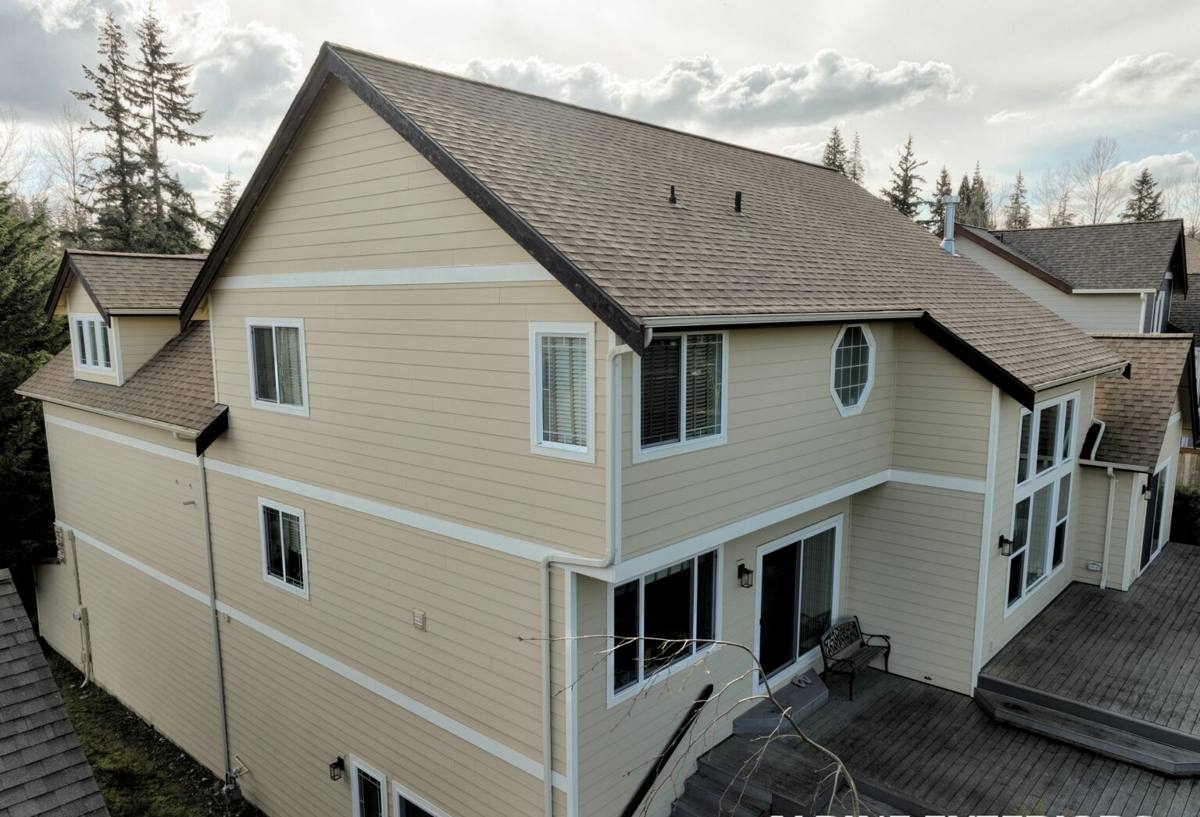
What Bellingham Weather Does to a Deck Over Time
Rain Volume and Duration
Whatcom County gets a lot of rain, but it's the duration more than the intensity that causes problems. Wood and lower-grade composite boards that stay wet for days at a time are far more prone to trapped moisture between boards, at ledger connections, and around fasteners than the same materials would be in a climate with shorter, heavier rain events followed by real drying time.
Salt Air
Proximity to Birch Bay and the surrounding saltwater means airborne salt settles on exterior surfaces, including deck boards and any exposed metal hardware. Salt accelerates corrosion in uncoated or poorly coated fasteners and framing connectors, and it can contribute to surface staining on lighter-colored composite boards over time if the boards aren't cleaned periodically.
Moss and Algae Season
Between the moisture, the shade from mature trees common in this area, and cooler temperatures for much of the year, Bellingham has what's realistically a moss and algae season that runs longer than most homeowners expect — often close to nine months. Any horizontal surface that stays damp and doesn't get direct sun is a candidate, and decks are exactly that kind of surface. This is less about the decking material failing and more about how the deck is built: airflow underneath, board spacing, and surface texture all affect how much moss and algae actually take hold.
Composite vs. Wood for a Bellingham Deck
Both materials can work here. The honest tradeoffs come down to maintenance burden and how each responds to sustained moisture, not one being universally "better."
| Factor | Composite Decking | Pressure-Treated Wood |
|---|---|---|
| Moisture absorption | Very low with capped boards; core resists swelling | Absorbs water readily; swells and shrinks with wet-dry cycles |
| Moss/algae resistance | Better on capped, textured boards; still needs periodic cleaning | More porous surface tends to hold moss and algae longer |
| Refinishing needs | None required if capped; no staining or sealing | Needs re-staining/sealing every 1-3 years in this climate to stay protected |
| Upfront cost | Higher material cost | Lower material cost |
| Long-term cost | Lower — labor/material for upkeep is minimal | Higher — recurring labor and material for maintenance |
| Splintering/cupping risk | Low | Increases as boards age and cycle wet-dry repeatedly |
For a lot of Bellingham homeowners, composite makes sense specifically because of the maintenance side of that table — nobody wants to be re-staining a deck every couple of years in a climate that barely gives you a dry week to do it in.
What a Correct Composite Deck Installation Involves
The board itself is only part of the job. In this climate, the substructure and detailing determine whether the deck performs well for its expected service life or starts showing problems in five years.
Framing and Ledger Flashing
Where the deck attaches to the house, the ledger board connection needs proper flashing to keep water from working its way behind the siding and into the wall assembly — this is one of the most common failure points on older decks in wet climates, composite or not. Fastener selection at the ledger and throughout the frame should be corrosion-resistant hardware rated for the moisture and salt exposure this area sees.
Joist Protection
Even under a composite deck surface, the framing underneath is typically still wood. Joist tape or an equivalent protective barrier over the top of each joist keeps standing water off the wood framing at the point where it's most likely to collect, which meaningfully extends the life of the substructure.
Board Spacing and Airflow
Composite boards need consistent gapping for drainage and to allow the boards themselves to expand and contract with temperature. Under the deck, adequate ventilation and clearance from grade helps the whole structure dry out between rain events instead of staying damp for weeks at a stretch, which is exactly the kind of environment moss and mildew prefer.
Footings and Frost Considerations
Footing depth needs to account for local frost depth and soil conditions, and should follow Whatcom County's current building code requirements. This is a detail that's easy to get wrong if a crew isn't used to building in this specific jurisdiction.
Fastening Method
Hidden fastener systems are common with composite boards and give a cleaner surface with no exposed screw heads for water to sit against — worth considering here given how much standing moisture the boards deal with over a typical winter.
Choosing Boards for This Climate
Not all composite decking is built the same way, and the differences matter more in a wet climate than a dry one.
- Fully capped boards have a protective shell on all sides, which resists moisture intrusion far better than boards capped on only the top and sides.
- Textured or grained surfaces help with slip resistance when boards are wet — a real consideration given how often Bellingham decks are wet.
- Color affects how visible surface algae and pollen staining are between cleanings; mid-tones tend to hide seasonal grime better than very light or very dark boards.
- Board profile (grooved for hidden fasteners vs. solid) affects both appearance and how water sheds off the surface.
We'll walk through the realistic tradeoffs of each option for your specific deck rather than pushing a single product line — the right board depends on sun exposure, shade, and how the deck is used.
Our Process for Bellingham Composite Decks
We keep this straightforward:
- On-site assessment. We look at drainage, sun/shade exposure, existing structure (if this is a replacement), and any moisture issues already present before we recommend a board or a build approach.
- Honest scope and estimate. You get a clear breakdown of what's involved — framing work, flashing, board selection, and any code-required elements for your specific property.
- Proper substructure work first. Framing, flashing, and joist protection get done right before a single composite board goes down, since that's the part that determines how the deck holds up long-term.
- Installation. Boards installed to manufacturer spec with correct spacing, fastening, and ventilation underneath.
- Final walk-through. We go over care and maintenance specific to your board choice and your property's exposure before we consider the job done.
Maintaining a Composite Deck in Bellingham
Composite decking is low-maintenance, not no-maintenance — especially in a climate with this much moss pressure. A simple seasonal routine keeps most decks looking and performing well for years.
- Sweep debris (leaves, needles, pollen) off the deck regularly, especially in fall — trapped organic matter holds moisture and feeds moss growth.
- Rinse or wash the surface a few times a year with a soft-bristle brush and a composite-safe cleaner to remove early moss and algae before it establishes.
- Avoid pressure washing at close range or high PSI, which can damage the surface texture or cap on some composite boards.
- Check that gaps between boards stay clear of debris so water continues to drain properly.
- Inspect under-deck ventilation once a year to make sure nothing (stored items, overgrown plants) is blocking airflow.
- Look over exposed fasteners and hardware periodically for early signs of corrosion, particularly if the deck faces the water.
Why a Local Crew Matters for This Job
A composite deck built to a generic spec sheet and one built for a specific Bellingham lot aren't the same job. A crew that already works in this area understands the realistic frost depth for footings, the flashing detail that actually keeps water out of a wall assembly during a typical Whatcom County winter, and how much ventilation a low deck needs to avoid becoming a moss farm by year two. That local knowledge shows up in decisions you won't necessarily see on the surface — but you'll feel the difference in how the deck performs five, ten, and fifteen years out.
We also know what Whatcom County's permitting and setback requirements typically look like for residential deck work, which keeps the project moving instead of stalling on paperwork.
Cost Factors to Expect
Composite decking costs vary based on size, board tier, substructure condition, and site access. Rather than quote a number that won't reflect your actual property, here's what typically drives the price up or down:
| Factor | Effect on Cost |
|---|---|
| Deck size and shape | Larger and more complex layouts (angles, multiple levels) increase labor |
| Existing structure condition | Replacing/repairing framing adds cost vs. building on sound existing framing |
| Board tier | Fully capped, premium lines cost more upfront than base composite lines |
| Railing and fastening system | Hidden-fastener systems and upgraded railing add material and labor |
| Site access | Difficult access (slopes, tight lots) increases labor time |
| Ledger/flashing complexity | Older homes may need more extensive flashing correction at the house connection |
We'll give you a real number for your specific deck after we've seen the site — not a rough range that turns into a surprise later.
If you're planning a new composite deck or replacing an aging one in Bellingham, we're happy to take a look and give you a straightforward, no-pressure estimate. Fill out the form below and we'll get in touch to schedule a time to walk the site.