 Birch Bay Siding
 Blaine's Climate Is Harder on Siding Than Most Homeowners Realize
Blaine sits right up against the water in the northwest corner of Whatcom County, and that location comes with a specific set of problems for exterior siding. Salt-laden air moves inland off the Strait of Georgia and Semiahmoo Bay, driving rain comes in sideways during the fall and winter storm cycle, and the long, damp shoulder seasons keep exterior surfaces wet for weeks at a time. Add in the shade from mature trees on many Blaine lots and you get a long moss season that runs well past what homeowners further inland deal with.
None of that is unusual for this part of Washington. What it means practically is that siding material choice and installation detail matter more here than they would in a drier climate. A siding job that would hold up fine in eastern Washington can fail within a few years on a Blaine exterior if it wasn't built for salt exposure, sustained moisture, and moss growth from day one.
Why Fiber Cement Holds Up Where Other Materials Struggle
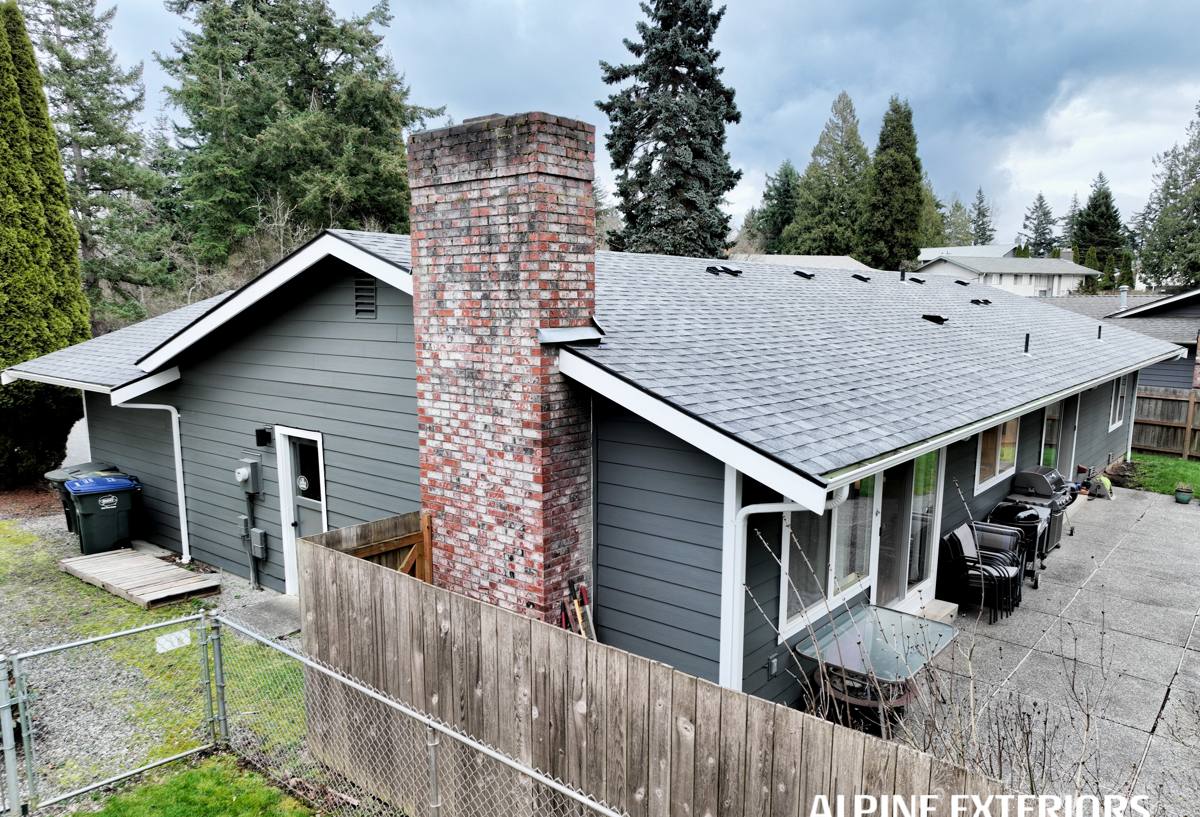
Fiber cement siding is a mix of cement, sand, and cellulose fiber, pressed and cured into planks and panels. It doesn't rot, it doesn't feed insects, and it doesn't warp or delaminate the way wood-based products can when they stay wet for extended periods. That matters directly for a Blaine property, where siding can spend a large part of the year damp from rain, fog, or morning condensation off the water.
We install James Hardie fiber cement exclusively, and we don't install LP SmartSide, vinyl, Cemplank, Allura, primed spruce, or cedar. That's not a marketing position — it's a standard we hold because of what we've seen happen to alternative products in coastal Whatcom County conditions specifically:
- Engineered wood products depend on an intact factory coating to keep moisture out; once that coating is compromised at a cut edge or fastener hole, the wood substrate underneath is vulnerable to swelling and rot, and salt air accelerates coating breakdown.
- Vinyl siding can handle moisture fine, but it expands and contracts significantly with temperature swings, and it doesn't offer the impact resistance or paintable, textured finish that many Blaine homeowners want for a coastal exterior.
- Untreated or primed-only wood species like cedar or spruce require an ongoing maintenance commitment — recoating, caulking, spot repairs — that's harder to keep up with when a house sits in a near-constant damp environment.
James Hardie's fiber cement, by contrast, is manufactured with moisture and climate exposure specifically engineered into the product line, and the ColorPlus factory finish is baked on and warranted, not applied on-site where weather and workmanship variables come into play.
What a Correct Fiber Cement Installation Actually Involves
Fiber cement is only as good as the installation behind it. A huge share of the siding problems we get called out to inspect on older homes in this area trace back to installation shortcuts, not the material itself. For Blaine specifically, three details matter more than usual.
Rain Screen and Drainage Gap
Given the volume of driving rain Blaine gets off the water, siding needs a way to shed bulk water and let any moisture that does get behind the cladding dry out. A proper rain screen gap between the water-resistive barrier and the back of the siding gives water somewhere to go instead of sitting against the wall assembly. Skipping this detail is one of the most common shortcuts we see, and it's one of the hardest to catch after the fact without pulling siding off.
Flashing at Every Penetration
Windows, doors, vents, hose bibs, light fixtures — every penetration through the siding is a potential entry point for wind-driven rain. Correct flashing detail at each one, integrated with the water-resistive barrier in the right shingle-lap order, is what actually keeps water out. Caulk is a backup, not a strategy.
Fastening and Clearances
James Hardie specifies fastener type, spacing, and placement for a reason — under-fastened or improperly nailed boards can work loose over time, especially with the freeze-thaw and wet-dry cycling this climate produces. We also hold the manufacturer's minimum clearances from grade, roof lines, and decks, which keeps the bottom edge of the siding from sitting in standing water or splash-back, a common cause of premature edge damage on coastal homes.
Moss, Algae, and the Long Shoulder Season
Shade, moisture, and mild temperatures are exactly what moss and algae need to establish themselves, and a lot of Blaine properties have all three in abundance for much of the year. Fiber cement itself doesn't feed organic growth the way wood substrate can, but any siding material will host surface growth if water sits against it or if debris accumulates in gaps and behind trim. Correct installation — proper clearances, working drainage, and trim details that don't trap moisture — reduces how much of a foothold moss and algae get in the first place. It won't eliminate periodic cleaning, but it changes the difference between a wash-down every couple of years and ongoing moisture damage underneath.
Our Process for a Blaine Fiber Cement Project
The steps are consistent from project to project, but a few of them get extra attention on Blaine homes specifically because of the site conditions common in this area.
- On-site assessment — we walk the exterior, check existing siding and sheathing condition, note tree cover and shade patterns, and look at drainage around the foundation, since standing water at grade affects siding longevity too.
- Tear-off and substrate check — old siding comes off and we inspect the sheathing underneath for hidden moisture damage before anything new goes on. This step matters more here than in drier parts of the county.
- Water-resistive barrier and rain screen — a new weather barrier goes on correctly lapped, with a drainage gap installed behind the siding.
- Flashing at every penetration — windows, doors, and any wall-mounted fixtures get flashed before siding goes over them.
- James Hardie installation to spec — correct fastener type, spacing, and clearances from grade, roofline, and decking.
- Trim, caulking, and touch-up — factory-finished ColorPlus boards need minimal field touch-up, which reduces the number of exposed seams where moisture can get in.
- Final walkthrough — we go over the completed job with the homeowner and point out any manufacturer-recommended maintenance specific to their product line and site conditions.
James Hardie Product Lines We Use in Blaine
Not every Hardie product fits every home, and the right choice depends on the home's style, exposure, and budget. Here's how the main options compare for a coastal Whatcom County property.
| Product | Best Fit | Notes for This Climate |
|---|---|---|
| HardiePlank Lap Siding | Most single-family homes | Widely used HZ5 formulation engineered for cold, wet Pacific Northwest conditions |
| HardiePanel Vertical Siding | Modern builds, accent walls, gable ends | Clean vertical lines; needs correct joint flashing given wind-driven rain exposure |
| HardieShingle Siding | Craftsman and cottage-style homes | Staggered or straight-edge shingle look without the moisture sensitivity of cedar shingles |
| HardieTrim Boards | Corners, fascia, window and door trim | Matches the siding's factory finish and durability at high-exposure edges |
Cost Factors for a Blaine Siding Project
Every home is different, so we don't quote pricing without seeing the property, but these are the main factors that move the number up or down on a typical Blaine job.
| Factor | Why It Matters |
|---|---|
| Tear-off scope | Removing and disposing of existing siding versus building over a bare wall adds labor |
| Sheathing repair | Hidden moisture or rot found during tear-off requires substrate repair before new siding goes on |
| Home size and wall complexity | Dormers, multiple gables, and cut-up wall lines take more time than simple rectangular walls |
| Product line and profile | Lap, panel, shingle, and trim products carry different material costs |
| Site access | Tight lots, slopes, or limited staging area affect equipment and labor time |
| Trim and detail work | Corner boards, window trim, and fascia work add scope beyond the flat wall area |
Signs Your Current Siding Is Losing the Battle
Homeowners often live with early warning signs for a while before calling anyone, partly because damage tends to hide behind the siding rather than on the surface. Worth a closer look if you notice any of the following:
- Soft or spongy spots when you press on the siding, especially near the bottom edge or under windows
- Paint or coating that's peeling, bubbling, or chalking heavily
- Visible gaps, cracking, or warping in boards or panels
- Persistent moss or algae staining that comes right back after cleaning
- Musty smells or visible staining on interior walls near exterior corners
- Siding that was painted or caulked repeatedly in the same spots over the years
Any one of these on its own isn't necessarily an emergency, but a combination of a few is usually a sign that moisture has been getting behind the siding for a while.
Why a Crew That Already Works Blaine Makes a Difference
Fiber cement installation isn't complicated in theory, but getting the water management details right on a specific site takes local judgment — knowing how a particular lot drains, how much wind-driven rain a given elevation actually takes, and where moss tends to establish based on tree cover and sun exposure. A crew that's worked a number of Blaine and Birch Bay properties has already seen how this stretch of Whatcom County behaves through a full wet season, and that experience shows up in the small decisions made on-site: where to add extra flashing, how much clearance to hold at grade, which elevations need the most attention to drainage detail. It's the difference between a crew following a generic install manual and one that's adapting that manual to conditions they've already dealt with locally.
Get a Free Estimate for Your Blaine Home
If your siding is showing wear, or you're planning ahead for a home in Blaine or the wider Birch Bay area, we're happy to take a look and walk you through what correct James Hardie installation would involve for your specific property — no pressure, no obligation. Use the form below to request a free estimate.