 Birch Bay Siding
 Roofing Built for Cherry Point's Coastline, Not a Catalog
Cherry Point sits close enough to the water that its roofs live a different life than a roof twenty miles inland. Salt-laden air moves off the Strait of Georgia and Georgia Strait shoreline, wind-driven rain comes in sideways during fall and winter storms, and the shaded, damp stretches under fir and cedar canopy stay wet long after the rest of Whatcom County has dried out. An asphalt shingle roof installed the same way you'd install one in Spokane or Yakima will not perform the same way here. It needs the right shingle, the right underlayment, and installation details that account for moisture that just doesn't quit for months at a time.
This page is about one job: asphalt shingle roofing for homes in and around Cherry Point. Not siding, not gutters, not a general overview of every roofing material on the market — just what a correct shingle roof looks like on a Cherry Point house, why it matters, and what our process involves when we do the work.
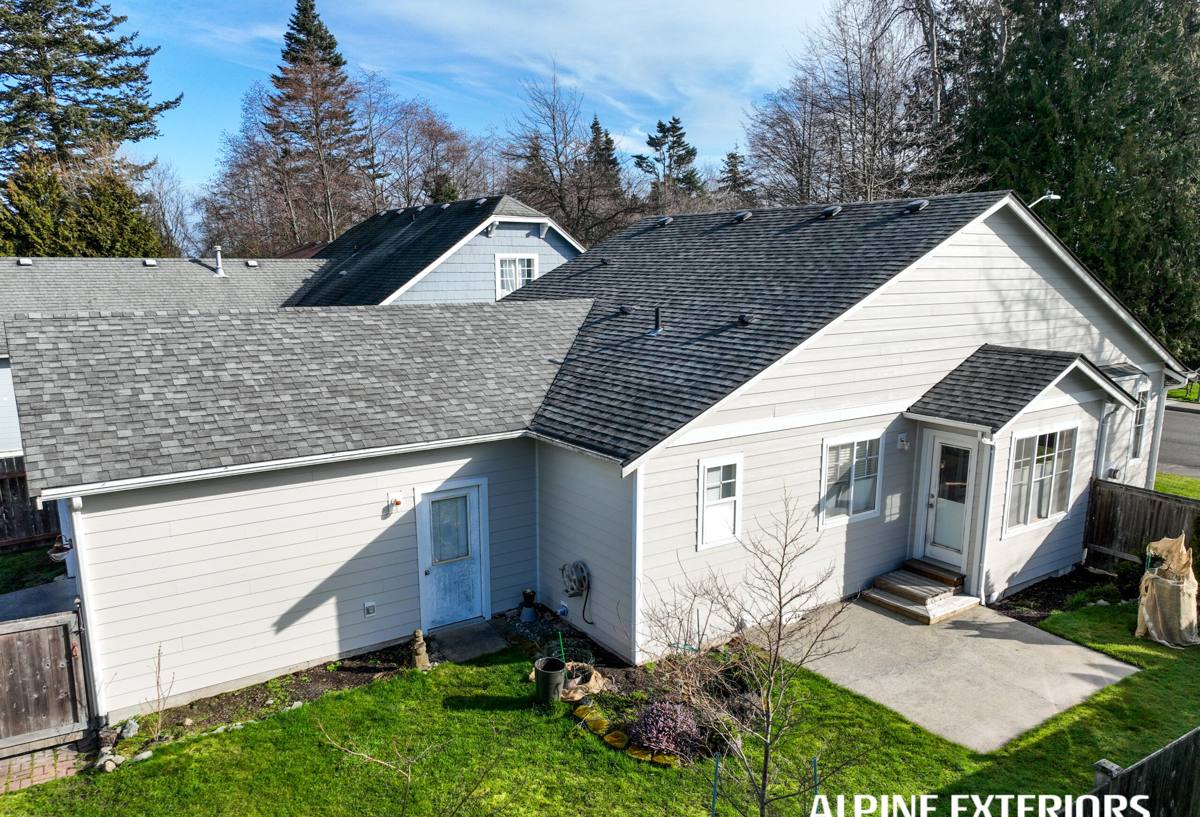
What Salt Air and Driving Rain Actually Do to a Shingle Roof
Asphalt shingles are a proven, cost-effective roofing material almost everywhere in the country, but coastal exposure changes how they age. A few things happen on homes near Cherry Point that don't happen the same way further inland:
- Metal components corrode faster. Flashing, drip edge, nail heads, and roof vents exposed to salt-carrying air corrode sooner than the same materials would inland. Cheap or improperly finished metal flashing is often the first thing to fail.
- Wind-driven rain finds weak seals. Storms off the water don't just drop rain straight down — they push it sideways and up under shingle edges, valleys, and around penetrations like vent pipes and chimneys. A roof that would shed normal rain fine can still leak under wind-driven conditions if the underlayment and flashing details weren't done right.
- Shaded, damp areas stay wet longer. North-facing slopes and sections under tree cover dry more slowly after rain, which is exactly the condition moss and algae need to take hold.
- UV and moisture cycling wear shingles unevenly. Sun-exposed slopes bake and lose granules over time while damp, shaded slopes grow moss and hold moisture against the shingle mat. The same roof can age at two different speeds depending on which direction each slope faces.
None of this means asphalt shingles are the wrong choice for Cherry Point — they're still one of the most practical, well-understood roofing materials available, and a well-installed shingle roof holds up fine on this coastline for decades. It just means the installation has to actually account for these conditions instead of following a generic playbook.
Choosing the Right Shingle for This Climate
Not every asphalt shingle is built the same, and the differences matter more here than in a drier, inland climate. The table below covers the main categories homeowners in this area typically choose between.
| Shingle Type | Typical Lifespan | Best Suited For | Cherry Point Considerations |
|---|---|---|---|
| 3-tab asphalt | 15-20 years | Budget-conscious re-roofs, secondary structures | Lower wind resistance rating; less material mass to resist wind-driven rain intrusion at edges |
| Architectural / laminate | 25-30+ years | Most primary residences | Heavier, more rigid, generally higher wind ratings — the standard choice we recommend for most Cherry Point homes |
| Algae-resistant (AR) shingles | Same as base shingle | Shaded or damp-prone roof sections | Copper- or zinc-infused granules resist the blue-green algae and moss growth common on shaded coastal roofs |
| Impact-rated / Class 4 | Same as base shingle, often with insurance discounts | Homes wanting added storm durability | Extra resistance to debris impact during high-wind storm events off the water |
For most Cherry Point homes, we recommend a laminate/architectural shingle with algae-resistant granules as the baseline, upgrading to a higher wind-rated product on exposed, unshielded lots closer to the shoreline. We'll walk through the actual options and cost differences for your specific roof during the estimate — this table is a starting point, not a substitute for looking at your house.
Moss and Algae: Prevention Built Into the Install, Not an Afterthought
Whatcom County's moss season runs long — realistically most of the year in shaded or north-facing areas. Moss isn't just cosmetic. Once it establishes on a shingle roof, it holds moisture against the shingle surface, works its way under shingle edges as it grows, and can lift tabs enough to let water in underneath. Left unaddressed for years, moss growth shortens the effective life of an otherwise good roof.
A correct installation for this climate builds in prevention rather than leaving it entirely to future maintenance:
- Algae-resistant shingle granules on shaded or historically moss-prone slopes
- Zinc or copper strips at the ridge on roofs with heavy tree cover, where rainwater carries trace metal ions down the slope to inhibit regrowth
- Proper attic and roof ventilation so the underside of the deck isn't adding its own moisture to the problem
- Keeping roof valleys and eaves clear during installation so debris doesn't start collecting moss growth in year one
None of these eliminate the need for periodic cleaning altogether, but they meaningfully slow how fast moss comes back — which matters on a coastal, tree-shaded property where it's a permanent condition to manage, not a one-time problem to solve.
What a Correct Asphalt Shingle Installation Actually Involves
The shingle itself is only part of the roof system. Most leaks and premature failures we see on coastal homes trace back to shortcuts in the layers underneath the shingle, not the shingle brand itself. A correct job includes:
Deck Inspection and Repair
Before anything goes down, the roof deck gets inspected for soft spots, rot, or delamination — common where old flashing has failed and let water sit against the sheathing for years. Any compromised decking gets replaced before new material goes on. Shingling over a bad deck just hides the problem.
Underlayment
Given how much wind-driven rain this area gets, we use a synthetic or ice-and-water-shield underlayment at eaves, valleys, and penetrations rather than relying on felt paper alone. This is the layer that protects the deck if wind ever pushes water up under a shingle edge — it matters more here than in calmer inland climates.
Flashing
Step flashing at walls and chimneys, valley flashing, and drip edge all need to be correctly lapped, fastened, and — given the salt exposure — made of a metal and finish that will hold up to it. This is one of the most common places we find prior installations cut corners.
Ventilation
Balanced intake and exhaust ventilation keeps the attic dry and temperature-regulated, which protects the shingles from underneath and helps prevent condensation-driven moisture problems that show up as mystery stains on ceilings months later.
Nailing Pattern and Wind Rating
Manufacturer nailing specs exist for a reason, and following them correctly — proper nail count, placement, and fastener type — is what actually gives a shingle its rated wind resistance. Skipping this is invisible until the first real storm.
Our Process, Start to Finish
- On-site inspection and estimate. We look at the actual roof — slope exposure, tree cover, existing moss or algae, flashing condition, and any soft decking — before recommending a shingle system.
- Written scope and pricing. You get a clear breakdown of materials, labor, and any deck repair contingencies before work starts, not surprises after.
- Tear-off and deck check. Old roofing comes off, the deck gets inspected, and any needed repairs happen before new material goes down.
- Underlayment, flashing, and shingle installation. Installed to manufacturer spec, with the coastal-specific details above applied where your roof needs them.
- Cleanup and final walkthrough. Site cleaned, debris hauled, and we walk the finished roof with you before calling the job done.
Signs a Cherry Point Roof Needs Attention
Because moisture damage on a coastal roof often starts quietly, it helps to know what to watch for between inspections:
- Granules collecting in gutters or at downspout outlets
- Dark streaking or green-black growth on shaded slopes
- Moss visible at shingle edges, valleys, or around the chimney
- Curling, cupping, or lifted shingle tabs, especially on wind-exposed slopes
- Rusty streaking near flashing or exposed fasteners
- Soft spots felt underfoot during any roof access
- Water stains on interior ceilings, particularly after a windy rainstorm
Any one of these on its own isn't necessarily an emergency, but they're worth a look before the next storm season rather than after.
Cost Factors Worth Understanding
Every roof is priced individually after inspection, but the main variables that move price on a Cherry Point job are generally the same:
| Factor | Why It Matters Here |
|---|---|
| Roof pitch and access | Steeper roofs and limited equipment access take more labor and safety setup |
| Deck condition | Moisture-related rot found during tear-off adds repair scope not visible from the ground |
| Shingle tier chosen | 3-tab vs. architectural vs. impact-rated shingles carry different material costs |
| Flashing scope | Homes with multiple valleys, chimneys, or wall intersections need more flashing work |
| Tree cover and shade | Heavier shade may justify algae-resistant shingles or zinc strips, a modest upcharge that pays off in reduced moss maintenance |
Why a Crew That Already Works Cherry Point Matters
A roofing crew that regularly works this stretch of Whatcom County has already seen how salt exposure, wind-driven rain, and long moss seasons play out on real roofs over years, not just at install day. That shows up in small but real ways — knowing which slopes on a given lot orientation tend to hold moisture, which flashing details actually hold up to salt air over time, and not treating this as a one-size-fits-all installation borrowed from a drier climate. It also means we're not disappearing after the job — if a question comes up two years down the road, we're still working in the area.
If you're weighing a repair against a full replacement, or just want an honest read on how much life is left in your current roof, we're glad to take a look. There's a free, no-pressure estimate form below — reach out and we'll come assess your roof and talk through real options, not a sales pitch.