 Birch Bay Siding
 Siding Built for Custer's Coastal Conditions
Custer sits close enough to Birch Bay and the Strait of Georgia that homes here deal with a specific mix of weather most siding products were never engineered for: salty marine air, wind-driven rain that hits siding sideways instead of straight down, and long stretches of gray, damp months where moss and algae get a real foothold on anything that stays wet. If you're planning a siding replacement in Custer, the product and the installation both need to answer to that climate, not just look good on the day it goes up.
We install James Hardie fiber cement siding exclusively, and this page is about what that means specifically for a home in the Custer area — what the salt air and moss season actually do to siding over time, what a correct Hardie installation looks like here, and why a crew that already works this stretch of Whatcom County matters more than it might seem.
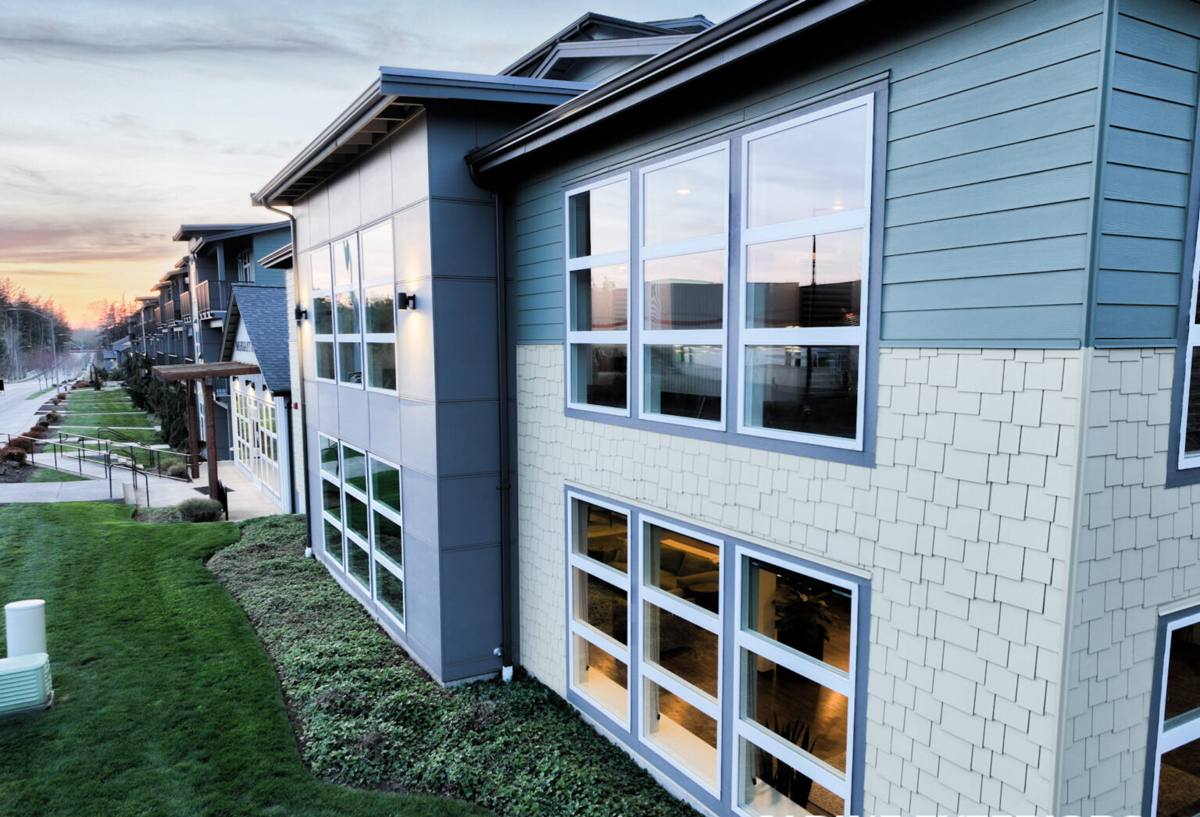
What Custer's Climate Does to Siding Over Time
Salt Air and Coastal Moisture
Proximity to the water means airborne salt settles on exterior surfaces, and combined with near-constant humidity, that salt accelerates corrosion on fasteners, trim flashing, and any metal components in the wall assembly. It also means paint films and caulking joints are under more stress than they would be twenty miles inland — salt-laden moisture works into hairline gaps faster and stays there longer.
Driving Rain
Rain in this part of Whatcom County rarely falls straight down. Wind off the water pushes it sideways, which means it gets driven up under laps, into butt joints, and around penetrations (hose bibs, light fixtures, vents) that would stay dry in a calmer climate. Siding systems here need real water-shedding detail — not just a product that resists moisture, but a install method that assumes water will be tested at every seam.
Moss and Algae Season
Whatcom County's wet season runs long, and shaded north- and west-facing walls in Custer can stay damp for weeks at a stretch. That's exactly the environment moss and algae need to establish. On porous or textured surfaces, moss doesn't just sit on top — it holds moisture against the substrate, which is where real damage starts, especially on wood-based siding products.
How These Factors Combine
None of these three conditions is unusual on its own. What makes Custer demanding is that they overlap for most of the year: salt-laden air keeps moisture in the mix, driving rain forces water into every weak seam, and long damp stretches give moss time to establish before a home ever gets a real dry-out period. Siding here isn't tested by one bad storm — it's tested by month after month of low-grade exposure that never fully lets up.
Why We Specify James Hardie for This Environment
James Hardie fiber cement is engineered from cement, sand, and cellulose fibers — it doesn't have the wood content that gives moss and rot something to feed on, and it doesn't swell, delaminate, or absorb water the way wood-based or wood-composite sidings can. For a Custer home dealing with salt air and constant damp, that matters in a few concrete ways:
- Non-combustible core: Hardie's fiber cement composition doesn't contribute fuel to a fire, which matters as wildfire-driven insurance scrutiny increases across Washington.
- Dimensionally stable: It doesn't expand and contract with moisture the way wood-based products do, so joints and caulking lines hold up better over years of wet-dry cycling.
- ColorPlus factory finish: A baked-on finish applied under controlled conditions resists fading and chipping far better than field-applied paint, and it holds up against the UV and salt exposure this area gets.
- HZ5 product engineering: Hardie's HZ5 line is formulated for climates with extended freeze-thaw and moisture exposure — appropriate for Pacific Northwest coastal conditions rather than a generic, one-size-fits-all product.
We don't install LP SmartSide, vinyl, Cemplank, Allura, primed spruce, or cedar. Each of those has legitimate uses in other climates or budgets, but in a marine, high-moisture environment like Custer, they carry trade-offs — moisture sensitivity, maintenance burden, or seam behavior — that we're not willing to put our name behind. James Hardie, installed correctly, is the product we trust on homes in this specific climate.
What "Correct Installation" Actually Involves
James Hardie's own product warranty is conditional on installation following their published fastening, clearance, and flashing specifications — and in a climate like Custer's, skipping these details is exactly what turns a good product into a problem ten years later.
Water Management Behind the Siding
Before a single board goes up, the wall needs a drainage plane — housewrap or building paper installed shingle-style, integrated with window and door flashing so any water that gets behind the siding has a path down and out, not a path inward. In a driving-rain environment, this layer is doing as much work as the siding itself.
Clearances and Gaps
Hardie specifies minimum clearances from grade, roof lines, decks, and horizontal surfaces, plus gaps at butt joints and around penetrations that get sealed with the right sealant — not caulked shut with no room for the material to move. Tight, unventilated details are where moss and trapped moisture start.
Fastening
Corrosion-resistant fasteners, driven correctly (not overdriven, which cracks the board's edge and creates a moisture entry point), at the spacing Hardie specifies for the exposure zone. Given the salt air here, fastener material and placement isn't a minor detail — it's the difference between hardware that lasts and hardware that streaks and fails early.
Flashing at Every Penetration
Every window, vent, light fixture, and hose bib is a place water will test the wall. Step flashing, kick-out flashing at roof-wall intersections, and properly lapped house wrap at every penetration are non-negotiable in a wind-driven-rain climate — this is where most siding failures we see actually originate, regardless of the siding brand.
Common Installation Shortcuts That Cause Trouble Later
| Shortcut | Why It's a Problem Here |
|---|---|
| Skipping or under-lapping the drainage plane | Wind-driven rain finds the gap and has no path to drain out |
| Caulking butt joints solid instead of leaving a gap | Traps moisture and prevents normal material movement, causing cracking |
| Overdriven or wrong-length fasteners | Cracks board edges and creates entry points that worsen with salt exposure |
| No kick-out flashing at roof-wall intersections | Concentrated water runoff gets directed straight into the wall assembly |
| Ignoring clearance from grade or decks | Keeps the bottom courses damp longer, which is exactly what moss needs |
Our Process on a Custer Project
1. On-Site Assessment
We walk the home and look specifically for what a Custer property tends to show: moss buildup on shaded walls, staining or corrosion patterns near grade or under decks, caulking that's failed at joints, and any spots where trim or flashing has let water in. This tells us where the wall assembly needs the most attention, not just where the siding looks worn.
2. Removal and Substrate Check
Old siding comes off and we inspect the sheathing underneath. In a damp climate, hidden rot or compromised sheathing is common enough that we don't skip this step — it needs to be sound before anything new goes on.
3. Drainage Plane and Flashing
New housewrap, properly lapped and integrated with flashing at every window, door, and penetration, before any siding goes up. This is the step that determines how the wall performs in year eight, not just year one.
4. James Hardie Installation to Spec
Correct clearances, correct fastener spacing and type, proper gaps at joints sealed with the right product — installed to Hardie's published specification so the manufacturer warranty is actually valid, not just assumed.
5. Final Walkthrough
We go over the finished work, point out anything homeowners should keep an eye on, and answer questions about care going forward.
Why a Local Crew Matters for This Kind of Work
A lot of siding problems in coastal Whatcom County aren't caused by a bad product — they're caused by a good product installed the way it would be installed somewhere drier. A crew that hasn't worked marine environments before might not think twice about a tight caulked joint or a skipped kick-out flashing detail, because in a less demanding climate those shortcuts don't show up as failures for years.
Working in and around Birch Bay and Custer regularly means we already know which details actually matter here: where moss tends to establish first, which wall orientations take the worst of the driving rain, and what a marine-exposure fastener schedule should look like. That's not something you get from a spec sheet — it's something you get from doing this work, in this climate, repeatedly.
Maintaining Hardie Siding in a Moss-Prone Climate
James Hardie siding is low-maintenance compared to wood-based alternatives, but "low-maintenance" doesn't mean "no maintenance" — especially in a climate that gives moss a long season to work with. A simple annual routine goes a long way:
- Rinse siding annually with a garden hose (avoid high-pressure washing, which can force water behind laps and damage the ColorPlus finish)
- Trim back vegetation and tree limbs that keep walls shaded and damp longer than necessary
- Check caulking at trim and penetrations yearly and re-caulk any joints that have cracked or pulled away
- Look at north- and west-facing walls specifically each fall, since these hold moisture longest through the wet season
- Address any moss growth early with a gentle cleaning rather than letting it establish and spread
Homes that get this basic upkeep tend to hold their finish and performance far longer than ones that don't — the product does most of the work, but a little seasonal attention protects the investment.
What This Costs and What Affects It
Every Custer home is different, so exact numbers depend on square footage, the current condition of the substrate, trim complexity, and which Hardie product line and profile you choose. Broadly, homeowners should expect a range that reflects full removal of old siding, substrate repair where needed, and a proper installation with all flashing and drainage detailing done correctly — not just a re-skin over existing problems. The factors that move the number most are:
| Factor | Why It Affects Cost |
|---|---|
| Substrate condition | Hidden rot or damaged sheathing found during removal needs repair before new siding goes on |
| Trim and detail complexity | More corners, penetrations, and architectural detail means more flashing and labor time |
| Product line and profile | Hardie offers multiple lines (lap, shingle-style, panel) and factory finishes at different price points |
| Home size and stories | More square footage and multi-story access affect both material and labor |
We'll always give you a straight number after actually looking at the house, not a phone estimate based on square footage alone.
If your Custer home's siding is showing moss, staining, or failed caulking, or you're just ready to stop maintaining a product that isn't built for this climate, we're happy to come take a look. Estimates are free, and there's no pressure — just an honest assessment of what your home needs.