 Birch Bay Siding
 Windows Built for Lummi Island's Marine Climate
Lummi Island sits out in the salt water of Whatcom County, and that changes what a window has to survive compared to a house twenty miles inland. Homes here take on salt-laden air off the water, wind-driven rain that hits siding and trim sideways instead of straight down, and a long stretch of damp, low-sun months where moss and algae get a real foothold on anything that stays wet. A window that's perfectly fine in a drier part of the county can fail early out here — not because it was a bad window, but because it wasn't specified or installed for this exposure.
Custom windows means more than picking a size off a shelf. It means matching frame material, glass package, and flashing detail to the specific wall the window is going into, on a specific side of a specific house, on an island where the weather comes off open water. That's the lens we use for every Lummi Island window project.
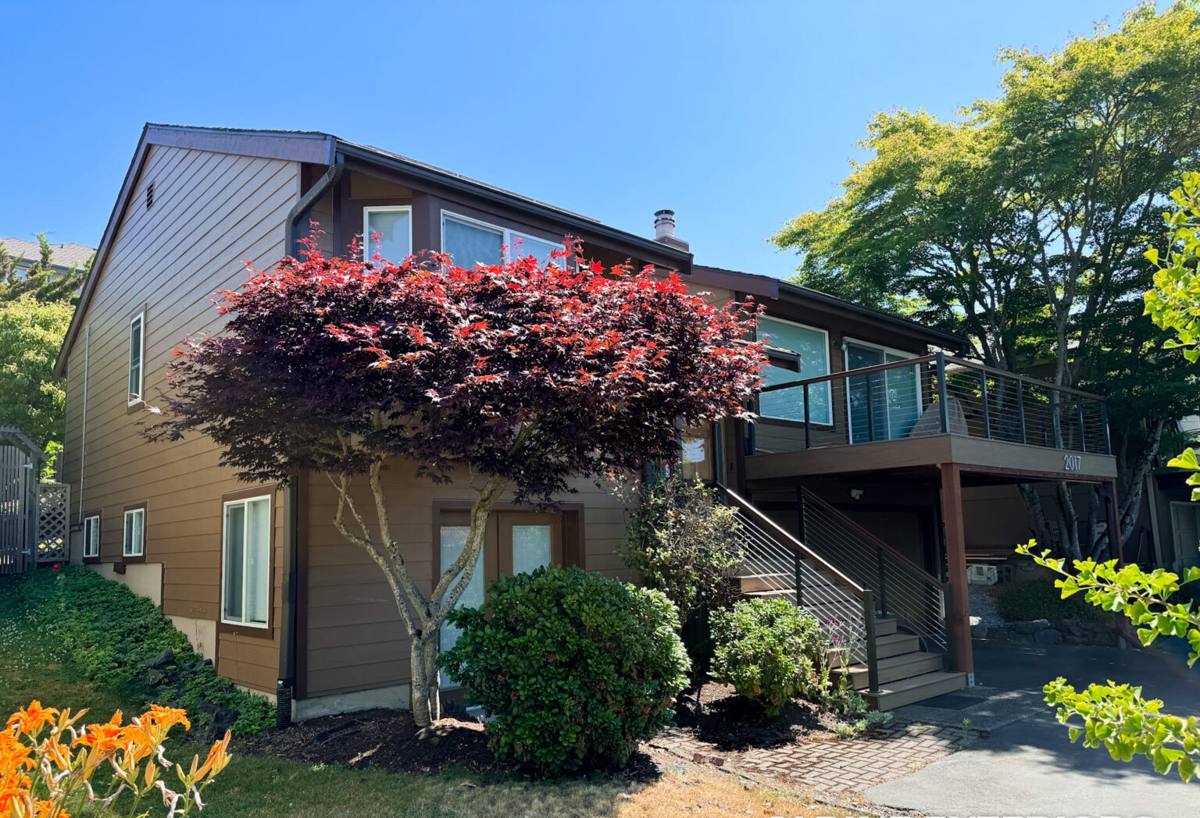
What Salt Air and Driving Rain Actually Do to the Wrong Window
It helps to understand the failure modes before talking about solutions, because the fixes only make sense once you see the problem they're solving.
Salt Air
Airborne salt is corrosive to unprotected metal hardware — hinges, locks, balance mechanisms, and screws. Over years, corrosion causes windows to stick, latches to seize, and finishes to pit or chalk prematurely. It's most aggressive on the water-facing side of a home, which on Lummi Island can mean nearly every elevation depending on the lot.
Driving Rain
Wind-driven rain doesn't just fall on a window — it gets pushed sideways and can find its way past poor flashing, worn sealant, or a frame that was never properly integrated with the wall's water-resistive barrier. Once water gets behind a window frame, it doesn't dry out quickly in this climate, and that's when you start seeing rot in the surrounding framing, not just the window itself.
Moss Season
Whatcom County's long wet season means moss and algae have months to establish on horizontal surfaces, sills, and anywhere water sits instead of shedding. On windows, this shows up as staining, degraded sealant, and — on wood components left unprotected — slow surface decay.
Frame Material: The Decision That Matters Most Out Here
For a Lummi Island install, frame material is the single biggest factor in how a window performs over the next 15-20 years. Each option below has real trade-offs, and the right call depends on the home's exposure and the owner's maintenance appetite.
| Material | Salt Air / Coastal Performance | Maintenance | Where It Fits Best |
|---|---|---|---|
| Vinyl | Good — won't corrode or rot, but check hardware quality | Low | Budget-conscious replacements, rental or secondary homes |
| Fiberglass | Excellent — dimensionally stable, resists moisture and corrosion | Low | Full sun/wind exposure, waterfront-facing walls |
| Aluminum-clad wood | Very good exterior protection with warm wood interior | Moderate | Homes prioritizing interior character with exterior durability |
| Bare wood | Poor without diligent upkeep — moisture and moss are constant threats | High | Historic or period-accurate homes where owners accept the upkeep |
We don't refuse to install any of these — we tell owners honestly what each one asks of them. Bare wood on a water-facing elevation on Lummi Island isn't wrong, but it's a commitment to regular repainting and sealant inspection that vinyl or fiberglass simply doesn't require.
Glass Packages Worth Paying For Here
The frame keeps water out; the glass package handles condensation, heat loss, and comfort near the window on cold, windy nights.
- Double-pane, low-E glass — the practical baseline for this climate; cuts heat loss and reduces interior condensation on cold mornings
- Argon or krypton gas fill — improves insulating value without changing the window's appearance
- Warm-edge spacers — reduce the cold "sweat line" that forms at the glass edge in damp, cool weather
- Impact-rated or laminated glass — worth considering on fully exposed elevations that take direct wind and wind-blown debris
- Tempered glass — required by code near doors, low sills, and other specific locations regardless of style
Our Custom Windows Process for Lummi Island Homes
Every project follows the same sequence, because skipping a step is exactly how water problems start.
- On-site assessment. We look at the actual wall — existing flashing condition, sill pitch, signs of past water intrusion, and which elevations take the worst weather.
- Measurement and specification. Custom sizing means the window is built (or ordered) for the actual rough opening, not a standard size the opening gets forced to fit.
- Material and glass selection. Based on the assessment, we recommend frame material and glass package by elevation, not a single spec for the whole house.
- Removal and opening prep. Old units come out carefully so we can inspect the framing and sill underneath before anything new goes in — this is where hidden rot or old flashing failures get caught.
- Flashing and water management. Proper integration with the house wrap or building paper, correct sill pan flashing, and back-dam detailing at the sill — this is the step that actually keeps driving rain out, more than the window itself.
- Installation and air-sealing. The window gets set plumb and level, mechanically fastened per manufacturer spec, and properly insulated and air-sealed around the frame.
- Exterior trim and sealant. Finish trim and sealant beads are the last line of defense and the first thing that shows wear — we use sealants rated for this climate, not whatever's cheapest.
- Final walkthrough. Every window operates, locks, and seals correctly before we consider the job done.
Sizing, Style, and Matching Your Home's Character
"Custom" also means matching what's already there — grid pattern, sash proportions, trim profile, and how the window reads from the street or from the water. On an older Lummi Island home, that might mean replicating a divided-light look with modern glass behind it. On a newer build, it might mean simply matching sightlines across a row of windows so the elevation looks intentional rather than mismatched. We measure and photograph existing details before ordering anything, so replacements sit right in the wall, not just functionally but visually.
Moss Season: Keeping Windows Performing Between Installs
A well-installed window still needs some seasonal attention in this climate. Here's what actually matters:
- Check and clear window sills and tracks before the wet season builds up debris that holds moisture
- Inspect exterior sealant beads annually for cracking or separation — this is cheap to catch early and expensive to ignore
- Keep gutters and downspouts clear so overflow isn't running down the wall past window heads
- Wipe down sills and frames periodically during moss season rather than letting organic growth sit and hold moisture
- Test hardware operation each season — sticking or stiff locks on a coastal property are often the first sign of corrosion starting
Cost Factors for a Lummi Island Custom Window Project
Every project is different, but the line items that move the price are consistent. We give straight numbers on-site after seeing the actual openings — broad ranges depend heavily on size, frame material, glass package, and how much flashing or framing repair an opening needs once we open it up.
| Factor | Why It Moves the Price |
|---|---|
| Frame material | Vinyl is the most economical; fiberglass and clad-wood cost more upfront but ask less in upkeep |
| Glass package | Impact-rated and multi-pane upgrades add cost but pay off on exposed elevations |
| Opening condition | Hidden rot or old flashing failures found during removal add repair scope |
| Number and size of openings | Larger or unusually shaped windows require custom fabrication rather than stock sizing |
| Elevation and access | Water-facing or hard-to-reach openings can add labor time |
Why a Crew That Already Works Lummi Island Matters
Lummi Island isn't like scheduling a job in town. Getting a crew, materials, and equipment to the island means working around ferry schedules, planning deliveries so custom-ordered windows and a work crew arrive the same day, and not burning half a job's labor hours on transit and waiting. A crew that already works out here has that logistics figured out — and just as important, has already seen how the local exposure treats different products, which is exactly the judgment that goes into recommending frame material and glass by elevation rather than guessing.
There's also a simple accountability piece: a contractor who regularly works Whatcom County's waterfront communities, including Lummi Island, has a reputation to protect out here and isn't disappearing after the invoice is paid. If a sealant bead needs a look two years later, that's a easy call, not a scheduling nightmare.
Ready to Talk Through Your Windows?
If you're weighing a full window replacement or need custom sizing for an odd opening on your Lummi Island home, we're happy to come take a look, walk the exposure on your specific walls, and give you an honest read on what materials and glass make sense for your situation. Reach out for a free, no-pressure estimate using the form below.