 Birch Bay Siding
 Deck Replacement Built for Lynden's Weather, Not a Showroom
Lynden sits inland from Birch Bay but shares the same weather pattern that wears out decks across Whatcom County: long stretches of rain from fall through spring, heavy dew and fog off the lowlands, and short, intense summers that dry wood out fast before the wet season starts all over again. Add the salt-tinged air that moves inland off the Strait of Georgia and Birch Bay on windy days, and you've got a climate that's genuinely tough on outdoor wood structures. A deck built without that in mind - or one that's simply reached the end of its service life - doesn't fail gracefully. It fails at the ledger board, the footings, or the framing, often before the surface boards even look that bad.
This page is about one job: replacing a deck in Lynden. Not a deck repair, not a general remodel - a full replacement done correctly for this specific climate, on this specific soil and drainage conditions common to the area.
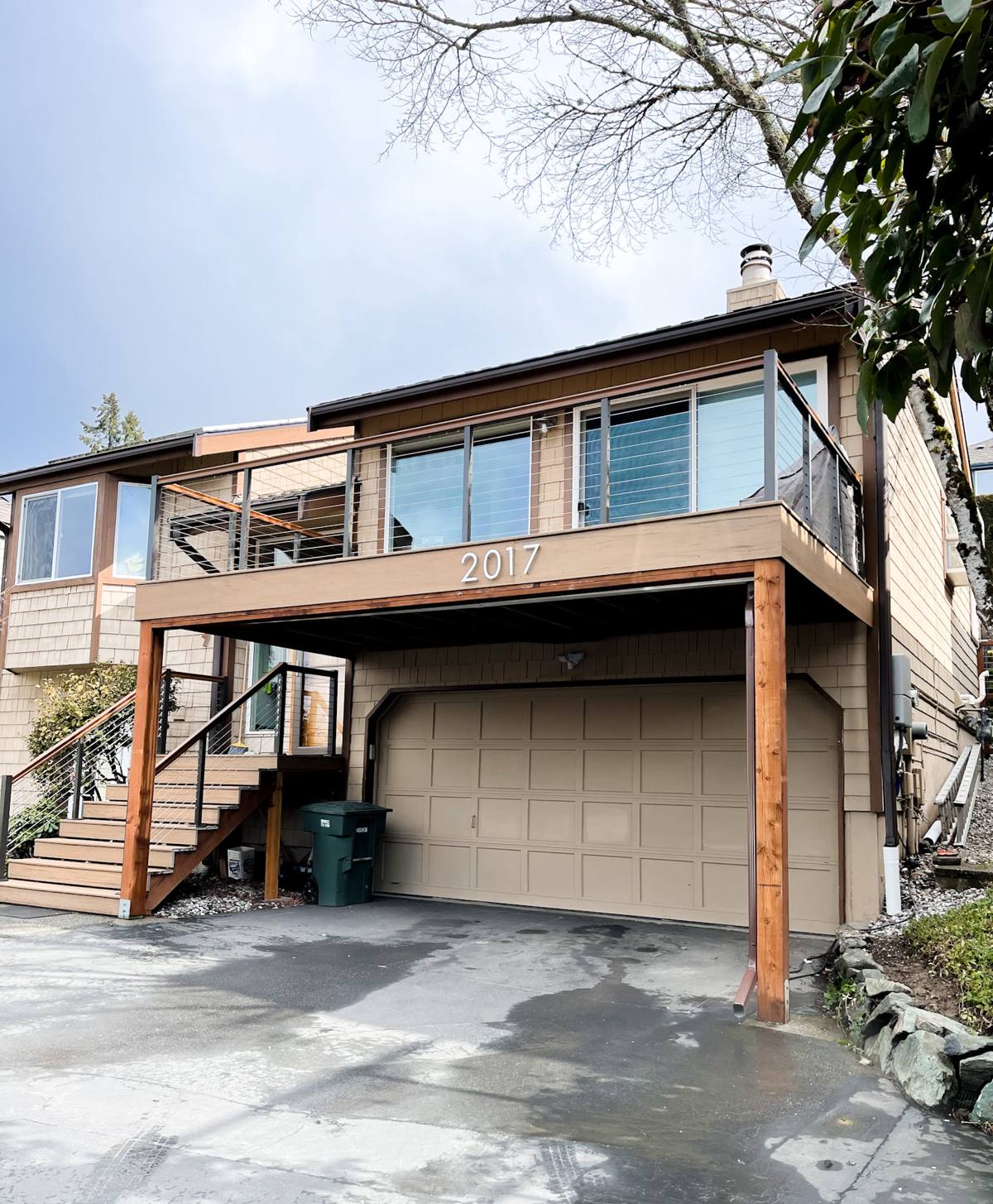
Signs a Lynden Deck Needs Full Replacement, Not a Patch
Homeowners often call us thinking they need a few boards swapped out, and sometimes that's true. But there's a difference between cosmetic wear and structural failure, and in a wet climate like ours, the structural stuff hides underneath the parts you can see.
Above the surface
- Boards that are soft, spongy, or crumble when pressed with a screwdriver
- Persistent green-black staining that comes back within weeks of cleaning - a sign moss and algae have gotten into the wood fibers, not just the surface
- Gaps or cupping severe enough that water pools instead of shedding
- Nail heads popping up as boards shrink and swell through repeated wet-dry cycles
Below the surface - the part that actually matters
- Soft or spongy spots where the deck meets the house (the ledger board area), which is the single most common structural failure point on older decks
- Wobble or bounce when you walk across the deck or lean on the railing
- Posts that have shifted, settled unevenly, or show rot at the base where they meet the ground or a footing
- Rust streaking from fasteners, which usually means the hardware wasn't rated for pressure-treated lumber contact
If what you're seeing is limited to a handful of surface boards and the frame underneath tests solid, a repair may genuinely be the right call - we'll tell you that instead of selling you a full rebuild. But once the ledger, joists, or footings are compromised, patching the surface just hides the problem for another season.
What a Correct Deck Replacement Actually Involves
A lot of deck work in this region gets done as a surface-only refresh: strip old boards, screw down new ones, call it done. That approach skips the part of the deck that actually determines whether it lasts 10 years or 25. Here's what we consider non-negotiable on a real replacement.
Ledger board and house connection
This is where the deck attaches to your home, and it's the point most likely to let water into the house structure if it's done wrong. We remove the old ledger entirely, inspect the rim joist and sheathing behind it for hidden rot, and install proper flashing that directs water away from the house rather than trapping it against the wall. This step gets rushed more than any other on cut-rate deck jobs, and it's usually the reason a "new" deck starts rotting from the inside within a few years.
Footings and posts
Whatcom County soil holds moisture longer than people expect, especially on lots with clay-heavy or poorly draining ground, which is common around Lynden's farmland and low-lying residential areas. Footings need to be set below frost depth and sized for the actual load of the deck, not guessed at. Posts get set on proper post bases that keep the wood off standing water - ground contact is where post rot starts, even on treated lumber.
Framing and joist spacing
Joist spacing has to match the decking material you're installing - composite boards generally need tighter spacing than wood to avoid flexing over time. We also use joist tape or another moisture barrier on top of the frame, which is a small material cost that meaningfully slows down rot at the fastener points where water naturally collects.
Fasteners and hardware
Mismatched hardware is a quiet, common failure. Pressure-treated lumber is corrosive to standard fasteners, so everything from joist hangers to screws needs to be rated for treated wood contact. We don't mix hardware types on a build.
Decking Material Options for This Climate
There's no single "best" decking material - it depends on how much upkeep you're willing to do, your budget, and how much direct weather exposure the deck gets. Here's how the common options actually compare for a Lynden property.
| Material | Upkeep in Our Climate | Typical Lifespan | Trade-offs |
|---|---|---|---|
| Pressure-treated wood | Annual cleaning, re-staining every 2-3 years | 15-20 years with upkeep | Lowest upfront cost; moss and graying show fast if maintenance lapses |
| Cedar | Regular sealing to preserve color and resist moisture | 15-20 years | Naturally moisture-resistant and attractive, but softer and more prone to surface wear than composite |
| Composite decking | Occasional washing, no staining or sealing | 25-30+ years | Higher upfront cost; some early composite products had moisture issues in humid climates, which is why we're selective about which composite lines we install |
| PVC decking | Lowest upkeep, resists moisture and staining well | 25-30+ years | Highest material cost; can feel less like traditional wood underfoot |
Because our climate means the deck surface rarely gets a long dry stretch to fully shed moisture, we lean toward recommending well-drained framing and moisture-resistant surface materials over anything that depends on the homeowner keeping up a strict re-sealing schedule. That's not a knock on wood decking - it's just an honest read on what actually gets maintained versus what gets put off until it's a problem.
How Our Deck Replacement Process Works
- On-site assessment. We inspect the existing deck from the ledger connection down to the footings, not just the surface boards, and tell you plainly whether you need a repair or a full replacement.
- Design and material selection. We walk through decking material, railing style, and layout options based on your budget and how you actually use the space.
- Permitting. Deck replacements of meaningful size typically require a permit through the local building department. We handle that paperwork so you're not stuck navigating it alone.
- Demolition. Full removal of the old deck, including hardware and any compromised ledger or framing material - not a build-over-the-old-frame shortcut.
- Framing and structural work. New ledger, flashing, footings, posts, and joists installed to code, with moisture barriers where they matter.
- Decking, railing, and finish work. Surface installation, railing, stairs, and any finishing details like fascia boards.
- Final walkthrough. We go over the finished deck with you before calling the job done, and again after any final inspection is signed off.
Cost Factors Worth Understanding Before You Get a Quote
Deck replacement pricing swings widely based on size, material, and site conditions, so we won't throw out a number that doesn't apply to your actual property. What we can tell you is what drives the cost up or down.
| Factor | How It Affects Cost |
|---|---|
| Deck size and height | Larger decks and multi-level or elevated decks require more framing, footings, and labor |
| Decking material | Composite and PVC cost more upfront than wood but reduce long-term maintenance spend |
| Access for equipment | Tight side yards or fenced-in backyards can add labor time versus open access |
| Existing structural condition | Rot found in the ledger, joists, or footings during demo can add scope once uncovered |
| Railing and stair complexity | Custom railing styles and multiple stair sections add material and labor time |
We give a firm estimate before work starts, and if demolition uncovers hidden rot or damage beyond what was visible during inspection, we stop and talk it through with you before proceeding - not after the fact.
Why It Matters to Hire a Crew That Already Works in Lynden
A deck built to a generic national spec doesn't account for Whatcom County's specific combination of sustained rain, humidity, and moss growth. A crew that works this region regularly knows which ledger flashing details actually hold up here, which decking products handle our humidity well versus which ones have a track record of moisture issues, and how local soil and drainage conditions affect footing placement. That local knowledge shows up in small decisions throughout the build - decisions that are hard to catch after the fact but make a real difference in how long the deck lasts.
It also matters for permitting and inspection. A crew familiar with the local building department's expectations moves through that process without the delays that come from unfamiliarity with local requirements.
Keeping a New Deck in Good Shape Through Whatcom County's Seasons
Even a well-built deck needs some seasonal attention in this climate. A short annual routine goes a long way toward protecting the investment:
- Sweep leaves and debris off the surface regularly in fall, especially in shaded corners where moss gets a foothold first
- Clean the deck surface at least once a year to remove algae and moss buildup before it stains the wood or works into composite grain lines
- Check that gaps between boards stay clear so water can drain through rather than pooling
- Inspect railing posts and stair connections annually for looseness
- Re-seal or re-stain wood decking on the schedule appropriate to the product - don't wait until it looks gray and worn
- Confirm the ledger flashing area stays clear of mulch, plants, or debris that trap moisture against the house
Skipping this upkeep is what turns a well-built deck into a premature replacement candidate. It's a small time investment compared to rebuilding.
Ready to Talk Through Your Deck
If your Lynden deck is showing signs of rot, wobble, or wear, or you're just ready to replace an aging deck before it becomes a safety issue, we're happy to take a look and give you a straight assessment - no pressure, no upsell. Fill out the form below to schedule a free estimate.