 Birch Bay Siding
 Marietta's Roofs Work Harder Than Most
Marietta sits close enough to Birch Bay and the Strait of Georgia that its homes take on a different kind of weathering than roofs just a few miles inland. Salt-laden air moves through constantly, wind-driven rain finds its way under anything loosely fastened, and the wet season lasts long enough that moss and algae get a real foothold before summer ever dries things out. A roof here isn't just shedding water — it's fighting corrosion, biological growth, and wind uplift at the same time, month after month.
That combination is exactly why metal roofing has become a common upgrade choice for homeowners in this part of Whatcom County. Done correctly, it holds up to conditions that wear down asphalt shingles faster than manufacturers' warranties assume. Done poorly — wrong fasteners, wrong underlayment, panels installed without accounting for coastal exposure — it can fail in ways that are expensive to unwind. This page is about what a correct metal roofing job looks like for a Marietta home specifically, not metal roofing in general.
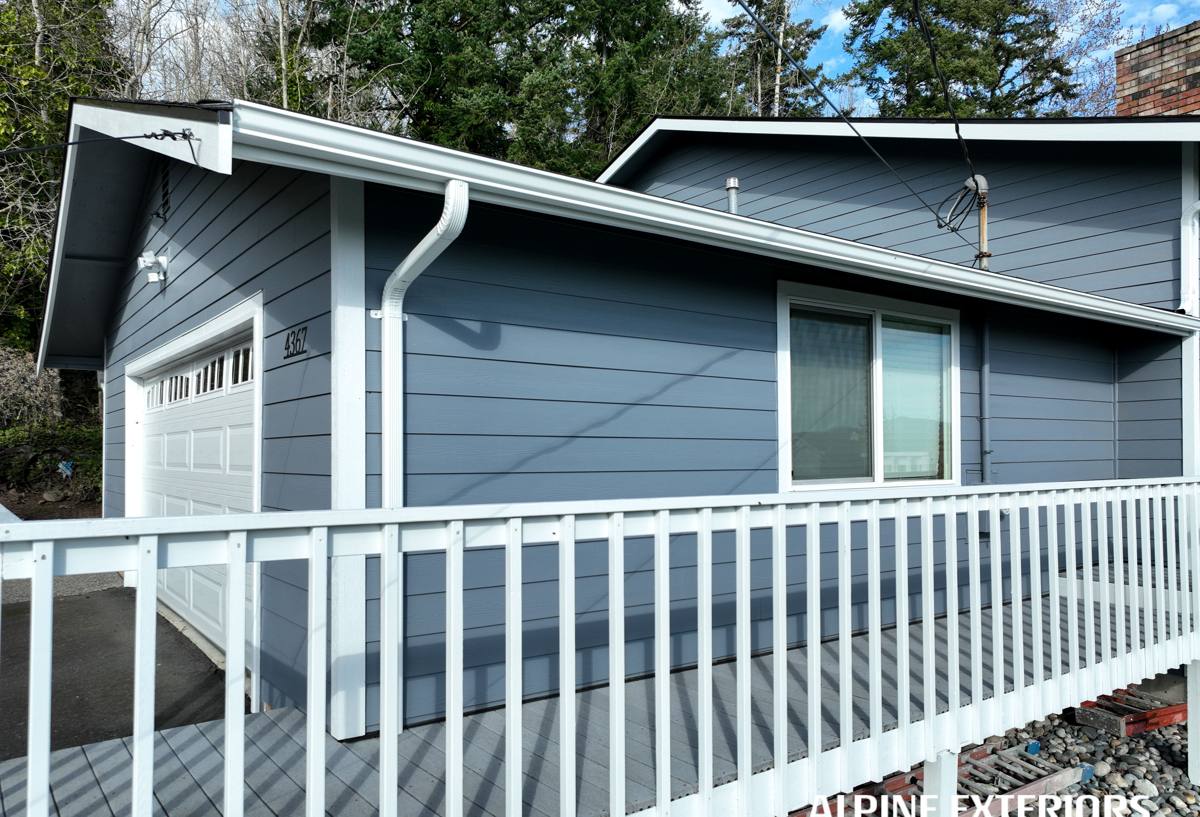
What Salt Air, Rain, and Moss Actually Do to a Roof
Salt Air and Corrosion
Airborne salt is conductive and mildly corrosive. On a roof, it accelerates rust at any point where bare metal is exposed — cut edges, exposed fastener heads, scratched coatings, or dissimilar metals touching each other. This is why fastener choice and panel coating matter more here than they would on a home 30 miles inland.
Driving Rain
Wind off the water doesn't let rain fall straight down — it pushes it sideways and up under laps, flashing, and fastener penetrations. A roof that's technically watertight in calm conditions can still leak here if the underlayment, flashing details, and panel overlaps weren't built with wind-driven rain in mind.
Moss and Algae
Cool, damp, shaded conditions for much of the year give moss plenty of time to establish, especially on north-facing slopes and anywhere debris collects. On asphalt shingles, moss roots into the granule surface and lifts material as it grows. On metal, moss can't root into the surface the same way, but it can still hold moisture against seams and fastener points longer than the roof would otherwise stay wet, which matters for corrosion resistance over time.
Why Metal Roofing Fits These Conditions
Metal roofing isn't automatically the right answer for every home, but for the specific combination of salt exposure, wind-driven rain, and heavy moss pressure that Marietta deals with, it has real advantages:
- Non-porous surface — moss and algae can't root into metal the way they root into shingle granules, which means less material degradation even when growth does occur
- Fewer horizontal laps than shingles, when installed with proper panel runs — fewer opportunities for wind-driven rain to find a way in
- Class A fire rating and strong wind-uplift performance when installed to spec, which matters given how exposed some Marietta lots are
- Long service life when the coating and fasteners are matched to a coastal environment — this is the part that gets skipped by crews unfamiliar with salt-air installations
The trade-off is that metal roofing is less forgiving of installation shortcuts than shingles. A shingle roof with a minor flashing mistake often leaks slowly and gives you warning. A metal roof with the same mistake can channel water in unexpected directions before it shows up as a stain inside the house. That's why installation quality matters more here than panel choice alone.
Choosing Panel Type and Finish for a Coastal Property
Not all metal roofing is built the same way, and not every product is a good fit for a property this close to salt water. Here's how the common options compare for a Marietta home specifically:
| Option | Coastal Suitability | Notes |
|---|---|---|
| Standing seam steel (Galvalume or painted) | Strong | Concealed fasteners reduce penetration points exposed to salt air; our standard recommendation for full exposure sites |
| Exposed-fastener steel panels | Fair, with upgraded fasteners | More affordable, but fastener heads need coastal-rated gaskets and periodic inspection since they're exposed to the elements |
| Aluminum panels | Strong | Naturally corrosion-resistant, a common choice for the most exposed lots near the water; typically a higher material cost |
| Uncoated or mill-finish steel | Not recommended | We don't install this in salt-air exposure — it corrodes far faster than coated or naturally resistant metals, and we won't warranty a job we don't think will hold up |
Fastener metallurgy matters as much as the panel itself. Mixing incompatible metals — say, a plain steel screw against an aluminum panel — sets up galvanic corrosion that can eat through a fastener years before the panel itself would fail. On every coastal job we match fastener and flashing metal to the panel metal, not just to whatever's on the truck.
What a Correct Installation Actually Involves
The panels get the attention, but most metal roof failures near the water trace back to what's underneath and around them, not the panels themselves.
Underlayment
We use a synthetic, high-temperature underlayment rated for the sustained moisture exposure this area gets, with self-adhering ice-and-water membrane at eaves, valleys, and any low-slope transitions where wind-driven rain is most likely to be pushed uphill under laps.
Flashing and Penetrations
Every roof-to-wall transition, chimney, vent pipe, and skylight curb gets flashing detailed for the specific panel profile being used — not a generic solution. This is the single most common place we find prior installation shortcuts on older Marietta roofs.
Fastening
Fastener spacing and torque are set to the manufacturer's wind-uplift specification for this exposure category, using coastal-rated fasteners with EPDM washers that match the panel metal.
Ventilation
A metal roof over a poorly ventilated attic can trap moisture underneath it just as easily as any other roofing material. We check and, where needed, correct intake and exhaust ventilation as part of the job, not as an afterthought.
Our Process on a Marietta Job
- On-site assessment — we look at slope, exposure direction, existing decking condition, ventilation, and how much wind-driven rain and moss pressure the specific roof planes are getting
- Panel and finish selection — matched to the home's exposure, not a one-size-fits-all default
- Tear-off and deck inspection — any soft or moisture-damaged decking gets replaced before a single panel goes down
- Underlayment and flashing installation — detailed for this climate, as described above
- Panel installation — fastened and lapped to the wind-uplift spec for this area
- Final walkthrough — we go over what was done, what maintenance (if any) it needs, and what the warranty actually covers
Maintenance: What a Metal Roof Actually Needs Near the Bay
Metal roofing is genuinely low-maintenance compared to shingles, but "low-maintenance" isn't "no-maintenance" in this environment. A short, honest checklist for homeowners:
- Clear debris (needles, leaves, branches) from valleys and low spots once or twice a year — trapped debris holds moisture against the panel longer than it would otherwise sit
- Rinse visible moss or algae growth with plain water rather than pressure-washing, which can damage seams and finishes
- Have flashing and sealant points checked every few years, especially around chimneys and vents — sealant ages faster in constant salt air than the metal does
- Watch for any scratches or chips in the coating near ladders, satellite mounts, or solar attachment points, and have them touched up before bare metal is exposed to salt air
- After any major windstorm off the water, a quick visual check for lifted panel edges or loose fasteners is worth the five minutes
What Affects the Cost
| Factor | Why It Matters |
|---|---|
| Panel type (exposed-fastener vs. standing seam) | Concealed-fastener systems cost more up front but reduce long-term maintenance and penetration points |
| Roof complexity | More valleys, penetrations, and roof-to-wall transitions mean more flashing labor |
| Deck condition | Any decking replacement needed from prior moisture damage adds to the scope |
| Metal choice | Aluminum and premium coated steel cost more than standard coated steel but perform better in full salt exposure |
| Access and pitch | Steeper or harder-to-access roofs take longer to install safely |
We won't quote a number without seeing the roof — anyone who does hasn't actually looked at your specific exposure, slope, and condition, all of which move the price.
Why a Crew That Already Works Marietta Makes a Difference
A metal roof installed to generic specifications can still fail early in a spot like this if it wasn't built for salt air and driving rain specifically. Working roofs in and around Birch Bay regularly means we already know which panel and fastener combinations hold up here, which flashing details actually stop wind-driven rain instead of just meeting code minimums, and which north-facing slopes are going to need extra attention to moss pressure. That's not something a crew coming from a dry inland market gets right on the first try — and a roof is a bad place to learn that lesson at your expense.
If you're weighing a metal roof for a Marietta home, or want a second opinion on a quote you already have, we're happy to come take a look. Use the form below to request a free, no-pressure estimate — we'll walk the roof, tell you honestly what it needs, and give you a real number based on your home, not a generic estimate.