 Birch Bay Siding
 Roofing on the Point: Why Point Whitehorn Homes Wear Out Differently
Point Whitehorn sits right up against the Strait of Georgia, and that location shapes everything about how a roof ages here. Homes on or near the point take a steady diet of salt-laden air, wind-driven rain that gets pushed sideways under poorly flashed edges, and a moss season that can run eight or nine months out of the year in the shaded, north-facing sections of a roof. A roofing system that would hold up fine twenty miles inland can fail early out here — not because the materials are bad, but because they weren't detailed for this exposure.
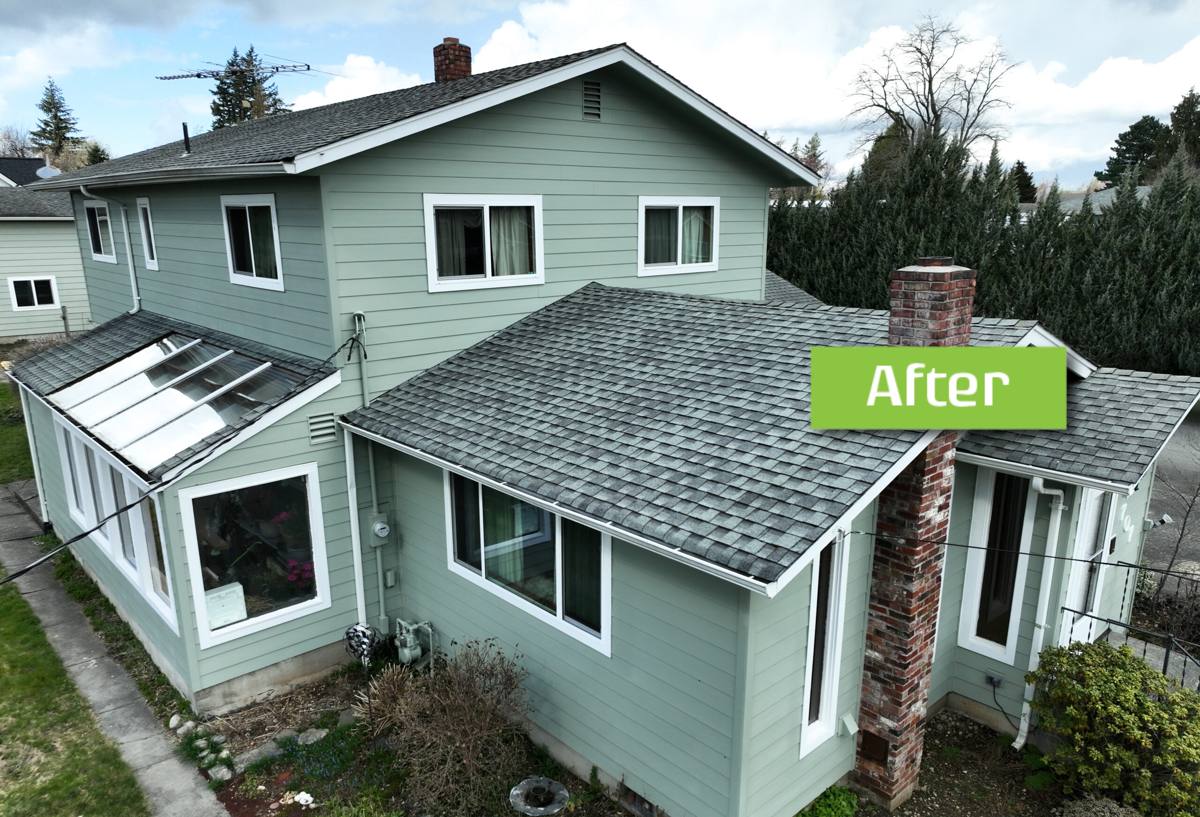
We install new roofs for homeowners throughout Point Whitehorn and the rest of Birch Bay, and the pattern we see on tear-offs is consistent: it's rarely the field of the roof that fails first. It's the edges, the valleys, the low-slope transitions, and anywhere moss has been allowed to sit and hold moisture against the deck. A correct installation out here front-loads attention to those spots instead of treating them as an afterthought.
What Salt Air, Driving Rain, and Moss Actually Do to a Roof
Salt Air
Airborne salt accelerates corrosion on any exposed metal — nails, flashing, vent boots, and fastener heads. Cheaper electro-galvanized fasteners and thin flashing stock can start showing rust streaks and pinholes years before an inland roof would. This is a durability issue, not a cosmetic one: once a fastener corrodes through, the shingle or panel it's holding loses its grip.
Driving Rain
Whatcom County storms coming off the water don't just fall straight down — wind pushes rain sideways and up under shingle tabs, at rake edges, and around chimneys and skylights. Underlayment and flashing details that would be "good enough" in a calmer climate can let water track sideways and find a nail hole or seam that a straight-down rain would never reach.
Moss
Moss doesn't just look bad — it holds moisture against the roofing surface for days after the rain stops, and its root structure works into shingle granules and shakes over time. On shaded or north-facing slopes, which are common on wooded Point Whitehorn lots, moss can establish within a couple of seasons if a roof isn't detailed and maintained to resist it.
What a Correct New Roof Involves Here
A new roof installation for this area needs to address all three of those stressors at the same time, not just meet minimum code. That means:
- Corrosion-resistant fasteners and flashing (stainless or heavier-gauge coated metal) at edges, valleys, and penetrations
- Fully sealed, high-quality synthetic underlayment as the water-shedding layer beneath the roof covering — not a fallback, the actual second line of defense
- Ice-and-water shield style membrane at eaves, valleys, and around every penetration, sized generously for wind-driven rain, not just minimum code coverage
- Properly lapped and step-flashed intersections at walls, chimneys, and dormers — the single most common source of leaks we find on tear-offs
- Balanced intake and exhaust ventilation, so the attic isn't trapping moisture that later shows up as rot or mold under the deck
- A roof covering and slope combination that sheds water and doesn't create flat, slow-draining sections where moss and debris can collect
None of this is exotic. It's standard best practice applied consistently, in a location where skipping any one of these steps shows up as a callback within a few years instead of a few decades.
Roofing Material Options for a Point Whitehorn Home
There isn't one "right" material for every house — slope, budget, style, and how exposed the roof is to salt air and wind all factor in. Here's how the common options compare for this specific climate.
| Material | Salt Air / Corrosion Behavior | Moss Resistance | Maintenance Reality |
|---|---|---|---|
| Architectural asphalt shingles | Good, if fasteners and flashing are corrosion-resistant | Moderate — benefits from algae/moss-resistant granules on shaded slopes | Periodic moss removal on shaded sections; standard lifespan with proper install |
| Standing seam metal | Very good with a marine-grade coating and correct fastener spec | High — smooth, steep-shed surface gives moss little to hold onto | Low; occasional debris clearing in valleys |
| Cedar shake | Fair; needs attention to fastener corrosion | Low without diligent upkeep — shake is naturally moisture-absorbent | Higher; requires regular cleaning and treatment to manage moss and moisture retention |
| Synthetic/composite shingle | Good; check manufacturer fastener guidance | Moderate to good depending on product surface texture | Low to moderate |
We're happy to walk through the trade-offs for your specific roofline in person — slope, sun exposure, and how close you are to the water all shift the calculus.
Our Process for a New Roof Installation
1. On-Site Assessment
We look at the existing roof, deck condition, ventilation, and how exposed the roof is to wind and salt spray from its position on the property. Shaded, north-facing, or low-slope sections get special attention since that's where moss and slow drainage tend to concentrate.
2. Tear-Off and Deck Inspection
Old roofing comes off down to the deck so we can check for soft spots, rot, or moisture damage that's often hidden under moss-covered shingles or beneath failed flashing. Any compromised decking gets replaced before anything new goes down — installing over a bad deck just guarantees an early failure.
3. Underlayment and Flashing First
This is where most of the long-term performance of the roof actually comes from. We install the water-resistive layers, ice-and-water membrane at vulnerable areas, and all flashing before the finish roofing material goes on, using corrosion-resistant materials suited to a marine-influenced climate.
4. Roof Covering Installation
Installed to manufacturer specification with attention to nailing pattern, exposure, and fastener type — details that matter more here than in a drier, calmer inland climate.
5. Ventilation Check
We confirm intake and exhaust are balanced so the attic can dry out between rain events instead of holding moisture against the new deck and roofing from underneath.
6. Final Walkthrough
We go over the finished roof with you, point out anything worth knowing for maintenance, and make sure everything's clean before we leave.
Why a Crew That Already Works Point Whitehorn Matters
Roofing crews that mostly work drier, more sheltered parts of the county sometimes underestimate what this stretch of coastline does to a roof over time. A crew that regularly works Point Whitehorn and greater Birch Bay knows which slopes on a given lot tend to hold moss, how far wind-driven rain can travel under a poorly lapped flashing, and which fastener and flashing specs actually hold up against salt air instead of just meeting code minimums. That local pattern recognition is the difference between a roof that's engineered for this specific coastline and one that's engineered for an average climate.
It also matters for timing. We schedule around the wetter stretches of the Whatcom County calendar and know how to sequence a tear-off and install so your home isn't left exposed if weather rolls in off the water mid-project.
Signs Your Point Whitehorn Roof May Need Replacement, Not Repair
- Moss established across large sections rather than isolated spots, especially if it's recurred after cleaning
- Granule loss heavy enough that shingles look patchy or bald in areas
- Soft or spongy decking felt underfoot in the attic, or daylight visible through the roof boards
- Repeated leaks around the same chimney, skylight, or valley despite prior patch repairs
- Curling, cracking, or lifted shingle edges, particularly on wind-exposed slopes facing the water
- Roof age at or beyond the manufacturer's expected service life for your material and exposure
If you're only seeing one or two of these and the roof is otherwise sound, a repair may genuinely be the more sensible move — we'll tell you that plainly rather than push a full replacement you don't need.
What Affects the Cost of a New Roof Here
Every roof is different, but the factors that most commonly move the price on a Point Whitehorn job are:
- Roof size and number of slopes, valleys, and penetrations (chimneys, skylights, vents)
- Current deck condition and whether sections need to be replaced
- Material choice, from standard architectural shingle up through metal or premium composite
- Access — tree cover, steep pitch, or tight lot lines common on wooded Point Whitehorn properties can affect labor
- How much of the flashing and ventilation system needs to be upgraded versus reused
We give you a written, itemized quote after seeing the roof in person — not a phone estimate — so you know exactly what you're paying for and why.
If your roof is showing its age or you just want an honest read on how much life it has left, we'll come take a look and give you a straightforward, no-pressure estimate. There's a form below to get that scheduled.