 Birch Bay Siding
 Storm Damage Roof Repair Built for Point Whitehorn's Coastline
Homes along Point Whitehorn sit close enough to the water that the weather here plays by different rules than it does even a few miles inland. Wind off the Strait of Georgia doesn't just bring rain — it drives it sideways, pushes salt spray onto roof surfaces, and keeps shingles and flashing damp longer than most manufacturers ever tested for. When a storm rolls through, the damage it leaves behind on a Point Whitehorn roof often looks different than storm damage on a roof in downtown Bellingham or out toward Lynden, and it needs to be assessed and repaired with that in mind.
This page covers what storm damage roof repair actually involves for homes in this part of Whatcom County — what to look for after a wind or rain event, what a proper repair includes, and why hiring a crew that already works this specific stretch of coastline matters more here than in most neighborhoods.
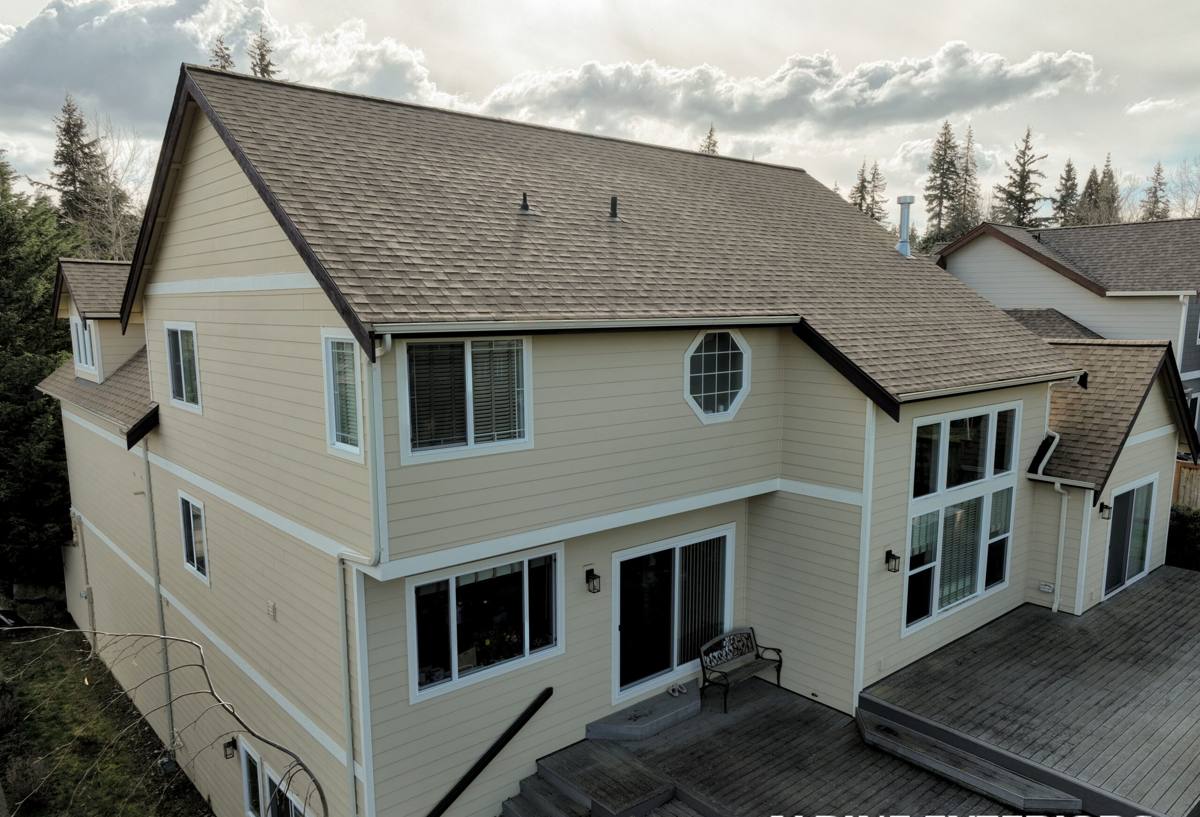
What Makes Point Whitehorn Roofs Different
Salt Air and Slow Corrosion
Metal components — nail heads, flashing, drip edge, valley metal, vent boots — take the brunt of salt exposure. Salt air accelerates oxidation on exposed fasteners and can eat through unprotected metal edges years before it would fail on an inland roof. After a storm, damage to these components is easy to miss because it doesn't always show up as an obvious hole or tear. It shows up as a fastener that's already halfway corroded before the wind ever finishes the job.
Wind-Driven Rain
Point Whitehorn's exposure to open water means storms arrive with less wind-break than roofs sitting behind hills or tree lines. Wind-driven rain gets pushed up and under shingle tabs, into exposed nail heads, and along ridge and hip lines — areas that stay bone dry on a calm-weather roof. A storm repair here has to account for water intrusion points that wouldn't be a concern on a more sheltered property.
A Long Moss Season
Whatcom County's damp, mild climate keeps moss and algae growth active for most of the year, and coastal moisture only extends that window. Moss holds water against the roof surface, works its way under shingle edges, and lifts tabs just enough for wind to finish the job during the next storm. A lot of what looks like sudden storm damage is actually moss-weakened shingles finally giving way under wind load — which changes how we assess and repair it.
Signs of Storm Damage Worth a Closer Look
Not all storm damage is obvious from the ground. Some of the most costly problems start small and stay hidden until they've caused interior damage. After any significant wind or rain event, it's worth checking for:
- Missing, cracked, or curled shingles, especially along ridges, hips, and roof edges where wind pressure is highest
- Granules collecting in gutters or at the base of downspouts
- Lifted or bent flashing around chimneys, skylights, and roof-wall intersections
- Damaged or missing vent boots and pipe collars
- Water stains on interior ceilings or in the attic, even faint ones
- Debris — branches, needles, gravel from asphalt shingles — collected in valleys
- Gutters pulled loose from fascia boards or sagging under storm debris
- Soft or spongy spots when walking the roof, which can mean saturated decking underneath
If you notice any of these after a storm, the roof needs a proper inspection before the next weather system moves through — not after.
What a Correct Storm Damage Repair Actually Involves
A rushed patch job is one of the most common causes of repeat storm damage. Doing it right means treating the repair as a system, not a single spot fix.
1. A Full Roof Assessment, Not Just the Obvious Spot
Storm damage rarely stays contained to the area a homeowner spots from the ground. A proper assessment walks the entire roof plane, checks flashing details, examines the attic for moisture intrusion, and photographs findings for both the repair plan and any insurance documentation.
2. Temporary Protection When Needed
If a storm has left the roof deck exposed, temporary tarping or dry-in protection goes on immediately to stop further water intrusion while repair materials are sourced and scheduled — this isn't optional in a climate where the next rain is rarely more than a few days away.
3. Deck Inspection and Repair
Any decking that's been saturated or soft needs to be replaced, not just covered over. Nailing new shingles over compromised decking is a shortcut that fails, and in a coastal climate a weak deck section only gets worse with the next rain.
4. Underlayment and Flashing Repair
Given how much wind-driven rain this area sees, underlayment condition matters as much as the shingles themselves. Damaged sections get replaced, and flashing — especially around chimneys, valleys, and roof-wall junctions — gets reset or replaced rather than caulked over, since caulk is a temporary fix, not a repair.
5. Matching Materials Where Possible
We source shingles and components that match the existing roof as closely as possible in profile and color. Exact matches aren't always available, especially on older roofs, and we'll tell you honestly upfront if a perfect match isn't realistic rather than promising something we can't deliver.
Our Process for Point Whitehorn Storm Repairs
The process stays consistent whether the damage is minor or extensive, because skipping steps is how small repairs turn into bigger problems.
- Initial contact and scheduling — we prioritize active leaks and exposed decking, since those situations get worse with every additional rain event.
- On-site inspection — a full walk of the roof, attic check where accessible, and photo documentation.
- Written scope and honest estimate — what needs to be repaired, what materials are involved, and a straightforward cost range before any work starts.
- Insurance coordination if applicable — we can provide documentation and work alongside your adjuster, though the insurance claim itself stays between you and your carrier.
- Repair work — completed with attention to the coastal-specific details covered above, not just a standard inland repair applied by default.
- Final walkthrough — we show you what was done and why, and flag anything else on the roof worth watching.
Repair or Replace? How We Help You Decide
Not every storm-damaged roof needs full replacement, but not every roof is a good candidate for another round of patching either. The right call depends on the roof's age, how widespread the damage is, and what's already been happening underneath.
| Factor | Leans Toward Repair | Leans Toward Replacement |
|---|---|---|
| Roof age | Under 12–15 years, asphalt shingle | Nearing or past manufacturer's expected service life |
| Damage extent | Isolated to one or two areas | Spread across multiple roof planes |
| Decking condition | Solid, dry decking under damaged shingles | Widespread soft spots or rot found during inspection |
| Moss/algae history | Minimal, well-maintained roof | Long-term moss damage weakening shingles broadly |
| Prior repairs | First significant repair needed | Multiple past patches, recurring leaks |
We'll always start with the least invasive option that actually solves the problem. If a full repair genuinely doesn't make sense given the roof's condition, we'll say so and explain why — not push a replacement that isn't needed yet.
Materials Worth Discussing for Coastal Repairs
When a repair involves replacing more than a small section, it's worth talking through material choices rather than defaulting to whatever's fastest to source. For a property exposed to salt air and driving rain, a few considerations matter more than they would inland:
- Fastener quality — corrosion-resistant nails and flashing hold up longer against salt air than standard-grade hardware.
- Shingle wind rating — higher wind-rated shingles are worth the modest cost difference on an exposed roof plane.
- Ventilation — proper attic ventilation reduces the moisture buildup that feeds moss growth and speeds shingle aging in this climate.
- Sealant limitations — sealants and caulk have a place in a repair, but we treat them as a supplement to proper flashing work, not a substitute for it, since they degrade faster in constant damp conditions than most homeowners expect.
Why a Crew That Already Works Point Whitehorn Matters
A roofer who mostly works inland jobs doesn't always think about salt-air fastener corrosion or wind-driven rain intrusion points by default — it's not part of their regular routine. Working this specific stretch of Whatcom County's coastline regularly means those details are standard practice, not an afterthought added after something fails a second time.
It also means faster, more realistic scheduling. We know how quickly an exposed roof deck becomes a real problem when the next system rolls in off the water, and we plan repair timelines around that reality rather than a generic service queue.
Get an Honest Look at Your Roof
If a recent storm has left you with missing shingles, a leak, or just a nagging feeling that something's not right up there, it's worth having it looked at before the next rain. We offer free, no-pressure estimates for Point Whitehorn homeowners — a straightforward inspection, an honest assessment of what's actually needed, and a clear estimate with no obligation. Use the form below to get started.