 Birch Bay Siding
 Roofing on the Water in Sandy Point
Sandy Point sits right on the shoreline north of Birch Bay, and that location is exactly why roofs here wear differently than roofs a few miles inland. Homes facing the water take a steady diet of salt-laden air, wind-driven rain that hits siding and roof edges at an angle instead of straight down, and long stretches of shade and dampness that keep moss and moisture active for most of the year. An asphalt shingle roof can absolutely handle these conditions, but only if it's specified and installed with them in mind. A roof built to a generic spec sheet, without accounting for exposure, wind, and the local moss season, tends to show its age early — curling edges, granule loss, dark streaking, and soft spots around valleys and penetrations well before the shingles are actually worn out.
This page covers what we look at specifically for asphalt shingle roofing in Sandy Point: the climate factors that matter, what a correctly built roof system looks like out here, how our process works on a site like this, and what to expect for upkeep once the roof is on.
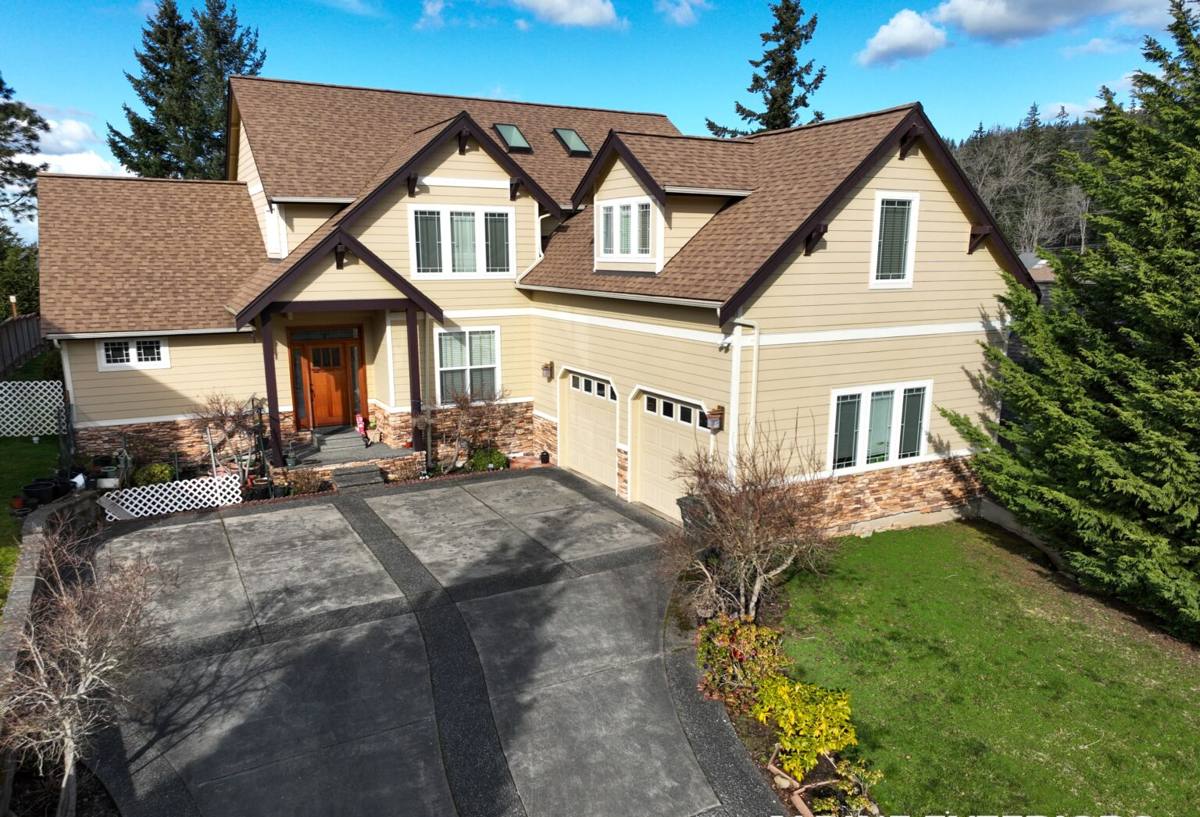
What the Local Climate Actually Does to a Shingle Roof
Salt air
Airborne salt from Georgia Strait doesn't rot asphalt shingles the way it corrodes bare metal, but it accelerates wear on anything metallic in the roof system — nails, flashing, vent stacks, and drip edge. Over years, salt exposure speeds up corrosion on lower-grade fasteners and flashing, which is where leaks usually start even though the shingles themselves still look fine. It also tends to hold moisture against the roof surface a little longer than a dry inland site would, which matters for algae and moss growth.
Wind-driven rain
Waterfront exposure in Whatcom County means rain doesn't always fall straight down — it gets pushed sideways and upward under eaves, around valleys, and into any gap in flashing or underlayment. A roof detailed for a calmer inland lot can develop wind-driven leaks at ridge caps, hip lines, and roof-to-wall transitions that would never be a problem on a more sheltered site.
Moss and shade
Birch Bay's tree cover and marine-layer humidity give moss a long growing season — realistically most of the year outside of the driest summer stretches. Moss holds moisture against the shingle surface, works into the granule layer, and can lift shingle edges over time, which is how small leaks start even on a roof that isn't that old.
Choosing the Right Asphalt Shingle for a Shoreline Lot
Not every asphalt shingle product is worth putting on a home this close to the water. We steer Sandy Point homeowners toward laminated (architectural) shingles with algae-resistant granules and a solid wind rating, rather than basic three-tab shingles, for reasons that come down to how each product actually behaves in this exposure over time.
| Factor | 3-Tab Shingles | Architectural / Laminate Shingles |
|---|---|---|
| Wind resistance | Lower rating, more vulnerable to lifting in gusty shoreline wind | Higher rated, multi-layer construction resists uplift better |
| Algae/moss resistance options | Limited | Widely available with copper-infused or algae-resistant granules |
| Expected lifespan in this climate | Shorter, especially with salt/moisture exposure | Longer, more consistent aging |
| Upfront cost | Lower | Moderate increase, offset by lower maintenance and longer service life |
| Appearance | Flat, uniform look | Dimensional, heavier shadow lines |
Three-tab shingles aren't a bad product everywhere — they just aren't our recommendation for a home taking this much wind and moisture off the water. The maintenance burden and shorter effective lifespan tend to outweigh the upfront savings once you factor in the exposure Sandy Point homes actually see.
What a Correctly Built Roof System Looks Like Here
The shingle itself is only part of the system. On a waterfront job, the details underneath and around the shingles matter as much or more:
- Ice-and-water shield at eaves and valleys — a self-adhering membrane under the first courses and in valleys, where wind-driven rain and ice damming are most likely to force water backward under the shingles.
- Synthetic underlayment across the full deck — a secondary water barrier that holds up better than old-style felt paper in a consistently damp climate.
- Corrosion-resistant flashing and fasteners — quality metal at valleys, chimneys, skylights, and roof-to-wall junctions, since these are the components most affected by salt air over time.
- Proper drip edge and starter strip — these keep wind-driven rain from getting up and under the shingle edge at the eaves and rakes, a common failure point in coastal wind.
- Balanced attic ventilation — intake at the eaves and exhaust at the ridge, sized correctly, so moisture doesn't build up under the deck and shorten the shingles' life from underneath.
- Sealed, correctly flashed penetrations — every pipe boot, vent, and fixture is a potential leak point if it's rushed.
How We Approach a Sandy Point Job
Every roof starts with a walk of the existing structure — deck condition, current ventilation, flashing condition, and any signs of moisture that have already made their way in. On shoreline properties we pay particular attention to the windward-facing slopes and any low-slope sections, since those take the brunt of both the wind and the standing moisture.
From there we put together a written scope covering the shingle product, underlayment system, flashing plan, and ventilation, so there's no ambiguity about what's being installed and why. We also account for the practical realities of working in a shoreline community — material staging, protecting landscaping and neighboring property during tear-off, and keeping the site clean and safe for the duration of the job. Once the old roofing is off, we don't cover up a bad deck: any soft or water-damaged sheathing gets replaced before anything new goes down, because shingles installed over a compromised deck will fail early no matter how good the shingle itself is.
Timing around the weather
Roofing in Whatcom County means working around real weather windows, especially this close to the water. We watch the forecast and sequence tear-off and dry-in so the deck isn't left exposed longer than necessary, and we don't start a tear-off we can't get dried in before the next system rolls through.
Maintenance and Moss Season
An asphalt shingle roof built correctly for Sandy Point's exposure still needs periodic attention — that's the nature of the local climate, not a sign of a bad install. A simple annual routine goes a long way:
- Clear debris and needles from valleys and around penetrations before fall rains set in.
- Check gutters and downspouts so water isn't backing up under the eave line.
- Have moss growth treated or removed before it spreads under shingle edges — don't wait until it's visibly thick.
- Look (or have us look) at flashing around chimneys, skylights, and vents every year or two, since these are the first spots to show wear from salt and wind.
- Address small leaks or lifted shingles promptly — they're inexpensive to fix early and expensive to ignore.
Signs Your Sandy Point Roof Needs a Look
A few warning signs come up more often on shoreline roofs than inland ones, and they're worth acting on rather than watching:
- Dark streaking or green-black patches on north-facing or shaded slopes — early algae or moss growth.
- Granules collecting in gutters or at downspout outlets, which points to accelerated shingle wear.
- Curling or lifted shingle edges, especially along the roof edges facing the water.
- Rust staining around flashing or fasteners — a sign salt exposure is starting to affect the metal.
- Any interior staining on ceilings or in the attic after a wind-driven rain event.
Catching these early is almost always cheaper than waiting for a full leak to show up inside the home.
Why Local Experience on This Specific Coastline Matters
A roofing crew that hasn't worked this stretch of Whatcom County shoreline before is guessing at wind exposure, moss cycles, and flashing details that a crew already familiar with Birch Bay and Sandy Point simply isn't guessing at. We've built our process around what actually holds up here — the shingle products, the underlayment systems, and the flashing details that perform against salt air and driving rain rather than just looking fine on installation day. That experience shows up less in the price and more in how the roof performs in year five, ten, and fifteen, which is really the only measure that matters.
Get a Straightforward Estimate
If you're weighing a repair, a full replacement, or just want an honest read on what condition your roof is really in, we're glad to take a look. Reach out for a free, no-pressure estimate using the form below — we'll walk the roof, tell you what we see, and give you options rather than a sales pitch.